Kirjojen hintavertailu – 12 903 735 kirjaa ja 27 kauppaa

Kirjailija

James Phillips

Kirjat ja teokset yhdessä paikassa: 25 kirjaa, julkaisuja vuosilta 2002–2026, suosituimpiin kuuluu Busby Berkeley at Warner Bros.. Vertaile teosten hintoja ja tarkista saatavuus suomalaisista kirjakaupoista.

25 kirjaa

Kirjojen julkaisuvuodet: 2002–2026.

The Equivocation of Reason

The Equivocation of Reason

James Phillips

Stanford University Press
2007
sidottu
The Equivocation of Reason: Kleist Reading Kant asks how the literary works of the German writer Heinrich von Kleist might be considered a critique and elaboration of Kantian philosophy. In 1801, the twenty-three-year-old Kleist, attributing his loss of confidence in our knowledge of the world to his reading of Kant, turned from science to literature. Kleist ignored Kant's apology of the sciences to focus on the philosopher's doctrine of the unknowability of things in themselves. From that point on, Kleist's writings relate confrontations with points of hermeneutic resistance. Truth is no longer that which the sciences establish; only the disappointment of every interpretation attests to the continued sway of truth. Though he adheres to Kant's definition of Reason as the faculty that addresses things in themselves, Kleist sees no need for its critique and discipline in the name of the reasonableness (prudence and common sense) of the experience of the natural sciences. Setting transcendental Reason at odds with empirical reasonableness, Kleist releases Kant's ethics and doctrine of the sublime from the moderating pull of their examples.

The Rubenstein Kiss

The Rubenstein Kiss

James Phillips

Methuen Drama
2005
nidottu
A remarkable new play about Cold-War betrayal and the quest for justice 1953. In McCarthy's America, Jakob and Esther Rubenstein are betrayed and punished for an act of industrial espionage. Could this be the greatest miscarriage of justice of the twentieth century?1975. New York. Matthew Maddison meets Anna Levi in front of an art gallery photograph of Jakob and Esther sharing one final kiss before they part. Young, radical and falling in love, together they seek justice for the past. Inspired by a true story, The Rubenstein Kiss explores the mysterious corridors of history to reveal the anguish of a family and a quest for atonement. Publication coincides with the play's premiere at London's Hampstead Theatre on 17 November 2005.'a commendably assured first play ...vividly captures the interlocking nature of sexual and ideological passion' Guardian'This is a bracingly ambitious piece, encompassing the tension between personal and political morality, between idealism and pragmatism, and the power of the past to shape individuals. Astutely and compassionately, Phillips explores each bend in the road that led to the Rubensteins' deaths ... A stimulating debut work of real scope.' The Times
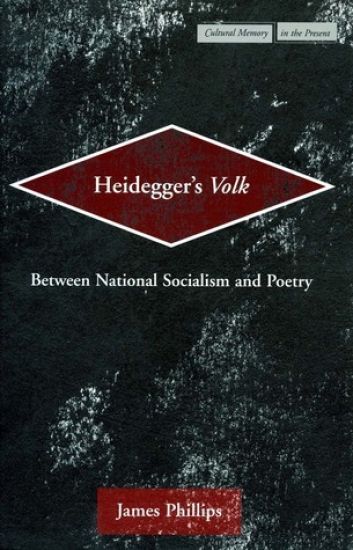
Heidegger's Volk

Heidegger's Volk

James Phillips

Stanford University Press
2005
sidottu
In 1933 the philosopher Martin Heidegger declared his allegiance to Hitler. Ever since, scholars have asked to what extent his work is implicated in Nazism. To address this question properly involves neither conflating Nazism and the continuing philosophical project that is Heidegger's legacy, nor absolving Heidegger and, in the process, turning a deaf ear to what he himself called the philosophical motivations for his political engagement. It is important to establish the terms on which Heidegger aligned himself with National Socialism. On the basis of an untimely but by no means unprecedented understanding of the mission of the German people, the philosopher first joined but then also criticized the movement. An exposition of Heidegger's conception of Volk hence can and must treat its merits and deficiencies as a response to the enduring impasse in contemporary political philosophy of the dilemma between liberalism and authoritarianism.
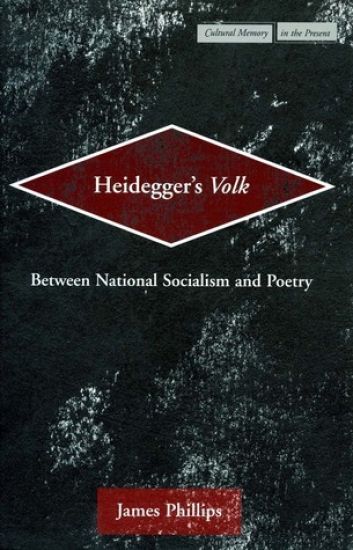
Heidegger's Volk

Heidegger's Volk

James Phillips

Stanford University Press
2005
pokkari
In 1933 the philosopher Martin Heidegger declared his allegiance to Hitler. Ever since, scholars have asked to what extent his work is implicated in Nazism. To address this question properly involves neither conflating Nazism and the continuing philosophical project that is Heidegger's legacy, nor absolving Heidegger and, in the process, turning a deaf ear to what he himself called the philosophical motivations for his political engagement. It is important to establish the terms on which Heidegger aligned himself with National Socialism. On the basis of an untimely but by no means unprecedented understanding of the mission of the German people, the philosopher first joined but then also criticized the movement. An exposition of Heidegger's conception of Volk hence can and must treat its merits and deficiencies as a response to the enduring impasse in contemporary political philosophy of the dilemma between liberalism and authoritarianism.