

Kirjailija
Jane Austen
Kirjat ja teokset yhdessä paikassa: 3 212 kirjaa, julkaisuja vuosilta 1791–2027, suosituimpiin kuuluu Ylpeys ja ennakkoluulo. Vertaile teosten hintoja ja tarkista saatavuus suomalaisista kirjakaupoista.
3 212 kirjaa
Kirjojen julkaisuvuodet: 1791–2027.

Pride and Prejudice is a romantic novel by Jane Austen, first published in 1813. The story charts the emotional development of the protagonist, Elizabeth Bennet, who learns the error of making hasty judgments and comes to appreciate the difference between the superficial and the essential. The comedy of the writing lies in the depiction of manners, education, marriage, and money during the British Regency period. The novel revolves around the importance of marrying for love, not simply for money, despite the social pressures to make a good match. Pride and Prejudice retains the fascination of modern readers, consistently appearing near the top of lists of "most-loved books" among both literary scholars and the general public. It has become one of the most popular novels in English literature, with over 20 million copies sold, and paved the way for many archetypes that abound in modern literature. Continuing interest in the book has resulted in a number of dramatic adaptations and an abundance of novels and stories imitating Austen's memorable characters or themes.
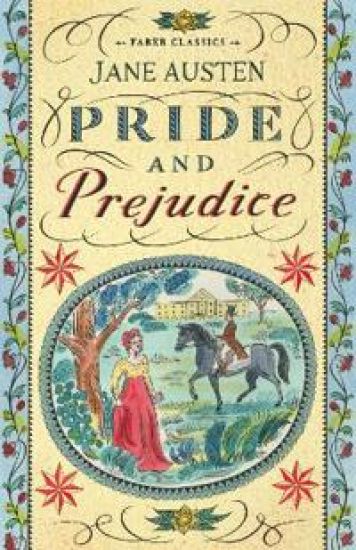
It is a truth universally acknowledged, that a single man in possession of a good fortune, must be in want of a wife. At least Mrs Bennet is determined that this is the case, but as she pushes her five daughters at every matrimonial prospect, not every encounter goes to plan . . . This classic full of wit, humour and romance gets a whole new look with a gorgeous cover by Emily Sutton.

When two rich young gentlemen move to town, they don't go unnoticed - especially when Mrs Bennett vows to have one of her five daughters marry into their fortunes. But love, as Jane and Elizabeth Bennett soon discover, is rarely straightforward, and often surprising. It's only a matter of time until their own small worlds are turned upside down and they discover that first impressions can be the most misleading of all. With a behind-the-scenes journey, including an author profile, a guide to who's who, activities and more.

The first-published of Jane Austen's novels, Sense and Sensibility takes up one of her great themes: how a woman should traverse the line between passion (or sense") and reason ("sensibility"). Austen's creations, the Dashwood sisters, embody both characteristics, as they pursue love, happiness, and their neighbor, Mr. Willoughby. What is the ideal path for a young woman--following her passions wherever they may lead? Or following the wise path society has laid before her, despite the callings of her heart? The internal struggles of women to centuries ago are not so dissimilar to those of our modern age, which is why Jane Austen speaks so clearly to us from afar. Sense and Sensibility, one of the indisputably essential parts of the Austen canon, will make you reconsider your own choices, and think about the path you want to follow in the future.

'It is a truth universally acknowledged, that a single man in possession of a good fortune must be in want of a wife.' Thus memorably begins Jane Austen's Pride and Prejudice, one of the world's most popular novels. Pride and Prejudice, Austen's own 'darling child' tells the story of fiercely independent Elizabeth Bennett, one of five sisters who must marry rich, as she confounds the arrogant, wealthy Mr. Darcy. What ensues is one of the most delightful and engrossingly readable courtships known to literature, written by a precocious Austen when she was just twenty-one years old. Humorous and profound, and filled with highly entertaining dialogue, this witty comedy of manners dips and turns through drawing-rooms and plots to reach an immensely satisfying finale. In the words of Eudora Welty, Pride and Prejudice is as 'irresistible and as nearly flawless as any fiction could be.'

Mansfield Park is the third published novel by Jane Austen, first published in 1814. The novel tells the story of Fanny Price. She is still a girl when her uncles take her to her mansion in Mansfield Park, rescuing her from a life of difficulties and needs. There, before his frightened look, will parade a world of leisure and refinement in which the innocent amusements will feed machinations and seduction strategies. That world hides a dangerous truth and only Fanny, from its submissive silence, will be able to glimpse its consequences and threats. Mansfield Park recreates a familiar and social order that unravels and deceptively restores itself through the ambiguous eyes of a young girl who has been assigned the fate and destiny of a Cinderella. Published in 1814, Mansfield Park is probably the most dense and complex novel of the author, a prodigy of narrative architecture and psychological depth.

Persuasion is the last novel fully completed by Jane Austen. It was published at the end of 1817, six months after her death. The story concerns Anne Elliot, a young Englishwoman of 27 years, whose family is moving to lower their expenses and get out of debt, at the same time as the wars come to an end, putting sailors on shore. They rent their home to an Admiral and his wife. The wife's brother, Navy Captain Frederick Wentworth, had been engaged to Anne in 1806, and now they meet again, both single and unattached, after no contact in more than seven years. This sets the scene for many humorous encounters as well as a second, well-considered chance at love and marriage for Anne Elliot in her second "bloom". The novel was well-received in the early 19th century. Greater fame came later in the century, continued in the 20th century, and through to the 21st century.

During an eventful season at Bath, young, na ve Catherine Morland experiences the joys of fashionable society for the first time. She is delighted with her new acquaintances: flirtatious Isabella, who shares Catherine's love of Gothic romance and horror, and sophisticated Henry and Eleanor Tilney, who invite her to their father's mysterious house, Northanger Abbey. There, her imagination influenced by novels of sensation and intrigue, Catherine imagines terrible crimes committed by General Tilney. With its broad comedy and irrepressible heroine, this is the most youthful and and optimistic of Jane Austen's works. For more than seventy years, Penguin has been the leading publisher of classic literature in the English-speaking world. With more than 1,700 titles, Penguin Classics represents a global bookshelf of the best works throughout history and across genres and disciplines. Readers trust the series to provide authoritative texts enhanced by introductions and notes by distinguished scholars and contemporary authors, as well as up-to-date translations by award-winning translators.

Mansfield Park by Jane Austen: Mansfield Park by Jane Austen
David Widger; Jane Austen
Createspace Independent Publishing Platform
2018
nidottu
Frances "Fanny" Price, at age 10, is sent from her family home to live with her uncle and aunt in the country in Northamptonshire. It is a jolting change, from the elder sister of many, to the youngest at the estate of Sir Thomas Bertram, husband of her mother's older sister. Her cousin Edmund finds her alone one day and helps her. She wants to write to her older brother William. Edmund provides the writing materials, the first kindness to her in this new family. Her cousins are Tom Jr. (age 17), Edmund (16), Maria (13) and Julia (12). Her aunt is kind but her uncle frightens her with his authoritative demeanour. Fanny's mother has another sister, Mrs Norris. She is the wife of the clergyman at Mansfield parsonage. Mrs Norris has no children and takes a great interest in her nieces and nephews. Mrs Norris makes a strict distinction between her Bertram nieces and lowly Fanny. Sir Thomas helps the sons of the Price family find occupations when they are old enough. William joins the Navy as a midshipman not long after Fanny arrives at Mansfield Park. He visits them once before going to sea, and writes to his sister. When Fanny is fifteen, Aunt Norris is widowed and moves into a cottage of her own. The frequency of her visits to Mansfield Park increases, as does her mistreatment of Fanny. Tom Bertram incurs a large debt and to pay it, Sir Thomas sells the living of the parsonage, freed up by the death of Uncle Norris, to clergyman Dr Grant. When Fanny is sixteen, Sir Thomas leaves to deal with problems on his plantation in Antigua. He takes Tom along and trusts to Aunt Norris for the others. Mrs Norris takes on the task of finding a husband for Maria and finds James Rushworth, with income of 12,000 a year, but weak-willed and stupid. Maria accepts his marriage proposal, subject to Sir Thomas's approval on his return. After a year in Antigua, Sir Thomas sends Tom home to Mansfield Park. One year later, the fashionable, wealthy, and worldly Henry Crawford and his sister, Mary Crawford, arrive at the parsonage to stay with Mrs. Grant, their half-sister. The arrival of the Crawfords enlivens life in Mansfield and sparks romantic entanglements. Mary and Edmund begin to form an attachment. She is disappointed to learn that Edmund will be a clergyman. Fanny fears that Mary's charms and attractions have blinded Edmund to her flaws. On a visit to Mr Rushworth's estate Sotherton, Henry deliberately plays with the affections of both Maria and Julia. Maria believes Henry is falling in love with her and treats Mr Rushworth dismissively, provoking his jealousy. Fanny observes this while Aunt Norris, blinded by her own self-importance and Edmund, infatuated with Mary, fail to perceive the various flirtations. Encouraged by Tom and his friend Mr Yates, the young people decide to put on an amateur performance of the play Lovers' Vows. Edmund objects, believing Sir Thomas would disapprove and feeling that the subject matter of the play is inappropriate for his sisters. Edmund reluctantly agrees to take on the role of Anhalt, the lover of the character played by Mary Crawford. The play provides a pretext for Henry and Maria to flirt in public. Fanny observes this, but again Aunt Norris, caught up in the excitement of staging a play, does not. Sir Thomas arrives home earlier than expected, while all are in the midst of rehearsal. He stops the theatricals. Henry, from whom Maria had imminently expected a marriage proposal, instead takes his leave, and she is not pleased. She goes ahead with marriage to Rushworth, with her father's permission. They honeymoon in Brighton and then settle in London, taking Julia with them. Fanny's improved appearance and gentle disposition endear her to Sir Thomas. With Maria and Julia gone, Fanny and Mary Crawford visit often.

Love And Freindship And Other Early Works
Jane Austen
Createspace Independent Publishing Platform
2018
nidottu
Jane Austen's earliest writing dates from when she was just eleven-years-old, and already shows the hallmarks of her mature work. But it is also a product of the times in which she grew up-dark, grotesque, often surprisingly bawdy, and a far cry from the polished, sparkling novels of manners for which she became famous. Drunken heroines, babies who bite off their mothers' fingers, and a letter-writer who has murdered her whole family all feature in these highly spirited pieces. This edition includes all of Austen's juvenilia, including her "History of England" and the novella Lady Susan, in which the anti-heroine schemes and cheats her way through high society. With a title that captures a young Austen's original idiosyncratic spelling habits and an introduction by Christine Alexander that shows how Austen was self-consciously fashioning herself as a writer from an early age, this is a must-have for any Austen lover.
Jane Austen (BarnesNoble Collectible Classics: Omnibus Edition)
Jane Austen
Gardners Bokimporten
2018
sidottu
Halvin toimitettuna 39,00 €
In a publishing career that spanned less than a decade, Jane Austen revolutionised the literary romance, using it as a stage from which to address issues of gender politics and class-consciousness rarely expressed in her day. The novels included in this beautiful leatherbound collection - -
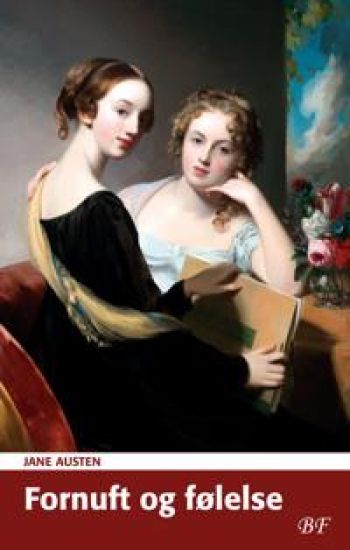
Elinor og Marianne Dashwood er søstre, men besidder vidt forskellige personligheder. Elinor er rolig, velovervejet og behersket. Marianne er lidenskabelig, umiddelbar og dramatisk. Fornuft og følelse. Da deres far dør uden juridisk mulighed for at testamentere sin formue til sin enke og sine tre døtre, må de fire kvinder tage til takke med en noget mere beskeden indkomst og livsstil, end de har været vant til. Denne omstændighed skal vise sig at få afgørende betydning for Elinor og Mariannes ægteskabelige fremtidsudsigter. Begge søstre havner kort efter hinanden i dybe, men udsigtsløse forelskelser. Deres reaktion på situationen er naturligvis som nat og dag, og de må begge gennemgå ydmygelser, svigt og bristede illusioner. Oplevelserne sætter sig dybe spor, ikke mindst hos Marianne, der må revidere sit syn på livet og kærligheden. "... fordi Elinor og Marianne og Jane er så intenst indtagende ladylike, så følger man stakåndet og fornøjet med. Sigende for den gode lady-stil er f.eks., at der ikke er nogen personer, der er så dumme, vulgære, kedelige eller ubehagelige, at de ikke - selv om deres dårlige kvaliteter generøst og underholdende demonstreres, gerne i dialogform - også har nogle gode kvaliteter eller i det mindste, med lidt god vilje, kan undskyldes for de dårlige." - Lars Bukdahl, Weekendavisen "Man bør læse Austen først og fremmest på grund af personskildringer og dialoger - de er helt ubetalelige. Ingen kan som Austen lystigt lade personerne udlevere sig selv i dialogerne, hvor dumhed og tåkrummende mangel på fintfølelse går hånd i hånd med ekstrem optagethed af penge og økonomi, langt fra det kulturelle dannelsesideal, som Austen skriver ud fra. Det er vanvittig morsomt og som skabt til film - men altså også værd at læse." - Birgitte Stoklund Larsen, Kristeligt Dagblad "Jane Austen er igen tilgængelig på dansk - en fryd for både øjet og øret. ... det ville være en skændsel hvis klassiske romaner af Jane Austens format ikke var tilgængelige på dansk, på tryk eller i lydbogsformat. ... Et forfatterskab af Jane Austens karat er den bedste modgift mod nok så mange tøsefjantede romaner af Helen Fielding, Sophie Kinsella, Candace Bushnell, Marian Keyes og hvad de ellers hedder, de store chick lit-forfattere på den internationale litterære scene..." - Claus Schatz-Jakobsen, Standart

Ochenta ilustraciones acompa an este gran cl sico. La alocada familia Bennet tiene cinco hijas. La se ora Bennet est obsesionada con casarlas, pues a la muerte del se or Bennet la propiedad pasar a manos de un familiar var n, debido al mayorazgo al que pertenece. Si esto ocurriese todas ellas podr an quedar en la calle. La se ora Bennet queda encantada cuando un joven soltero y rico alquila una propiedad vecina, debido a que sus planes son casar a una de sus hijas con este hombre. Orgullo y prejucio es una de las obras m s famosas de la literatura inglesa. De la autora Jane Austen, una novela rom ntica y c mica ambientada durante el reinado de Jorge III. Trata sobre el desarrollo de sus principales personajes, sus cambios de impresiones, del orgullo de uno y los prejuicios de la otra.

Orgueil et pr jug s (1813) est le roman le plus populaire de l'illustre auteur Jane Austen. L'histoire en est simple: Elizabeth Bennet, qui se croit d daign e par Darcy, jeune homme riche et hautain, s'amourache d'un bel officier, Wickham. Au roman sentimental et de coup de foudre, Jane Austen substitue celui qui d crit l' volution d'une psychologie plus complexe, o se m lent la raison, le sentiment de gratitude, la m fiance l' gard des " premi res impressions ." L'abondance des menus v nements, qui passionnent autant que de grandes aventures, fait l'un des charmes du roman britannique. Elle se combine avec la finesse d'une analyse enti rement int gr e la description du comportement, et avec un humour discret, mais toujours pr sent.

Henry Dashwood, his second wife, and their three daughters live for many years with Henry's wealthy bachelor uncle. That uncle decides, in late life, to will his property first to Henry, then to Henry's first son John, and then to John's three-year-old son Harry. The uncle dies, but Henry lives just a year after that. On Henry's death, the new owner of the estate, then, is John Dashwood, the child of Henry's first marriage. Henry's second wife, Mrs Dashwood, and their daughters, Elinor, Marianne and Margaret, inherit only a small income. On his deathbed, Mr Henry Dashwood extracts a promise from his son John to take care of his half-sisters. But before Henry is long in the grave, John's greedy wife, Fanny, persuades her husband to renege on the promise, appealing to his concerns about diminishing his own son Harry's inheritance and to the fact that his sisters are but half-blood and therefore undeserving of his family loyalty. She claims that providing the promised help for Mrs. Dashwood and her daughters will unfairly impoverish their son, which is hardly possible given the size of John Dashwood's inheritance and subsequent income. John and Fanny immediately move in as the new owners of Norland, while the Dashwood women are treated as unwelcome guests by a spiteful Fanny. Mrs Dashwood seeks somewhere else to live. In the meantime, Fanny's brother, Edward Ferrars visits Norland and soon forms an attachment with Elinor. Fanny disapproves of the match and offends Mrs Dashwood by implying that Elinor must be motivated by his expectations of coming into money
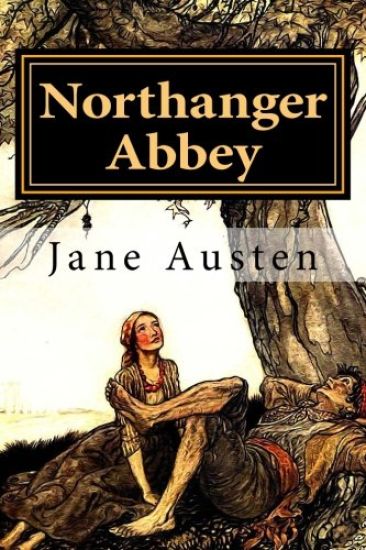
Northanger Abbey by Jane Austen: Northanger Abbey by Jane Austen
David Widger; Jane Austen
Createspace Independent Publishing Platform
2018
nidottu
Seventeen-year-old Catherine Morland is one of ten children of a country clergyman. Although a tomboy in her childhood, by the age of 17 she is "in training for a heroine" and is excessively fond of reading Gothic novels, among which Ann Radcliffe's Mysteries of Udolpho is a favourite. Catherine is invited by the Allens, her wealthier neighbours in Fullerton, to accompany them to visit the town of Bath and partake in the winter season of balls, theatre and other social delights. She is soon introduced to a clever young gentleman, Henry Tilney, with whom she dances and converses. Through Mrs. Allen's old schoolfriend Mrs. Thorpe, she meets her daughter Isabella, a vivacious and flirtatious young woman, and the two quickly become friends. Mrs. Thorpe's son John is also a friend of Catherine's older brother, James, at Oxford where they are both students. The Thorpes are not happy about Catherine's friendship with the Tilneys, as they correctly perceive Henry as a rival for Catherine's affections, though Catherine is not at all interested in the crude John Thorpe. Catherine tries to maintain her friendships with both the Thorpes and the Tilneys, though John Thorpe continuously tries to sabotage her relationship with the Tilneys. This leads to several misunderstandings, which put Catherine in the awkward position of having to explain herself to the Tilneys. Isabella and James become engaged. James' father approves of the match and offers his son a country parson's living of a modest sum, 400 annually, but they must wait until he can obtain the benefice in two and a half years. Isabella is dissatisfied, but to Catherine she misrepresents her distress as being caused solely by the delay, and not by the value of the sum. Isabella immediately begins to flirt with Captain Tilney, Henry's older brother. Innocent Catherine cannot understand her friend's behaviour, but Henry understands all too well, as he knows his brother's character and habits. The Tilneys invite Catherine to stay with them for a few weeks at their home, Northanger Abbey. Catherine, in accordance with her novel reading, expects the abbey to be exotic and frightening. Henry teases her about this, as it turns out that Northanger Abbey is pleasant and decidedly not Gothic. However, the house includes a mysterious suite of rooms that no one ever enters; Catherine learns that they were the apartments of Mrs. Tilney, who died nine years earlier. As General Tilney no longer appears to be ill affected by her death, Catherine decides that he may have murdered her or even imprisoned her in her chamber. Catherine discovers that her over-active imagination has led her astray, as nothing is strange or distressing in the apartments. Unfortunately, Henry questions her; he surmises, and informs her that his father loved his wife in his own way and was truly upset by her death. 6] She leaves, crying, fearing that she has lost Henry's regard entirely. Realizing how foolish she has been, Catherine comes to believe that, though novels may be delightful, their content does not relate to everyday life. Henry does not mention this incident to her again. James writes to inform her that he has broken off his engagement to Isabella and that she has become engaged instead to Captain Tilney. Henry and Eleanor Tilney are sceptical that their brother has actually become engaged to Isabella Thorpe. Catherine is terribly disappointed, realising what a dishonest person Isabella is. A subsequent letter from Isabella herself confirms the Tilney siblings' doubts, and shows that Frederick Tilney was merely flirting with Isabella. The General goes off to London, and the atmosphere at Northanger Abbey immediately becomes lighter and pleasanter for his absence. Catherine passes several enjoyable days with Henry and Eleanor until, in Henry's absence, the General returns abruptly, in a temper.

"I declare after all there is no enjoyment like reading ..." Set against the background the Georgian era, Pride and Prejudice is a spirited and romantic novel by Jane Austen. Mr Bennet is an English gentleman living in Hartfordshire, England with his overbearing wife. The Bennets have 5 daughters one of them being Elizabeth Bennet. In the story, Elizabeth learns a life lesson about making hasty judgments.

Persuasion by Jane Austen: Persuasion by Jane Austen
Sharon Partridge; Martin Ward; Jane Austen
Createspace Independent Publishing Platform
2018
nidottu

Pride and Prejudice by Jane Austen: Pride and Prejudice by Jane Austen
David Widger; Jane Austen
Createspace Independent Publishing Platform
2018
nidottu
The novel opens with Mrs. Bennet trying to persuade Mr. Bennet to visit Mr. Bingley, an eligible bachelor who has arrived in the neighborhood. After some verbal sparring with Mr. Bennet baiting his wife, it transpires that this visit has already taken place at Netherfield, Mr. Bingley's rented house. The visit is followed by an invitation to a ball at the local assembly rooms that the whole neighbourhood will attend. At the ball, Mr. Bingley is open and cheerful, popular with all the guests, and appears to be very attracted to the beautiful Miss Jane Bennet. His friend, Mr. Darcy, is reputed to be twice as wealthy; however, he is haughty and aloof. He declines to dance with Elizabeth, suggesting that she is not pretty enough to tempt hiShe finds this amusing and jokes about the statement with her friends. Mr. Bingley's sister, Caroline, later invites Jane to visit. When Jane visits Miss Bingley, she is caught in a rain shower on the way and comes down with a serious cold. Elizabeth visits the ill Jane at Netherfield. There Darcy begins to be attracted to Elizabeth, while Miss Bingley becomes jealous, since she has designs on Darcy herself. Illustration by Hugh Thomson representing Mr. Collins, protesting that he never reads novels Mr. Collins, a cousin of Mr. Bennet and heir to the Longbourn estate, visits the Bennet family. He is a pompous and obsequious clergyman, who expects each of the Bennet girls to wish to marry him due to his inheritance. He quickly decides to propose to Elizabeth when he is led to believe Jane is taken. Elizabeth and her family meet the dashing and charming George Wickham, who singles out Elizabeth and tells her a story of the hardship that Mr. Darcy has caused him by depriving him of a living (position as clergyman in a prosperous parish with good revenue that, once granted, is for life) promised to him by Mr. Darcy's late father. Elizabeth's dislike of Mr. Darcy is confirmed. At a ball at Netherfield, Elizabeth reluctantly dances with Mr. Darcy. Other than Jane and Elizabeth, several members of the Bennet family show a distinct lack of decorum. Mrs. Bennet hints loudly that she fully expects Jane and Bingley to become engaged and the younger Bennet sisters otherwise expose the family to ridicule. Mr. Collins proposes to Elizabeth, who rejects him, to the fury of her mother and the relief of her father. Shortly thereafter, they receive news that the Bingleys are suddenly leaving for London, with no intention to return. After his humiliating rejection by Elizabeth, Mr. Collins proposes to Charlotte Lucas, a sensible young woman and Elizabeth's friend. Charlotte is slightly older and is grateful to receive a proposal that will guarantee her a comfortable home. Elizabeth is aghast at such pragmatism in matters of love. Heartbroken, Jane goes to visit her Aunt and Uncle Gardiner at an unfashionable address in London. Miss Bingley clearly does not want to continue the friendship and Jane is upset though very composed. In the spring, Elizabeth visits Charlotte and Mr. Collins in Kent. Elizabeth and her hosts are invited to Rosings Park, the imposing home of Lady Catherine de Bourgh, patroness of Mr. Collins and Mr. Darcy's extremely wealthy aunt. She expects Mr. Darcy to marry her daughter. Mr. Darcy and his cousin, Colonel Fitzwilliam, are also visiting at Rosings Park. Colonel Fitzwilliam tells Elizabeth how Mr. Darcy managed to save a friend from a bad match. Elizabeth realizes the story must refer to Jane and is horrified that Darcy has interfered and caused her sister so much pain. Mr. Darcy, meanwhile, has fallen in love with Elizabeth and proposes to her. She rejects him angrily, stating that she could not love a man who has caused her sister such unhappiness and further accuses him of treating Mr. Wickham unjustly. The latter accusation seems to anger Mr. Darcy, and he accuses her family of wanting propriety and suggests he has been kinder to Bingley than himself. They part, barely speaking.