Kirjojen hintavertailu – 12 859 828 kirjaa ja 27 kauppaa
Kirjailija
Jean-Francois Lyotard
Kirjat ja teokset yhdessä paikassa: 47 kirjaa, julkaisuja vuosilta 1984–2027, suosituimpiin kuuluu Der Widerstreit. Vertaile teosten hintoja ja tarkista saatavuus suomalaisista kirjakaupoista.
Nimi esiintyy myös muodoissa: Jean-François Lyotard
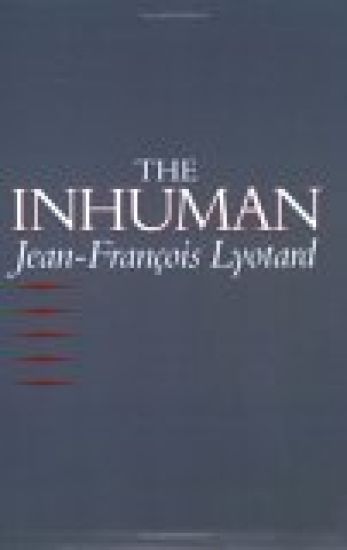
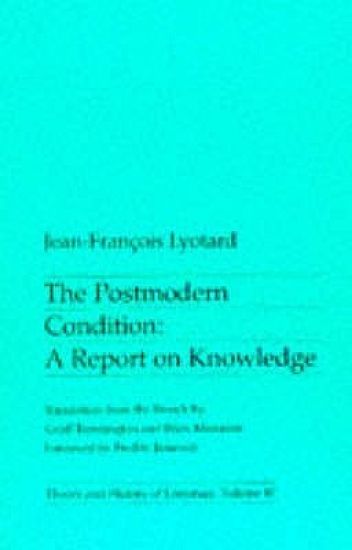
In this major study, now available in paperback, Lyotard develops his analysis of the phenomenon of postmodernity, and examines the philosophy of Kant, Heidegger, Adorno and Derrida. Lyotard claims that it is the task of literature, philosophy and the arts to bear witness to and explain the links between modernity, progress and humanity, and the difficult transition to postmodernity.
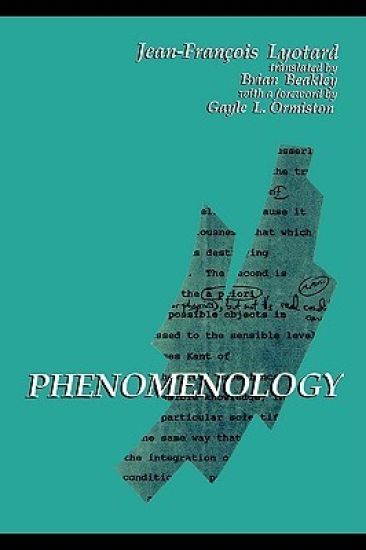
This translation of Lyotard's first book, La Phenomenologie, supplies an important link to Lyotard's more recent works. Phenomenology presents a commentary on the phenomenological movement. From the dual perspectives of a work on, and of, phenomenology, Lyotard's text profiles the different aspects of phenomenology, focusing particularly on the writings of Hegel, Husserl, Merleau-Ponty, and Tran Duc Thao. Phenomenology marks a particular episode in Lyotard's reflections on the "philosophical project" and is emblematic of his critical reflections on philosophy's involvements in routine, daily commitments. Like Merleau-Ponty, in this work Lyotard eliminates philosophy as a "separate existence." Beyond offering an account of certain phenomenological themes, Lyotard's commentary explicates phenomenology's relevance to psychology, sociology, and history.
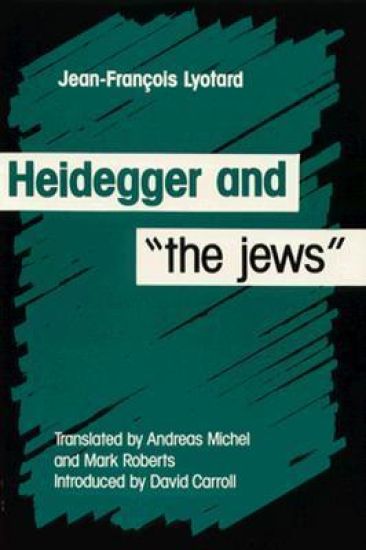
Although Heidegger's relationship to nazism was hinted at as early as 1960, it was only confirmed in 1987 through the publication in France of previously unpublished speeches, lectures and letters. French intellectual responded violently, either vindicating or condemning Heidegger. The two interrelated essays in this volume are Lyotard's contribution to the debate. In the first, "the Jews", Lyotard establishes the theme of the "outsider" by placing "the Jews" in lower case, plural, and in quotation marks to represent the outsiders: artists, anarchists, black, the homeless - and the Jews; they are all a disruptive, alien force which threatens the West's dream of development and fulfilment. In "Heidegger", the second essay, Lyotard postulates a nubmer of rules for explaining the "Heidegger affair", most of which call for a close textual reading, and facilitate interpretation of the affair within the widest possible context.
Many definitions of postmodernism focus on its nature as the aftermath of the modern industrial age when technology developed. This book extends that analysis to postmodernism by looking at the status of science, technology, and the arts, the significance of technocracy, and the way the flow of information is controlled in the Western world.
Here is a course of action: harden, worsen, accelerate decadence. Adopt the perspective of active nihilism, exceed the mere recognition-be it depressive or admiring--of the destruction of all values. Become more and more incredulous. Push decadence further still and accept, for instance, to destroy the belief in truth under all its forms. In this collection of essays and interviews from 1970-72, Jean-Francois Lyotard explores and drifts, as we drift, between art and politics, the "figural" and representation, silence and libidinal energy. Art becomes a deconstructing force that deals not with the signified of things but their form or plastic organization; and politics is the overturning of a mystified or alienated reality. The artists' reaction to capitalism, and their function, isn't anymore to create new good forms, but to deconstruct and accelerate their obsolescence. It is necessarily a critical activity. In his essays dealing with Freud, Lyotard develops his thought on the figural and the unconscious as a topological space. Contrasting image-figure, form-figure, and matrix-figure, Lyotard establishes links between the order of desire and the figural through the category of transgression: transgression of the object, transgression of form, transgression of space. For him, the important thing is not to produce a consistent discourse but rather to produce "figures" within reality. For there is no point in changing social reality if all it does is set up the same form. Dealing with issues of depth and appearance, the body becomes a surface of inscription for flows of libidinal energy. We need to pay more attention to the silence of bodily organs which creates a tremendous dissonance: it is this silence that must be heard as the libido wanders through our bodies. What we enjoy in art is its ability to displace us, to make us drift.