
Kirjailija
JEREMY MARK ROBINSON
Kirjat ja teokset yhdessä paikassa: 121 kirjaa, julkaisuja vuosilta 2005–2026, suosituimpiin kuuluu J.R.R. Tolkien. Vertaile teosten hintoja ja tarkista saatavuus suomalaisista kirjakaupoista.
121 kirjaa
Kirjojen julkaisuvuodet: 2005–2026.
Blade Runner and the Cinema of Philip K. Dick
Jeremy Mark Robinson
Crescent Moon Publishing
2012
pokkari
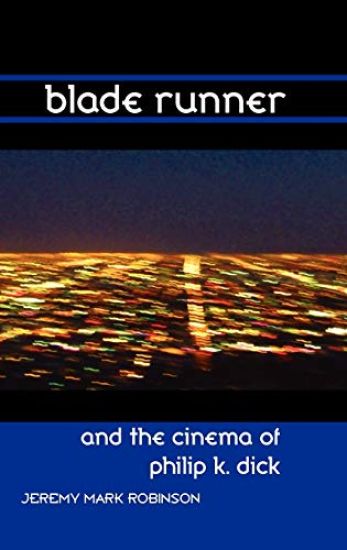
Blade Runner and the Cinema of Philip K. Dick
JEREMY MARK ROBINSON
CRESCENT MOON PUBLISHING
2012
sidottu
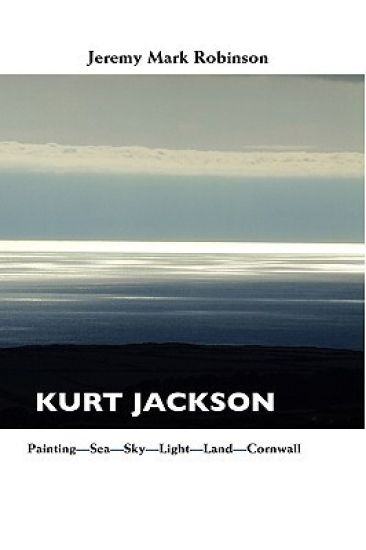
KURT JACKSON A new book about the British landscape painter Kurt Jackson (b. 1961). This new hardback edition includes many new illustrations. including photographs taken for this new edition. The text has been completely updated. EXTRACT FROM CHAPTER 4: One of Kurt Jackson's appealing concepts is that the ocean is one of the last true wildernesses left on the planet. It's an idea that I found very interesting when he explained it to me when we first met in St Just. I took it that he meant a spiritual as well as an ecological or natural wilderness. Jackson's art can thus be seen as an art that is the border region between humanity and nature, between culture and nature, as well as literally tackling that area - the coast - which is neither land nor sea. Note that Kurt Jackson is always facing outwards from the land, and looking towards the ocean, not painting with his back to the sea, and looking towards the land (and notice that the many boats and ships and helicopters and such in this area are left out of the paintings, too). So Jackson's Porth series, about Priest Cove, and all of his sea paintings, are very important in his art in articulating this idea of the ocean as the last wilderness. 'Have you ever wondered what's out there' is a question that Kurt Jackson asks (it's the title of one of his major paintings, too - the centrepiece of the Porth series). Jackson has repeated the question over a number of related works: the title of two 2004 pieces is The Last Wilderness In Western Europe? This was painted on Jura (in Scotland), and both pictures are consciously emptied of human marks - just empty moorland and a delicate blue sky. An earlier picture, part of the Cape series, was entitled Do You Ever Wonder What's Out There? (1999) - an unusual composition in the Jackson oeuvre which puts the horizon very high, and focusses on the dark blue ocean flecked with white spray. Kurt Jackson isn't that interested in many of the connotations of the ocean - the moon, time, goddesses, rebirth (though moons do appear in his art from time to time). He's not really interested in religious or pagan or magical symbols in that way. And he's not that interested in shipping, fishing, and all things maritime, like J. M. W. Turner was. But when Jackson asks a question like 'have you ever wondered what's out there', and considers the sea as one of the last wildernesses, that alters the interpretation of his sea paintings. It doesn't apply to all of them, though: in plenty of paintings (and not only the smaller or more modest ones), Jackson is not thinking in terms of big themes. But when he titles a painting Have You Ever Wondered What's Out There? (and writes the title in big letters across the painting), it's clearly intended to resonate in the viewer at a deeper level.

JEAN-LUC GODARD There's no one else quite like Jean-Luc Godard. You could take a few frames from one of his films and know they were by the maestro and nobody else. Where the flood of movies globally now runs into many thousands, Godard's works stand out as original, acerbic, romantic, ironic, humorous and explorative. EXTRACT FROM CHAPTER 2: "GODARD BIOGRAPHY" With Bout du Souffle, Godard produced one of the first, great French New Wave movies, starring Jean-Paul Belmondo and Jean Seberg, and written by, among others, Fran ois Truffaut. Bout du Souffle, with its cool Parisian milieu, its filmic and film noir allusions, handheld camera, direct sound, startling editing and stylish, self-conscious performances from Belmondo and Seberg, established Godard as one of the major voices of postwar cinema, a reputation which Godard built on in subsequent early films such as Le Petit Soldat (1960), Une Femme Est Une Femme (1961), Vivre Sa Vie (1962), Le M pris (1963), Bande Part (1964), and Une Femme Mari e (1964). In these films of the early to mid-1960s, Godard established a radical, polemical series of films as film-essays which confronted issues such as late consumer capitalism, prostitution, labour, politics, ideology, gender, marriage, music, popular culture, Hollywood and not forgetting cinema itself. In the mid-1960s, Godard's films became increasingly political - the sci-fi film Alphaville (1965), Pierrot le Fou (1965), Made in U. S. A (1966), Masculine/ F minin (1966), 2 ou 3 Choses Que Je Sais (1966) - until, by 1967-68, the Marxist and Maoist influences permeated Godard's films: Weekend (1967), La Chinoise (1967), La Gai Savoir (1968), and One Plus One (Sympathy For the Devil, 1968). His concern was 'not to make political films, but to make films politically' (my emphasis). In the 1970s, Godard moved into video and television territory, and worked with Anne-Marie Mi ville on many projects: Ici Et Ailleurs (1974), Num ro Deux (1975), Comment a Va (1976), Six Fois Deux/ Sur Et Sous La Communication (1976), and France/ Tour/ D tour/ Deux/ Enfants (1977-78). In the late 1970s, Godard made a 'return' to feature filmmaking, with the 'sublime trilogy', Sauve Qui Peut (a.k.a. Every Man For Himself and Slow Motion, 1979), Passion (1982), and Pr nom: Carmen (1983). Easily his most controversial film, Je Vous Salue Marie (Hail Mary), appeared in 1985; it was followed by D tective (1985), made to help finance the completion of Hail Mary, King Lear (1987), which starred Peter Sellars, Burgess Meredith, Molly Ringwald, Norman Mailer and Woody Allen, Nouvelle Vague (1990), H las Pour Moi (1993), For Ever Mozart (1997), loge de l'Amour (In Praise of Love, 2000) and Notre Musique (2005). Fully illustrated. Bibliography and notes.

Critical study of Russian film director Andrei Tarkovsky (1932-1986) with a scene-by-scene analysis of all of his films