Kirjojen hintavertailu – 12 903 725 kirjaa ja 27 kauppaa

Kirjailija

Jerry White

Kirjat ja teokset yhdessä paikassa: 31 kirjaa, julkaisuja vuosilta 1987–2026, suosituimpiin kuuluu Poor Bickerton. Vertaile teosten hintoja ja tarkista saatavuus suomalaisista kirjakaupoista.

31 kirjaa

Kirjojen julkaisuvuodet: 1987–2026.

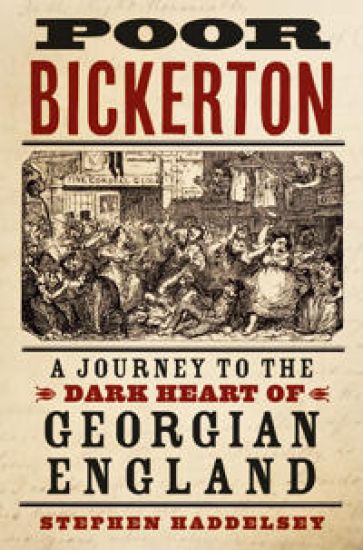
Poor Bickerton

Poor Bickerton

Stephen Haddelsey; Jerry White

THE HISTORY PRESS LTD
2024
sidottu
‘An adroit, intelligent and painstaking social history … Poor Bickerton offers us a luxurious tapestry from which everyone interested in English social history in the late-Georgian period can learn something new and surprising.’ – Professor Jerry White, author of London in the Eighteenth Century: A Great and Monstrous ThingOn 8 October 1833, Coroner Thomas Higgs opened an inquest into the death of John Bickerton, an elderly eccentric who, despite rumours of his wealth and high connections, had died in abject squalor, ‘from the want of the common necessaries of life’. Over the coming hours, Higgs and his jury would unpick the details of Bickerton’s strange, sad story: a story that began with comparative wealth, included education at Oxford and the Inns of Court, and brought him to the attention of two sitting prime ministers, but which descended into madness, imprisonment, mockery and starvation. Using Bickerton’s life as a thread around which to weave his narrative, historian Stephen Haddelsey explores the lives of the down-and-outs and rejects of Georgian and Regency England, including debtors, criminals and the insane. For anyone fascinated by this era of balls and intrigue, of Lord Byron and mad King George, here a world altogether grittier than that to be found in the novels of Jane Austen is revealed in all its lurid detail.
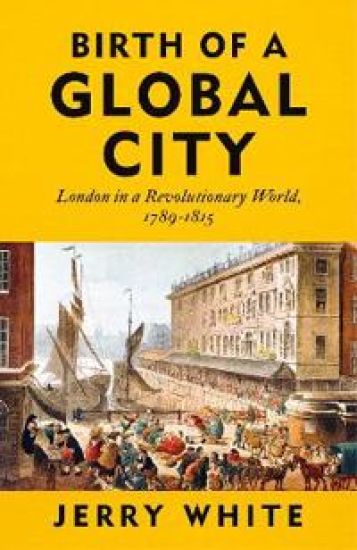
Birth of a Global City

Birth of a Global City

Jerry White

Vintage Publishing
2026
sidottu
How the turmoil of revolution and war created the London we know today – the world’s first truly global city. The French Revolutionary and Napoleonic Wars changed London beyond recognition, turning it into the capital of the world – the focal point of international finance and trade. Victory over France in 1815 ushered in the ‘British Century’: the next hundred years would be defined by Britain’s capitalist innovation and financial might, naval supremacy and imperial ambition. In this brilliant portrait of these pivotal years, Jerry White looks at how revolution and war on the Continent transformed the capital. While the manufacture of war materials brought wealth for some, high food prices led to bread riots. The war divided public opinion, with ultra-patriots clamouring for the defeat of ‘Bony’, while others sought to emulate the democratic reforms pioneered across the Channel. Crucially, the chaos and uncertainty on the Continent led to a mass flight of foreign bankers and merchants to London, which would help turn London into the world’s leading financial centre -- contemporaries called it ‘The Modern Rome’. Yet Birth of a Global City takes in the wider world too. Who was feeding London, in the British Isles and across the empire? How instrumental was Britain’s financial might in victory over France? What impact did the abolition of the slave trade in 1807 have on London, Britain and its empire? And how dangerous were the political ideas coming from the Continent? It was this turbulent period of war and political turmoil that created London as we know it today.
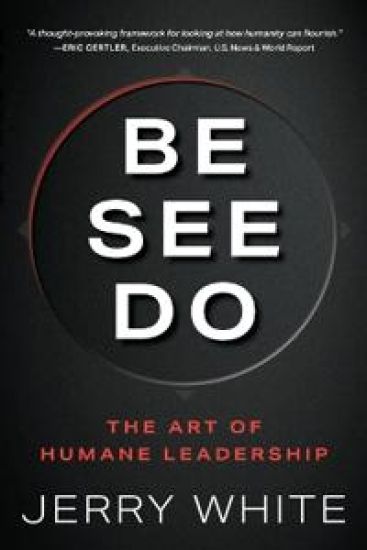
Be See Do

Be See Do

Jerry White

Humane Leadership Academy LLC
2026
Nidottu
Tervetuloa Pohjoismaiden suurimpaan verkkokirjakauppaan! Adlibris kannattaa sananvapautta, ja haluamme edistää kirjallisuuden ja tiedon saatavuutta.
Be See Do

Be See Do

Jerry White

Humane Leadership Academy LLC
2026
Kangassidos
Tervetuloa Pohjoismaiden suurimpaan verkkokirjakauppaan! Adlibris kannattaa sananvapautta, ja haluamme edistää kirjallisuuden ja tiedon saatavuutta.
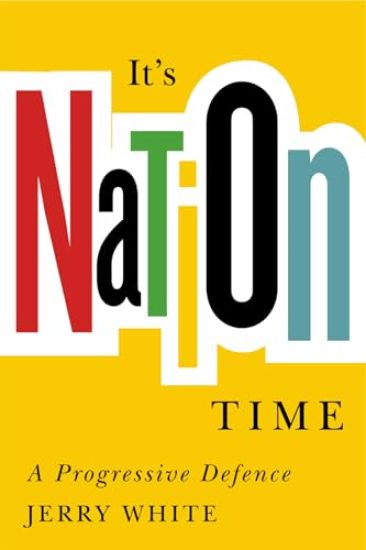
It’s Nation Time

It’s Nation Time

Jerry White

MCGILL-QUEEN'S UNIVERSITY PRESS
2024
sidottu
Speaking at the Congress of African People in September 1970, Amiri Baraka said, “In Newark, when we greet each other on the streets, we say, ‘what time is it?’ We always say, ‘It’s nation time!’ Nationalism is about land and nation, a way of life trying to free itself.” National identity and nationhood are too often easily dismissed as retrograde populism or racist exclusion. Instead, they need to be understood as a key part of a vision of globalization that holds the imperatives of diversity and solidarity in a delicate balance. Jerry White offers a defence of the nation based on the assumption that struggles for national identity have often unfolded in ways that should be familiar to those who defend the political standpoint of the progressive left. Having evolved into something that a wide variety of actors have sought to defend, nations can also serve as a defence against the homogenizing forces of globalization and as havens of diversity in opposition to more singularly minded forms of affiliation. It’s Nation Time is structured as a series of specific case studies that speak to theories of nation and their historical and cultural manifestations. It includes examples as varied as Black nationalism, Simone Weil’s hopes for a postwar France, the first independence period of Georgia, the Bollywood cinema of Nehru-era India, and small or stateless nations such as New Zealand, Quebec, Ireland, Catalonia, the Métis, the Mohawk, and the Inuit to argue that nationalism is a social form that has much potential and life in it. Broadly internationalist but also deeply insightful about the particular cultures and politics of small nations, It’s Nation Time defends an idea of nation, and a form of nationalism that are rooted in the potential for diversity, flexibility, and progressive politics.
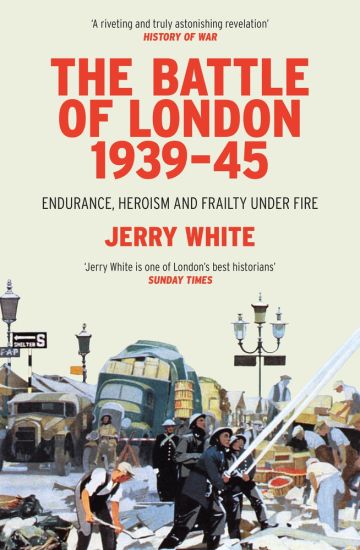
The Battle of London 1939-45

The Battle of London 1939-45

Jerry White

Vintage Publishing
2023
pokkari

Halvin toimitettuna 26,90 €

'Endlessly fascinating. . . White is such a brilliant historian' Mail on SundayLasting for six long years, the Blitz transformed life in the capital beyond recognition, marking a time of almost constant anxiety, disruption, deprivation and sacrifice for Londoners. With the capital the nation's frontline during the Second World War, by its end, 30,000 inhabitants had lost their lives. While much has been written about 'the Myth of the Blitz', its riveting social history has often been overlooked. Unearthing what it was actually like for those living through those tempestuous years, Jerry White paints a fascinating portrait of the daily lives of ordinary Londoners, telling the story through their own voices.'As a history of the capital in wartime, it is probably unsurpassable' Sunday Telegraph'An impressive history of the capital at war. . . White, an accomplished chronicler of London's history, tells it with brio and a confident mastery of the sources' Literary Review
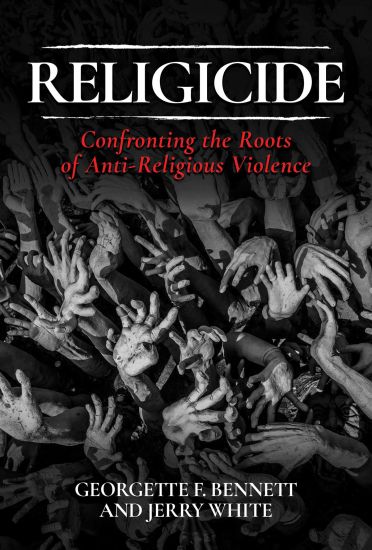
Religicide

Religicide

Georgette F. Bennett; Jerry White

Permuted Press
2023
sidottu
A brave and timely proposal to name, investigate, and ultimately stop a new crime–the mass murder of millions of people for their faith. Religion-related violence is the fastest spreading type of violence worldwide. Attacks on religious minorities follow a clear pattern and are preceded with early warning signs. Until now, such violence had no name, let alone a set of policies designed to identify and prevent it. A unique attempt to create a new moral and legal category alongside other forms of persecution and mass murder, Religicide explores the roots of atrocities such as the Armenian Genocide, the Holocaust, the Bosnian war, and other human rights catastrophes. The authors tap into their decades of activism, interreligious engagement, and people-to-people diplomacy to delve into a gripping examination of contemporary religicides: the Yazidis in Iraq, the Rohingya in Myanmar, Uyghur Muslims and Tibetan Buddhists in China, and the centuries-long efforts to wipe out Indigenous Americans. Yet, even in the face of these horrific atrocities, the authors resist despair. They amplify the voices of survivors and offer a blueprint for action, calling on government, business, civil society, and religious leaders to join in a global campaign to protect religious minorities.
The Radio Eye

The Radio Eye

Jerry White

Wilfrid Laurier University Press
2018
nidottu
The Radio Eye: Cinema in the North Atlantic, 1958-1988, examines the way in which media experiments in Quebec, Newfoundland, the Faroe Islands, and the Irish-Gaelic-speaking communities of Ireland use film, video, and television to advocate for marginalized communities and often for ""smaller languages."" The Radio Eye is not, however, a set of isolated case studies. Author Jerry White illustrates the degree to which these experiments are interconnected, sometimes implicitly but more often quite explicitly. Media makers in the North Atlantic during the period 1958-1988 were very aware of each other's cultures and aspirations, and, by structuring the book in two interlocking parts, White illustrates the degree to which a common project emerged during those three decades. The book is bound together by White's belief that these experiments are following in the idealism of Soviet silent filmmaker Dziga Vertov, who wrote about his notion of ""the Radio Eye."" White also puts these experiments in the context of work by the Cuban filmmaker and theorist Julio García Espinosa and his notion of ""imperfect cinema,"" Jürgen Habermas and his notions of the ""public sphere,"" and Édourard Glissant's ideas about ""créolité"" as the defining aspect of modern culture. This is a genuinely internationalist moment, and these experiments are in conversation with a wide array of thought across a number of languages.
Stan Brakhage in Rolling Stock, 1980-1990

Stan Brakhage in Rolling Stock, 1980-1990

Jerry White

Wilfrid Laurier University Press
2018
sidottu
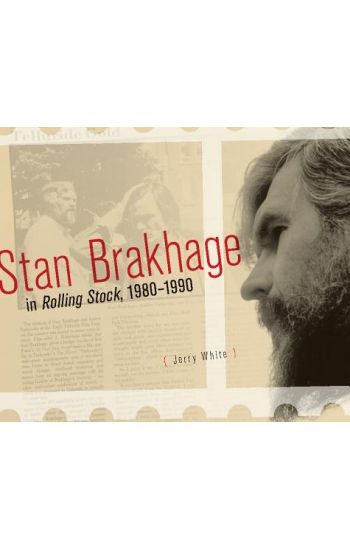
This is a collection of writings by the giant of experimental cinema, Stan Brakhage, that shows him in a completely new light, as part of world cinema. For the duration of the 1980s, Brakhage contributed to the Boulder literary magazine Rolling Stock, mostly publishing reports from the Telluride Film Festival. These reports show that Brakhage was keenly interested in world cinema, anxious to meet and dialogue with filmmakers of many different stripes. The book also contains substantial discussion of Brakhage's work in light of the filmmakers he encountered at Telluride and discussed in Rolling Stock. Long chapters are given over to Soviet filmmakers such as Andrei Tarkovsky, Larissa Shepitko, and Sergei Parajanov, as well as the German filmmaker Hans-Jürgen Syberberg. Brakhage was a keen viewer of these filmmakers and their contemporaries, both at Telluride and in his role as teacher at the University of Colorado, and Stan Brakhage and Rolling Stock attempts to place his work alongside theirs and thus reclaim him for world cinema. The book's appendices reprint letters Brakhage wrote to Stella Pence (Telluride's co-founder and managing director), as well as summaries of his work for Telluride and a brace of difficult-to-find reviews.
Black Women Only

Black Women Only

Jerry White

Createspace Independent Publishing Platform
2018
nidottu
Travis Simmons is a serial killer that loves meth and has a lust for chocolate. His addictions has gotten him caught up in an international human trafficking ring ran by the self proclaimed King of Russia Isben Hussein, who has vowed to blow America off the map.
Mansions of Misery

Mansions of Misery

Jerry White

Vintage
2017
pokkari
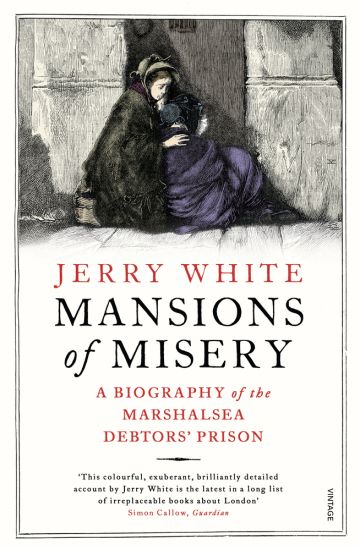
For Londoners of the eighteenth and nineteenth centuries, debt was a part of everyday life. But when your creditors lost their patience, you might be thrown into one of the capital’s most notorious jails: the Marshalsea Debtors’ Prison. In Mansions of Misery, acclaimed chronicler of the capital Jerry White introduces us to the Marshalsea’s unfortunate prisoners – rich and poor; men and women; spongers, fraudsters and innocents. We get to know the trumpeter John Grano who wined and dined with the prison governor and continued to compose music whilst other prisoners were tortured and starved to death. We meet the bare-knuckle fighter known as the Bold Smuggler, who fell on hard times after being beaten by the Chelsea Snob. And then there’s Joshua Reeve Lowe, who saved Queen Victoria from assassination in Hyde Park in 1820, but whose heroism couldn’t save him from the Marshalsea. Told through these extraordinary lives, Mansions of Misery gives us a fascinating and unforgettable cross-section of London life from the early 1700s to the 1840s.
Vivre Avec Sa Conscience (Honesty, Morality, and Conscience): L'
Au palmar s des notions floues et difficiles, la conscience figure sans doute en bonne place. Elle est source de bien des erreurs, de la culpabilisation abusive la licence sans bornes. Bien r elle et pourtant impalpable, elle est changeante selon les moments et les individus. Pourtant, elle est mentionn e dans la Bible comme l'un des moyens par lequel Dieu nous parle et peut nous guider si nous la d veloppons de la bonne mani re. Il ne s'agit pas d'un livre de morale, ni d'une approche th ologique du sujet. Bas sur l'enseignement des critures et sur l'exp rience v cue de l'auteur, cet ouvrage aborde de fa on aussi pragmatique que possible des sujets comme: - l'honn tet et l' thique au travail; - le probl me de la pression du groupe; - l'honn tet au foyer; - l'honn tet avec soi-m me; - la moralit sexuelle; - d velopper ses convictions sur une base biblique.
Streets of Sin

Streets of Sin

Fiona Rule; Jerry White

The History Press Ltd
2015
sidottu
Notting Hill was not always an upmarket residential enclave and celebrity hotspot. Streets of Sin delves into the district’s murky past and relates the deplorable scandals and shocking crimes that blighted the area from its development until the late twentieth century. Best-selling London historian Fiona Rule sheds new light on notorious events that took place amid the leafy streets, including the horrifying murders at Rillington Place, the nefarious career of slum landlord Peter Rachman, the Profumo affair and Britain’s first race riots. She reveals what life was like in ‘Rotting Hill’ during its dark years when murder, extortion and disorder were everyday occurrences, and explores the price its residents have had to pay to climb up out of the ghetto.
Zeppelin Nights

Zeppelin Nights

Jerry White

Vintage
2015
pokkari
‘Zeppelin Nights is social history at its best… White creates a vivid picture of a city changed forever by war’ The Times2018 marks the centenary of the end of the First World War. In those four decisive years, London was irrevocably changed. Soldiers passed through the capital on their way to the front and wounded men were brought back to be treated in London’s hospitals. At night, London plunged into darkness for fear of Zeppelins that raided the city. Meanwhile, women escaped the drudgery of domestic service to work as munitionettes. Full employment put money into the pockets of the poor for the first time. Self-appointed moral guardians seize the chance to clamp down on drink, frivolous entertainment and licentious behaviour. Even against a war-torn landscape, Londoners were determined to get on with their lives, firmly resolved not to let Germans or puritans spoil their enjoyment. Peopled with patriots and pacifists, clergymen and thieves, bluestockings and prostitutes, Jerry White’s magnificent panorama reveals a battle-scarred yet dynamic, flourishing city.‘Jerry White's name on a title page is a guarantee of a lively, compassionate book full of striking incidents and memorable images… This is a fast-paced social history that never stumbles… A well-orchestrated polyphony of voices that brings history alive’ Guardian
Two Bicycles

Two Bicycles

Jerry White

Wilfrid Laurier University Press
2013
nidottu
Jean-Luc Godard and Anne-Marie Miéville are among the most important postwar filmmakers; they have worked across forms, across media, and across countries. This book, the first to be devoted specifically to the work they did together, examines the way they expanded the possibilities of cinema by using cutting-edge video equipment in a constant search for a new kind of filmmaking. Two Bicycles examines all of the films, videos, and television works that the two did together, and moves slowly across France and Switzerland, with detours in Quebec, Mozambique, and Palestine. Their amazingly varied body of work includes a twelve-hour television series, some experimental videos, an acclaimed feature film with Isabelle Huppert, a cigarette commercial, and much else. Overall the book shows the degree to which this work departs radically from the legacy of the French New Wave, and in many ways shows signs of having been formed by the distinct culture of Switzerland, to which Godard and Miéville returned in the 1970s to set up their ""atelier,"" Sonimage. Two Bicycles offers a chance to explore a body of work that is as unique and demanding as it is rich and revelatory. Godard and Miéville have worked together for four decades but have never seemed more relevant.