Kirjailija
Jieun Kiaer
Kirjat ja teokset yhdessä paikassa: 64 kirjaa, julkaisuja vuosilta 2012–2026, suosituimpiin kuuluu Missionary Translators. Vertaile teosten hintoja ja tarkista saatavuus suomalaisista kirjakaupoista.
64 kirjaa
Kirjojen julkaisuvuodet: 2012–2026.
Korean Literature Through the Korean Wave engages with the rising interest in both the Korean Wave and Korean language learning by incorporating Korean Wave cultural content, especially K-dramas, films and songs, to underline and support the teaching of Korean literature. It combines both premodern and modern texts, including poetry, novels, philosophical treatises, and even comics, to showcase the diversity of Korean literature. Particular care has been taken to include the voices of those marginalised in the often male, elite-dominated discourse on Korean literature. In particular, this book also distinguishes itself by extending the usual breadth of what is considered modern Korean literature up until the present day, including texts published as recently as 2017. Many of these texts are very relevant for recent discourse in Korean affairs, such as the obsession with physical appearance, the #MeToo movement and multiculturalism. This textbook is aimed at B1-B2 level and Intermediate-Mid students of Korean. On the one hand the textbook introduces students to seeing beyond Korean literature as a monolithic entity, giving a taste of its wonderful richness and diversity. On the other hand, it provides an entry point into discussions on Korean contemporary society, in which the text (and associated media extracts) provides the catalyst for more in-depth analysis and debate.
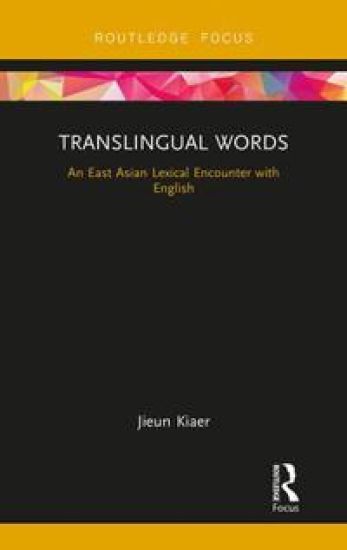
Translingual Words is a detailed case study on lexical integration, or mediation, occurring between East Asian languages and English(es). In Part I, specific examples from global linguistic corpora are used to discuss the issues involved in lexical interaction between East Asia and the English-speaking world. Part II explores the spread of East Asian words in English, while Part III discusses English words which can be found in East Asian languages. Translingual Words presents a novel approach on hybrid words by challenging the orthodox ideas on lexical borrowing and explaining the dynamic growth of new words based on translingualism and transculturalism.
This introduction to the sounds of Korean is designed for English-speaking students with no prior knowledge of the language and includes online sound files, which demonstrate the sounds and pronunciation described. It will be an invaluable resource for students of Korean wanting to understand the basis of the current state of Korean phonetics and phonology, as well as for those studying Korean linguistics. • Provides a complete and authoritative description and explanation of the current state of Korean phonetics and phonology • Gives clear comparisons with English and provides practical advice on pronunciation • Provides a wealth of authentic Korean examples • Each chapter contains exercises and Did you know? sections to help students put their knowledge into practice.
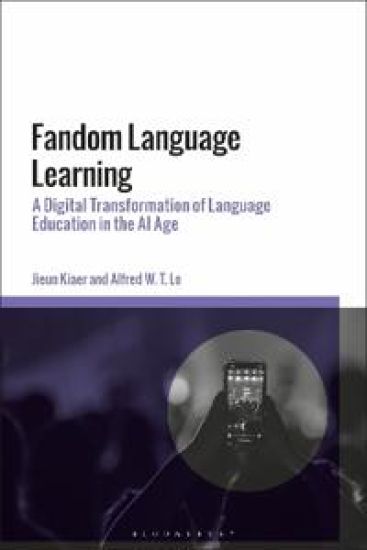
Standing at the intersection of fan culture, digital technology, and language learning, this book advocates for a transformative shift in language education in the AI age. Introducing the concept of fandom language learning, it illustrates how enthusiasm for specific interests motivates fans to learn languages, resulting in immersive and personalised learning experiences. Tracing the evolution of digital platforms shows how this has become possible thanks to their pivotal role in transforming language learning from a solitary, traditional endeavour into a vibrant, community-driven practice. The authors examine the psychological underpinnings of fandom language learning and how emotional engagement and cultural immersion can help to foster motivation. They also weigh the impact of social media and AI on language learning, emphasising the potential for these technologies to smooth the way for more interactive, engaging, and effective language education. Through a translanguaging approach, they also give new perspectives on the ways in which digital platforms enable learners to transcend linguistic boundaries and how fandom learners can harness creative expression and multilingual engagement. Building on these ideas, Fandom Language Learning also sets out practical guidance for educators on how to use fandom culture to motivate foreign language learning and increase students’ Foreign Language Enjoyment (FLE), envisioning a future where language education is not only more aligned with learners’ passions but also more responsive to the demands of a digital, multilingual world.
Multimodal Communication in Young Multilingual Children
Jieun Kiaer
CHANNEL VIEW PUBLICATIONS LTD
2026
nidottu
This book explores young children's language acquisition in multilingual households through an original longitudinal study of the author's own children and interviews with members of other Korean-English families. The study investigates how multilingual children not only acquire multiple languages (verbal communication) but also acquire multiple strategies of non-verbal communication. In the process, it is also revealed that parents learn from children, collaboratively shaping the language of their family together in a manner that is between and beyond languages and cultures. The book explores the different types and frequency of non-verbal behaviours acquired by multilingual children and reveals how multilingual families use a range of multimodal resources to communicate effectively in a way that creates solidarity. The results of this longitudinal study are discussed within the paradigm of translanguaging and provide insight into an underrepresented multilingual population. With accompanying online videos, this book offers rich multimodal family interaction data for students and researchers interested in multilingualism, family language practices, and first and second language acquisition.
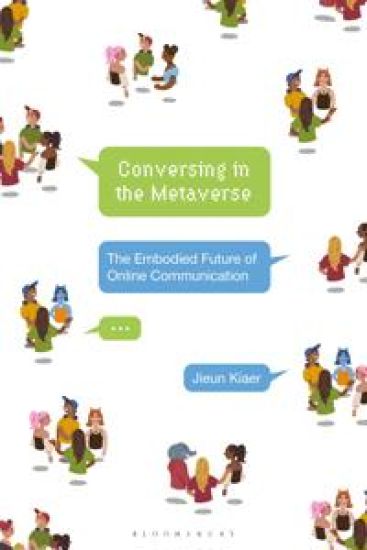
How do metaverse technologies change how we communicate with each other? This book explores how existing metaverse technologies affect our communication, both verbal and non-verbal, as well as the ramifications of these effects. Communication is central to the human experience, and how we currently communicate (and will communicate) can affect our sense of identity and relationships with others, which can have huge long term societal repercussions. Utilising methods of digital ethnography and linguistic landscape, this book takes an in-depth look at what exactly the metaverse is—or will be—and tracks the technological and societal trends that surround it. To do so, it questions what differentiates the metaverse from earlier connected virtual worlds like World of Warcraft or Second Life, and features extracts from interviews with the users and developers of current metaverses, such as Roblox, Minecraft, and Gather.town. It also investigates the impact of the pandemic in changing and accelerating how we communicate in virtual spaces.
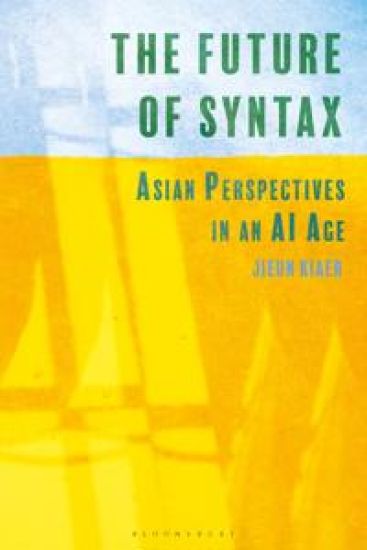
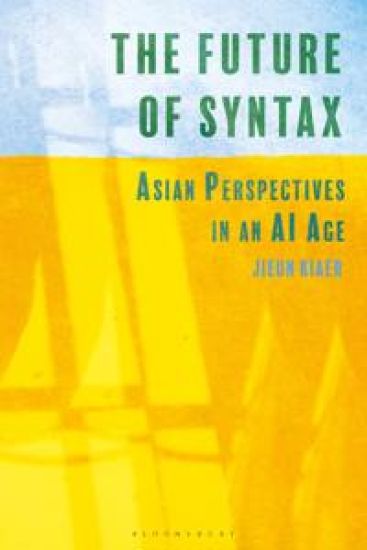
Proposing a new approach to the study of language, this book argues for the need to consider syntax in context and to engage with a wider variety of perspectives that better reflect the modern world and the changes to our language prompted by increased cultural diversity, the prevalence of social media, AI, and more. Referencing big data and drawing on a corpus of linguistic research, the book explores in particular the socio-pragmatic sensitivity and complexity within East Asian languages including Chinese, Japanese, and Korean, offering new insights that step away from traditional approaches to formal syntax. In tracing the history of syntactic theory, it highlights the shifts in our communication as we adapt to technological developments, and focuses in particular on the significant advances in AI. Arguing that traditional syntactic theory is no longer in keeping with real life communication, Jieun Kiaer scrutinises current approaches and raises key questions about the need for a more appropriate grammar better suited to the diversity of human language.
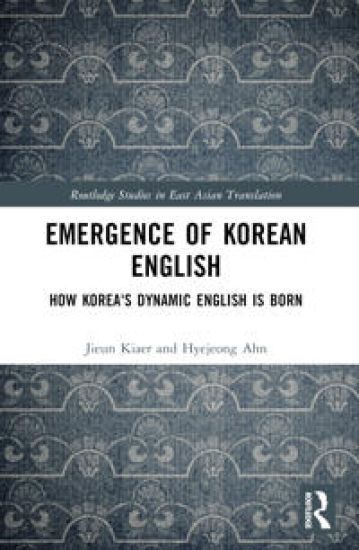
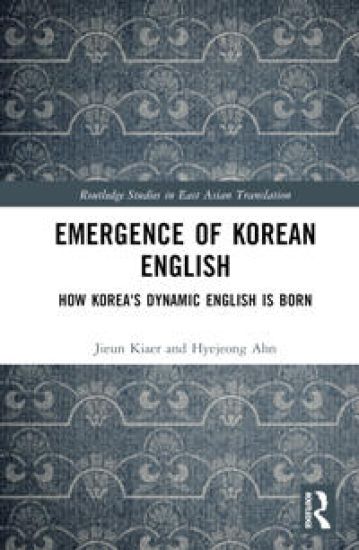
Emergence of Korean English explores the dynamic nature of emerging Korean English and its impact on Korean society, culture, and identity. This book challenges the negative stereotypes and stigmatization of Konglish and argues that it has been a great asset for Korea’s fast economic development. The fate of Korean English has been transformed in the time of the Korean wave as the K-fandom actively engages with Korean English. The book offers a comprehensive overview of Korea’s encounter with the English language and provides an in-depth analysis of linguistic characteristics, pragmatic features, and cross-cultural and cross-linguistic aspects of Korean English. The authors examine the unique linguistic features of Korean English, including phonological, syntactic, and lexical features, and highlight the sociocultural implications of these features for Korean society. In addition, the book discusses the role of Hallyu fandom languages in the emergence of Korean English and the growth of Korean pop culture worldwide. It also provides insights into the English fever in South Korea and its impact on education, society, and culture. This book is a valuable resource for scholars, students, and professionals who are interested in the emergence of Korean English and its social, cultural, and linguistic implications for Korea and the global community.
Standing at the intersection of fan culture, digital technology, and language learning, this book advocates for a transformative shift in language education in the AI age. Introducing the concept of fandom language learning, it illustrates how enthusiasm for specific interests motivates fans to learn languages, resulting in immersive and personalised learning experiences. Tracing the evolution of digital platforms shows how this has become possible thanks to their pivotal role in transforming language learning from a solitary, traditional endeavour into a vibrant, community-driven practice. The authors examine the psychological underpinnings of fandom language learning and how emotional engagement and cultural immersion can help to foster motivation. They also weigh the impact of social media and AI on language learning, emphasising the potential for these technologies to smooth the way for more interactive, engaging, and effective language education. Through a translanguaging approach, they also give new perspectives on the ways in which digital platforms enable learners to transcend linguistic boundaries and how fandom learners can harness creative expression and multilingual engagement. Building on these ideas, Fandom Language Learning also sets out practical guidance for educators on how to use fandom culture to motivate foreign language learning and increase students’ Foreign Language Enjoyment (FLE), envisioning a future where language education is not only more aligned with learners’ passions but also more responsive to the demands of a digital, multilingual world.
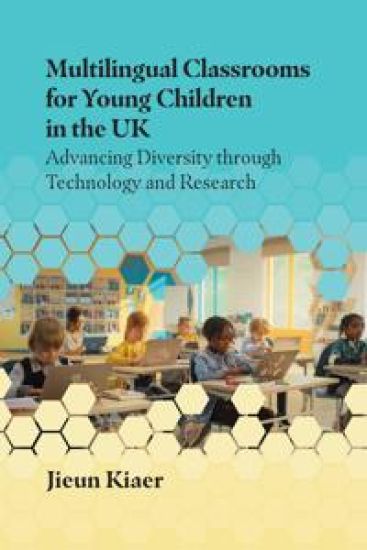
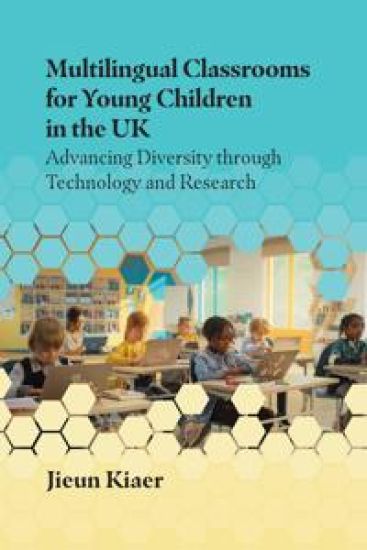
This book demonstrates the importance of raising multilingual children in the UK, both for the children’s own benefit and for the benefit of society as a whole. Against the backdrop of both the rich linguistic diversity already present in the UK and the challenges faced by any languages other than a few major European languages to find any space in educational contexts, the author challenges the myth that multilingualism hinders English language acquisition and use, instead emphasising the cultural and cognitive advantages of multilingual education and support for home and community languages. The book is a call to action for educators, policymakers and parents, combining practical strategies with research-based insights to support its readers in advocating for multilingual education. It presents a hopeful vision for education in the UK, where teachers can combine technological innovations and the linguistic resources of their classrooms and communities to support and promote multilingualism.
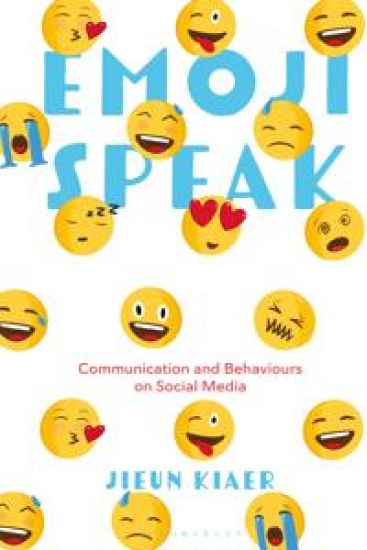
Providing an in-depth discussion of emoji use in a global context, this volume presents the use of emoji as a hugely important facet of computer-mediated communication, leading author Jieun Kiaer to coin the term ‘emoji speak’. Exploring why and how emojis are born, and the different ways in which people use them, this book highlights the diversity of emoji speak. Presenting the results of empirical investigations with participants of British, Belgian, Chinese, French, Japanese, Jordanian, Korean, Singaporean, and Spanish backgrounds, it raises important questions around the complexity of emoji use. Though emojis have become ubiquitous, their interpretation can be more challenging. What is humorous in one region, for example, might be considered inappropriate or insulting in another. Whilst emoji use can speed up our communication, we might also question whether they convey our emotions sufficiently. Moreover, far from belonging to the youth, people of all ages now use emoji speak, prompting Kiaer to consider the future of our communication in an increasingly digital world.
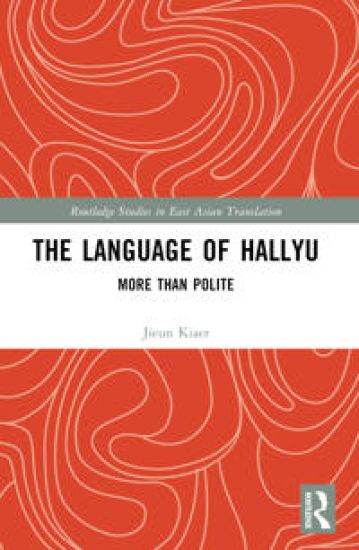
The Language of Hallyu will re-examine the language of the Korean Wave by looking at popular K-content. In doing so, it will expose the meanings that get lost in translation, hidden under subtitles. Over the past decade, hallyu (the Korean wave) has exploded in popularity around the globe. K-films, K-drama, and K-pop were once small subcultures, known mostly by Korea’s East and Southeast Asian neighbours and Korean diaspora. Now, K-content has entered the international mainstream. Consequently, interest in Korean language has grown, while interest in language learning in general has decreased. Many textbooks emphasise that Korean is a ‘polite’ language, but this book will highlight that this is not the case. The Language of Hallyu examines popular K-content, including Parasite (2019), Minari (2020), Squid Game (2021), and Pachinko (2022). The author introduces language stylistics to explain how Koreans style their language to suit every occasion. She argues that they do this via a process of visual scanning and social tuning, whereby visual clues are assessed in tangent with an individual’s sociocultural awareness. The author concludes by highlighting the danger of the jondaemal/banmal (polite/casual speech) divide, demonstrating that Korean language is so much more than polite. This book will be of interest to students and researchers in Korean language and culture, particularly those interested in linguistics and pragmatics.
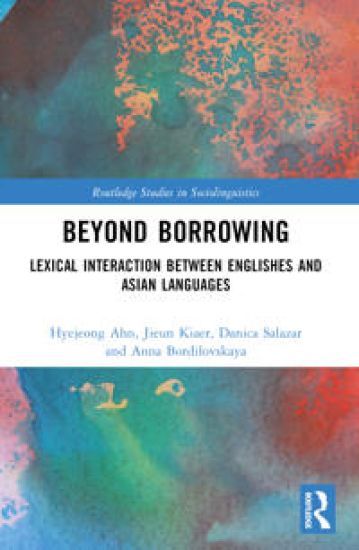
Beyond Borrowing
Hyejeong Ahn; Jieun Kiaer; Danica Salazar; Anna Bordilovskaya
TAYLOR FRANCIS LTD
2024
nidottu
In their book, the authors describe the usage of and attitudes towards English in Asia since the 19th century, as well as the creative and dynamic ways in which Asians of the 21st century continually reinvent the lexicon of English, and the lexicons of their native tongues. The current biggest source of loanwords for many of the world’s languages is English, the once obscure Germanic language that has risen to the role of a global lingua franca. However, the overwhelming influence of English is far from being entirely one-sided, at least from a lexical perspective. Many have decried the way that English has "invaded" the vocabularies of their languages, without realizing that the English word stock is to some extent also being invaded by these languages. This book explores the phenomenon of word exchange by examining its occurrence between English and some of the major languages spoken in Asia-highly multi-ethnic, multicultural, and multilingual region where English is the predominant medium of international and intraregional communication. Students and researchers from various linguistic areas such as World Englishes, applied linguistics, sociolinguistics, lexicology, and contact linguistics will find this book appealing.
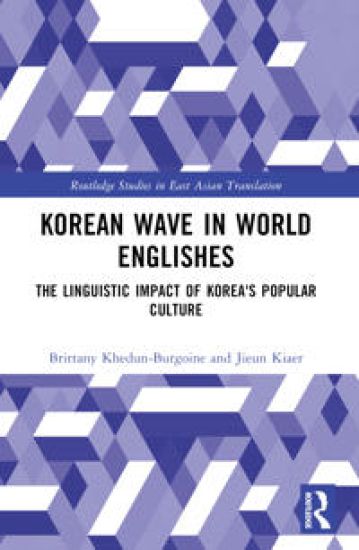
Korean Wave in World Englishes
Brittany Khedun-Burgoine; Jieun Kiaer
TAYLOR FRANCIS LTD
2024
nidottu
This book examines the linguistic impact of the Korean Wave on World Englishes, demonstrating that the K-Wave is not only a phenomenon of popular culture, but also language. The "Korean Wave" is a neologism that was coined during the 1990s that includes K-pop, K-dramas, K-film, K-food, and K-beauty, and in recent years it has peaked in global popularity. This book intends to show how social media phenomena have facilitated the growth of Korea’s cultural influence globally and enabled a number of Korean origin words to settle in varieties of Englishes. This in turn has globalised Korean origin words and revolutionised the English language through an active and collaborative process of lexical migration. Korean origin words such as oppa (older brother) are no longer bound solely to Korean-speaking contexts. The study focuses primarily on media content, particularly social media, corroborated by case studies to examine how linguistic innovation has been engendered by the Korean Wave. Suitable for students and researchers of Korean linguistics, Korean culture, Korean popular culture, and translation studies, this book is the first detailed study of the global linguistic impact of the Korean Wave.
How do metaverse technologies change how we communicate with each other? This book explores how existing metaverse technologies affect our communication, both verbal and non-verbal, as well as the ramifications of these effects. Communication is central to the human experience, and how we currently communicate (and will communicate) can affect our sense of identity and relationships with others, which can have huge long term societal repercussions. Utilising methods of digital ethnography and linguistic landscape, this book takes an in-depth look at what exactly the metaverse is—or will be—and tracks the technological and societal trends that surround it. To do so, it questions what differentiates the metaverse from earlier connected virtual worlds like World of Warcraft or Second Life, and features extracts from interviews with the users and developers of current metaverses, such as Roblox, Minecraft, and Gather.town. It also investigates the impact of the pandemic in changing and accelerating how we communicate in virtual spaces.
Proposing a new approach to the study of language, this book argues for the need to consider syntax in context and to engage with a wider variety of perspectives that better reflect the modern world and the changes to our language prompted by increased cultural diversity, the prevalence of social media, AI, and more. Referencing big data and drawing on a corpus of linguistic research, the book explores in particular the socio-pragmatic sensitivity and complexity within East Asian languages including Chinese, Japanese, and Korean, offering new insights that step away from traditional approaches to formal syntax. In tracing the history of syntactic theory, it highlights the shifts in our communication as we adapt to technological developments, and focuses in particular on the significant advances in AI. Arguing that traditional syntactic theory is no longer in keeping with real life communication, Jieun Kiaer scrutinises current approaches and raises key questions about the need for a more appropriate grammar better suited to the diversity of human language.
Emergence of Korean English explores the dynamic nature of emerging Korean English and its impact on Korean society, culture, and identity. This book challenges the negative stereotypes and stigmatization of Konglish and argues that it has been a great asset for Korea’s fast economic development. The fate of Korean English has been transformed in the time of the Korean wave as the K-fandom actively engages with Korean English. The book offers a comprehensive overview of Korea’s encounter with the English language and provides an in-depth analysis of linguistic characteristics, pragmatic features, and cross-cultural and cross-linguistic aspects of Korean English. The authors examine the unique linguistic features of Korean English, including phonological, syntactic, and lexical features, and highlight the sociocultural implications of these features for Korean society. In addition, the book discusses the role of Hallyu fandom languages in the emergence of Korean English and the growth of Korean pop culture worldwide. It also provides insights into the English fever in South Korea and its impact on education, society, and culture. This book is a valuable resource for scholars, students, and professionals who are interested in the emergence of Korean English and its social, cultural, and linguistic implications for Korea and the global community.