Kirjojen hintavertailu – 12 859 824 kirjaa ja 27 kauppaa

Kirjailija

Jim Cox

Kirjat ja teokset yhdessä paikassa: 25 kirjaa, julkaisuja vuosilta 1996–2016, suosituimpiin kuuluu Electric Motors in the Home Workshop. Vertaile teosten hintoja ja tarkista saatavuus suomalaisista kirjakaupoista.

25 kirjaa

Kirjojen julkaisuvuodet: 1996–2016.

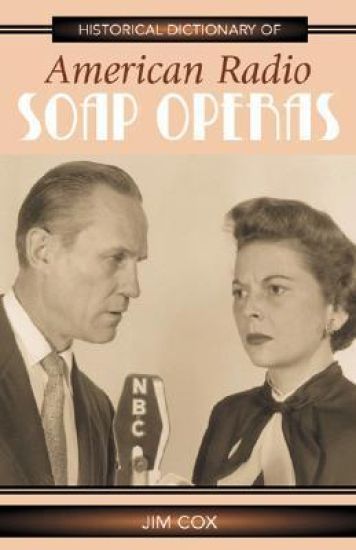
Historical Dictionary of American Radio Soap Operas
The period from 1925 to 1960 was the heyday of the American Radio Soap Opera. In addition to being part of popular culture, the soap opera had important commercial aspects as well that were not only related to their production, but also to the desperate need to sell products or perish. Both sides of this story are traced in this comprehensive compendium. The dictionary section, made up of more than 500 cross-referenced entries, provides brief vignettes of the more popular and also less well-known "soaps," among them Back Stage Wife, Our Gal Sunday, Pepper Young's Family and The Guiding Light. Other entries evoke those who brought these programs to life: the actors, announcers, scriptwriters, networks, and even the sponsors. Nor are the basic themes, the stock characters and the gimmick, forgotten. The book's introduction defines the soap opera, examines the span of the radio serial, reviews its origins and its demise, and focuses on the character types that made up its denizens. The chronology outlines the period and the bibliography offers further reading. Together, these elements make a comprehensive reference work that researchers will find invaluable long into the future.

Understanding Doctors' Performance

Understanding Doctors' Performance

Jim Cox; Jenny King; Allen Hutchinson; Pauline McAvoy

Radcliffe Publishing Ltd
2005
nidottu
Understanding Doctors’ Performance addresses possible reasons why doctors under-perform, covering specific areas such as education and training, physical and mental health, workload, personality, organisational culture, drug and alcohol misuse, and cognitive impairment. It draws together evidence and describes the factors (apart from clinical competence) that adversely affect performance and how they can be prevented, identified, assessed and addressed. This practical and easy to read book is invaluable for NHS managers, medical directors, chief executives and board members, along with directors of human resources in healthcare and healthcare professionals interested in the assessment of performance or the management of underperformance.
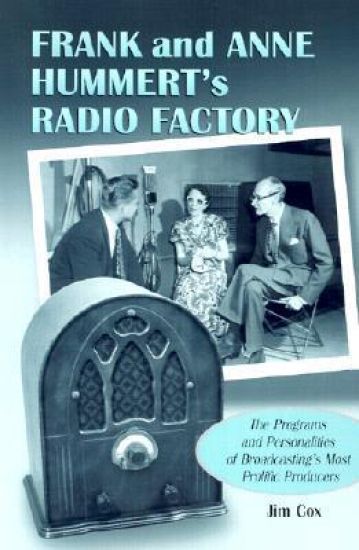
Frank and Anne Hummert's Radio Factory
Frank and Anne Hummert brought at least 125 separate series to the airwaves. The production dynasty over which they presided extended far beyond the serialized melodrama that became their trademark. Their genres also included music, mystery, juvenile adventure, quiz, sports, news, comedy and dramatic theater. The Hummerts tried to appeal to everyone's tastes and probably influenced more old time radio listeners than anyone else. By the 1940s the twosome controlled four and a half hours of the national weekday broadcast schedule. This book explores the private lives and professional dealings of broadcasting's most prolific creator-producers. There are five appendices: a list of all broadcast series that were created, adapted, supervised, augmented or influenced by the Hummerts; a list of the most active players among radio producers stemming from the Golden Age and their best-remembered titles; a collection of statements attributed to Frank or Anne that express their philosophy of broadcast programming; a chronology of defining moments in the Hummerts' lives; and three sample programming schedules that give the reader a clear understanding of the Hummerts' involvement in radio producing.
Say Goodnight, Gracie

Say Goodnight, Gracie

Jim Cox

McFarland Co Inc
2002
pokkari
Until the late 1940s, most Americans relied heavily upon radio, the only means of mass communication they knew, for information and entertainment. But with the 1950s came television sets and prosperity enabled more people to afford them. Radio began a decline. This work examines what could be called the final decade of AM network radio and the many factors that contributed to its decline. The first chapter is an overview of AM radio in the 1950s. The second chapter covers 1950 through 1953, when radio was still a popular medium but faced a need to make changes in its programming. Bill Paley and David Sarnoff strongly promoted radio in those years and the networks attempted to increase the ratings of their programs. Chapter three covers 1954 through 1956, three years in which radio experienced losses of its primary audience and some of its most popular shows (because of the pullout of advertisers), and an effort was made by the networks to keep their programs going and to convince audiences the medium was not on its way out. Chapter four, 1957 through 1960, chronicles the "end" of AM radio in homes, the cancellation of almost all remaining programs, network affiliates' going independent, and the rise in popularity of "drive time" radio. Chapter five covers 1961 to the present and summarizes the major changes that have taken place.