Kirjojen hintavertailu – 12 903 725 kirjaa ja 27 kauppaa

Kirjailija

Jim Tomlinson

Kirjat ja teokset yhdessä paikassa: 24 kirjaa, julkaisuja vuosilta 1993–2026, suosituimpiin kuuluu The Triumph of Textiles. Vertaile teosten hintoja ja tarkista saatavuus suomalaisista kirjakaupoista.

24 kirjaa

Kirjojen julkaisuvuodet: 1993–2026.

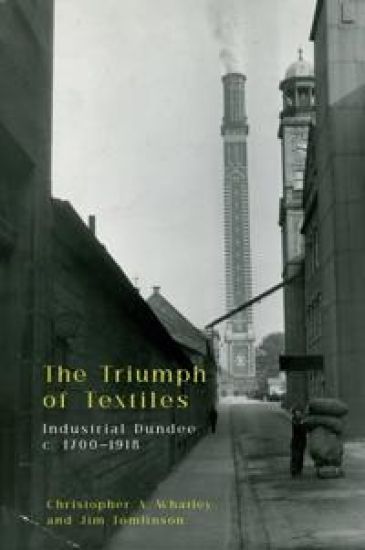
The Triumph of Textiles

The Triumph of Textiles

Christopher A Whatley; Jim Tomlinson

EDINBURGH UNIVERSITY PRESS
2025
nidottu
A fresh account of the remarkable rise of Dundee as a global industrial city and the origins of its later demise. The background to jute, the product most closely associated with Dundee, is investigated in unprecedented depth. The role of flax and linen as foundations for the jute industry is emphasised. The book challenges many perceptions of Dundee. Linen was as important to Dundee before c.1850 as jute was afterwards; the significance of jute pre-1850 has often been exaggerated by historians. Traditionally Dundee's success was attributed to the production of cheap coarse cloth for sacks, bagging etc. Yet many firms manufactured high quality, admiralty grade canvas, and colourful rugs and carpets in imitation of Brussels and other woollen floor coverings. Design was important. So too were enterprising merchants and manufacturers from the early eighteenth century onwards. Although squalor and industrial and social conflict became the norm after the 1870s, prior to that Dundee was relatively buoyant economically, and greatly admired by visitors including those from as far afield as the US. In short, Dundee was one of Scotland's industrial powerhouses a fact too often overlooked.
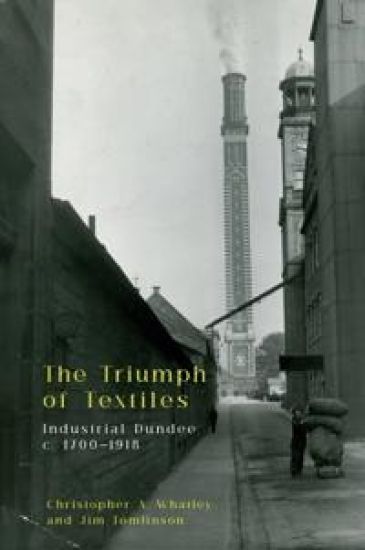
The Triumph of Textiles

The Triumph of Textiles

Christopher A Whatley; Jim Tomlinson

EDINBURGH UNIVERSITY PRESS
2024
sidottu
A fresh account of the remarkable rise of Dundee as a global industrial city and the origins of its later demise. The background to jute, the product most closely associated with Dundee, is investigated in unprecedented depth. The role of flax and linen as foundations for the jute industry is emphasised. The book challenges many perceptions of Dundee. Linen was as important to Dundee before c.1850 as jute was afterwards; the significance of jute pre-1850 has often been exaggerated by historians. Traditionally Dundee's success was attributed to the production of cheap coarse cloth for sacks, bagging etc. Yet many firms manufactured high quality, admiralty grade canvas, and colourful rugs and carpets in imitation of Brussels and other woollen floor coverings. Design was important. So too were enterprising merchants and manufacturers from the early eighteenth century onwards. Although squalor and industrial and social conflict became the norm after the 1870s, prior to that Dundee was relatively buoyant economically, and greatly admired by visitors including those from as far afield as the US. In short, Dundee was one of Scotland's industrial powerhouses a fact too often overlooked.
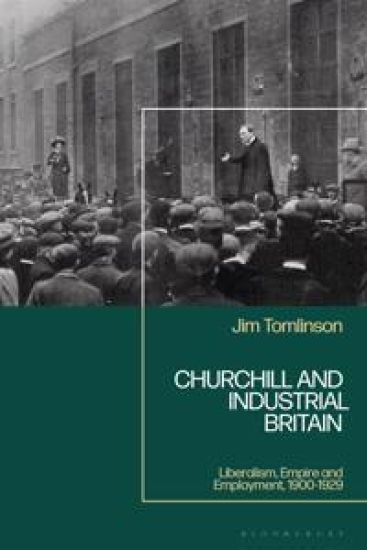
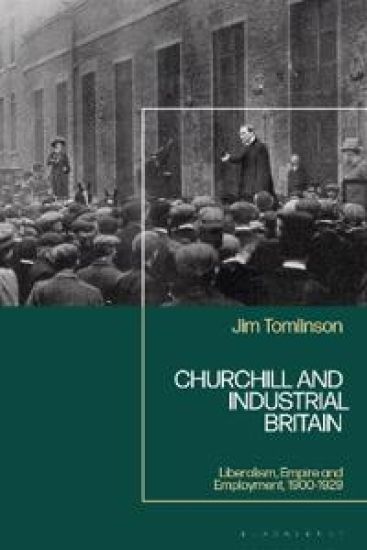
Churchill and Industrial Britain

Churchill and Industrial Britain

Jim Tomlinson

BLOOMSBURY PUBLISHING PLC
2026
nidottu
This book offers a new understanding of the main economic and political trends of 20th-century Britain, through the lens of Churchill’s early career and approach to industrialisation. Shedding fresh light on Churchill’s political endeavours between 1900 and 1922, this study analyses his work within his political constituencies, and highlights how he attempted to balance their local concerns with his larger imperial agenda. Tomlinson guides readers through Britain’s industrial challenges at the start of the twentieth century - with a particular focus on the textile economies of Churchill’s constituencies in Lancashire and Scotland - and shows how industrial competition within the Empire exemplified the tensions between domestic economic policy and attempts at globalization, and influenced Churchill’s later politics. Tomlinson acknowledges the role of the First World War in boosting the industrial output and bargaining power of countries within the Empire, and analyses these alongside key moments in Churchill’s early career, such as his defeat at Dundee, and time at the Exchequer. In doing so, the author highlights the context in which Churchill’s ideas on the politics and economics of Empire were first formed, particularly in relation to the impact of imperial economic policy on British domestic prosperity. Ultimately, this book delivers a new assessment of twentieth-century British economic history, in the light of Britain’s relationship to the Empire and the 'first great globalization'.
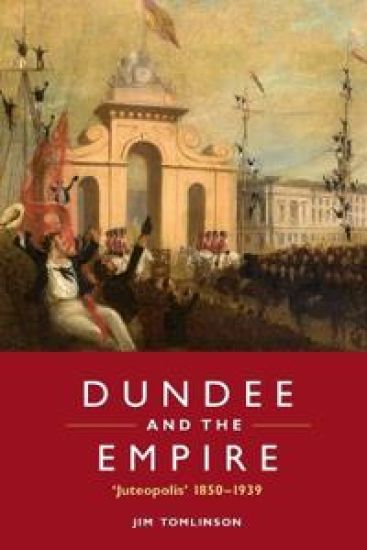
Dundee and the Empire

Dundee and the Empire

Jim Tomlinson

EDINBURGH UNIVERSITY PRESS
2026
nidottu
In the half century before the First World War Britain simultaneously expanded its empire and globalized its economy. This book uses the case of Dundee to analyse the impact of these issues of empire and globalization, covering the ‘expansionary’ period before 1914 and the much more difficult era from the First to the Second War. Dundee is especially well-suited for this purpose given both the strength of its imperial connections (especially with India) and the intensity of its globalization. How did the people of Dundee respond to the challenges of being arguably the most economically globalized city in the world? The answer is complicated by the fact that the aspect of globalization which impacted most directly on the ordinary inhabitants of the city was competition in the jute industry from Calcutta—a city within the British Empire. So Dundee had to cope not only with powerful low-wage competition in jute, its staple industry, but the political reality that for decision-makers in London the fate of the British Empire in India was far more important than the economic well-being of a small Scottish city. This history of Dundee’s responses to these challenges combines global economic history with analysis of imperial relations, and examines how these issues were understood by ordinary Dundonians as well as politicians and policy-makers.
Churchill and Industrial Britain

Churchill and Industrial Britain

Jim Tomlinson

BLOOMSBURY PUBLISHING PLC
2024
sidottu
This book offers a new understanding of the main economic and political trends of 20th-century Britain, through the lens of Churchill’s early career and approach to industrialisation. Shedding fresh light on Churchill’s political endeavours between 1900 and 1922, this study analyses his work within his political constituencies, and highlights how he attempted to balance their local concerns with his larger imperial agenda. Tomlinson guides readers through Britain’s industrial challenges at the start of the twentieth century - with a particular focus on the textile economies of Churchill’s constituencies in Lancashire and Scotland - and shows how industrial competition within the Empire exemplified the tensions between domestic economic policy and attempts at globalization, and influenced Churchill’s later politics. Tomlinson acknowledges the role of the First World War in boosting the industrial output and bargaining power of countries within the Empire, and analyses these alongside key moments in Churchill’s early career, such as his defeat at Dundee, and time at the Exchequer. In doing so, the author highlights the context in which Churchill’s ideas on the politics and economics of Empire were first formed, particularly in relation to the impact of imperial economic policy on British domestic prosperity. Ultimately, this book delivers a new assessment of twentieth-century British economic history, in the light of Britain’s relationship to the Empire and the 'first great globalization'.
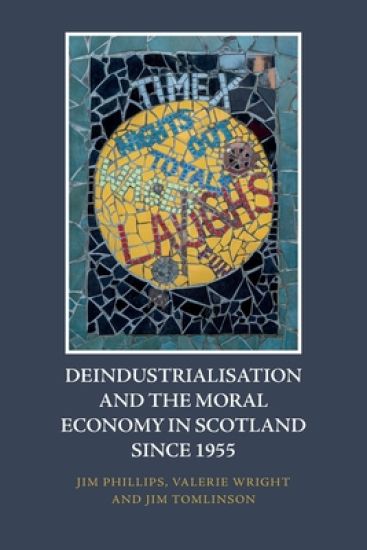
Deindustrialisation and the Moral Economy in Scotland Since 1955

Deindustrialisation and the Moral Economy in Scotland Since 1955

Jim Phillips; Valerie Wright; Jim Tomlinson

EDINBURGH UNIVERSITY PRESS
2023
nidottu
Exploring the social, cultural and political implications of deindustrialisation in twentieth-century Scotland Examines deindustrialisation as long-running, phased and politicised process Draws on documentary source material from a range of industrial sectors, as well as transcripts from over 20 exclusive interviews with industry professionals Relates Scottish Home Rule to long-running debates about economic security and working class welfare Analyses longer history of deindustrialisation, with emergence of assembly goods manufacturing alongside shrinkage of established sectors such as shipbuilding Deindustrialisation is the central feature of Scotland's economic, social and political history since the 1950s, when employment levels peaked in the established sectors of coal, shipbuilding, metals and textiles, along with the railways and docks. This book moves analysis beyond outmoded tropes of economic decline and industrial catastrophe, and instead examines the political economy of deindustrialisation with a sharp eye on cultural and social dimensions that were not uniformly negative, as often assumed. Viewing the long-term process of deindustrialisation through a moral economy framework, the book carefully reconstructs the impact of economic change on social class, gender relations and political allegiances, including a reawakened sense of Scottish national identity. In doing so, it reveals deindustrialisation as a more complex process than the customary body count of closures and job losses suggests, and demonstrates that socioeconomic change did not just happen, but was influenced by political agency.
Deindustrialisation and the Moral Economy in Scotland Since 1955

Deindustrialisation and the Moral Economy in Scotland Since 1955

Jim Phillips; Valerie Wright; Jim Tomlinson

Edinburgh University Press
2021
sidottu
Deindustrialisation is the central feature of Scotland's economic, social and political history since the 1950s, when employment levels peaked in the established sectors of coal, shipbuilding, metals and textiles, along with the railways and docks. This book moves analysis beyond outmoded tropes of economic decline and industrial catastrophe, and instead examines the political economy of deindustrialisation with a sharp eye on cultural and social dimensions that were not uniformly negative, as often assumed. Viewing the long-term process of deindustrialisation through a moral economy framework, the book carefully reconstructs the impact of economic change on social class, gender relations and political allegiances, including a reawakened sense of Scottish national identity. In doing so, it reveals deindustrialisation as a more complex process than the customary body count of closures and job losses suggests, and demonstrates that socioeconomic change did not just happen, but was influenced by political agency.
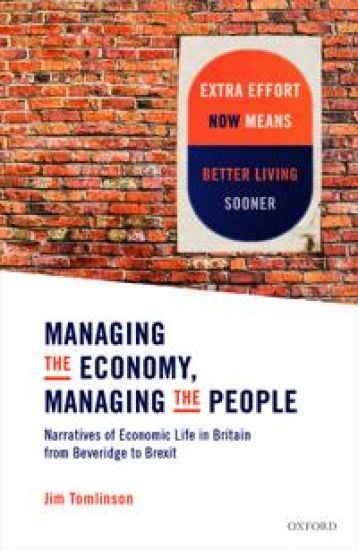
Managing the Economy, Managing the People

Managing the Economy, Managing the People

Jim Tomlinson

Oxford University Press
2017
sidottu
This study offers a distinctive new account of British economic life since the Second World War, focussing upon the ways in which successive governments, in seeking to manage the economy, have sought simultaneously to 'manage the people': to try and manage popular understanding of economic issues. In doing so, governments have sought not only to shape expectations for electoral purposes but to construct broader narratives about how 'the economy' should be understood. The starting point of this work is to ask why these goals have been focussed upon (and differentially over time), how they have been constructed to appeal to the population, and, insofar as this can be assessed, how far the population has accepted these narratives. The first half of the book analyses the development of the major narratives from the 1940s onwards, addressing the notion of 'austerity' and its particular meaning in the 1940s; the rise of a narrative of 'economic decline from the late 1950s, and the subsequent attempts to 'modernize' the economy; the attempts to 'roll back the state' from the 1970s; the impact of ideas of 'globalization' in the 1900s; and, finally, the way the crisis of 2008/9 onwards was constructed as a problem of 'debts and deficits'. The second part of the book focuses on four key issues in attempts to 'manage the people': productivity, the balance of payments, inflation, and unemployment. It shows how, in each case, governments sought to get the populace to understand these issues in a particular light, and shaped strategies to that end.
The Politics of Decline

The Politics of Decline

Jim Tomlinson

Routledge
2017
sidottu
The key aim of this new book is to show how economic decline has always been a highly politicised concept, forming a central part of post-war political argument. In doing so, Tomlinson reveals how the term has been used in such ways as to advance particular political causes.
The Conservatives and Industrial Efficiency, 1951-1964

The Conservatives and Industrial Efficiency, 1951-1964

Nick Tiratsoo; Jim Tomlinson

Routledge
2016
nidottu
The Conservatives and Industrial Efficiency, 1951-1964 responds to the need for a full assessment of the Conservatives performance in this crucial period. Drawing upon a wide range of archival sources, Nick Tiratsoo and Jim Tomlinson explore the different aspects of the efficiency question. Beginning with the major issue of attempts in the 1950s to americanize British industry, the authors also discuss the Conservatives policy on ompetition, education and training, investment and research and development. This new survey reveals that the Conservatives were informed about each of these issues, yet shrank from effective reform. They were, rather, reduced to inertia by ideological dilemmas, internal party antagonisms and conflicting strategic objectives. Tiratsoo and Tomlinson conclude that 1951 - 1964 were indeed 'thirteen wasted years'. This book will be of interest to all those concerned with the post-1945 economic and political history of Britain.
Problems of British Economic Policy, 1870-1945
Most historical accounts of economic policy set out to describe the way in which governments have attempted to solve their economic problems and to achieve their economic objectives. Jim Tomlinson, however, focuses on the problems themselves, arguing that the way in which areas of economic policy become ‘problems’ for policy makers is always problematic itself, that it is never obvious and never happens ‘naturally’. This approach is quite distinct from the Marxist, the Keynesian or the neo-classical accounts of economic policy, the schools of thought which are described and criticized in the introduction. Subsequent chapters use the issues of unemployment, the gold standard and problems of trade and Empire to demonstrate that these competing accounts all obscure the true complexities of the process. Because they adhere to simple assumptions about the role of economic theory or of ‘vested interests’ previous histories have been unable adequately to explain the dramatic change after the First World War in attitudes to unemployment, for instance, or the decision to return to gold in 1925. Jim Tomlinson surveys the institutional circumstances, the conflicting political pressures and the theories offered at the time in an attempt to discover the conditions which characterized the questions as economic problems and contributed to the choice of ‘solutions’. The result is a sophisticated and intellectually compelling account of matters which have remained at the forefront of political debate since its first publication in 1981.
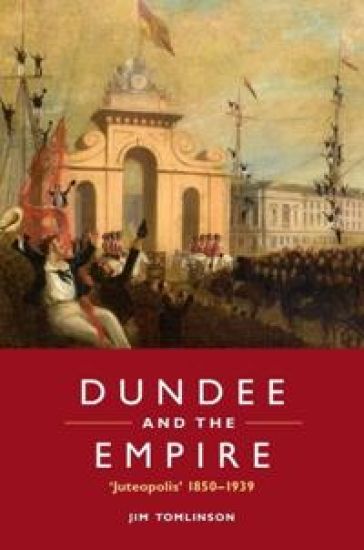
Dundee and the Empire

Dundee and the Empire

Jim Tomlinson

Edinburgh University Press
2014
sidottu
This book deals with Dundee as a globalized and globalizing city in the early 20th century. How did the people of Dundee respond to the challenges of being the most economically globalized city in the world in the years before the First World War? The answer to this question is complicated by the fact that the aspect of globalization which impacted most directly on the ordinary inhabitants of Dundee was competition in the jute industry from Calcutta, a city within the British Empire of the early 20th century. Dundee had to cope not only with powerful low-wage competition in its staple industry, but the political reality that for decision-makers in London the fate of the British Empire in India was far more important than the economic well-being of a small Scottish city. The history of Dundee's response to these challenges combines global economic history with analysis of imperial relations, including how these issues were understood by ordinary Dundonians, as well as by politicians and policy-makers. This is a new 'global' history of Dundee's industrial era. It combines economic, political and social history. It explores the significance of empire for British policy. It shows how the challenges historically posed by globalization can best be analyzed.
British Macroeconomic Policy since 1940 (Routledge Revivals)
Originally published in1985. Jim Tomlinson charters the route of British macroeconomic policy in the post-war era. This book argues that the objectives of macroeconomic policy have not been constant; that the emphasis has shifted from one item to another over time; and that this uncertainty and inconsistency over objectives goes a long way to explaining why macroeconomics management has not been a startling success.
British Macroeconomic Policy since 1940 (Routledge Revivals)
Originally published in1985, Jim Tomlinson charters the route of British macroeconomic policy in the post-war era. This book argues that the objectives of macroeconomic policy have not been constant; that the emphasis has shifted from one item to another over time; and that this uncertainty and inconsistency over objectives goes a long way to explaining why macroeconomics management has not been a startling success.
Nothing Like an Ocean

Nothing Like an Ocean

Jim Tomlinson

The University Press of Kentucky
2009
sidottu
The eleven stories in Nothing Like An Ocean confirm the promise of Jim Tomlinson's award-winning debut, Things Kept, Things Left Behind. Set in and around the fictional town of Spivey, Kentucky, the stories spotlight small-town lives that are thrown into quiet turmoil by unexpected events or outsiders: a man's broken-down car prompts a bittersweet hometown reunion; a husband is surprised to find that the idyllic spot where he courted his wife has been obliterated by mountaintop removal; a waitress watches in fascination as a regular customer blossoms as muse to an artist from Belarus. Adept at juxtaposing light and dark elements, Tomlinson displays compassion for characters searching for moments of found grace and earned redemption. The title story, about a divorced man who receives an anonymous invitation to a church social for middle-aged singles, carries tragic undertones as the protagonist is continually reminded of his son's accidental death and the subsequent dissolution of his marriage. With a strong sense of place and clear, poetic language, Tomlinson breathes new life into timeless stories, creating for the reader a world that is foreign and yet deeply familiar.
The Labour Governments 1964–1970 Volume 3

The Labour Governments 1964–1970 Volume 3

Jim Tomlinson

Manchester University Press
2008
nidottu
Available in paperback for the first time, this book is the third in the three volume set The Labour governments 1964-1970 and concentrates on Britain's economic policy under the Labour governments in the 1960s. It assesses the origins, development and outcomes of the attempts made by the 1964-1970 Labourgovernments under Harold Wilson to modernise the British economy. This is the first comprehensive and archivally-based work to offer a detailed study of this modernisation project. The book places the project in the context of Labour's economic ideas as they had developed since the 1940s as well as the economic legacy they inherited from the previous thirteen years of Conservative rule. After outlining this context and providing a summary narrative of economic policy over this period, the international aspect of Labour's approach to the economy is analysed. The core of the book then goes on to look in detail at the policies directly concerned with modernisation. Following the agenda set by the national plan of 1965, policies on planning, investment and the firm, technical change, the labour market and the nationalised industries are all analysed. In addition, the productivity campaign of the late 1960s is shown to have encapsulated many of the underlying ideas but also many of the problems of Labour's approach to economic policy. The final section of the book asks how the pursuit of modernisation affected Labour's pursuit of "social justice", before offering an overall assessment of Labour's period of office. The book will be of special interest to contemporary historians, economic historians and those interested in the history of the Labour party. Together with the other books in the series, on domestic policy and international policy, it provides a complete picture of the development of Britain under the premiership of Harold Wilson.
Things Kept, Things Left Behind

Things Kept, Things Left Behind

Jim Tomlinson

University of Iowa Press
2006
nidottu
The stories in ""Things Kept, Things Left Behind"" explore the ambiguities of kept secrets, the tangles of abandoned pasts, and uneasy accommodations. Jim Tomlinson's characters each face the desire to reclaim dreams left behind, along with something of the dreamer that was also lost. Starkly rendered, these spiraling characters inhabit a specific place and class - small-town Kentucky, working-class America - but the stories, told in all their humor and tragedy, are universal. In each story, the characters face conflict, sometimes within themselves, sometimes with each other. Each carries a past and with it an urge to return and repair. In ""First Husband, First Wife,"" ex-spouses are repeatedly drawn together by a shared history they cannot seem to escape, and they are finally forced to choose between leaving the past or leaving each other. LeAnn and Cass are grown sisters who conspire to help their prideful mother in ""Things Kept."" ""Prologue"" is a voyeuristic journey through the surprisingly different lives of two star-crossed friends, each with its successes and pitfalls, told through their letters over thirty-five years. In ""Stainless,"" Annie and Warren divide their possessions on the final night of their marriage. Their realtor has advised them to ""declutter"" the house they are leaving, but they discover that most of the clutter cannot be so easily removed. The choices are never simple, and for every thing kept, something must be abandoned. Tomlinson's characters struggle but eventually find their way, often unknowingly, to points of departure, to places where things just might change.
Problems of British Economic Policy, 1870-1945
Most historical accounts of economic policy set out to describe the way in which governments have attempted to solve their economic problems and to achieve their economic objectives. Jim Tomlinson, however, focuses on the problems themselves, arguing that the way in which areas of economic policy become ‘problems’ for policy makers is always problematic itself, that it is never obvious and never happens ‘naturally’. This approach is quite distinct from the Marxist, the Keynesian or the neo-classical accounts of economic policy, the schools of thought which are described and criticized in the introduction. Subsequent chapters use the issues of unemployment, the gold standard and problems of trade and Empire to demonstrate that these competing accounts all obscure the true complexities of the process. Because they adhere to simple assumptions about the role of economic theory or of ‘vested interests’ previous histories have been unable adequately to explain the dramatic change after the First World War in attitudes to unemployment, for instance, or the decision to return to gold in 1925. Jim Tomlinson surveys the institutional circumstances, the conflicting political pressures and the theories offered at the time in an attempt to discover the conditions which characterized the questions as economic problems and contributed to the choice of ‘solutions’. The result is a sophisticated and intellectually compelling account of matters which have remained at the forefront of political debate since its first publication in 1981.
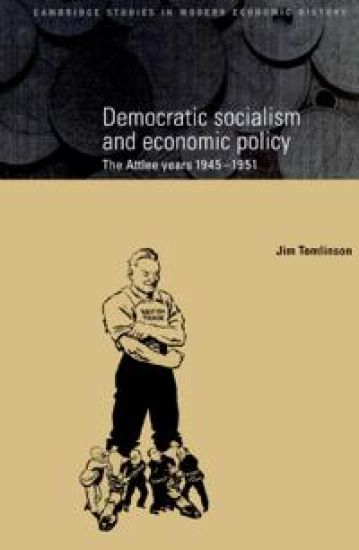
Democratic Socialism and Economic Policy

Democratic Socialism and Economic Policy

Jim Tomlinson

Cambridge University Press
2002
pokkari
This major study analyses the economic policies of the Attlee government, both international and domestic, in the light of Labour’s issues and doctrines about the economy. Jim Tomlinson highlights the concern of the government with issues of industrial efficiency, and how this concern pervaded all areas of economic policy. He focuses on the economic aspects of the creation of the welfare state, and how efficiency concerns led to a great deal of austerity in the design of welfare provision. In addition, Tomlinson offers detailed discussion of the labour market in this period, both the attempts to ‘plan’ that market and the tensions in the policies created by attempts to attract more women into paid work. Students, professional historians and even politicians will greatly benefit from this broad-based reappraisal of a crucial era.
The Politics of Decline

The Politics of Decline

Jim Tomlinson

Longman
2000
nidottu
The key aim of this new book is to show how economic decline has always been a highly politicised concept, forming a central part of post-war political argument. In doing so, Tomlinson reveals how the term has been used in such ways as to advance particular political causes.