Kirjojen hintavertailu – 12 903 725 kirjaa ja 27 kauppaa

Kirjailija

Joe R. Feagin

Kirjat ja teokset yhdessä paikassa: 46 kirjaa, julkaisuja vuosilta 1996–2026, suosituimpiin kuuluu White Parents, Black Children. Vertaile teosten hintoja ja tarkista saatavuus suomalaisista kirjakaupoista.

Nimi esiintyy myös muodoissa: Joe R Feagin

46 kirjaa

Kirjojen julkaisuvuodet: 1996–2026.

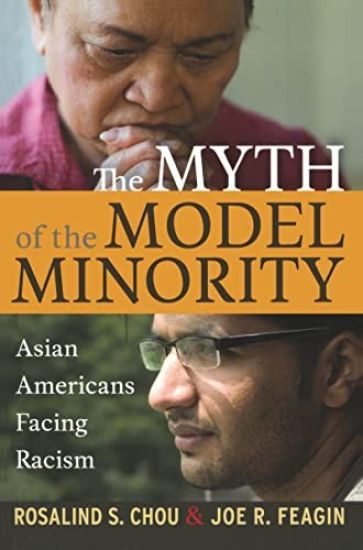
Myth of the Model Minority

Myth of the Model Minority

Rosalind S. Chou; Joe R. Feagin

Paradigm
2014
nidottu
The second edition of this popular book adds important new research on how racial stereotyping is gendered and sexualized. New interviews show that Asian American men feel emasculated in America’s male hierarchy. Women recount their experiences of being exoticized, subtly and otherwise, as sexual objects. The new data reveal how race, gender, and sexuality intersect in the lives of Asian Americans. The text retains all the features of the renowned first edition, which offered the first in-depth exploration of how Asian Americans experience and cope with everyday racism. The book depicts the “double consciousness” of many Asian Americans—experiencing racism but feeling the pressures to conform to popular images of their group as America’s highly achieving “model minority.”
Myth of the Model Minority

Myth of the Model Minority

Rosalind S. Chou; Joe R. Feagin

Paradigm
2014
sidottu
The second edition of this popular book adds important new research on how racial stereotyping is gendered and sexualized. New interviews show that Asian American men feel emasculated in America’s male hierarchy. Women recount their experiences of being exoticized, subtly and otherwise, as sexual objects. The new data reveal how race, gender, and sexuality intersect in the lives of Asian Americans. The text retains all the features of the renowned first edition, which offered the first in-depth exploration of how Asian Americans experience and cope with everyday racism. The book depicts the “double consciousness” of many Asian Americans—experiencing racism but feeling the pressures to conform to popular images of their group as America’s highly achieving “model minority.” FEATURES OF THE SECOND EDITION
Latinos Facing Racism

Latinos Facing Racism

Joe R. Feagin; José A. Cobas

Paradigm
2013
nidottu
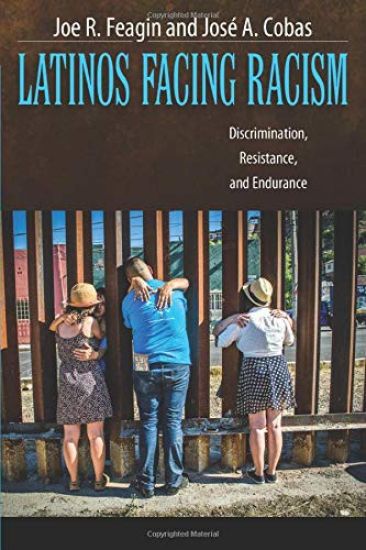
Feagin and Cobas provide the first in-depth examination of the everyday racism faced by middle-class Latinos. Based on a national survey, we learn how a diverse group of talented Latinos Mexican Americans, Puerto Rican Americans, Cuban Americans, and others respond to and cope with the commonplace white racial framing and discriminatory practices. Drawing on extensive interviewing, the authors address the recurring discrimination of ordinary whites directed against Spanish speakers and individuals with presumed Latino phenotypes. These incidents occur in everyday encounters, such as when male and female Latinos travel or shop. The book also chronicles the mistreatment that Latinos face from immigration officials when they cross US borders and from the police when they are racially profiled outside Latino areas. Critical and conforming Latino responses to recurring white discrimination are also extensively examined, as well as the diverse Latino reactions to remedial programs like affirmative action and to the ideal of assimilation into the proverbial US melting pot. "
Latinos Facing Racism

Latinos Facing Racism

Joe R. Feagin; José A. Cobas

Paradigm
2013
sidottu
This book provides the first in-depth examination of the everyday racism faced by middle-class Latinos. It chronicles the mistreatment that Latinos face from immigration officials when they cross US borders and from the police when they are racially profiled outside "Latino areas."
The White Racial Frame

The White Racial Frame

Joe R. Feagin

Routledge
2013
sidottu
In this book Joe Feagin extends the systemic racism framework in previous Routledge books by developing an innovative concept, the white racial frame. Now four centuries-old, this white racial frame encompasses not only the stereotyping, bigotry, and racist ideology emphasized in other theories of "race," but also the visual images, array of emotions, sounds of accented language, interlinking interpretations and narratives, and inclinations to discriminate that are still central to the frame’s everyday operations. Deeply imbedded in American minds and institutions, this white racial frame has for centuries functioned as a broad worldview, one essential to the routine legitimation, scripting, and maintenance of systemic racism in the United States. Here Feagin examines how and why this white racial frame emerged in North America, how and why it has evolved socially over time, which racial groups are framed within it, how it has operated in the past and in the present for both white Americans and Americans of color, and how the latter have long responded with strategies of resistance that include enduring counter-frames. In this new edition, Feagin has included much new interview material and other data from recent research studies on framing issues related to white, black, Latino, and Asian Americans, and on society generally. The book also includes a new discussion of the impact of the white frame on popular culture, including on movies, video games, and television programs as well as a discussion of the white racial frame’s significant impacts on public policymaking, immigration, the environment, health care, and crime and imprisonment issues.

The White Racial Frame

The White Racial Frame

Joe R. Feagin

Routledge
2013
nidottu
In this book Joe Feagin extends the systemic racism framework in previous Routledge books by developing an innovative concept, the white racial frame. Now four centuries-old, this white racial frame encompasses not only the stereotyping, bigotry, and racist ideology emphasized in other theories of "race," but also the visual images, array of emotions, sounds of accented language, interlinking interpretations and narratives, and inclinations to discriminate that are still central to the frame’s everyday operations. Deeply imbedded in American minds and institutions, this white racial frame has for centuries functioned as a broad worldview, one essential to the routine legitimation, scripting, and maintenance of systemic racism in the United States. Here Feagin examines how and why this white racial frame emerged in North America, how and why it has evolved socially over time, which racial groups are framed within it, how it has operated in the past and in the present for both white Americans and Americans of color, and how the latter have long responded with strategies of resistance that include enduring counter-frames. In this new edition, Feagin has included much new interview material and other data from recent research studies on framing issues related to white, black, Latino, and Asian Americans, and on society generally. The book also includes a new discussion of the impact of the white frame on popular culture, including on movies, video games, and television programs as well as a discussion of the white racial frame’s significant impacts on public policymaking, immigration, the environment, health care, and crime and imprisonment issues.

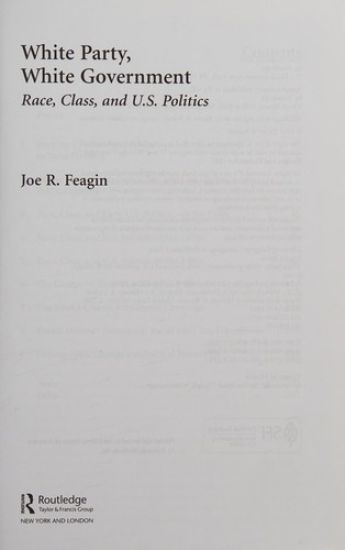
White Party, White Government

White Party, White Government

Joe R. Feagin

Routledge
2012
sidottu
White Party, White Government examines the centuries-old impact of systemic racism on the U. S. political system. The text assesses the development by elite and other whites of a racialized capitalistic system, grounded early in slavery and land theft, and its intertwining with a distinctive political system whose fundamentals were laid down in the founding decades. From these years through the Civil War and Reconstruction, to the 1920s, the 1930s Roosevelt era, the 1960s Johnson era, through to the Ronald Reagan, George H. W. Bush, and Barack Obama presidencies, Feagin exploring the effects of ongoing demographic changes on the present and future of the U. S. political system.
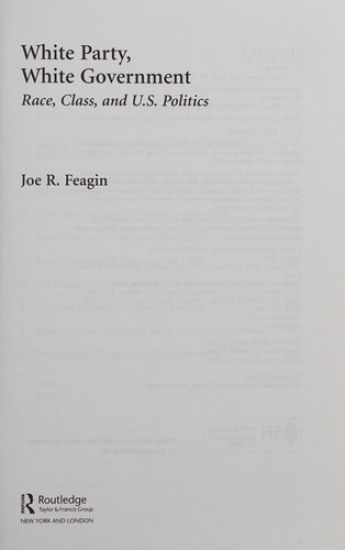
White Party, White Government

White Party, White Government

Joe R. Feagin

Routledge
2012
nidottu
White Party, White Government examines the centuries-old impact of systemic racism on the U. S. political system. The text assesses the development by elite and other whites of a racialized capitalistic system, grounded early in slavery and land theft, and its intertwining with a distinctive political system whose fundamentals were laid down in the founding decades. From these years through the Civil War and Reconstruction, to the 1920s, the 1930s Roosevelt era, the 1960s Johnson era, through to the Ronald Reagan, George H. W. Bush, and Barack Obama presidencies, Feagin exploring the effects of ongoing demographic changes on the present and future of the U. S. political system.
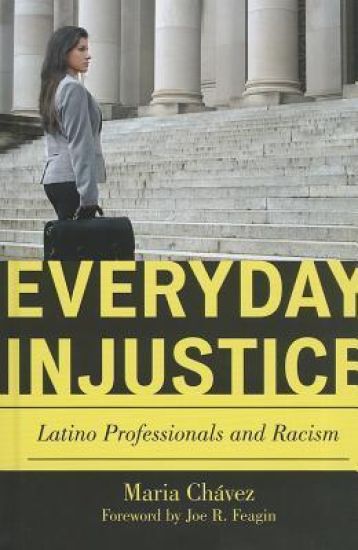
Everyday Injustice

Everyday Injustice

Maria Chávez; Joe R. Feagin

Rowman Littlefield
2011
sidottu
As members of the fastest-growing demographic group in America, Latinos are increasingly represented in the professional class, but they continue to face significant racism. Everyday Injustice introduces readers to the challenges facing Latino professionals today. Examining the experiences of many of the most privileged members of the largest racial and ethnic community in the United States, Maria Chávez provides important insights into the challenges facing racialized groups, particularly Latinos, in the United States. Her study looks at Latino lawyers in depth, weaving powerful personal stories and interview excerpts with a broader analysis of survey research and focus groups. The book examines racial framing in America, the role of language and culture among Latino professionals, the role of Latinos in the workplace, their level of civic participation, and the important role that education plays in improving their experiences. One chapter discusses the unique challenges that Latinas face in the workplace as both women and people of color. The findings outlined in Everyday Injustice suggest that despite considerable success in overcoming educational, economic, and class barriers, Latino professionals still experience marginalization. A powerful illustration of racism and inequality in America.
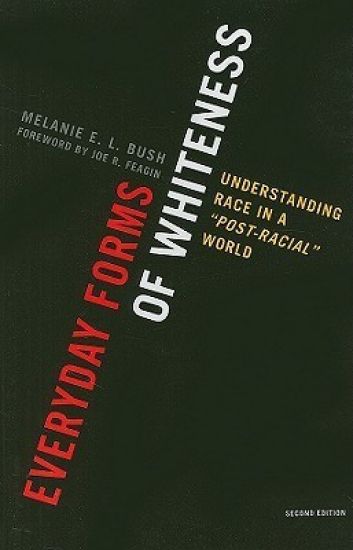
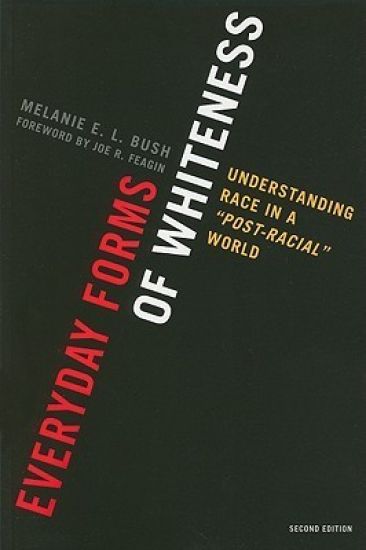
Everyday Forms of Whiteness

Everyday Forms of Whiteness

Melanie E. L. Bush; Joe R. Feagin

Rowman Littlefield Publishers
2011
sidottu
The second edition of Melanie Bush's acclaimed Everyday Forms of Whiteness looks at the often-unseen ways racism impacts our lives. The author has interviewed and surveyed hundreds of college students and reveals that even though we talk as though we live in a "post-racial" world after the election of Barack Obama, racism is still very much a factor in everyday life. The second edition incorporates new data and interviews to show how the everyday thinking of ordinary people contributes to the perpetuation of systemic racialized inequality. The book introduces key terms for the study for race and ethnicity, reveals the mechanisms that support the racial hierarchy in U. S. society, then outlines ways we can challenge long-standing patterns of racial inequality.
Everyday Forms of Whiteness

Everyday Forms of Whiteness

Melanie E. L. Bush; Joe R. Feagin

Rowman Littlefield Publishers
2011
nidottu
The second edition of Melanie Bush's acclaimed Everyday Forms of Whiteness looks at the often-unseen ways racism impacts our lives. The author has interviewed and surveyed hundreds of college students and reveals that even though we talk as though we live in a "post-racial" world after the election of Barack Obama, racism is still very much a factor in everyday life. The second edition incorporates new data and interviews to show how the everyday thinking of ordinary people contributes to the perpetuation of systemic racialized inequality. The book introduces key terms for the study for race and ethnicity, reveals the mechanisms that support the racial hierarchy in U. S. society, then outlines ways we can challenge long-standing patterns of racial inequality.
How the United States Racializes Latinos

How the United States Racializes Latinos

José A. Cobas; Jorge Duany; Joe R. Feagin

Paradigm
2009
nidottu
Mexican and Central American undocumented immigrants, as well as U. S. citizens such as Puerto Ricans and Mexican-Americans, have become a significant portion of the U. S. population. Yet the U. S. government, mainstream society, and radical activists characterize this rich diversity of peoples and cultures as one group alternatively called "Hispanics," "Latinos," or even the pejorative "Illegals." How has this racializing of populations engendered governmental policies, police profiling, economic exploitation, and even violence that afflict these groups? From a variety of settings-New York, New Jersey, Los Angeles, Central America, Cuba-this book explores this question in considering both the national and international implications of U. S. policy. Its coverage ranges from legal definitions and practices to popular stereotyping by the public and the media, covering such diverse topics as racial profiling, workplace discrimination, mob violence, treatment at border crossings, barriers to success in schools, and many more. It shows how government and social processes of racializing are too seldom understood by mainstream society, and the implication of attendant policies are sorely neglected.
How the United States Racializes Latinos

How the United States Racializes Latinos

José A. Cobas; Jorge Duany; Joe R. Feagin

Paradigm
2009
sidottu
Mexican and Central American undocumented immigrants, as well as U. S. citizens such as Puerto Ricans and Mexican-Americans, have become a significant portion of the U. S. population. Yet the U. S. government, mainstream society, and radical activists characterize this rich diversity of peoples and cultures as one group alternatively called "Hispanics," "Latinos," or even the pejorative "Illegals." How has this racializing of populations engendered governmental policies, police profiling, economic exploitation, and even violence that afflict these groups? From a variety of settings-New York, New Jersey, Los Angeles, Central America, Cuba-this book explores this question in considering both the national and international implications of U. S. policy. Its coverage ranges from legal definitions and practices to popular stereotyping by the public and the media, covering such diverse topics as racial profiling, workplace discrimination, mob violence, treatment at border crossings, barriers to success in schools, and many more. It shows how government and social processes of racializing are too seldom understood by mainstream society, and the implication of attendant policies are sorely neglected.
Myth of the Model Minority

Myth of the Model Minority

Rosalind S. Chou; Joe R. Feagin

Paradigm
2008
nidottu
With their apparent success in schools and careers, Asian Americans have long been viewed by white Americans as the "model minority." Yet few Americans realize the lives of many Asian Americans are constantly stressed by racism. This reality becomes clear from the voices of Asian Americans heard in this first in-depth book on the experiences of racism among Asian Americans from many different nations and social classes. Chou and Feagin assess racial stereotyping and discrimination from dozens of interviews across the country with Asian Americans in a variety of settings, from elementary schools to colleges, workplaces, and other public arenas. They explore the widely varied ways of daily coping that Asian Americans employ-some choosing to conform and others actively resisting. This book dispels notions that Asian Americans are universally "favored" by whites and have an easy time adapting to life in American society. The authors conclude with policy measures that can improve the lives not only of Asian Americans but also of other Americans of color.
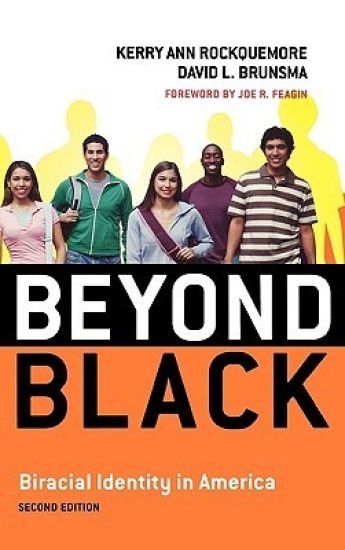
Beyond Black

Beyond Black

Kerry Ann Rockquemore; David L. Brunsma; Joe R. Feagin

Rowman Littlefield Publishers
2007
sidottu
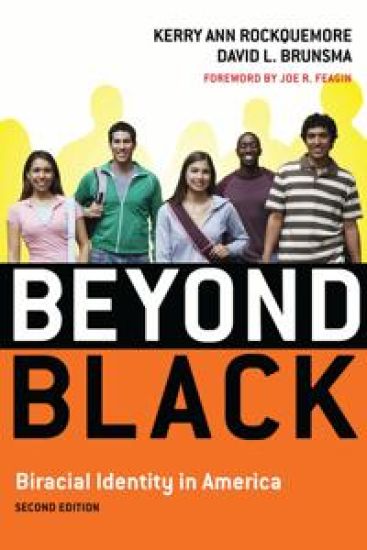
Beyond Black is a groundbreaking study of the dynamic meaning of racial identity for multiracial people in post-Civil Rights America. Kerry Ann Rockquemore and David Brunsma document the wide range of racial identities that individuals with one Black and one White parent develop, and they provide a incisive sociological explanation of the choices facing those who are multiracial. Stemming from the controversy of the 2000 Census and whether an additional "multiracial" category should be added to the survey, this second edition of Beyond Black uses both survey data and interviews of multiracial young adults to explore the contemporary dynamics of racial identity formation. The authors raise even larger social and political questions posed by expanding racial categorization on the U. S. Census.
Beyond Black

Beyond Black

Kerry Ann Rockquemore; David L. Brunsma; Joe R. Feagin

Rowman Littlefield Publishers
2007
nidottu
Beyond Black is a groundbreaking study of the dynamic meaning of racial identity for multiracial people in post-Civil Rights America. Kerry Ann Rockquemore and David Brunsma document the wide range of racial identities that individuals with one Black and one White parent develop, and they provide a incisive sociological explanation of the choices facing those who are multiracial. Stemming from the controversy of the 2000 Census and whether an additional 'multiracial' category should be added to the survey, this second edition of Beyond Black uses both survey data and interviews of multiracial young adults to explore the contemporary dynamics of racial identity formation. The authors raise even larger social and political questions posed by expanding racial categorization on the U. S. Census.
The First R

The First R

Debra Van Ausdale; Joe R. Feagin

Rowman Littlefield
2001
pokkari
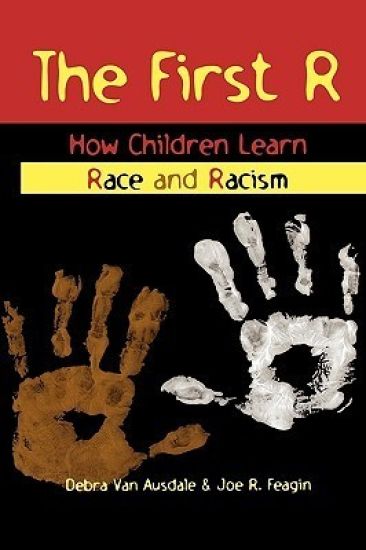
This study looks into how children learn about the 'first R'—race—and challenges the current assumptions with case-study examples from three child-care centers. Parents and teachers will find this remarkable study reveals that the answer to how children learn about race might be more startling than could be imagined.
White Racism

White Racism

Joe R. Feagin; Hernan Vera; Pinar Batur

Routledge
2000
sidottu
This book incorporates a range of new material on racist events and incidents across the United States. It includes a few new concepts and some of the original concepts about individual and institutionalized racism in the United States.