Kirjojen hintavertailu – 12 875 077 kirjaa ja 26 kauppaa

Kirjailija

Johan Huizinga

Kirjat ja teokset yhdessä paikassa: 46 kirjaa, julkaisuja vuosilta 1971–2026, suosituimpiin kuuluu Erazm. Vertaile teosten hintoja ja tarkista saatavuus suomalaisista kirjakaupoista.

46 kirjaa

Kirjojen julkaisuvuodet: 1971–2026.

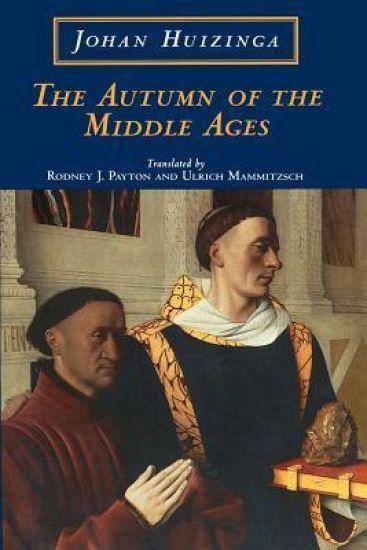
The Autumn of the Middle Ages

The Autumn of the Middle Ages

Johan Huizinga; Rodney J. (TRN) Payton; Ulrich (TRN) Mammitzsch

University of Chicago Press
1997
pokkari
This is a portrait of life, thought and art in 14th- and 15th-century France and the Netherlands. Regarded as an historical classic by many scholars, it has also been criticized and incorrectly translated. This edition corrects changes made by other translators to the original Dutch text of 1919. For Huizinga, the 14th and 15th centuries marked not the birth of a dramatically new era in history - the Renaissance - but the fullest, ripest phase of medieval life and thought. However, his work was criticized at home and in Europe for being "old-fashioned" and "too literary". Franz Hopman adapted, reduced, and altered the Dutch edition, softening Huizinga's passionate arguments, dulling his nuances, and eliminating theatrical passages. He also dropped many passages Huizinga had quoted in their original old French. Additionally, chapters were rearranged, all references were dropped, and mistranslations introduced. This translation attempts to correct such errors, recreating Huizinga's Dutch edition, restoring the missing material, including prose quotations in French with translations, and returning the book to the form originally intended by its author.
The Autumn of the Middle Ages

The Autumn of the Middle Ages

Johan Huizinga

University of Chicago Press
1996
sidottu
"Herfsttij der Middeluwen", or "The Autumn of the Middle Ages" - the original title - is a portrait of life thought, and art in 14th and 15th century France and the Netherlands. For Huizinga, this period marked not the birth of a dramatically new era in history, the Renaissance, but the fullest, ripest phase of medieval life and thought. Now, for the first time ever, the original version of this classic work has been translated into English. In the 1924 translation, Fritz Hopman adapted, reduced, and altered the Dutch edition - softening Huizinga's often passionate arguments, dulling his nuances, and eliminating passages. He also rearranged and redivided chapters, dropped references, and introduced mistranslations. This edition is free of such errors, recreating the second Dutch edition - which represents Huizinga's thinking at its most important stage - as closely as possible. Everything has been restored. Prose quotations appear in French, with translations printed at the bottom of the page. Mistranslations have been corrected. Payton and Mammitzsch also have added helpful material, including Huizinga's preface to the first and the second Dutch editions (1919 and 1921) and the one to the 1924 German translation. Several notes clarify Huizinga's references to things which would be common knowledge only to Dutch readers, Huizinga frequently refers to paintings, sculptures, and carvings, some little known; this edition also includes full range of illustrations.

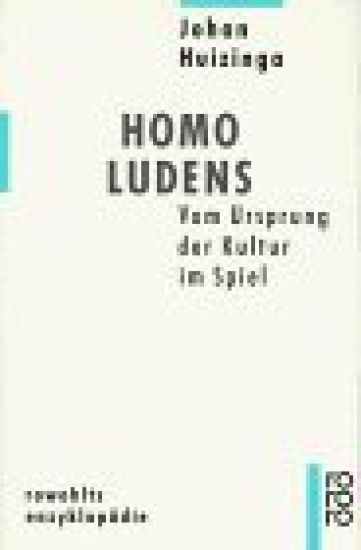
Homo ludens

Homo ludens

Johan Huizinga

ROWOHLT TASCHENBUCH VERLAG GMBH
1987
pokkari

Halvin toimitettuna 22,80 €

Ein grundlegendes Element unsere Kultur ist das Spiel. Der Mensch ist ein Spieler - und ohne seine Lust und Fähigkeit zum Spielen hätten sich ganze Bereiche seiner Kultur nicht entwickelt: die Dichtung, das Recht, die Wissenschaft, die bildende Kunst, die Philosophie und andere. Johan Huizinga, der große holländische Historiker und Kulturphilosoph, hat in diesem Buch eine Theorie der Kultur entworfen, in der er dem Denker (homo sapiens) und dem Tätigen (homo faber) den Menschen als Spieler (homo ludens) an die Seite stellt.
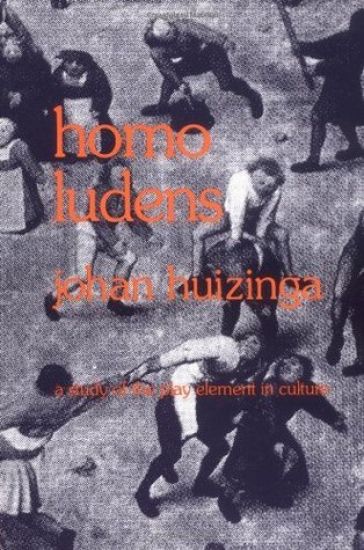
Homo Ludens: A Study of the Play-Element in Culture

Homo Ludens: A Study of the Play-Element in Culture

Johan Huizinga

BEACON PRESS
1971
nidottu

Halvin toimitettuna 29,40 €

An essential reference for all game designers, this 1938 classic is "a fascinating account of 'man the player' and the contribution of play to civilization" (Harper's). In this classic evaluation of play that has become a "must-read" for those in game design, Dutch philosopher Johan Huizinga defines play as the central activity in flourishing societies. Like civilization, play requires structure and participants willing to create within limits. Starting with Plato, Huizinga traces the contribution of Homo Ludens, or "man the player" through Medieval Times, the Renaissance, and into our modern civilization. Huizinga defines play against a rich theoretical background, using cross-cultural examples from the humanities, business, and politics. Homo Ludens defines play for generations to come.