Kirjojen hintavertailu – 12 859 827 kirjaa ja 27 kauppaa

Kirjailija

Johann Sebastian Bach

Kirjat ja teokset yhdessä paikassa: 151 kirjaa, julkaisuja vuosilta 1958–2026, suosituimpiin kuuluu Magnificat in D major, BWV 243. Vertaile teosten hintoja ja tarkista saatavuus suomalaisista kirjakaupoista.

151 kirjaa

Kirjojen julkaisuvuodet: 1958–2026.

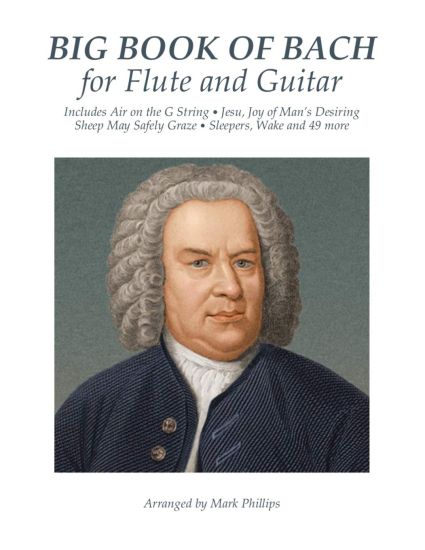
Big Book of Bach for Flute and Guitar

Big Book of Bach for Flute and Guitar

Mark Phillips; Johann Sebastian Bach

Createspace Independent Publishing Platform
2018
nidottu
53 Bach masterpieces for flute and guitar (in standard notation and tablature). Note: For the sake of playability, many of the pieces have been transposed from original keys and/or shortened/excerpted. Includes: chzen und erb rmlich Weinen (from Cantata 13); Adagio (from Flute Sonata in C Major, BWV 1033); Adagio ma non tanto (from Flute Sonata in E Minor, BWV 1034); Agnus Dei (from Mass in B Minor, BWV 232); Air on the G String (from Orchestral Suite No. 3, BWV 1068); Allemande (from Notebook for Anna Magdalena; BWV 813); Andante (from Flute Sonata in E Minor, BWV 1034); Arioso (from Cantata 156); Bete aber auch dabei (from Cantata 115); Bist du bei mir (from Notebook for Anna Magdalena; BWV 508); Bourr e in E Minor (from Lute Suite in E Minor, BWV 996); Chorale (from St. Matthew Passion, BWV 244); Das Blut, so meine Schuld durchstreicht (from Cantata 78); Die Liebe zieht mit sanften Schritten (from Cantata 36); Die Obrigkeit ist Gottes Gabe (from Cantata 119); Durchs Feuer wird das Silber rein (from Cantata 2); Erf llet, ihr himmlischen g ttlichen Flammen (from Cantata 1); Gavotte (from French Suite No. 5, BWV 816); Gavotte I (from Orchestral Suite No. 1, BWV 1066); Gib dich zufrieden und sei stille (from Notebook for Anna Magdalena; BWV 511); Gott ist unser Sonn und Schild (from Cantata 79); Gott, du hast es wohl gef get (from Cantata 63); Hochgelobter Gottessohn (from Cantata 6); H rt, ihr Augen, auf zu weinen (from Cantata 98); Ich will bei meinem Jesu wachen (from St. Matthew Passion, BWV 244); Ich w nschte mir den Tod, den Tod (from Cantata 57); Jesu, Joy of Man's Desiring (from Cantata 147); Jesu, meine Freude (from Motet No. 3, BWV 227); Keep, O My Spirit (from Christmas Oratorio, BWV 248); Kyrie (from Mass in B Minor, BWV 232); Mein Jesu, ziehe mich nach dir (from Cantata 22); Menuet (from Orchestral Suite No. 2, BWV 1067); Menuetto I & II (from Flute Sonata in C Major, BWV 1033); Minuet I (from Orchestral Suite No. 1, BWV 1066); Minuet in D Minor (from Notebook for Anna Magdalena; BWV Anh. 132); Minuet in G Major (from Notebook for Anna Magdalena; BWV Anh. 114); Minuet in G Minor (from Notebook for Anna Magdalena; BWV Anh. 115); Passepied I (from Orchestral Suite No. 1, BWV 1066); Polonaise (from Orchestral Suite No. 2, BWV 1067); Schlafe, mein Liebster, und pflege der Ruh (from Cantata 213); Schlummert ein, ihr matten Augen (from Notebook for Anna Magdalena; BWV 82); Seele, deine Spezereien (from Easter Oratorio, BWV 249); Seinem Sch pfer noch auf Erden (from Cantata 39); Sheep May Safely Graze (from Cantata 208); Siciliano (from Flute Sonata in E-flat Major, BWV 1031); Sinfonia (from Christmas Oratorio, BWV 248); Sleepers, Wake (from Cantata 140); Warum betr bst du dich (from Notebook for Anna Magdalena; BWV 516); Wenn Sorgen auf mich dringen (from Cantata 3); Wer nur den lieben Gott l sst walten (from Notebook for Anna Magdalena; BWV 691); Wie jammern mich doch die verkehrten Herzen (from Cantata 170); Wir setzen uns mit Tr nen nieder (from St. Matthew Passion, BWV 244); Zum reinen Wasser er mich weist (from Cantata 112).
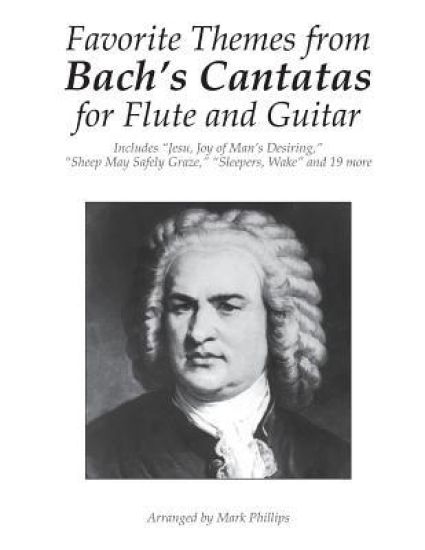
Favorite Themes from Bach's Cantatas for Flute and Guitar

Favorite Themes from Bach's Cantatas for Flute and Guitar

Mark Phillips; Johann Sebastian Bach

Createspace Independent Publishing Platform
2018
nidottu
22 beautiful themes from Bach's cantatas for flute and guitar (in standard notation and tablature), including "Jesu, Joy of Man's Desiring," "Sheep May Safely Graze" and "Sleepers, Wake." These arrangements are stand-alone flute/guitar duets derived mostly from the instrumental introductions to the most beloved cantata arias. Contents: Cantata 1, Erf llet, ihr himmlischen g ttlichen Flammen; Cantata 2, Durchs Feuer wird das Silber rein; Cantata 3, Wenn Sorgen auf mich dringen; Cantata 6, Hochgelobter Gottessohn; Cantata 13, chzen und erb rmlich Weinen; Cantata 22, Mein Jesu, ziehe mich nach dir; Cantata 36, Die Liebe zieht mit sanften Schritten; Cantata 39, Seinem Sch pfer noch auf Erden; Cantata 57, Ich w nschte mir den Tod, den Tod; Cantata 63, Gott, du hast es wohl gef get; Cantata 78, Das Blut, so meine Schuld durchstreicht; Cantata 79, Gott ist unser Sonn und Schild; Cantata 98, H rt, ihr Augen, auf zu weinen; Cantata 112, Zum reinen Wasser er mich weist; Cantata 115, Bete aber auch dabei; Cantata 119, Die Obrigkeit ist Gottes Gabe; Cantata 140, Wachet auf, ruft uns die Stimme (Sleepers, Wake); Cantata 147, Jesus bleibet meine Freude (Jesu, Joy of Man's Desiring); Cantata 156, Sinfonia (Arioso); Cantata 170, Wie jammern mich doch die verkehrten Herzen; Cantata 208, Schafe k nnen sicher weiden (Sheep May Safely Graze); Cantata 213, Schlafe, mein Liebster, und pflege der Ruh.
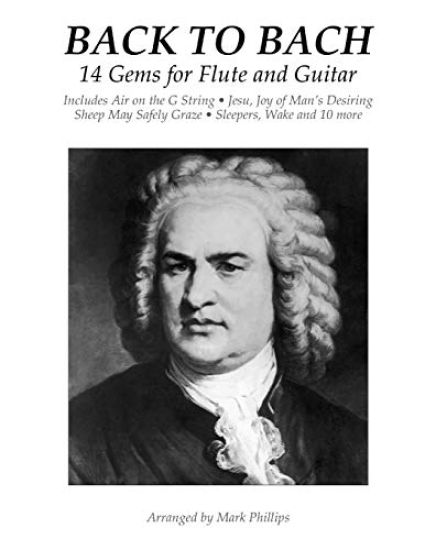
Back to Bach: 14 Gems for Flute and Guitar

Back to Bach: 14 Gems for Flute and Guitar

Mark Phillips; Johann Sebastian Bach

Createspace Independent Publishing Platform
2018
nidottu
14 gems by J. S. Bach arranged for flute and guitar. Includes: Agnus Dei (Excerpt, from Mass in B Minor); Air on the G String (from Orchestral Suite No. 3); Bourr e in E Minor (from Lute Suite in E Minor); Gavotte (from French Suite No. 5); Gavotte I (from Orchestral Suite No. 1); Ich will bei meinem Jesu wachen (Excerpt, from St. Matthew Passion); Jesu, Joy of Man's Desiring (from Cantata 147); Kyrie (Excerpt, from Mass in B Minor); Minuet I (from Orchestral Suite No. 1); Passepied I (from Orchestral Suite No. 1); Seele, deine Spezereien (Excerpt, from Easter Oratorio); Sheep May Safely Graze (from Cantata 208); Sleepers, Wake (from Cantata 140); Wir setzen uns mit Tr nen nieder (Excerpt, from St. Matthew Passion).
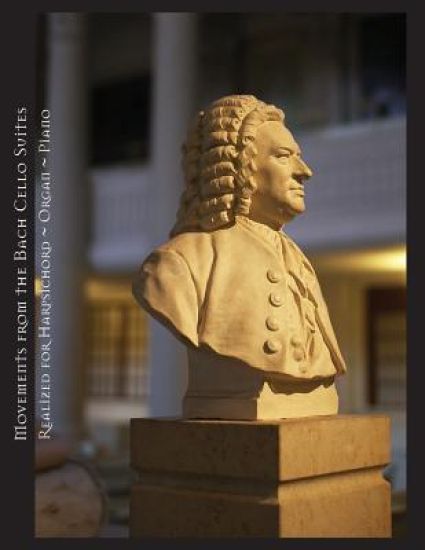
Movements from the Bach Cello Suites Realized for Harpsichord Organ Piano

Movements from the Bach Cello Suites Realized for Harpsichord Organ Piano

Johann Sebastian Bach; Noel Jones

Createspace Independent Publishing Platform
2018
nidottu
This is created for harpsichordists, pianists and organists who love the Cello Suites. It is also useful for students interested in expanding their familiarity with the Bass Clef. These fifteen movements lend themselves nicely for realization and performance on a keyboard. The realization is based upon the study of four early copies of the original violoncello manuscript - which, itself, has never been found. Bach brilliantly created music for the four or five strings of the Baroque Cello that states and, when not possible, implies harmonies. This realization puts these implied harmonies on paper.
Masterpieces of Solo Piano

Masterpieces of Solo Piano

Johann Sebastian Bach; George Frideric Handel; Jean-Philippe Rameau; Domenico Scarlatti; Antonio Vivaldi; Henry Purcell; Georg Philipp Telemann

Dover Publications Inc.
2017
nidottu
This inexpensive compilation draws upon authoritative sources to present favorite piano works of the Baroque era. Unlike many other anthologies of music from the era, which vary widely in the quality of their content, this collection comprises only the greatest works of the period. Intermediate and advanced pianists will find these carefully chosen pieces a rewarding and satisfying reflection of the glories of the Baroque. Selections include Johann Sebastian Bach's Chromatic Fantasia and Fugue as well as the French Suite No. 5; Fantasia in C Minor, BWV 906; and preludes and fugues from The Well-Tempered Clavier. Other works by Bach include the great composer's transcriptions for keyboard of five violin concertos by Vivaldi, reprinted from the definitive Bach-Gesellschaft edition. Other selections include several pieces by Handel, among them the popular Air and Variations known as The Harmonious Blacksmith; four sonatas by Scarlatti; and works by Telemann, Rameau, and Purcell.
Italian Concerto: Urtext with fingering

Italian Concerto: Urtext with fingering

Johann Sebastian Bach

Createspace Independent Publishing Platform
2017
nidottu
Bach composed his "Italian Concerto" (originally titled "Concerto in the Italian Style") for harpsichord in 1734 in Leipzig. A year later it was published in Nuremberg together with the "French Overture" (originally titled "Overture in the French Style") as the second part of Clavier bung. In the detailed title, which Bach prefaced to this edition, he emphasized that the pieces were composed for a harpsichord with two keyboards. The dynamic signs piano and forte that Bach wrote in the score indicated on which keyboard the performer was supposed to play. Without a doubt, these instructions give the modern pianist a valuable clue to composer's dynamic design of the piece. This publication is based on the first edition that belonged to Bach himself and which he revised and corrected. Fingering is added by the editor. For advanced students and professional pianists.
Italian Concerto BWV 971: Edited and URTEXT versions

Italian Concerto BWV 971: Edited and URTEXT versions

Johann Sebastian Bach

Createspace Independent Publishing Platform
2017
nidottu
This edition of Bach's Italian Concerto, from the second part of his "Clavier bung", includes two versions - the URTEX, based on the first publication in 1735 in Nuremberg, and edited version, in which the editor added fingerings, recommended articulations and few dynamic marks given in small print. While students usually need editor recommendations they will also benefit from referring to the original Bach's manuscript reproduced by the URTEXT.
28 pièces pour piano: Volume I et II

28 pièces pour piano: Volume I et II

Johann Sebastian Bach

Createspace Independent Publishing Platform
2017
nidottu
Ce livre comprend 28 pi ces pour piano compos par Jean-S bastien Bach. SOMMAIRE Volume 1 1 Minuet en Sol Majeur, BWV Anh. 114 2 Minuet en Sol mineur, BWV Anh. 115 3 Minuet en Sol Majeur, BWV Anh. 116 4 Polonaise en Sol mineur, BWV Anh. 119 5 Marche en R Majeur, BWV Anh. 122 6 Minuet No. 3 en Sol mineur, BWV 822 7 Minuet No. 1 en Sol mineur, BWV 822 8 Minuet No. 2 en Sol mineur, BWV 822 9 Marche en Sol Majeur, BWV Anh. 124 10 Minuet en R mineur, BWV Anh. 132 11 Musette en Sol Majeur, BWV 808 12 Bourr e en Mi mineur, BWV 996 13 Musette en R Majeur, BWV Anh. 126 14 Gavotte en Sol mineur, BWV 822 15 Marche en Mib Majeur, BWV Anh. 127 16 Minuet en Do mineur, BWV Anh. 121 Volume 2 1 Polonaise en Sol mineur, BWV Anh. 125 2 Gavotte en R Majeur, BWV 811 3 Polonaise en Sol Majeur, BWV Anh. 130 4 Gavotte en Sol mineur, BWV 808 5 Gavotte en Sol Majeur, BWV 816 6 Polonaise en Sol mineur, BWV Anh. 123 7 Minuet en Fa Majeur, BWV 820 8 Minuet en Mi Majeur, BWV 817 9 Scherzo en La mineur, BWV 827 10 Sarabande en Mi Mineur, BWV 810 11 Minuet en Do Mineur, BWV 813 12 Prelude en Fa mineur, BWV 823
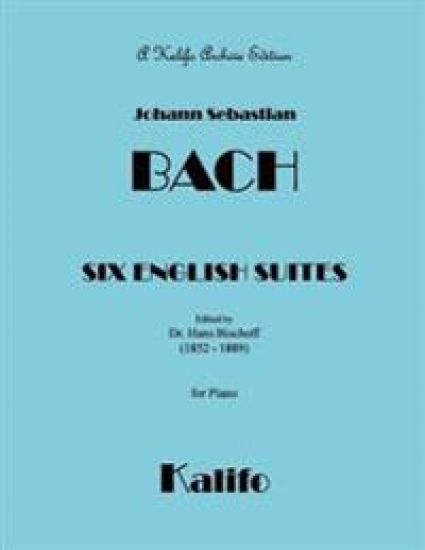
Six English Suites

Six English Suites

Johann Sebastian Bach

Createspace Independent Publishing Platform
2017
nidottu
New 2017 printing, these six English Suites from 1715 are thought to have been written while Bach was living in Weimar. Each suite begins with a Prelude, a departure from the traditional suite progression, followed by an Allemande, Courante, Sarabande, Bourr e or Gavotte or Menuet and all ending with a Gigue. Four of the six suites are in minor keys. Any reviews on Amazon before January 2017 are not associated with this book.
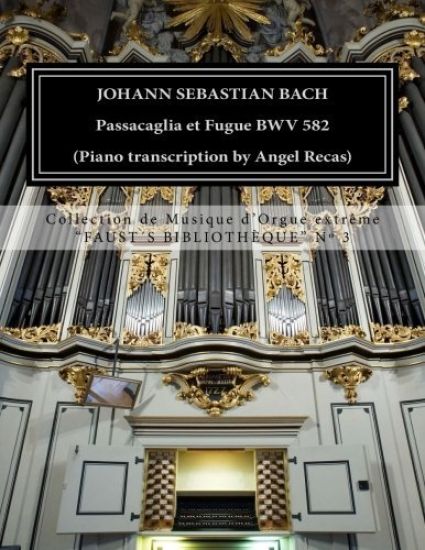
Johann Sebastian Bach Passacaglia et Fugue BWV 852 (piano transcription by Angel Recas): Johann Sebastian Bach Passacaglia BWV 852 (piano transcriptio
"In principio erat rhythmus et rhythmum erat Bach" (En el principio era el ritmo y el ritmo era Bach). As , de esta manera ligeramente parafraseada y tan expl citamente contundente, se expresaba el gran pianista Hans von B low, celeb rrimo director de orquesta, alumno predilecto de Liszt, y uno de los mayores pianistas que ha dado la historia musical interpretativa del piano, acerca de la fundamental trascendencia de la figura de Johann Sebastian Bach en la historia de la m sica. Ser a en 1848 cuando el pianista y compositor h ngaro Franz Liszt, posiblemente el mayor virtuoso que hab a dado la historia de la m sica se instalar a en Weimar, dejando atr s una impresionante y prol fica carrera como virtuoso, los a os que en su biograf a habr an de llamarse Ann es de P lerinage. En Weimar, en este hist rico principado alem n, en octubre de 1842 Liszt ya hab a sido nombrado como "Kapellmeister in au erordentlichen Diensten" (Maestro de capilla de servicios extraordinarios), y seria all al fijar su residencia en 1848 donde permanecer a, siendo nombrado adem s director del gran Teatro de la pera de Weimar, la joya musical de la bell sima aunque un poco provinciana y decadente por entonces ciudad de Goethe y Schiller. En la inmortal ciudad de Weimar, que se convertir a en esos a os de estancia lisztiana en uno de los centros art sticos de peregrinaje musical de toda Europa. Liszt poco pod a sospechar que, en cierta forma, de manera inconsciente, estaba tomando el testigo e incluso el legado hist rico musical, reviviendo la gran tradici n organ stica heredada desde Bach y que llegaba hasta las pocas m ticas y oscuramente legendarias del viejo Buxtehude y del mism simo Pachebel. Ser a esta herencia a trav s de organistas (muchos de ellos alumnos propios o colaboradores de Liszt en aquellos a os de estancia en Weimar) como Alexander Winterberger, Julius Reubke, Alexander Wilhelm Gottschalg, Christian Bernhard Sulze y entre todos el gran organista y te rico Johann Gottlob T pfer, cuya influencia en Liszt ser a decisiva. Sin apenas ser consciente de ello, Liszt abrir a, a principios de la d cada de 1850, el camino y las premisas est tico-musicales de este neog tico rom ntico alem n a los autores e interpretes que posteriormente seguir an sus pasos; ya bien a trav s del rgano rom ntico; T pfer, Winterberger, Reubke, Gottschalg, Rheinberger, Gigout, Vierne, Widor, Guillou etc...o mediante un nuevo estilo pian stico que se podr a definir est ticamente como de pianismo neog tico rom ntico; Tausig, Busoni, Reger, Godowsky, Horowitz, Lewenthal, Nyiregyhazi, Feinberg etc... La Passacaglia y fuga BWV 582 es posiblemente una de las piezas compuestas para rgano del compositor alem n Johann Sebastian Bach m s dif ciles y valoradas de todo el repertorio organ stico. Se la podr a considerar, con toda justicia y tal vez junto con algunas piezas de Max Reger o de Charles-Marie Widor, como una de las piezas cumbres, y t cnicamente culminantes, de todo el cat logo escrito para rgano. Parece ser que habr a sido compuesta en una poca temprana del desarrollo art stico creativo en la carrera del m sico. Sin duda, las caracter sticas y las premisas est tico musicales de la creaci n de una escuela pian stica g tica rom ntica, y que tiene sus ra ces en la Alemania del norte y sus maestros organ sticos del pasado, y m s concretamente en la figura compositiva de Johan Sebastian Bach. Esta transcripci n que presentamos dentro de esta colecci n, est dedicada a la memoria de Ferrucio Busoni, verdadero Fausto-organ stico, quien ejemplifica a la perfecci n el ideal de artista recreador y en cierta forma creador del estilo neo-g tico pian stico. Esta transcripci n se inspira en la escritura caracter stica de las transcripciones pian stico-organ sticas del gran maestro Ferrucio Busoni.