Kirjojen hintavertailu – 12 859 818 kirjaa ja 27 kauppaa

Kirjailija

Johann Wolfgang von Goethe

Kirjat ja teokset yhdessä paikassa: 2 535 kirjaa, julkaisuja vuosilta 1787–2027, suosituimpiin kuuluu Faust II. Vertaile teosten hintoja ja tarkista saatavuus suomalaisista kirjakaupoista.

Nimi esiintyy myös muodoissa: Johann-Wolfgang Von Goethe

2 535 kirjaa

Kirjojen julkaisuvuodet: 1787–2027.

Tales for Transformation

Tales for Transformation

Johann Wolfgang von Goethe

City Lights Books
1988
pokkari
In 1768, at the age of nineteen, Johann Wolfgang von Goethe began to study hermetic literature. This exploration had a huge impact on the early aesthetic education of Europe’s great man of letters, the last renaissance titan. In the years that followed, Goethe immersed himself in the hermetic tradition, and even set up an alchemic laboratory and attempted to make an elixir of immortality. Although he eventually gave up his alchemical experiments, he was to believe in the validity of the Great Work for the rest of his life. Alchemic symbolism is prominent in many of Goethe’s works, and it is particularly abundant in the tales of self-mastery and transformation presented in this collection. Included here are new translations of “Fairy Tale” (“Märchen”), Goethe’s alchemical allegory; “The Counselor” and “The New Melusina,” stories of temptation and the tests of love; “The Good Woman,” a curious discourse on aesthetics and the rights of women; and the lyrical prose masterpiece “Novelle.” Here also for the first time in English is “The Magical Flute,” Goethe’s sequel to Mozart’s opera, with themes of initiation, the magical power of music and liberated genius.
Faust II

Faust II

Johann Wolfgang von Goethe

Hamburger Lesehefte
1987
pokkari
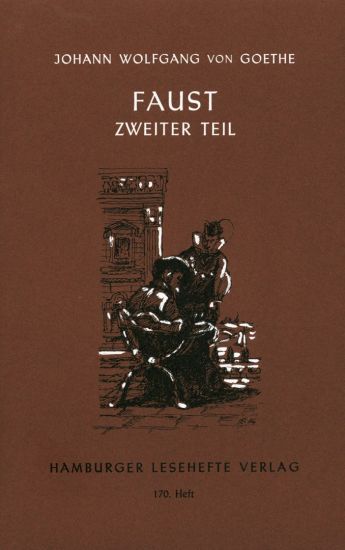
Die Arbeit an seinem "Faust" hat Goethe von den Anfängen des Urfaust im Jahre 1772 bis zur Vollendung des 2. Teiles ein Jahr vor seinem Tode sein Leben lang beschäftigt. Das Schicksal Fausts, der aus unersättlichem Wissensdrang einen Pakt mit dem Teufel schliesst, wird zum Gegenstand eines metaphysischen Welthandels zwischen dem an die irrende, aber gute Menschheit glaubenden Gott-Vater und Mephistopheles, der Verkörperung des Bösen. In diesem Werk spiegeln sich alle Stufen von Goethes Entwicklung vom Sturm und Drang der Jugend über die Klassik der Reifezeit bis zum grossartigen späten Stil Goethes wider. Das Nachwort enthält: Der historische Faust - Die Volksbücher - Marlowes Tragödie und die Faustspiele in Deutschland - Zur Entstehungsgeschichte von Goethes Faustdichtung - Die Gretchentragödie - Zur Textgestaltung. Die ausführlichen Anmerkungen sind auf den Schulgebrauch abestellt.
Italian Journey 1786-1788

Italian Journey 1786-1788

Johann Wolfgang von Goethe

Penguin Classics
1982
pokkari

Halvin toimitettuna 18,70 €

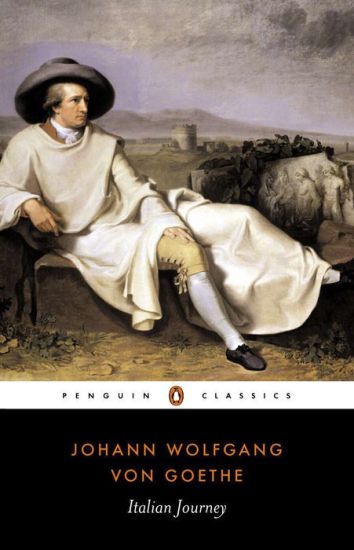
In 1786, when he was already the acknowledged leader of the Sturm und Drang literary movement, Goethe set out on a journey to Italy to fulfil a personal and artistic quest and to find relief from his responsibilities and the agonies of unrequited love. As he travelled to Venice, Rome, Naples and Sicily he wrote many letters, which he later used as the basis for the Italian Journey. A journal full of fascinating observations on art and history, and the plants, landscape and the character of the local people he encountered, this is also a moving account of the psychological crisis from which Goethe emerged newly inspired to write the great works of his mature years.
Römische Elegien

Römische Elegien

Johann Wolfgang von Goethe

Insel Verlag GmbH
1980
sidottu
Ein Mord mit Blausäure-Marzipankartoffeln hält den Kriminaler Karl Grandauer ebenso in Atem wie seine Schwiegermutter und der eigene Nachwuchs. Traudls Bruder, der wortschnelle Kurt, hat heimlich die Jüdin Sarah geheiratet, was den national-ehrgeizigen Adi veranlasst, sich aus politischen Gründen von der Familie zurückzuziehen. Die Wahl Hitlers zum Reichskanzler vertieft die politischen Gräben bei der Familie und den Freunden Karl Grandauers. Auch auf der Straße ist die "Bewegung" spürbar. SA-Männer bestimmen das Bild. In seinem Amt kommt der unpolitische Karl immer mehr in die Mahlsteine der sich polarisierenden Gesellschaft. Der Sohn eines stadtbekannten Nazis wird tot aufgefunden. Ein Täter wird präsentiert, doch Grandauer schießt quer.
Elective Affinities

Elective Affinities

Johann Wolfgang von Goethe

Penguin Classics
1978
pokkari

Halvin toimitettuna 18,70 €

Eduard and Charlotte are an aristocratic couple who live a harmonious but idle life in their estate. But the peace of their existence is thrown into chaos when two visitors - Eduard's friend the Captain and Charlotte's passionate young ward Ottilie - provoke unexpected attraction and forbidden love. Taking its title from the principle of elective affinities - the theory that certain chemicals are naturally drawn to one another - this is a penetrating study of marriage and adultery. Inspired by Goethe's own conflicting loyalties as he battled to maintain his relationship with his wife and control his feelings for a younger woman, Elective Affinities is one of the greatest works of the romance era: a rich exploration of love, conflict, and the inescapable force of fate.
Theory of Colours

Theory of Colours

Johann Wolfgang von Goethe

MIT Press
1970
pokkari

Halvin toimitettuna 32,50 €

By closely following Goethe's explanations of the color phenomena, the reader may become so divorced from the wavelength theory—Goethe never even mentions it—that he may begin to think about color theory relatively unhampered by prejudice, ancient or modern. By the time Goethe's Theory of Colours appeared in 1810, the wavelength theory of light and color had been firmly established. To Goethe, the theory was the result of mistaking an incidental result for an elemental principle. Far from pretending to a knowledge of physics, he insisted that such knowledge was an actual hindrance to understanding. He based his conclusions exclusively upon exhaustive personal observation of the phenomena of color. Of his own theory, Goethe was supremely confident: “From the philosopher, we believe we merit thanks for having traced the phenomena of colours to their first sources, to the circumstances under which they appear and are, and beyond which no further explanation respecting them is possible.” Goethe's scientific conclusions have, of course, long since been thoroughly demolished, but the intelligent reader of today may enjoy this work on quite different grounds: for the beauty and sweep of his conjectures regarding the connection between color and philosophical ideas; for an insight into early nineteenth-century beliefs and modes of thought; and for the flavor of life in Europe just after the American and French Revolutions. The book does not have to be studied to be appreciated. Goethe's subjective theory of colors permits him to speak most persuasively of color harmony and aesthetics. In some readers these notions will evoke a positive response on their merits. Others may regard them as pure fantasy, but savor the grace and style of their exposition. The work may also be read as an accurate guide to the study of color phenomena. Goethe's conclusions have been repudiated, but no one quarrels with his reporting of the facts to be observed. With simple objects—vessels, prisms, lenses, and the like—the reader will be led through a demonstration course not only in subjectively produced colors, but also in the observable physical phenomena of color. By closely following Goethe's explanations of the color phenomena, the reader may become so divorced from the wavelength theory—Goethe never even mentions it—that he may begin to think about color theory relatively unhampered by prejudice, ancient or modern.

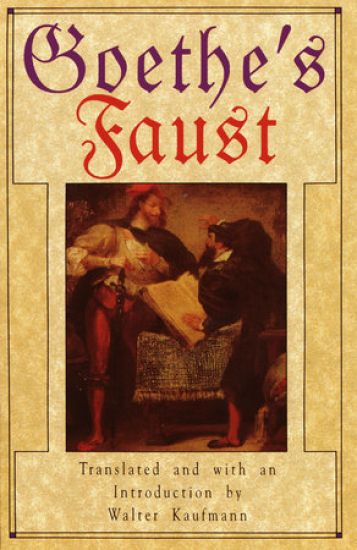
Goethe's Faust

Goethe's Faust

Johann Wolfgang Von Goethe

Anchor Books
1962
pokkari

Halvin toimitettuna 19,50 €

The best translation of Faust available, this volume provides the original German text and its English counterpart on facing pages. Walter Kaufmann's translation conveys the poetic beauty and rhythm as well as the complex depth of Goethe's language. Includes Part One and selections from Part Two.