Kirjojen hintavertailu – 12 903 725 kirjaa ja 27 kauppaa

Kirjailija

Johannes Karl Fink

Kirjat ja teokset yhdessä paikassa: 28 kirjaa, julkaisuja vuosilta 2009–2024, suosituimpiin kuuluu High Performance Polymers. Vertaile teosten hintoja ja tarkista saatavuus suomalaisista kirjakaupoista.

28 kirjaa

Kirjojen julkaisuvuodet: 2009–2024.

High Performance Polymers

High Performance Polymers

Johannes Karl Fink

William Andrew Publishing
2014
sidottu
Approaching the material from a chemistry and engineering perspective, High Performance Polymers presents the most reliable and current data available about state-of-the-art polymerization, fabrication, and application methods of high performance industrial polymers. Chapters are arranged according to the chemical constitution of the individual classes, beginning with main chain carbon-carbon polymers and leading to ether-containing, sulfur-containing, and so on. Each chapter follows an easily readable template, provides a brief overview and history of the polymer, and continues on to such sub-topics as monomers; polymerization and fabrication; properties; fabrication methods; special additives; applications; suppliers and commercial grades; safety; and environmental impact and recycling. High Performance Polymers brings a wealth of up-to-date, high performance polymer data to you library, in a format that allows for either a fast fact-check or more detailed study. In this new edition the data has been fully updated to reflect all developments since 2008, particularly in the topics of monomers, synthesis of polymers, special polymer types, and fields of application.
Reactive Polymers Fundamentals and Applications

Reactive Polymers Fundamentals and Applications

Johannes Karl Fink

William Andrew Publishing
2013
sidottu
The use of reactive polymers enables manufacturers to make chemical changes at a late stage in the production process—these in turn cause changes in performance and properties. Material selection and control of the reaction are essential to acheive optimal performance. The second edition of Reactive Polymers Fundamentals and Applications introduces engineers and scientists to the range of reactive polymers available, explains the reactions that take place, and details applications and performance benefits. Basic principles and industrial processes are described for each class of reactive resin (thermoset), as well as additives, the curing process, and applications and uses. The initial chapters are devoted to individual resin types (e.g. epoxides, cyanacrylates, etc.); followed by more general chapters on topics such as reactive extrusion and dental applications. Material new to this edition includes the most recent developments, applications and commercial products for each chemical class of thermosets, as well as sections on fabrication methods, reactive biopolymers, recycling of reactive polymers, and case studies. Injection molding of reactive polymers, radiation curing, thermosetting elastomers, and reactive extrusion equipment are all covered as well.
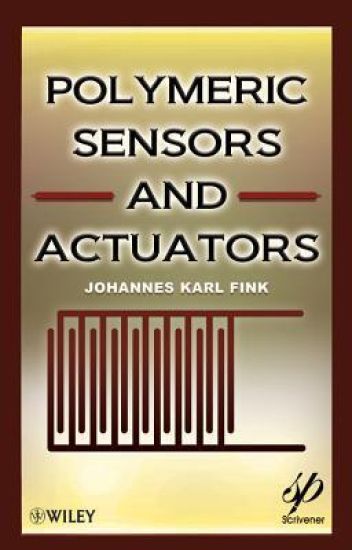
Polymeric Sensors and Actuators

Polymeric Sensors and Actuators

Johannes Karl Fink

John Wiley Sons Inc
2012
sidottu
The book exhaustively covers the various polymers that are used for sensors and actuators from the perspective of organic chemistry. The field of polymeric sensors and actuators is developing very rapidly as newly derived polymer materials are suitable for sensor technology. This book uniquely and comprehensively covers the various polymers that are used for sensors and actuators. The author has researched both scientific papers and patents to include all the recent discoveries and applications. Since many chemists may not be very familiar with the physical background as well as how sensors operate, Polymeric Sensors and Actuators includes a general chapter dealing with the overall physics and basic principles of sensors. Complementary chapters on their methods of fabrication as well as the processing of data are included. The actuators sections examine the fields of applications, special designs, and materials. The final chapter is dedicated to liquid crystal displays. The book concludes with four extensive indices including one special one on analytes to allow the practitioner to easily use the text. This comprehensive text examines the following sensor types: Humidity SensorsBiosensorsMechanical SensorsOptical SensorsSurface Plasmon ResonanceTest StripsMicroelectromechanical (MEMS) SensorsPiezoelectric SensorsAcoustic Wave SensorsElectronic NoseSwitchable Polymers
Handbook of Engineering and Specialty Thermoplastics, 4 Volume Set

Handbook of Engineering and Specialty Thermoplastics, 4 Volume Set

Johannes Karl Fink; Sabu Thomas; Visakh P. M.

John Wiley Sons Inc
2011
sidottu
Plastics, just like any other material, have experienced a rapid development over the last decade and it is vital for chemical engineers to have a single source documenting all these developments. Arranged according to the chemical constitution of polymers, this four-volume set reviews the developments that have taken place in the last decade, focusing on common types of polymers belonging to the class of water soluble polymers. It covers a wide range of applications including polyolefins, styrenics, water soluble polymers, polyether, polyesters, and nylon.
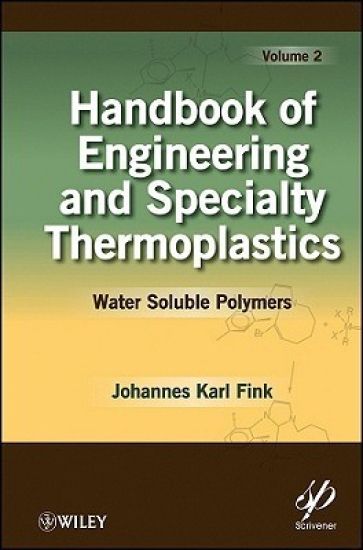
Handbook of Engineering and Specialty Thermoplastics, Volume 2
This book focuses on common types of polymers belonging to the class of water soluble polymers. It covers a wide range of applications: food, cosmetic, medical, lithography and ink jet printing, agricultural, wastewater cleaning, and oilfield. The text is arranged according to the chemical constitution of polymers and reviews the developments that have taken place in the last decade. Each chapter follows the same template. A brief introduction to the polymer type is given and previous monographs and reviews dealing with the topic are listed for quick reference. The text continues with monomers, polymerization, fabrication techniques, properties, applications, as well as safety issues. Providing a rather encyclopedic approach to water soluble polymers, the Handbook of Engineering and Specialty Thermoplastics: Presents a listing of suppliers and commercial grades Reviews current patent literature, essential for the engineer developing new products Contains an extensive tradenames index with information that is fairly unique Concludes with an index of acronyms and a general index The Handbook of Engineering and Specialty Thermoplastics: Water Soluble Polymers provides a comprehensive reference for chemical engineers and offers advanced students a textbook for use in courses on chemically biased plastics technology and polymer science.
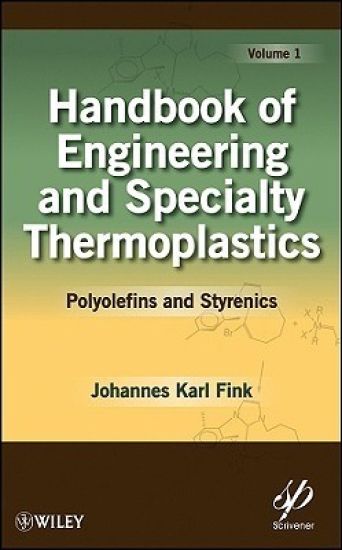
Handbook of Engineering and Specialty Thermoplastics, Volume 1
Utilizes an encyclopedic approach to cover the developments in polyolefins and styrenics during the last decade This book focuses on common types of polymers belonging to the class of polyolefins and styrenics. The text is arranged according to the chemical constitution of polymers and reviews the developments that have taken place in the last decade. A brief introduction to the polymer type is given and previous monographs and reviews dealing with the topic are listed for quick reference. The text continues with monomers, polymerization, fabrication techniques, properties, application, as well as safety issues. Providing a rather encyclopedic approach to polyolefins and styrenics, The Handbook of Engineering and Specialty Thermoplastics: Presents a listing of suppliers and commercial grades Reviews current patent literature, essential for the engineer developing new products Contains as extensive tradenames index with information that is fairly unique Concludes with an index of acronyms The Handbook of Engineering and Specialty Thermoplastics: Polyolefins and Styrenics provides a comprehensive reference for chemical engineers and offers advanced students with a textbook for use in courses on chemically biased plastics technology and polymer science.
A Concise Introduction to Additives for Thermoplastic Polymers
Describes twenty-one of the most important and commonly used additives A Concise Introduction to Additives for Thermoplastic Polymers focuses on additives for thermoplastic polymers and describes 21 of the most important and commonly used additives from Plasticizers and Fillers to Optical Brighteners and Anti-Microbial additives. It also includes chapters on safety and hazards, and prediction of service time models. While there are many exhaustive and complex books dealing with additives for polymers, the size of them deter students and many industry engineers from using them. The purpose of this book, therefore, is to fill this void and present a concise introduction to this important subject. Written in an accessible and practical style, the author introduces the reader to the complex subject of plastics additives in an engaging manner. His ability to be concise is the result of his teaching courses on the subject and using his own lecture notes for material. This book comprises the author's course notes so that a larger public can benefit from his knowledge. A Concise Introduction to Additives for Thermoplastic Polymers is the ideal primer for students who will later work in polymer science or the development of plastics formulation, as well as industry engineers and specialists who want to have a deeper knowledge of the plastics industry.
Physical Chemistry in Depth

Physical Chemistry in Depth

Johannes Karl Fink

Springer-Verlag Berlin and Heidelberg GmbH Co. K
2009
sidottu
"Physical Chemistry in Depth" is not a stand-alone text, but complements the text of any standard textbook on "Physical Chemistry" into depth having in mind to provide profound understanding of some of the topics presented in these textbooks. Standard textbooks in Physical Chemistry start with thermodynamics, deal with kinetics, structure of matter, etc. The "Physical Chemistry in Depth" follows this adjustment, but adds chapters that are treated traditionally in ordinary textbooks inadequately, e.g., general scaling laws, the graphlike structure of matter, and cross connections between the individual disciplines of Physical Chemistry. Admittedly, the text is loaded with some mathematics, which is a prerequisite to thoroughly understand the topics presented here. However, the mathematics needed is explained at a really low level so that no additional mathematical textbook is needed.