Kirjojen hintavertailu – 12 859 818 kirjaa ja 27 kauppaa
Kirjailija
John Banville
Kirjat ja teokset yhdessä paikassa: 117 kirjaa, julkaisuja vuosilta 1991–2027, suosituimpiin kuuluu Roger's Version. Vertaile teosten hintoja ja tarkista saatavuus suomalaisista kirjakaupoista.
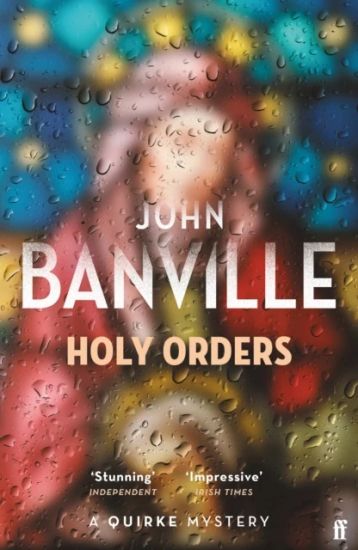
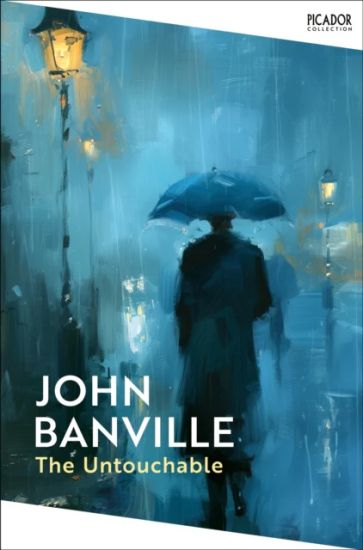
FROM THE BESTSELLING AUTHOR OF SNOW 'Stunning' Independent 'Impressive' Irish Times When spring storms descend on 1950s Dublin, a body is found in a canal, and pathologist Quirke must find the truth behind this brutal murder. The investigation leads him into the dark heart of the organisation that really runs this troubled city: the church. As Quirke's traumatic childhood in a priest-run orphanage returns to haunt him, he must face his greatest trial yet. Praise for the Quirke Series: 'A joy to read.' Sunday Times 'Darkly dangerous [with] flinty humour.' Daily Telegraph 'Beguiling characters and evocative settings . . . Impeccable.' The Times
FROM THE BESTSELLING AUTHOR OF SNOW 'Banville is one of my favourite writers alive.' REBECCA F. KUANG 'More than a touch of genius.' THE TIMES As a deep, bewildering fog cloaks Dublin, a young woman named April is found to have vanished. Flawed pathologist Quirke responds to a request to help find her. Speaking with those who knew her, he begins to realize that there may have been more behind the young woman's secrecy than he could have imagined. When a disturbing discovery is made, the complex web of love, lies, jealousy and dark secrets that April spun her life from finally begins to unravel. Praise for the Quirke Series: 'A joy to read.' Sunday Times 'Darkly dangerous [with] flinty humour.' Daily Telegraph 'Beguiling characters and evocative settings . . . Impeccable.' The Times
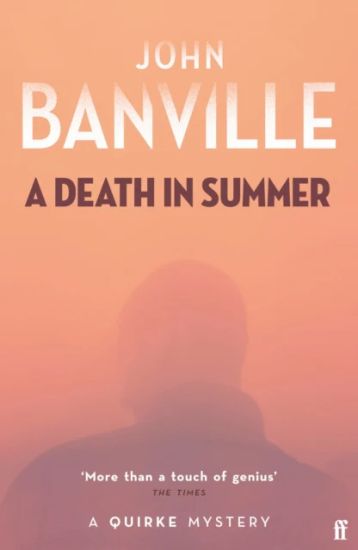
FROM THE BESTSELLING AUTHOR OF SNOW'Banville is one of my favourite writers alive.' REBECCA F. KUANG 'More than a touch of genius.' THE TIMES Newspaper magnate Richard Jewell is found dead at his country estate, a shotgun still in his hands. Few see his demise as cause for sorrow, but before long, Quirke realizes that, rather than the suspected suicide, 'Diamond Dick' has been murdered. Suspicion soon falls on one of Jewell's biggest rivals, but as Quirke gets to know Jewell's beautiful, enigmatic wife, his fragile sister and those who work for the family, it becomes clear that not everything in this household is as it seems. Praise for the Quirke Series: 'A joy to read.' Sunday Times 'Darkly dangerous [with] flinty humour.' Daily Telegraph 'Beguiling characters and evocative settings . . . Impeccable.' The Times
The second volume of John Banville’s Revolutions Trilogy and winner of the Guardian Fiction Prize, Kepler is a gorgeous historical novel exploring the life of Johannes Kepler, one of the world’s greatest mathematicians. Johannes Kepler, born in 1571 in south Germany, was one of the world’s greatest mathematicians and astronomers. The novel Kepler, by John Banville, brilliantly recreates his life and his incredible drive to chart the orbits of the planets and the geometry of the universe while being driven from exile to exile by religious and domestic strife. At the same time it illuminates the harsh realities of the Renaissance world; rich in imaginative daring but rooted in poverty, squalor and the tyrannical power of emperors.‘Superbly illuminates the man, the time, and the everlasting quest for knowledge’ The Observer
Dark secrets and reality unravel in Shroud, the second of John Banville’s three novels to feature Cass Cleave, alongside Eclipse and Ancient Light. Axel Vander, distinguished intellectual and elderly academic, is not the man he seems. When a letter arrives out of the blue, threatening to unveil his secrets – and carefully concealed identity – Vander travels to Turin to meet its author. There, muddled by age and alcohol, unable always to distinguish fact from fiction, Vander comes face to face with the woman who has the knowledge to unmask him, Cass Cleave. However, her sense of reality is as unreliable as his, and the two are quickly drawn together, their relationship dark, disturbed and doomed to disaster from its very start.‘Shroud will not be easily surpassed for its combination of wit, moral complexity and compassion. It is hard to see what more a novel could do’ The Irish TimesNow part of the Picador Collection, a series showcasing the very best of modern literature.
Ghosts opens with a shipwreck, leaving a party of sightseers temporarily marooned on an island. The stranded castaways make their way towards the refuge of the isle’s reclusive savant; but the big isolated house which is home to Professor Silas Kreutznaer and his laconic assistant, Licht, is also home to another, unnamed presence . . . Onto this seemingly haunted island, where a strange singing hangs in the air, Banville drops a scrumptious cast of characters – including a murderer – and weaves a tale where the details are clear but the conclusion polymorphous – shifting appearances, transformations and thwarted assumptions make this world of uneasy calm utterly enthralling.‘As fascinating, complex, stimulating and energetic as any work of art . . . A work which proves Banville as a master, the artist in total control of his craft’ The Times ‘John Banville’s funniest book . . . another triumph by our most outrageously inventive and daring novelist’ The Sunday Independent‘Makes this astonishingly attractive novelist one of the most important writers now at work in English – a key thinker, in fact, in fiction’ The London Review of BooksNow part of the Picador Collection, a series showcasing the very best of modern literature.
The first volume of John Banville’s Revolutions Trilogy and winner of the James Tait Black Memorial Prize, Doctor Copernicus is a rich historical novel that explores the life of one of history’s greatest scientists. The work of Nicholas Koppernigk, better known as Copernicus, shattered the medieval view of the universe and led to the formulation of the image of the solar system we know today. Here his life is powerfully evoked in a novel that offers a vivid portrait of a man of painful reticence, haunted by a malevolent brother and baffled by the conspiracies that rage around him and his ideas while he searches for the secret of life.‘Banville is superb . . . there are not many historical novels of which it can be said that they illuminate both the time that forms their subject matter and the time in which they are read: Doctor Copernicus is among the very best of them’ The EconomistNow part of the Picador Collection, a series showcasing the very best of modern literature.
The first of John Banville’s novels concerning father and daughter Alexander and Cass Cleave, Eclipse is a lyrical exploration of memory, family and identity. Alexander Cleave, actor, has left his career and his family behind and banished himself to his childhood home. He wants to retire from life, but finds this impossible in a house brimming with presences, some ghostly, some undeniably human. Memories and anxiety for the future, and more particularly for his beloved but troubled daughter, conspire to distract him from his dreaming retirement. This humane and beautifully written story tells the tragic tale of a man, intelligent, preposterous and vulnerable, who in attempting to bring the performance to a close finds himself travelling inevitably towards a devastating denouement.‘This unsparing, compassionate, humane book demonstrates again that Banville is in a class of his own’ The SpectatorNow part of the Picador Collection, a series showcasing the very best of modern literature.
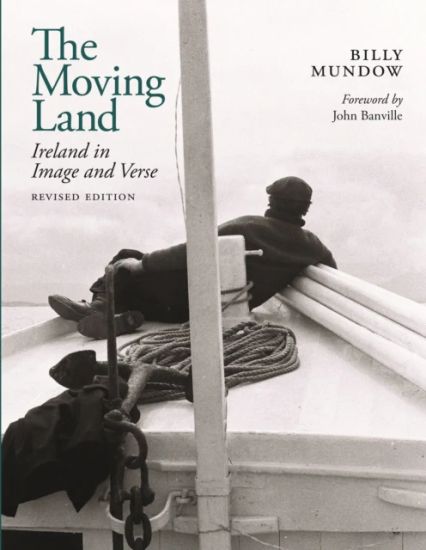
This selection of documentary photography by Billy Mundow matches monochrome images of Ireland from the 1960s to the words of Irish poets, recalling lost generations. Themes of a vanished world spool through the pages, capturing the remote and sparsely populated West of Ireland and its islands – places of breathtaking beauty and tranquillity – the midlands and Dublin’s streetscapes. Concentrating on portraiture and personality, the work follows in the footsteps of the late Bill Doyle. Scenes depicted in The Moving Land become less familiar as time passes, but the poetry paired with each image resonates and connects the viewer with a living heritage. Poems by Gerald Dawe, Patrick Kavanagh, Richard Murphy, Eiléan Ní Chuilleanáin, Moya Cannon, Paul Durcan, Paul Muldoon, and the photographer, take the form of a dinnseanchas and feature throughout. Like a magic lantern, these images flicker from west to east, illuminating Inishbofin, County Galway; Tory Island, County Donegal; rural Ireland; and Dublin City. ‘Billy Mundow’s photographs were taken in the 1960s, in an Ireland that seems to us as archaic as Arcady. This Ireland is a place we recognize but no longer know. Perhaps on the western islands, or in the wilds of Connemara, something of the old world survives. But who now can remember a horse being led along a muddy lane with a sea wall on one side and cottages on the other? Which of us recalls the planter’s daughter wreathed in a headscarf and a smile? Where now are those two forlorn children glimpsed in a doorway one overcast evening? … These photographs, Billy Mundow tells us, were taken on the fly, on the sly. This is how Cartier-Bresson worked, his Leica concealed in a pocket, watching for the moment when the wind swooped and the world’s skirts blew up.’ John Banville
FROM THE BESTSELLING AUTHOR OF SNOW 'Absorbing' The Times 'Gripping' Scotsman Quirke's pathology department, set deep beneath 1950s Dublin, is his own gloomy realm: always quiet, always night, and always under his control. Until, late one evening, he stumbles across a body that should not be there. The investigation he opens uncovers a dark secret at the heart of the city's high Catholic network - a secret with the power to shake his own family and everything he holds dear. Praise for the Quirke Series: 'A joy to read.' Sunday Times 'Darkly dangerous [with] flinty humour.' Daily Telegraph 'Beguiling characters and evocative settings . . . Impeccable.' The Times
Quirke's latest case leads him inexorably toward the dark machinations of an old foe, in the seventh mystery from "one of the most imaginative literary novelists writing in the English language today" (The Washington Post)Perhaps Quirke has been down among the dead too long. Lately the Dublin pathologist has suffered hallucinations and blackouts, and he fears the cause is a brain tumor. A specialist diagnoses an old head injury caused by a savage beating; all that's needed, the doctor declares, is an extended rest. But when a body turns up, any possibility of rest vanishes... The corpse is discovered in a crashed car one hot June night. The police assume the driver's death was either an accident or a suicide, but Quirke's examination of the body leads him to believe otherwise. Then his daughter Phoebe gets a mysterious visit from an acquaintance; when the woman later disappears, Phoebe asks her father for help, and Quirke in turn seeks the assistance of his old friend Inspector Hackett. Before long, the two men find themselves deep in a shadowy world where one of the city's most powerful men uses the cover of politics and religion to make obscene profits. Even the Dead--John Banville's seventh novel featuring the endlessly fascinating Quirke--is a story of surpassing intensity and surprising beauty.
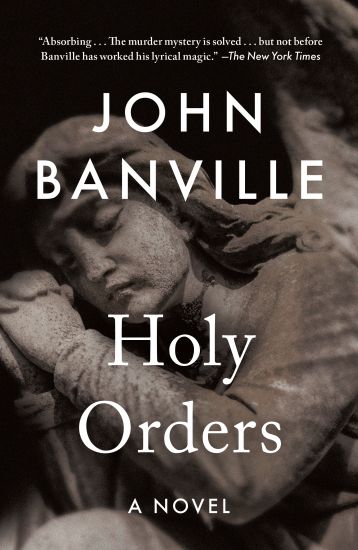
Quirke confronts the Catholic Church in one of the "Ten Best Mysteries of the Year" (The Wall Street Journal)In Quirke's time as a pathologist, he's come up against everything from the most influential men in Dublin to an international conspiracy to his own family. But in John Banville's latest, he's up against the most powerful force in 1950s Ireland: the Catholic Church. When the body of Phoebe's friend Jimmy Minor is discovered floating in the Dublin canal, she calls on her father and his friend Inspector Hackett for help. Investigating the journalist's murder will send them prying into dark secrets the Church will kill to keep. The two men will be tested physically, intellectually, and morally as never before--and Quirke will be forced to confront the demons that have plagued him since his grim childhood in a Catholic orphanage...
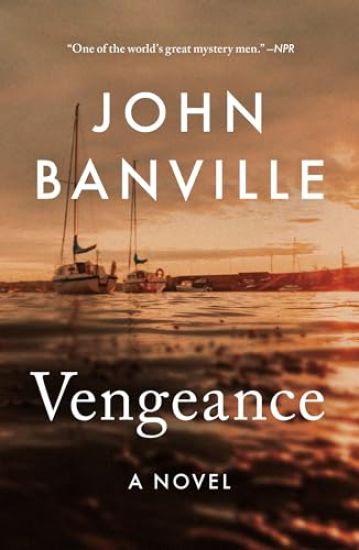
Quirke finds himself at the center of a deadly intergenerational feud in the latest novel from Booker Prize-winning "literary polymath" (The New York Times) John BanvilleTwo men go sailing off the coast of Ireland. Only one comes back, claiming the other shot himself. But Detective Inspector Hackett and his friend Quirke aren't so sure... The dead man is the patriarch of the powerful Delahaye family; the survivor is the scion of the Clancy family, their longtime rivals turned resentful business partners. As Quirke and Hackett investigate the death, they become embroiled in this multigenerational entanglement, encountering a host of characters at the heart of the mystery: Mona, Delahaye's beautiful, vicious young widow, his enigmatic identical twin sons, and Jack Clancy, his resentful, downtrodden, womanizing partner. But when a second, even more shocking death occurs, it becomes clear that terrible secrets undergird the families' world--secrets which Quirke will need to uncover if he wants to prevent more deaths.
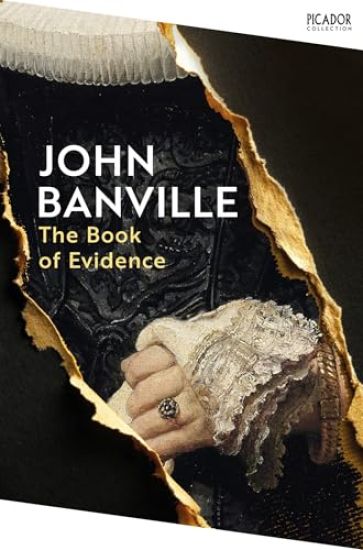
Inspired by the crimes of Malcolm Macarthur in Ireland, 1982, The Book of Evidence by John Banville is a gripping portrait of a cold, deceptive and utterly unprecedented killer, shortlisted for the Booker Prize.'Banville writes a dangerous and clear-running prose and has a grim gift of seeing people's souls' – Don DeLillo, author of White Noise and LibraFreddie Montgomery has committed two crimes. He stole a small Dutch master – an unattributed painting of a middle-aged woman – from a wealthy family friend. And he murdered a chambermaid who caught him in the act, bludgeoning her to death with a hammer. An eccentric narcissist, he has little to say about the woman he killed. He travels through life without any apparent remorse. He killed her, he says, because he was physically capable of it. It made sense to him. However, as he narrates his testimony, there is one thing he cannot understand. One thing he would desperately like to know. Why did he want to steal the painting?'Remarkable' – Ruth Rendell, author of the Inspector Wexford novelsThe Book of Evidence is the first in John Banville's acclaimed Frames Trilogy. It is followed by Ghosts and Athena. Now part of the Picador Collection, a series showcasing the very best of modern literature.
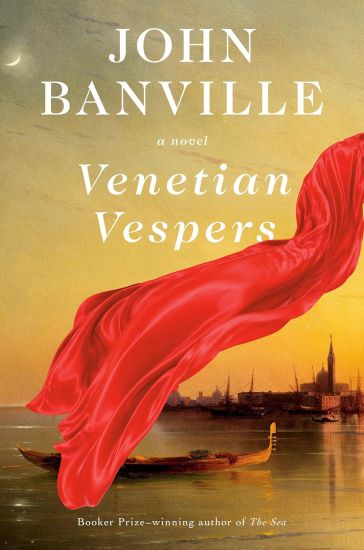
A masterful, enthralling new novel from the Booker Prize winner Everything was a puzzle, everything a trap set to mystify and hinder me. . . . 1899. As the new century approaches, struggling English writer Evelyn Dolman--a hack, by his own description--marries Laura Rensselaer, daughter of an American oil tycoon. Evelyn anticipates that he and Laura will inherit a substantial fortune and lead a comfortable, settled life. But his hopes are dashed when a mysterious rift between Laura and her father, just before the patriarch's death, leads to her disinheritance. The unhappy newlyweds travel to Venice to celebrate the New Year at the Palazzo Dioscuri, ancestral home of the charming but treacherous Count Barbarigo. From their first moments in the mist-blanketed floating city, otherworldly occurrences begin to accumulate. Evelyn's already jangled nerves fray further. Where has Laura disappeared to? How to explain the increasingly sinister circumstances closing around him? Could he be losing his mind? Venetian Vespers is a haunting, atmospheric noir from one of the most sophisticated stylists of our time.
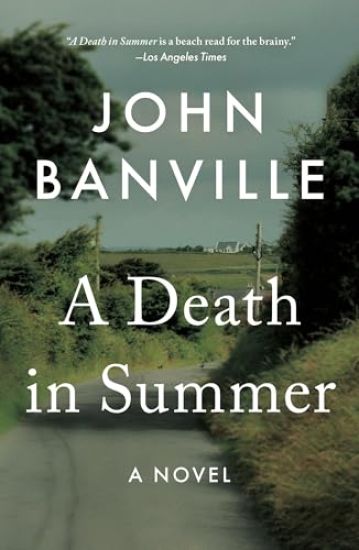
A powerful man's suspicious suicide has Dublin on a boil in the fourth Quirke volume, named one of the Chicago Tribune's Best Reads of the YearOn a sweltering summer afternoon, newspaper tycoon Richard Jewell--known to his many enemies as Diamond Dick--is discovered with his head blown off by a shotgun blast. But is it suicide or murder? For help with the investigation, Detective Inspector Hackett calls in his old friend Quirke, who has an unusual level of access to Dublin's elite. Jewell's coolly elegant French wife, Fran oise, seems less than shocked by her husband's death. But Dannie, Jewell's high-strung sister, is devastated, and Quirke is surprised to learn that in her grief she has turned to an unexpected friend: David Sinclair, Quirke's ambitious assistant in the pathology lab at the Hospital of the Holy Family. To complicate things further, an unlikely romance has begun to blossom between Sinclair and Quirke's fractious daughter Phoebe. As a record heat wave envelops the city and the secrets underlying Diamond Dick's empire come to light, Quirke and Hackett find themselves caught up in a dark maze of intrigue and violence that threatens to end in disaster. Tightly plotted and gorgeously written, A Death in Summer is John Banville at his thrilling best.