Kirjojen hintavertailu – 12 859 827 kirjaa ja 27 kauppaa
Kirjailija
John Bunyan
Kirjat ja teokset yhdessä paikassa: 731 kirjaa, julkaisuja vuosilta 1778–2026, suosituimpiin kuuluu The Pilgrim's Progress from This World to That Which Is to Come. Vertaile teosten hintoja ja tarkista saatavuus suomalaisista kirjakaupoista.
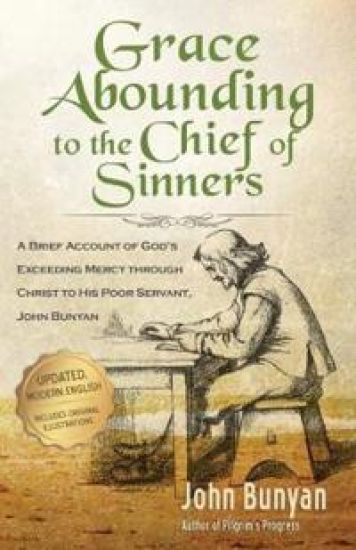
Come and hear, all ye that fear God, and I will declare what he has done unto my soul. (Psalm 66:16)This is a short and honest account of how God demonstrated His exceeding great mercy to His unworthy servant, John Bunyan. This story specifically tells how Bunyan was converted. John Bunyan was a companion of sin and was troubled by sin. He fought temptation and sin in his own strength and lost, and in despair he gave up hope of ever finding God's mercy; but the Lord Jesus Christ at last delivered him from the guilt and terror that so often and so viciously troubled him. In addition to this, a short account of Bunyan's call to the work of the ministry is told, along with the trials and trouble he encountered - including some of the difficulties he faced while in prison. This is all taken from his writings and is now published for the encouragement and support of others who are weak and tempted and need strength and hope and victory in Jesus. About the AuthorJohn Bunyan was born in November 1628, in Elstow, England. A celebrated English minister and preacher, he wrote The Pilgrim's Progress (1678), the book that was the most characteristic expression of the Puritan religious outlook. His other works include doctrinal and controversial writings; a spiritual autobiography, Grace Abounding (1666); and the allegory, The Holy War (1682).
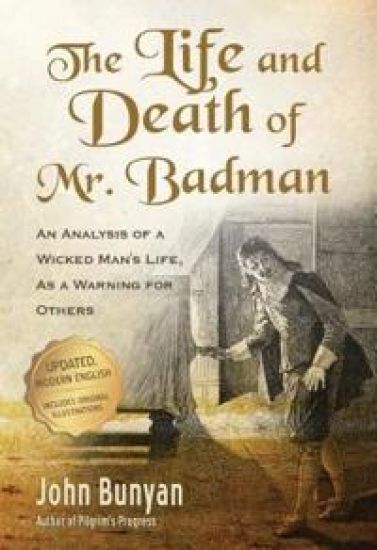
This novel was designed to be a companion piece to Pilgrim's journey to heaven in 'The Pilgrim's Progress', describing instead the progress of the wicked Mr Badman through the world to his death and damnation. It is set out as a dialogue between two ernest gentlement - Mr Attentive and Mr Wiseman.
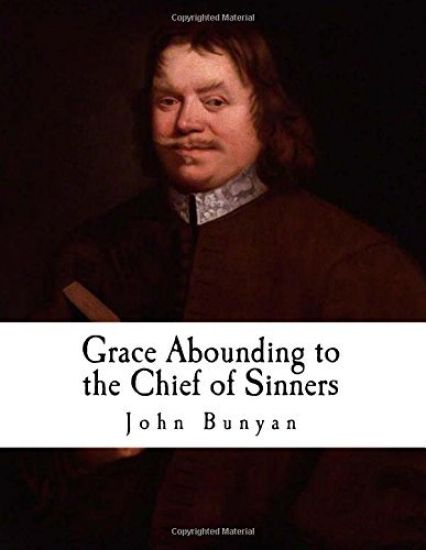
Grace Abounding to the Chief of Sinners, or The Brief Relation of the Exceeding Mercy of God in Christ to his Poor Servant John Bunyan is a Puritan spiritual autobiography written by John Bunyan. It was composed while Bunyan was serving a twelve-year prison sentence in Bedford gaol for preaching without a license and was first published in 1666. The title contains allusions to two Biblical passages: 'Grace Abounding' is a reference to the Epistle to the Romans 5:20, which states 'Where sin abounded, grace did much more abound' (KJV) and 'Chief of Sinners' refers to First Epistle to Timothy 1:15, where Paul refers to himself by the same appellation.
Grace Abounding to the Chief of Sinners, or The Brief Relation of the Exceeding Mercy of God in Christ to his Poor Servant John Bunyan is a Puritan spiritual autobiography written by John Bunyan. It was composed while Bunyan was serving a twelve-year prison sentence in Bedford gaol for preaching without a license and was first published in 1666. The title contains allusions to two Biblical passages: 'Grace Abounding' is a reference to the Epistle to the Romans 5:20, which states 'Where sin abounded, grace did much more abound' (KJV) and 'Chief of Sinners' refers to First Epistle to Timothy 1:15, where Paul refers to himself by the same appellation.
The Pilgrim's Progress - John Bunyan. The Pilgrim's Progress from This World, to That Which Is to Come is a 1678 Christian allegory written by John Bunyan. It is regarded as one of the most significant works of religious English literature, has been translated into more than 200 languages, and has never been out of print. It has also been cited as the first novel written in English. Bunyan began his work while in the Bedfordshire county prison for violations of the Conventicle Act, which prohibited the holding of religious services outside the auspices of the established Church of England. Early Bunyan scholars such as John Brown believed The Pilgrim's Progress was begun in Bunyan's second, shorter imprisonment for six months in 1675, but more recent scholars such as Roger Sharrock believe that it was begun during Bunyan's initial, more lengthy imprisonment from 1660 to 1672 right after he had written his spiritual autobiography, Grace Abounding to the Chief of Sinners.
Acclaimed as "one of the greatest literary masterpieces in the world," John Bunyan's beloved allegory captivates the reader's attention while providing insight into the Christian life. Join Bunyan in this illustrated edition as he tells the story of "Christian," a man on an adventurous journey across rough terrain, over sunlit hills, and through dark valleys. His trek is an intriguing allegory for today--mixed with the chivalric adventure of yesterday--as the pilgrimage takes us from the City of Destruction to the Celestial City whose builder and maker is God.
Grace Abounding to the Chief of Sinners, or The Brief Relation of the Exceeding Mercy of God in Christ to his Poor Servant John Bunyan is a Puritan spiritual autobiography written by John Bunyan. It was composed while Bunyan was serving a twelve-year prison sentence in Bedford gaol for preaching without a license and was first published in 1666. The title contains allusions to two Biblical passages: 'Grace Abounding' is a reference to the Epistle to the Romans 5:20, which states 'Where sin abounded, grace did much more abound' (KJV) and 'Chief of Sinners' refers to First Epistle to Timothy 1:15, where Paul refers to himself by the same appellation............ John Bunyan ( baptised 30 November 1628 - 31 August 1688) was an English writer and Puritan preacher best remembered as the author of the Christian allegory The Pilgrim's Progress. In addition to The Pilgrim's Progress, Bunyan wrote nearly sixty titles, many of them expanded sermons. Bunyan came from the village of Elstow, near Bedford. He had some schooling and at the age of sixteen joined the Parliamentary army during the first stage of the English Civil War. After three years in the army he returned to Elstow and took up the trade of tinker, which he had learned from his father. He became interested in religion after his marriage, attending first the parish church and then joining the Bedford Meeting, a nonconformist group in Bedford, and becoming a preacher. After the restoration of the monarch, when the freedom of nonconformists was curtailed, Bunyan was arrested and spent the next twelve years in jail as he refused to give up preaching. During this time he wrote a spiritual autobiography, Grace Abounding to the Chief of Sinners, and began work on his most famous book, The Pilgrim's Progress, which was not published until some years after his release. Bunyan's later years, in spite of another shorter term of imprisonment, were spent in relative comfort as a popular author and preacher, and pastor of the Bedford Meeting. He died aged 59 after falling ill on a journey to London and is buried in Bunhill Fields. The Pilgrim's Progress became one of the most published books in the English language; 1,300 editions having been printed by 1938, 250 years after the author's death. He is remembered in the Church of England with a Lesser Festival on 30 August, and on the liturgical calendar of the United States Episcopal Church on 29 August. Some other churches of the Anglican Communion, such as the Anglican Church of Australia, honour him on the day of his death (31 August). EARLY LIFE: John Bunyan was born in 1628 to Thomas and Margaret Bunyan at Bunyan's End in the parish of Elstow, Bedfordshire. Bunyan's End is located about halfway between the hamlet of Harrowden (one mile south-east of Bedford) and Elstow High Street. Bunyan's date of birth is not known, but he was baptised on 30 November 1628, the baptismal entry in the parish register reading "John the sonne of Thomas Bunnion Jun., the 30 November". The name Bunyan was spelt in many different ways (there are 34 variants in Bedfordshire Record Office) and had its origins in the Norman-French name Buignon. There had been Bunyans in north Bedfordshire since at least 1199. Bunyan's father was a brazier or tinker who travelled around the area mending pots and pans, and his grandfather had been a chapman or small trader. The Bunyans also owned land in Elstow, so Bunyan's origins were not quite as humble as he suggested in his autobiographical work Grace Abounding to the Chief of Sinners when he wrote that his father's house was "of that rank that is meanest and most despised in the country"......
The story begins in an unfortunate place called City of Destruction in which Christian lives in the company of his family, wife and children. Cristiano appears on the scene with a book in his hands, dressed in rags, with eyes full of tears, lamenting the news he has received through this mysterious book, namely, his city, City of Destruction, will be destroyed with fire heaven and all its inhabitants will be brought to trial for their crimes against the fairest King. Desperate, Christian tries in vain to persuade his family to leave this city to save their lives, but they, showing a deep disinterest in his words, call him mad or sick. Faced with such a desperate situation, Cristiano goes out into the forest to mourn his ruin when suddenly a man named Evangelista (the one who bears good news) approaches him with a radical message, namely, HUYE DE LA ARRO COMA, that will fall on this city and escapes to the Celestial City, home of the fairest of Kings; without thinking for a minute and before the possibility of escaping from such a fate, Christian begins his pilgrimage to salvation.
The Pilgrim's Progress - as Originally Published - being a fac-simile reproduction of the first edition is an unchanged, high-quality reprint of the original edition of 1875. Hansebooks is editor of the literature on different topic areas such as research and science, travel and expeditions, cooking and nutrition, medicine, and other genres. As a publisher we focus on the preservation of historical literature. Many works of historical writers and scientists are available today as antiques only. Hansebooks newly publishes these books and contributes to the preservation of literature which has become rare and historical knowledge for the future.
The Child's Pilgrim's Progress - Vol. 2 is an unchanged, high-quality reprint of the original edition of 1860. Hansebooks is editor of the literature on different topic areas such as research and science, travel and expeditions, cooking and nutrition, medicine, and other genres. As a publisher we focus on the preservation of historical literature. Many works of historical writers and scientists are available today as antiques only. Hansebooks newly publishes these books and contributes to the preservation of literature which has become rare and historical knowledge for the future.
The Child's Pilgrim's Progress - Vol. 1 is an unchanged, high-quality reprint of the original edition of 1860. Hansebooks is editor of the literature on different topic areas such as research and science, travel and expeditions, cooking and nutrition, medicine, and other genres. As a publisher we focus on the preservation of historical literature. Many works of historical writers and scientists are available today as antiques only. Hansebooks newly publishes these books and contributes to the preservation of literature which has become rare and historical knowledge for the future.
The Pilgrim's Progress is an unchanged, high-quality reprint of the original edition of 1866. Hansebooks is editor of the literature on different topic areas such as research and science, travel and expeditions, cooking and nutrition, medicine, and other genres. As a publisher we focus on the preservation of historical literature. Many works of historical writers and scientists are available today as antiques only. Hansebooks newly publishes these books and contributes to the preservation of literature which has become rare and historical knowledge for the future.
The Pilgrim's Progress - As originally published. Being a Fac-Similie Reproduction of the First Edition is an unchanged, high-quality reprint of the original edition of 1875. Hansebooks is editor of the literature on different topic areas such as research and science, travel and expeditions, cooking and nutrition, medicine, and other genres. As a publisher we focus on the preservation of historical literature. Many works of historical writers and scientists are available today as antiques only. Hansebooks newly publishes these books and contributes to the preservation of literature which has become rare and historical knowledge for the future.
The Pilgrim's Progress from This World to that Which is to Come is an unchanged, high-quality reprint of the original edition of 1880. Hansebooks is editor of the literature on different topic areas such as research and science, travel and expeditions, cooking and nutrition, medicine, and other genres. As a publisher we focus on the preservation of historical literature. Many works of historical writers and scientists are available today as antiques only. Hansebooks newly publishes these books and contributes to the preservation of literature which has become rare and historical knowledge for the future.