Kirjojen hintavertailu – 12 859 827 kirjaa ja 27 kauppaa

Kirjailija

John Bunyan

Kirjat ja teokset yhdessä paikassa: 731 kirjaa, julkaisuja vuosilta 1778–2026, suosituimpiin kuuluu The Pilgrim's Progress from This World to That Which Is to Come. Vertaile teosten hintoja ja tarkista saatavuus suomalaisista kirjakaupoista.

731 kirjaa

Kirjojen julkaisuvuodet: 1778–2026.

Grace Abounding

Grace Abounding

John Bunyan

Whitaker House
2019
pokkari
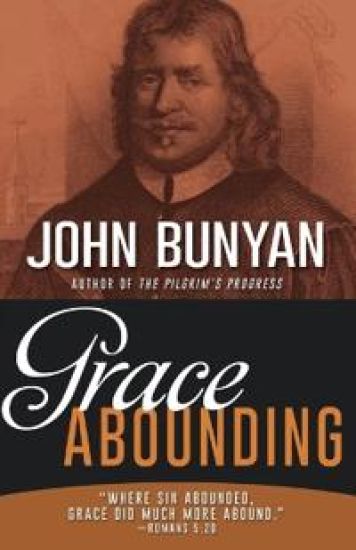
John Bunyan, author of The Pilgrim's Progress, was a great man of faith. However, his conversion and Christian walk weren't easy, and he spent twelve years in jail for preaching the gospel. With power and inspiration, Bunyan tells the story of how
Saved by Grace

Saved by Grace

John Bunyan

Hesed and Emet Publishing
2019
nidottu
This is a new and updated version by H&E Publishing of Saved by Grace, which was first published in 1675, is an exposition of Bunyan's favorite theme-salvation by grace. Taking Ephesians 2:5-"by grace you are saved"-as his text, he sets out to answer five questions about grace: 1) What is it to be saved? 2) What is it to be saved by grace? 3) Who are they that are saved by grace? 4) How it appears that they are saved by grace? 5) What might be the reasons which prevailed with God to save us by grace, rather than by any other means? His treatment is theologically penetrating and yet pastorally sensitive, robustly Reformed and yet warmly evangelical, clearly written and forcefully argued. Simply put, it is an outstanding treatment of a profoundly important subject.
The Pilgrim's Progress

The Pilgrim's Progress

John Bunyan

Big Nest
2018
pokkari
The Pilgrim's Progress is a Christian allegory written by John Bunyan. He began his work while in the Bedfordshire county prison for violations of the Conventicle Act, which prohibited the holding of religious services outside the auspices of the established Church of England. The text is considered one of the most significant works of religious English literature.
The Pilgrim's Progress

The Pilgrim's Progress

John Bunyan

Bibliotech Press
2018
pokkari
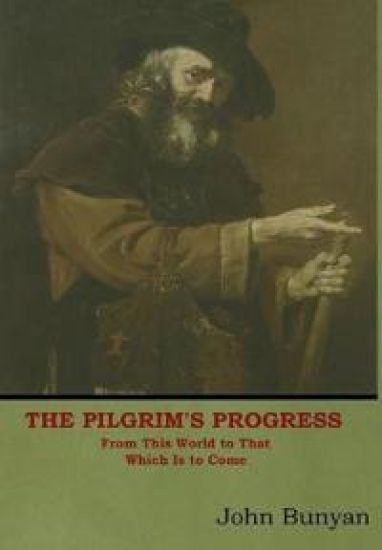
The Pilgrim's Progress from This World, to That Which Is to Come is a 1678 Christian allegory written by John Bunyan. It is regarded as one of the most significant works of religious English literature, has been translated into more than 200 languages, and has never been out of print. It has also been cited as the first novel written in English. Bunyan began his work while in the Bedfordshire county prison for violations of the Conventicle Act of 1664, which prohibited the holding of religious services outside the auspices of the established Church of England. Early Bunyan scholars such as John Brown believed The Pilgrim's Progress was begun in Bunyan's second, shorter imprisonment for six months in 1675, but more recent scholars such as Roger Sharrock believe that it was begun during Bunyan's initial, more lengthy imprisonment from 1660 to 1672 right after he had written his spiritual autobiography Grace Abounding to the Chief of Sinners. The English text comprises 108,260 words and is divided into two parts, each reading as a continuous narrative with no chapter divisions. The first part was completed in 1677 and entered into the Stationers' Register on 22 December 1677. It was licensed and entered in the "Term Catalogue" on 18 February 1678, which is looked upon as the date of first publication. After the first edition of the first part in 1678, an expanded edition, with additions written after Bunyan was freed, appeared in 1679. The Second Part appeared in 1684. There were eleven editions of the first part in John Bunyan's lifetime, published in successive years from 1678 to 1685 and in 1688, and there were two editions of the second part, published in 1684 and 1686. (wikipedia.org)
The Pilgrim's Progress

The Pilgrim's Progress

John Bunyan

Bibliotech Press
2018
sidottu
The Pilgrim's Progress from This World, to That Which Is to Come is a 1678 Christian allegory written by John Bunyan. It is regarded as one of the most significant works of religious English literature, has been translated into more than 200 languages, and has never been out of print. It has also been cited as the first novel written in English. Bunyan began his work while in the Bedfordshire county prison for violations of the Conventicle Act of 1664, which prohibited the holding of religious services outside the auspices of the established Church of England. Early Bunyan scholars such as John Brown believed The Pilgrim's Progress was begun in Bunyan's second, shorter imprisonment for six months in 1675, but more recent scholars such as Roger Sharrock believe that it was begun during Bunyan's initial, more lengthy imprisonment from 1660 to 1672 right after he had written his spiritual autobiography Grace Abounding to the Chief of Sinners. The English text comprises 108,260 words and is divided into two parts, each reading as a continuous narrative with no chapter divisions. The first part was completed in 1677 and entered into the Stationers' Register on 22 December 1677. It was licensed and entered in the "Term Catalogue" on 18 February 1678, which is looked upon as the date of first publication. After the first edition of the first part in 1678, an expanded edition, with additions written after Bunyan was freed, appeared in 1679. The Second Part appeared in 1684. There were eleven editions of the first part in John Bunyan's lifetime, published in successive years from 1678 to 1685 and in 1688, and there were two editions of the second part, published in 1684 and 1686. (wikipedia.org)
The Riches of Bunyan Selected from His Works

The Riches of Bunyan Selected from His Works

John Bunyan

Createspace Independent Publishing Platform
2018
nidottu
John Bunyan ( baptised on November 30, 1628 - August 31, 1688) was an English writer and Puritan preacher best remembered as the author of the Christian allegory The Pilgrim's Progress. In addition to The Pilgrim's Progress, Bunyan wrote nearly sixty titles, many of them expanded sermons. Bunyan came from the village of Elstow, near Bedford. He had some schooling and at the age of sixteen joined the Parliamentary army during the first stage of the English Civil War. After three years in the army he returned to Elstow and took up the trade of tinker, which he had learned from his father. He became interested in religion after his marriage, attending first the parish church and then joining the Bedford Meeting, a nonconformist group in Bedford, and becoming a preacher. After the restoration of the monarch, when the freedom of nonconformists was curtailed, Bunyan was arrested and spent the next twelve years in jail as he refused to give up preaching. During this time he wrote a spiritual autobiography, Grace Abounding to the Chief of Sinners, and began work on his most famous book, The Pilgrim's Progress, which was not published until some years after his release.
The Pilgrim's Progress from this world to that which is to come

The Pilgrim's Progress from this world to that which is to come

John Bunyan

Createspace Independent Publishing Platform
2018
nidottu
John Bunyan ( baptised on November 30, 1628 - August 31, 1688) was an English writer and Puritan preacher best remembered as the author of the Christian allegory The Pilgrim's Progress. In addition to The Pilgrim's Progress, Bunyan wrote nearly sixty titles, many of them expanded sermons. Bunyan came from the village of Elstow, near Bedford. He had some schooling and at the age of sixteen joined the Parliamentary army during the first stage of the English Civil War. After three years in the army he returned to Elstow and took up the trade of tinker, which he had learned from his father. He became interested in religion after his marriage, attending first the parish church and then joining the Bedford Meeting, a nonconformist group in Bedford, and becoming a preacher. After the restoration of the monarch, when the freedom of nonconformists was curtailed, Bunyan was arrested and spent the next twelve years in jail as he refused to give up preaching. During this time he wrote a spiritual autobiography, Grace Abounding to the Chief of Sinners, and began work on his most famous book, The Pilgrim's Progress, which was not published until some years after his release.
The Pilgrim's Progress

The Pilgrim's Progress

John Bunyan

Createspace Independent Publishing Platform
2018
nidottu
The Pilgrim's Progress from This World, to That Which Is to Come is a 1678 Christian allegory written by John Bunyan. It is regarded as one of the most significant works of religious English literature, has been translated into more than 200 languages, and has never been out of print. It has also been cited as the first novel written in English. Bunyan began his work while in the Bedfordshire county prison for violations of the Conventicle Act of 1664, which prohibited the holding of religious services outside the auspices of the established Church of England. Early Bunyan scholars such as John Brown believed The Pilgrim's Progress was begun in Bunyan's second, shorter imprisonment for six months in 1675, but more recent scholars such as Roger Sharrock believe that it was begun during Bunyan's initial, more lengthy imprisonment from 1660 to 1672 right after he had written his spiritual autobiography Grace Abounding to the Chief of Sinners. The English text comprises 108,260 words and is divided into two parts, each reading as a continuous narrative with no chapter divisions. The first part was completed in 1677 and entered into the Stationers' Register on 22 December 1677. It was licensed and entered in the "Term Catalogue" on 18 February 1678, which is looked upon as the date of first publication. After the first edition of the first part in 1678, an expanded edition, with additions written after Bunyan was freed, appeared in 1679. The Second Part appeared in 1684. There were eleven editions of the first part in John Bunyan's lifetime, published in successive years from 1678 to 1685 and in 1688, and there were two editions of the second part, published in 1684 and 1686.
The Pharisee and the Publican

The Pharisee and the Publican

John Bunyan

Createspace Independent Publishing Platform
2018
nidottu
John Bunyan ( baptised on November 30, 1628 - August 31, 1688) was an English writer and Puritan preacher best remembered as the author of the Christian allegory The Pilgrim's Progress. In addition to The Pilgrim's Progress, Bunyan wrote nearly sixty titles, many of them expanded sermons. Bunyan came from the village of Elstow, near Bedford. He had some schooling and at the age of sixteen joined the Parliamentary army during the first stage of the English Civil War. After three years in the army he returned to Elstow and took up the trade of tinker, which he had learned from his father. He became interested in religion after his marriage, attending first the parish church and then joining the Bedford Meeting, a nonconformist group in Bedford, and becoming a preacher. After the restoration of the monarch, when the freedom of nonconformists was curtailed, Bunyan was arrested and spent the next twelve years in jail as he refused to give up preaching. During this time he wrote a spiritual autobiography, Grace Abounding to the Chief of Sinners, and began work on his most famous book, The Pilgrim's Progress, which was not published until some years after his release.
The Jerusalem Sinner Saved; or, Good News for the Vilest of Men

The Jerusalem Sinner Saved; or, Good News for the Vilest of Men

John Bunyan

Createspace Independent Publishing Platform
2018
nidottu
John Bunyan ( baptised on November 30, 1628 - August 31, 1688) was an English writer and Puritan preacher best remembered as the author of the Christian allegory The Pilgrim's Progress. In addition to The Pilgrim's Progress, Bunyan wrote nearly sixty titles, many of them expanded sermons. Bunyan came from the village of Elstow, near Bedford. He had some schooling and at the age of sixteen joined the Parliamentary army during the first stage of the English Civil War. After three years in the army he returned to Elstow and took up the trade of tinker, which he had learned from his father. He became interested in religion after his marriage, attending first the parish church and then joining the Bedford Meeting, a nonconformist group in Bedford, and becoming a preacher. After the restoration of the monarch, when the freedom of nonconformists was curtailed, Bunyan was arrested and spent the next twelve years in jail as he refused to give up preaching. During this time he wrote a spiritual autobiography, Grace Abounding to the Chief of Sinners, and began work on his most famous book, The Pilgrim's Progress, which was not published until some years after his release.
Life and Death of Mr. Badman

Life and Death of Mr. Badman

John Bunyan

Createspace Independent Publishing Platform
2018
nidottu
John Bunyan ( baptised on November 30, 1628 - August 31, 1688) was an English writer and Puritan preacher best remembered as the author of the Christian allegory The Pilgrim's Progress. In addition to The Pilgrim's Progress, Bunyan wrote nearly sixty titles, many of them expanded sermons. Bunyan came from the village of Elstow, near Bedford. He had some schooling and at the age of sixteen joined the Parliamentary army during the first stage of the English Civil War. After three years in the army he returned to Elstow and took up the trade of tinker, which he had learned from his father. He became interested in religion after his marriage, attending first the parish church and then joining the Bedford Meeting, a nonconformist group in Bedford, and becoming a preacher. After the restoration of the monarch, when the freedom of nonconformists was curtailed, Bunyan was arrested and spent the next twelve years in jail as he refused to give up preaching. During this time he wrote a spiritual autobiography, Grace Abounding to the Chief of Sinners, and began work on his most famous book, The Pilgrim's Progress, which was not published until some years after his release.
The Pilgrim's Progress

The Pilgrim's Progress

John Bunyan

Createspace Independent Publishing Platform
2018
nidottu
Rare edition with unique illustrations and elegant classic cream paper. John Bunyan was variously a tinker, soldier, Baptist minister, prisoner and writer of outstanding narrative genius which reached its apotheosis in this, his greatest work. It is an allegory of the Christian life of true brilliance and is presented as a dream which describes the pilgrimage of the hero - Christian - from the City of Destruction via the Slough of Despond, the Hill of Difficulty, the Valley of the Shadow of Death and Vanity Fair over the River of the Water of Life and into the Celestial City. The Pilgrim's Progress has been translated into 108 languages, was a favourite of Dr Johnson and was praised by Coleridge as one of the few books which might be read repeatedly and each time with a new and different pleasure. Includes unique illustrations.
Kristityn vaellus Tasta maailmasta siihen kun tuleva on

Kristityn vaellus Tasta maailmasta siihen kun tuleva on

John Bunyan

Createspace Independent Publishing Platform
2018
nidottu

Halvin toimitettuna 13,00 €

John Bunyan ( baptised on November 30, 1628 - August 31, 1688) was an English writer and Puritan preacher best remembered as the author of the Christian allegory The Pilgrim's Progress. In addition to The Pilgrim's Progress, Bunyan wrote nearly sixty titles, many of them expanded sermons. Bunyan came from the village of Elstow, near Bedford. He had some schooling and at the age of sixteen joined the Parliamentary army during the first stage of the English Civil War. After three years in the army he returned to Elstow and took up the trade of tinker, which he had learned from his father. He became interested in religion after his marriage, attending first the parish church and then joining the Bedford Meeting, a nonconformist group in Bedford, and becoming a preacher. After the restoration of the monarch, when the freedom of nonconformists was curtailed, Bunyan was arrested and spent the next twelve years in jail as he refused to give up preaching. During this time he wrote a spiritual autobiography, Grace Abounding to the Chief of Sinners, and began work on his most famous book, The Pilgrim's Progress, which was not published until some years after his release.

Grace Abounding to the Chief of Sinners

Grace Abounding to the Chief of Sinners

John Bunyan

Createspace Independent Publishing Platform
2018
nidottu
Grace Abounding to the Chief of Sinners, or The Brief Relation of the Exceeding Mercy of God in Christ to his Poor Servant John Bunyan is a Puritan spiritual autobiography written by John Bunyan. It was composed while Bunyan was serving a twelve-year prison sentence in Bedford gaol for preaching without a license and was first published in 1666. The title contains allusions to two Biblical passages: 'Grace Abounding' is a reference to the Epistle to the Romans 5:20, which states 'Where sin abounded, grace did much more abound' and 'Chief of Sinners' refers to First Epistle to Timothy, where Paul refers to himself by the same appellation.
De Heilige Oorlog

De Heilige Oorlog

John Bunyan

Createspace Independent Publishing Platform
2018
nidottu
John Bunyan ( baptised on November 30, 1628 - August 31, 1688) was an English writer and Puritan preacher best remembered as the author of the Christian allegory The Pilgrim's Progress. In addition to The Pilgrim's Progress, Bunyan wrote nearly sixty titles, many of them expanded sermons. Bunyan came from the village of Elstow, near Bedford. He had some schooling and at the age of sixteen joined the Parliamentary army during the first stage of the English Civil War. After three years in the army he returned to Elstow and took up the trade of tinker, which he had learned from his father. He became interested in religion after his marriage, attending first the parish church and then joining the Bedford Meeting, a nonconformist group in Bedford, and becoming a preacher. After the restoration of the monarch, when the freedom of nonconformists was curtailed, Bunyan was arrested and spent the next twelve years in jail as he refused to give up preaching. During this time he wrote a spiritual autobiography, Grace Abounding to the Chief of Sinners, and began work on his most famous book, The Pilgrim's Progress, which was not published until some years after his release.