Kirjailija
John Clare
Kirjat ja teokset yhdessä paikassa: 72 kirjaa, julkaisuja vuosilta 1984–2026, suosituimpiin kuuluu John Clare. Vertaile teosten hintoja ja tarkista saatavuus suomalaisista kirjakaupoista.
72 kirjaa
Kirjojen julkaisuvuodet: 1984–2026.
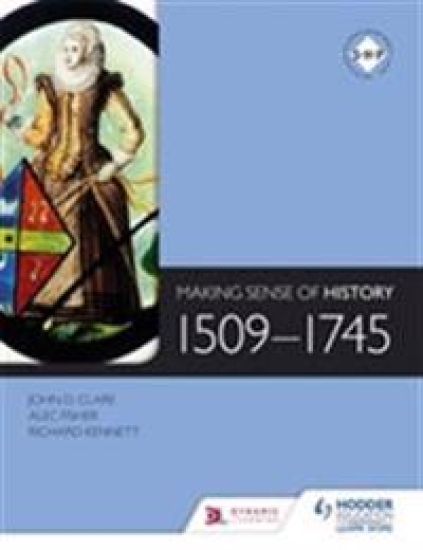
Making Sense of History: 1509-1745
Alec Fisher; John Clare; Richard Kennett
Hodder Education
2014
nidottu
Deliver engaging, enquiry-driven lessons and help pupils gain a coherent chronological understanding of and across periods studied with this complete offering for Key Stage 3 History. Designed for the 2014 National Curriculum this supportive learning package makes history fun and inspiring to learn. Making Sense of History consists of four Pupil's Books with accompanying Dynamic Learning Teaching and Learning resources. Structured around big picture overviews and in-depth enquiries on different topics, the course develops pupils understanding of history and their ability to ask and explore valid historical questions about the past.- Help pupils come to a sound chronological understanding of the past and identify the most significant events, connections and patterns of change and continuity with specifically tailored big pictures of the period and of the topics within it.- Develop pupils' enquiry skills and help them become motivated and curious to learn about the past with purposeful and engaging enquiries and a focus on individuals' lives.- Ensure pupils' progress in their historical thinking through clear and balanced targeted coverage of the main second order concepts in history.- Support and stretch your pupils with differentiated material, including writing frames to support literacy and ideas for more challenge provided in the Dynamic Learning Teaching and Learning Resources.- Make assessment become a meaningful and manageable process through bespoke mark schemes for individual pieces of work.
""Poems Descriptive of Rural Life and Scenery"" is a collection of poems written by John Clare and originally published in 1820. The poems are inspired by the natural beauty and simplicity of rural life, and they depict the everyday experiences of farmers, shepherds, and other rural inhabitants. Clare's poetry is characterized by its vivid imagery, its attention to detail, and its celebration of the natural world. The poems in this collection explore themes such as the changing seasons, the beauty of the countryside, and the joys and sorrows of rural life. They offer a glimpse into a world that has long since disappeared, and they provide a valuable insight into the poet's own life and experiences. ""Poems Descriptive of Rural Life and Scenery"" is a timeless work of literature that continues to inspire readers with its beauty and its celebration of the natural world. This Is A New Release Of The Original 1820 Edition. This scarce antiquarian book is a facsimile reprint of the old original and may contain some imperfections such as library marks and notations. Because we believe this work is culturally important, we have made it available as part of our commitment for protecting, preserving, and promoting the world's literature in affordable, high quality, modern editions, that are true to their original work.

Scientific communication is challenging. The subject matter is complex and often requires a certain level of knowledge to understand it correctly; describing hazard ratios, interpreting Kaplan Meier curves and explaining confounding factors is different from talking about a new car or clothing range. Processes, for example in clinical trials, are laborious and tedious and knowing how much of the detail to include and exclude requires judgement. Conclusions are rarely clear cut making communicating statistical risk and probability tough, especially to non-statisticians and non-scientists such as journalists. Communicating Clearly about Science and Medicine looks at these and many more challenges, then introduces powerful techniques for overcoming them. It will help you develop and deliver impactful presentations on medical and scientific data and tell a clear, compelling story based on your research findings. It will show you how to develop clear messages and themes, while adhering to the advice attributed to Einstein: 'Make things as simple as possible...but no simpler.' John Clare illustrates how to communicate clearly the risks and benefits contained in a complex data set, and balance the hope and the hype. He explains how to avoid the 'miracle cure' or 'killer drug' headlines which are so common and teaches you how to combine the accuracy of peer-to-peer reviewed science with the narrative skills of journalism.

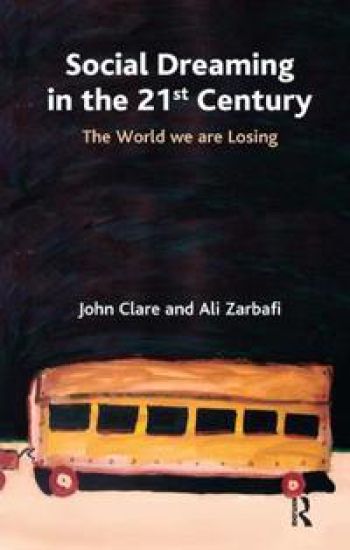
We are running out of ideas in Western society. Faced with global warming, Third World devastation, nuclear proliferation and the threat posed by religious conflict, we need new ways of thinking. After the loss and carnage of the Twentieth Century there is prevailing mood of uncertainty and paranoia, yet at the same time a denial of tragedy, a salvation fantasy, an illusion that we will be saved. The decline in social solidarity, the fragmentation of communal values and a growing sense of 'I' as opposed to 'we', are all signs of an inversion of moral certitudes, a disconnection from reality. This book asks what methods do we have at our disposal to understand and reverse this breakdown of communication within and between communities.
Selected Poems of John Clare: York Notes Advanced - everything you need to study and prepare for the 2025 and 2026 exams
John Clare
Pearson Education Limited
2008
pokkari
Full of analysis and interpretation, historical background, discussions and commentaries, York Notes will help you get right to the heart of the text you're studying, whether it's poetry, a play or a novel.
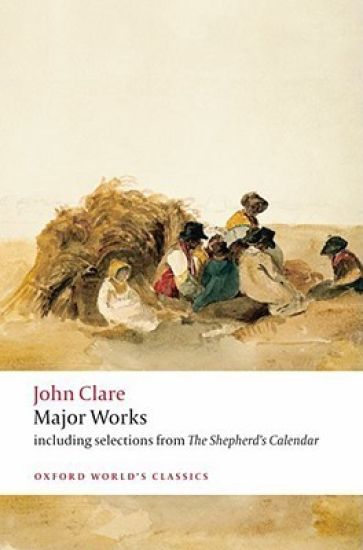
This authoritative edition was originally published in the acclaimed Oxford Authors series under the general editorship of Frank Kermode. It brings together a generous selection of Clare's poetry and prose, including autobiographical writings and letters. John Clare (1793-1864) is now recognized as one of the greatest English Romantic poets, after years of indifference and neglect. Clare was an impoverished agricultural labourer, whose genius was generally not appreciated by his contemporaries, and his later mental instability further contributed to his loss of critical esteem. But the extraordinary range of his poetical gifts has restored him to the company of his contemporaries Byron, Keats, and Shelley, and this fine selection illustrates all aspects of his talent. It contains poems from all stages of his career, including love poetry, and bird and nature poems. Written in his native Northamptonshire, Clare's work provides a fascinating reflection of rural society, often underscored by his own sense of isolation and despair. Clare's writings are here presented with the minimum of editorial interference, and with a new Introduction by the poet and scholar Tom Paulin. ABOUT THE SERIES: For over 100 years Oxford World's Classics has made available the widest range of literature from around the globe. Each affordable volume reflects Oxford's commitment to scholarship, providing the most accurate text plus a wealth of other valuable features, including expert introductions by leading authorities, helpful notes to clarify the text, up-to-date bibliographies for further study, and much more.
Poems Descriptive Of Rural Life And Scenery (1820)
John Clare
KESSINGER PUBLISHING, LLC
2008
sidottu
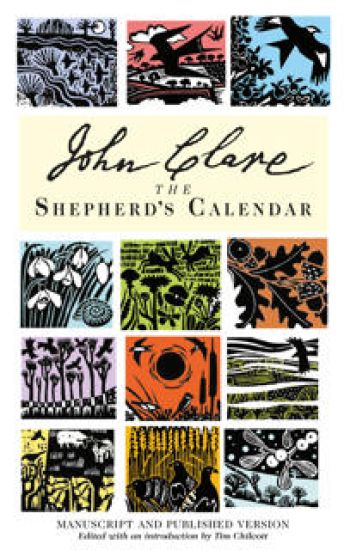
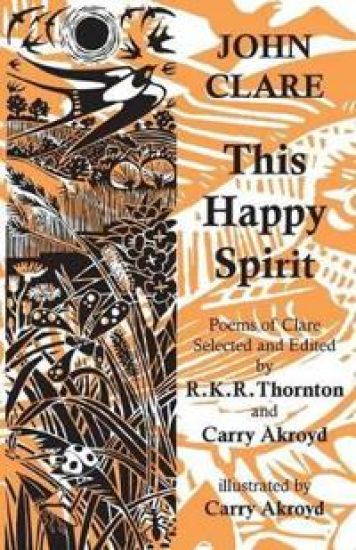
For the first time in nearly 180 years, this is a book that presents, side by side, two major versions of one of John Clare's most celebrated poems, "The Shepherd's Calendar". The final manuscripts of the poem that Clare composed are placed against the published version in a parallel text; and some fascinating poetic differences, as well as similarities, between the two versions emerge. These changes and continuities are examined in a challenging introduction that charts the development of the poem, and that explores the imaginative strengths of both versions, as well as their limitations. The presentation of this material is enhanced by a series of beautiful linocuts by Carry Akroyd, evoking the natural and human landscapes about which Clare wrote.