

Kirjailija
John Collins
Kirjat ja teokset yhdessä paikassa: 317 kirjaa, julkaisuja vuosilta 1992–2026, suosituimpiin kuuluu An Analysis of Milton Friedman's The Role of Monetary Policy. Vertaile teosten hintoja ja tarkista saatavuus suomalaisista kirjakaupoista.
317 kirjaa
Kirjojen julkaisuvuodet: 1992–2026.




Crime Lab Report compiles the most relevant and popular articles that appeared in this ongoing periodical between 2007 and 2017. Articles have been categorized by theme to serve as chapters, with an introduction at the beginning of each chapter and a description of the events that inspired each article. The author concludes the compilation with a reflection on Crime Lab Report, the retired periodical, and the future of forensic science as the 21st Century unfolds. Intended for forensic scientists, prosecutors, defense attorneys and even students studying forensic science or law, this compilation provides much needed information on the topics at hand.
Reminiscences of Isaac and Rachel Budd Collins - with an account of some of their descendants, together with a genealogy of the Collins family, and also a history of a reunion held at Philadelphia, May 9, 1892 is an unchanged, high-quality reprint of the original edition of 1892. Hansebooks is editor of the literature on different topic areas such as research and science, travel and expeditions, cooking and nutrition, medicine, and other genres. As a publisher we focus on the preservation of historical literature. Many works of historical writers and scientists are available today as antiques only. Hansebooks newly publishes these books and contributes to the preservation of literature which has become rare and historical knowledge for the future.

Reminiscences of Isaac and Rachael (Budd) Collins
John Collins; Isaac Collins; Morris Earle
Hansebooks
2018
nidottu
Highlife is Ghana's most important modern home grown dance-music that has its roots in traditional music infused with outside influences coming from Europe and the Americas. Although the word 'highlife' was not coined until the 1920s, its origins can be traced back to the regimental brass bands, elite-dance orchestras and maritime guitar and accordion groups of the late 19th and very early 20th centuries. Highlife is, therefore, one of Africa's earliest popular music genres. The book traces the origins of highlife music to the present - and include information on palmwine music, adaha brass bands, concert party guitar bands and dance bands, right up to off-shoots such as Afro-rock, Afrobeat, burger highlife, gospel highlife, hiphop highlife (i.e. hiplife) and contemporary highlife. The book also includes chapters on the traditional background or roots of highlife, the entrance of women into the Ghanaian highlife profession and the biographies of numerous Ghanaian (and some Nigerian) highlife musicians, composers and producers. It also touches on the way highlife played a role in Ghana's independence struggle and the country's quest for a national - and indeed Pan-African - identity. The book also provides information on music styles that are related to highlife, or can be treated as cousins of highlife, such as the maringa of Sierra Leone, the early guitar styles of Liberia, the juju music of Nigeria the makossa of the Cameroon/ It also touches on the popular music of Ghana's Francophone neighbours. There is also a section on the Black Diasporic input into highlife, through to the impact of African American and Caribbean popular music styles like calypsos, jazz, soul, reggae, disco, hiphop and rap and dancehall. that have been integrated into the highlife fold. Thus, highlife has not only influenced other African countries but is also an important cultural bridge uniting the peoples of Africa and its Diaspora.
The 18th century was a wealth of knowledge, exploration and rapidly growing technology and expanding record-keeping made possible by advances in the printing press. In its determination to preserve the century of revolution, Gale initiated a revolution of its own: digitization of epic proportions to preserve these invaluable works in the largest archive of its kind. Now for the first time these high-quality digital copies of original 18th century manuscripts are available in print, making them highly accessible to libraries, undergraduate students, and independent scholars. Delve into what it was like to live during the eighteenth century by reading the first-hand accounts of everyday people, including city dwellers and farmers, businessmen and bankers, artisans and merchants, artists and their patrons, politicians and their constituents. Original texts make the American, French, and Industrial revolutions vividly contemporary.++++The below data was compiled from various identification fields in the bibliographic record of this title. This data is provided as an additional tool in helping to insure edition identification: ++++Harvard University LibrariesN026891London: printed for J. Johnson, 1792. 97, 1]p.; 8

'Gay' is neither a serene nor settled identity in the lives of countless persons who manifest it. With unfailing regard for them as persons, the author integrates strands from history, psychology, and philosophy in narrating the roots and rise of gay identity. Neither political nor polemical, this narrative proceeds along the path of reasoned inquiry in discerning that emotional burdens and risky sexual behaviors give shape to gay. Anchored in an esteem for persons as such, the story arrives at an outcome that promotes understanding, lifts the weight of a burdensome identity, and diminishes the divide within society over homosexuality. John Collins has worked in the field of education for forty years, serving in such capacities as teacher, principal, superintendent and college professor. He holds a doctorate in education from a Jesuit University. John is married and is father to five grown children. Restoring Reason in a Controversial Matter

This work has been selected by scholars as being culturally important, and is part of the knowledge base of civilization as we know it. This work was reproduced from the original artifact, and remains as true to the original work as possible. Therefore, you will see the original copyright references, library stamps (as most of these works have been housed in our most important libraries around the world), and other notations in the work. This work is in the public domain in the United States of America, and possibly other nations. Within the United States, you may freely copy and distribute this work, as no entity (individual or corporate) has a copyright on the body of the work. As a reproduction of a historical artifact, this work may contain missing or blurred pages, poor pictures, errant marks, etc. Scholars believe, and we concur, that this work is important enough to be preserved, reproduced, and made generally available to the public. We appreciate your support of the preservation process, and thank you for being an important part of keeping this knowledge alive and relevant.
An Analysis of Adam Smith's The Wealth of Nations
John Collins
Macat International Limited
2017
sidottu
Adam Smith’s 1776 Inquiry into The Nature and Causes of the Wealth of Nations – more often known simply as The Wealth of Nations – is one of the most important books in modern intellectual history. Considered one of the fundamental works of classical economics, it is also a prime example of the enduring power of good reasoning, and the ability of reasoning to drive critical thinking forward. Adam Smith was attempting to answer two complex questions: where does a nation’s wealth come from, and what can governments do to increase it most efficiently? At the time, perhaps the most widely accepted theory, mercantilism, argued that a nation’s wealth was literally the amount of gold and silver it held in reserve. Smith, meanwhile, weighed the evidence and came to a different conclusion: a nation’s wealth, he argued, lay in its ability to encourage economic activity, largely without government interference. Underlying this radical redefinition was the revolutionary concept that powered Smith’s reasoning and which continues to exert a vast influence on economic thought: the idea that markets are self-regulating. Pitting his arguments against those of his predecessors, Smith carefully and persuasively reasoned out a strong case for free markets that reshaped government economic policies in the 19th-century and continues to shape global prosperity today.
An Analysis of John Maynard Keyne's The General Theory of Employment, Interest and Money
John Collins
Macat International Limited
2017
sidottu
John Maynard Keynes’s 1936 General Theory of Employment, Interest and Money is a perfect example of the global power of critical thinking. A radical reconsideration of some of the founding principles and accepted axioms of classical economics at the time, it provoked a revolution in economic thought and government economic policies across the world. Unsurprisingly, Keynes’s closely argued refutation of the then accepted grounds of economics employs all the key critical thinking skills: analysing and evaluating the old theories and their weaknesses; interpreting and clarifying his own fundamental terms and ideas; problem solving; and using creative thinking to go beyond the old economic theories. Perhaps above all, however, the General Theory is a masterclass in problem solving. Good problem solvers identify their problem, offer a methodology for solving it, and suggest solutions. For Keynes the problem was both real and theoretical: unemployment. A major issue for governments during the Great Depression, unemployment was also a problem for classical economics. In classical economics, theoretically, unemployment would always disappear. Keynes offered both an explanation of why this was not the case in practice, and a range of solutions that could be implemented through government monetary policy.
An Analysis of Adam Smith's The Wealth of Nations
John Collins
Macat International Limited
2017
nidottu
Adam Smith’s 1776 Inquiry into The Nature and Causes of the Wealth of Nations – more often known simply as The Wealth of Nations – is one of the most important books in modern intellectual history. Considered one of the fundamental works of classical economics, it is also a prime example of the enduring power of good reasoning, and the ability of reasoning to drive critical thinking forward. Adam Smith was attempting to answer two complex questions: where does a nation’s wealth come from, and what can governments do to increase it most efficiently? At the time, perhaps the most widely accepted theory, mercantilism, argued that a nation’s wealth was literally the amount of gold and silver it held in reserve. Smith, meanwhile, weighed the evidence and came to a different conclusion: a nation’s wealth, he argued, lay in its ability to encourage economic activity, largely without government interference. Underlying this radical redefinition was the revolutionary concept that powered Smith’s reasoning and which continues to exert a vast influence on economic thought: the idea that markets are self-regulating. Pitting his arguments against those of his predecessors, Smith carefully and persuasively reasoned out a strong case for free markets that reshaped government economic policies in the 19th-century and continues to shape global prosperity today.
An Analysis of John Maynard Keyne's The General Theory of Employment, Interest and Money
John Collins
Macat International Limited
2017
nidottu
John Maynard Keynes’s 1936 General Theory of Employment, Interest and Money is a perfect example of the global power of critical thinking. A radical reconsideration of some of the founding principles and accepted axioms of classical economics at the time, it provoked a revolution in economic thought and government economic policies across the world. Unsurprisingly, Keynes’s closely argued refutation of the then accepted grounds of economics employs all the key critical thinking skills: analysing and evaluating the old theories and their weaknesses; interpreting and clarifying his own fundamental terms and ideas; problem solving; and using creative thinking to go beyond the old economic theories. Perhaps above all, however, the General Theory is a masterclass in problem solving. Good problem solvers identify their problem, offer a methodology for solving it, and suggest solutions. For Keynes the problem was both real and theoretical: unemployment. A major issue for governments during the Great Depression, unemployment was also a problem for classical economics. In classical economics, theoretically, unemployment would always disappear. Keynes offered both an explanation of why this was not the case in practice, and a range of solutions that could be implemented through government monetary policy.
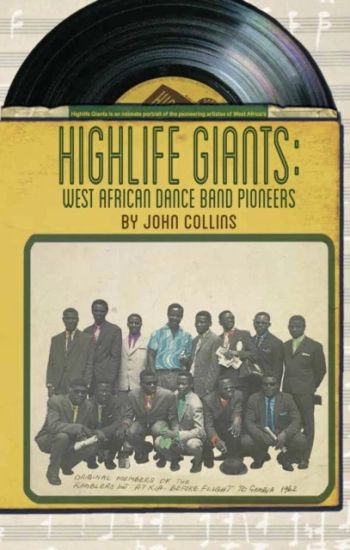
As West Africa's oldest form of popular music, Highlife was the soundtrack of the independence era and its influence still resonates widely today. Highlife Giants is an intimate portrait of the pioneering artistes of West Africa's vibrant music scene from the 1920s onwards. It is packed full of inside information from interviews with stars including E. T Mensah, Kofo Ghanaba, Bobby Benson and Ignace De Souza, revealing priceless behind-the-scene moments such as Louis Armstrong giving Eddie Okonta a trumpet with a golden mouthpiece after seeing him perform. Together with an illuminating account of Highlife's instruments, rhythms and influences, Highlife Giants comprehensively charts the development of this rich and varied popular music, which has come to influence contemporary West African music such as Afrobeat and hiplife. Highlife remains crucial in generating social commentary and protest, and contributing to the consolidation of a pan-African musical identity. This book will enthrall readers wishing to delve into the rich musical history of West Africa.

From the Foundations in Global Studies series, this text offers students a fresh, comprehensive, multidisciplinary entry point to the study of the social and cultural aspects of global studies. After a brief introduction to global studies, the early chapters of the book survey the key concepts and processes of globalization as well as a critical look at the meaning and role globalization. Students are guided through the material with relevant maps, resource boxes, and text boxes that support and guide further independent exploration of the topics at hand. The second half of the book features interdisciplinary case studies, each of which focuses on a specific issue.
From the Foundations in Global Studies series, this text offers students a fresh, comprehensive, multidisciplinary entry point to the study of the social and cultural aspects of global studies. After a brief introduction to global studies, the early chapters of the book survey the key concepts and processes of globalization as well as a critical look at the meaning and role globalization. Students are guided through the material with relevant maps, resource boxes, and text boxes that support and guide further independent exploration of the topics at hand. The second half of the book features interdisciplinary case studies, each of which focuses on a specific issue.

125 Common Golf Mistakes: And Their Solutions
John Collins
Createspace Independent Publishing Platform
2016
nidottu
125 COMMON GOLF MISTAKES is a collection of the most prevalent golf mistakes made by players of all levels. This book covers set up errors all the way through to mistakes made even before you arrive at the course. The information given is easy to understand and will unlock many repetitive mistakes that most cannot figure out on their own. The key to correcting golf mistakes is understanding them and then addressing them in a way that works for you. There isn't a single challenge in golf that hasn't been seen by the larger part of all golfers. The Pro's spend a lifetime discovering and solving golf's little mysteries. This book contains a number of answers and tips to the most common errors made in golf. Here are a few valuable tips that are covered in this book: Create a mini game plan for every hole Two-Put Strategy Learn when and how to Bump and Run Course Design Comprehension I hope you like it

Success: How the Most Dangerous Men on the Planet Succeed and Win!: Develop a US NAVY SEAL Mindset and Become Extraordinary
John Collins
Createspace Independent Publishing Platform
2016
nidottu
Halvin toimitettuna 13,80 €