Kirjojen hintavertailu – 12 903 725 kirjaa ja 27 kauppaa

Kirjailija

John Collins

Kirjat ja teokset yhdessä paikassa: 317 kirjaa, julkaisuja vuosilta 1992–2026, suosituimpiin kuuluu An Analysis of Milton Friedman's The Role of Monetary Policy. Vertaile teosten hintoja ja tarkista saatavuus suomalaisista kirjakaupoista.

317 kirjaa

Kirjojen julkaisuvuodet: 1992–2026.

Seeing the Unseen

Seeing the Unseen

John Collins

Xulon Press
2010
pokkari
Abandoning at age 30 what promised to be a lucrative law practice, John Collins escaped to Spain for a three-year sabbatical to search for the meaning of life. In SEEING THE UNSEEN: Opening the Closed Circuit of Everyday Consciousness, he relates his findings in maxims and identifies seven impediments that commonly hinder our capacity to render our everyday experience of people, places and things intelligible, meaningful and joyful. Collins believes the greatest obstacle to realizing personal fulfillment, or salvation or the Kingdom of God is psychological. Living our lives almost entirely on the conscious surface of Self, we neglect the unconscious core of our being, resulting in the inability of the whole Self to truly see and know reality. Collins suggests that religion's finest hour may come when it assumes responsibility for healing this rupture in our innermost being, allowing us to achieve greater understanding of ourselves, of the world and ultimately, of God. John Collins is a nearly retired general practice attorney in Bucks County, Pa., who graduated with honors in philosophy from Johns Hopkins University, and was subsequently awarded a law degree from the Harvard Law School in 1957. He also attended the Sorbonne, Catholic University, Princeton Theological Seminary and Villanova University for special studies. He served with the 82nd Airborne Division during the Korean War. He also served as a public defender, as an assistant district attorney, and as an unsuccessful candidate for the Pennsylvania state legislature. He is married and the father of three children.

Programming the SIMPL Way

Programming the SIMPL Way

John Collins; Robert Findlay

Lulu.com
2008
pokkari
SIMPL (Synchronous Interprocess Messaging Project for Linux) is discussed at many different levels. At its most fundamental, SIMPL is a set of library functions which allow the passing of encapsulated messages between cooperating processes. On another level, SIMPL is an active open source project which began over a decade ago. Over the years this project has accumulated an extensive body of sample code and extensions. SIMPL is also a great way to design software applications where complexity is encapsulated in separate, easily testable, readily extendable modules. The current state of software development is compared to the hardware world before the advent of integrated circuit chips. The term softwareIC is coined to describe the software equivalent of the integrated circuit. The SIMPL toolkit, along with tokenized messaging and the SIMPL testing framework is shown to be a great way to build these softwareICs. Several are illustrated throughout the book.
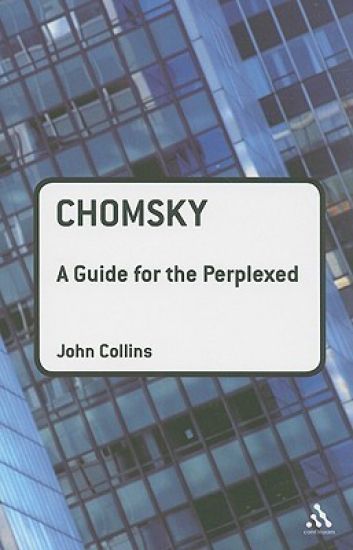
Chomsky: A Guide for the Perplexed

Chomsky: A Guide for the Perplexed

John Collins

BLOOMSBURY PUBLISHING PLC
2008
sidottu
Continuum's Guides for the Perplexed are clear, concise and accessible introductions to thinkers, writers and subjects that students and readers can find especially challenging. Concentrating specifically on what it is that makes the subject difficult to fathom, these books explain and explore key themes and ideas, guiding the reader towards a thorough understanding of demanding material. Noam Chomsky is one of the most influential thinkers of the twentieth-century. His work in linguistics, philosophy and political theory has spanned six decades, and has been met with critical acclaim and controversy in equal measure. This book is an introduction to Chomsky's theoretical writings, but also a critical engagement with his work. Chomsky: A Guide for the Perplexed covers every aspect of Chomsky's thought, from transformational grammar to political dissent.
Chomsky: A Guide for the Perplexed

Chomsky: A Guide for the Perplexed

John Collins

Continuum International Publishing Group Ltd.
2008
nidottu
" Continuum's Guides for the Perplexed are clear, concise and accessible introductions to thinkers, writers and subjects that students and readers can find especially challenging. Concentrating specifically on what it is that makes the subject difficult to fathom, these books explain and explore key themes and ideas, guiding the reader towards a thorough understanding of demanding material. Noam Chomsky is one of the most influential thinkers of the twentieth-century. His work in linguistics, philosophy and political theory has spanned six decades, and has been met with critical acclaim and controversy in equal measure. This book is an introduction to Chomsky's theoretical writings, but also a critical engagement with his work. Chomsky: A Guide for the Perplexed covers every aspect of Chomsky's thought, from transformational grammar to political dissent. John Collins shows how Chomsky's linguistic theory, philosophy and politics are all connected, and by so doing helps the reader to understand this key thinker's massive contribution to twentieth-century thought. The book examines: * The different faces of Noam Chomsky * Transformational grammar * Chomsky's opposition to behaviourism * Government and binding theory * The minimalist program * Libertarian socialism. Accessibly written to help the reader decipher the complexities of Chomsky's work, this Guide for the Perplexed is an invaluable resource which will be useful to students, professionals and lay readers alike."
West African Popular Theatre

West African Popular Theatre

Karin Barber; John Collins; Alain Ricard

James Currey
2007
pokkari
This text provides a view from below on the new forms of theatre in West Africa. Throughout, the voices of the theatre practitioners are heard, reminiscing, explaining, philosophizing and grumbling. Their personalities come across vividly, and their views play a vital role. North America: Indiana University Press
Cool Waters, Emerald Seas

Cool Waters, Emerald Seas

John Collins

Atrium
2006
sidottu
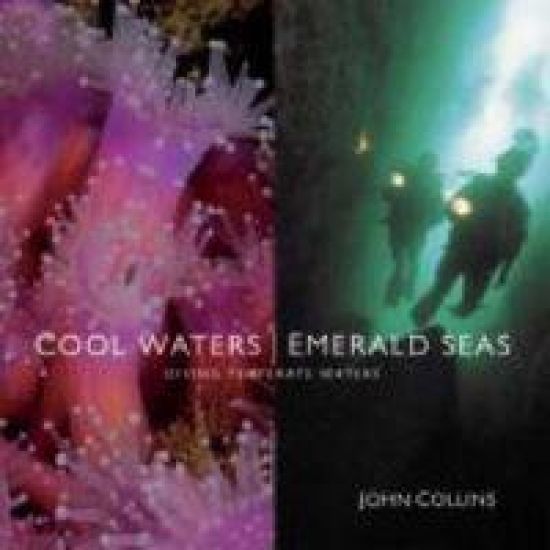
John Collins takes us on a marine adventure within the oceans that lap many of our most populated shores, from the north Atlantic around western Europe, to the chilly Pacific of North America and south to the Great White sharks of Africa. His photographic portrait of a little explored part of our ocean world is the culmination of twenty years of diving the seas around Ireland, Scotland, Canada, South Africa and Tasmania. From his voyages, he brings us 120 photographs illustrating the colourful and bizarre life below while also conveying the mood of exploration - his photographs are interpretative rather than purely documentary. Of the seven tenths of our blue planet, we have explored but a fraction. Away from coral reefs, the ocean world between the tropics and the poles is the most vibrant and productive of all our seas. Beneath its grey roof lies a bounty of neon-coloured life as well as offering us a time-capsule of our losses at sea - evoked by the sombre mood of a lost ship. The bizarre underwater world holds a fascination for many: for some it is the natural history of beautiful flower-like anemones and brightly coloured fish. For others, it is the predators we fear most - sharks. And for some, the history of our sea-going losses resonates above ground. While most people are aware of the beauties of our coral reefs, this book differs from most collections of underwater photographs in looking only at our cold seas. The seas on our doorstep are slow to give up their secrets, making this collection of images from our emerald seas something truly out of the ordinary and introducing us to previously unseen marvels.
Occupied by Memory

Occupied by Memory

John Collins

New York University Press
2004
pokkari
Occupied by Memory explores the memories of the first Palestinian intifada. Based on extensive interviews with members of the "intifada generation," those who were between 10 and 18 years old when the intifada began in 1987, the book provides a detailed look at the intifada memories of ordinary Palestinians. These personal stories are presented as part of a complex and politically charged discursive field through which young Palestinians are invested with meaning by scholars, politicians, journalists, and other observers. What emerges from their memories is a sense of a generation caught between a past that is simultaneously traumatic, empowering, and exciting—and a future that is perpetually uncertain. In this sense, Collins argues that understanding the stories and the struggles of the intifada generation is a key to understanding the ongoing state of emergency for the Palestinian people. The book will be of interest not only to scholars of the Middle East but also to those interested in nationalism, discourse analysis, social movements, and oral history.
Occupied by Memory

Occupied by Memory

John Collins

New York University Press
2004
sidottu
Occupied by Memory explores the memories of the first Palestinian intifada. Based on extensive interviews with members of the "intifada generation," those who were between 10 and 18 years old when the intifada began in 1987, the book provides a detailed look at the intifada memories of ordinary Palestinians. These personal stories are presented as part of a complex and politically charged discursive field through which young Palestinians are invested with meaning by scholars, politicians, journalists, and other observers. What emerges from their memories is a sense of a generation caught between a past that is simultaneously traumatic, empowering, and exciting—and a future that is perpetually uncertain. In this sense, Collins argues that understanding the stories and the struggles of the intifada generation is a key to understanding the ongoing state of emergency for the Palestinian people. The book will be of interest not only to scholars of the Middle East but also to those interested in nationalism, discourse analysis, social movements, and oral history.
West African Popular Theatre

West African Popular Theatre

Karin Barber; John Collins; Alain Ricard

Indiana University Press
1997
pokkari
" . . . a ground-breaking contribution to the field of African literature . . . " —Research in African Literatures "Anyone with the slightest interest in West African cultures, performance or theatre should immediately rush out and buy this book." —Leeds African Studies Bulletin "A seminal contribution to the fields of performance studies, cultural studies, and popular culture. " —Margaret Drewal "A fine book. The play texts are treasures." —Richard Bauman African popular culture is an arena where the tensions and transformations of colonial and post-colonial society are played out, offering us a glimpse of the view from below in Africa. This book offers a comparative overview of the history, social context, and style of three major West African popular theatre genres: the concert party of Ghana, the concert party of Togo, and the traveling popular theatre of western Nigeria.
Discoveries in the Judaean Desert: Volume XXII. Qumran Cave 4: XVII

Discoveries in the Judaean Desert: Volume XXII. Qumran Cave 4: XVII

George Brooke; John Collins; Torleif Elgvin; Peter Flint; Jonas Greenfield; Erik Larson; Carol Newsom; Émile Puech; Lawrence Schiffman; Michael Stone; Julio Trebolle Barrera

Clarendon Press
1997
sidottu
This volume contains a collection of compositions from Cave 4 at Qumran, written during the Second Temple period and linked to biblical texts through characters, themes, or genre. Some of these, such as the Levi Aramaic Document, Testament of Naphtali, and Prayer of Nabonidus, were known previously from Greek and Aramaic manuscripts of the Apocrypha. The additional documents include PseudoDaniel, the Commentaries on Genesis, Commentary on Malachi, Apocryphon of Joshua, The Two Ways, Apocryphon of Elisha, Prayer of Mercy, and a number of small miscellaneous texts. All these documents greatly enhance our understanding of the phenomenon of psuedepigraphy (written in the name of a famous biblical or religious character) and of biblical interpretation during the Second Temple period.
West African Pop Roots

West African Pop Roots

John Collins

Temple University Press,U.S.
1992
sidottu
Having spent more than twenty years as a performer, manager, and producer of African music, John Collins brings an insider's perspective and a personal passion to this account of popular music in West Africa. He explores the roots of the various styles and genres and the 'feedback' of black music adapted to the New World and returning to Africa to reinfluence its origins. Collins celebrates the personalities and sounds of today's music, its influence on an international audience, the African music business, and the cross-fertilization between African music and that of other cultures. Interspersed with his rich descriptions and historical narratives are colorful biographical sketches of important African musicians along with a wealth of rare photographs of individuals and bands. With the intention of exposing 'the inner driving forces of popular music in Africa', Collins delves into the history of African music, traces its evolution throughout the twentieth century, and explores the current 'world beat' explosion. He demonstrates that the enormous energy generated by African music is in part a result of its polyrhytmic nature and rhythmic spacing, 'the hot sounds and the cool space'. He describes the complexities of African rhythms: the cross-beats, the inside rhythm, the varying tempo, the positive and negative sound, and the rhythmic dialogue. 'African music', Collins observes, 'is a gestalt of opposites that unifies the up and down-beat, head and feet, the audience and performer, into the communion of the beat... There is no separation, only universal 'togetherness"." West African Pop Roots" treats the significant personalities and inside stories of many of its greatest stars, including Manu Dibango with Soul Makossa, E. T. Mensah, Victor Uwaifo, Fela, Youssou N'Dour, and Sonny Okosun, among others. Collins describes the global research for the African roots of pop, which has attracted such Western performers as Ginger Baker, Paul McCartney, Mick Fleetwood, Peter Gabriel, Paul Simon, David Byrne, and many others. The author describes Africa's world-wide influence on music and dance as 'the nearest thing we have in the twentieth century to a global folk music'. Author note: John Collins is manager of the Bokoor Recording Studio (Ghana), acting Chairman of the Bokoor African Popular Music Archives Foundation, and is on the Ghanaian National Folklore-Copyright Administration Board. The author of several books and numerous articles about African music, he is a doctoral candidate at State University of New York at Buffalo.