Kirjojen hintavertailu – 12 903 725 kirjaa ja 27 kauppaa

Kirjailija

John Dirk Walecka

Kirjat ja teokset yhdessä paikassa: 36 kirjaa, julkaisuja vuosilta 2000–2023, suosituimpiin kuuluu Introduction To Electricity And Magnetism. Vertaile teosten hintoja ja tarkista saatavuus suomalaisista kirjakaupoista.

36 kirjaa

Kirjojen julkaisuvuodet: 2000–2023.

Electron Scattering for Nuclear and Nucleon Structure

Electron Scattering for Nuclear and Nucleon Structure

John Dirk Walecka

Cambridge University Press
2023
sidottu
The scattering of high-energy electrons from nuclear and nucleon targets provides a microscope for examining the structure of these tiny objects. The best evidence we have on what nuclei and nucleons actually look like comes from electron scattering. This 2001 book examines the motivation for electron scattering and develops the theoretical analysis of the process. It discusses our theoretical understanding of the underlying structure of nuclei and nucleons at appropriate levels of resolution and sophistication, and summarizes experimental electron scattering capabilities. Only a working knowledge of quantum mechanics and special relativity is assumed, making this a suitable textbook for graduate and advanced undergraduate courses. It will also provide a valuable summary and reference for researchers already working in electron scattering and other areas of nuclear and particle physics. This text has been reissued as an Open Access publication on Cambridge Core.
Electron Scattering for Nuclear and Nucleon Structure

Electron Scattering for Nuclear and Nucleon Structure

John Dirk Walecka

Cambridge University Press
2023
pokkari
The scattering of high-energy electrons from nuclear and nucleon targets provides a microscope for examining the structure of these tiny objects. The best evidence we have on what nuclei and nucleons actually look like comes from electron scattering. This 2001 book examines the motivation for electron scattering and develops the theoretical analysis of the process. It discusses our theoretical understanding of the underlying structure of nuclei and nucleons at appropriate levels of resolution and sophistication, and summarizes experimental electron scattering capabilities. Only a working knowledge of quantum mechanics and special relativity is assumed, making this a suitable textbook for graduate and advanced undergraduate courses. It will also provide a valuable summary and reference for researchers already working in electron scattering and other areas of nuclear and particle physics. This text has been reissued as an Open Access publication on Cambridge Core.
Introduction To Quantum Mechanics: Solutions To Problems

Introduction To Quantum Mechanics: Solutions To Problems

John Dirk Walecka

WORLD SCIENTIFIC PUBLISHING CO PTE LTD
2021
sidottu
The author has published two texts on classical physics, Introduction to Classical Mechanics and Introduction to Electricity and Magnetism, both meant for initial one-quarter physics courses. The latter is based on a course taught at Stanford several years ago with over 400 students enrolled. These lectures, aimed at the very best students, assume a good concurrent course in calculus; they are otherwise self-contained. Both texts contain an extensive set of accessible problems that enhances and extends the coverage. As an aid to teaching and learning, the solutions to these problems have now been published in additional texts. A third published text completes the first-year introduction to physics with a set of lectures on Introduction to Quantum Mechanics, the very successful theory of the microscopic world. The Schrödinger equation is motivated and presented. Several applications are explored, including scattering and transition rates. The applications are extended to include quantum electrodynamics and quantum statistics. There is a discussion of quantum measurements. The lectures then arrive at a formal presentation of quantum theory together with a summary of its postulates. A concluding chapter provides a brief introduction to relativistic quantum mechanics. An extensive set of accessible problems again enhances and extends the coverage. The current book provides the solutions to those problems. The goal of these three texts is to provide students and teachers alike with a good, understandable, introduction to the fundamentals of classical and quantum physics.
Introduction To Quantum Mechanics: Solutions To Problems

Introduction To Quantum Mechanics: Solutions To Problems

John Dirk Walecka

WORLD SCIENTIFIC PUBLISHING CO PTE LTD
2021
nidottu
The author has published two texts on classical physics, Introduction to Classical Mechanics and Introduction to Electricity and Magnetism, both meant for initial one-quarter physics courses. The latter is based on a course taught at Stanford several years ago with over 400 students enrolled. These lectures, aimed at the very best students, assume a good concurrent course in calculus; they are otherwise self-contained. Both texts contain an extensive set of accessible problems that enhances and extends the coverage. As an aid to teaching and learning, the solutions to these problems have now been published in additional texts. A third published text completes the first-year introduction to physics with a set of lectures on Introduction to Quantum Mechanics, the very successful theory of the microscopic world. The Schrödinger equation is motivated and presented. Several applications are explored, including scattering and transition rates. The applications are extended to include quantum electrodynamics and quantum statistics. There is a discussion of quantum measurements. The lectures then arrive at a formal presentation of quantum theory together with a summary of its postulates. A concluding chapter provides a brief introduction to relativistic quantum mechanics. An extensive set of accessible problems again enhances and extends the coverage. The current book provides the solutions to those problems. The goal of these three texts is to provide students and teachers alike with a good, understandable, introduction to the fundamentals of classical and quantum physics.
Introduction To Quantum Mechanics

Introduction To Quantum Mechanics

John Dirk Walecka

World Scientific Publishing Co Pte Ltd
2021
sidottu
The author has published two texts on classical physics, Introduction to Classical Mechanics and Introduction to Electricity and Magnetism, both meant for initial one-quarter physics courses. The latter is based on a course taught at Stanford several years ago with over 400 students enrolled. These lectures, aimed at the very best students, assume a good concurrent course in calculus; they are otherwise self-contained. Both texts contain an extensive set of accessible problems that enhances and extends the coverage. As an aid to teaching and learning, the solutions to these problems have now been published in additional texts. The present text completes the first-year introduction to physics with a set of lectures on Introduction to Quantum Mechanics, the very successful theory of the microscopic world. The Schrödinger equation is motivated and presented. Several applications are explored, including scattering and transition rates. The applications are extended to include quantum electrodynamics and quantum statistics. There is a discussion of quantum measurements. The lectures then arrive at a formal presentation of quantum theory together with a summary of its postulates. A concluding chapter provides a brief introduction to relativistic quantum mechanics. An extensive set of accessible problems again enhances and extends the coverage. The goal of these three texts is to provide students and teachers alike with a good, understandable, introduction to the fundamentals of classical and quantum physics.
Introduction To Quantum Mechanics

Introduction To Quantum Mechanics

John Dirk Walecka

World Scientific Publishing Co Pte Ltd
2021
nidottu
The author has published two texts on classical physics, Introduction to Classical Mechanics and Introduction to Electricity and Magnetism, both meant for initial one-quarter physics courses. The latter is based on a course taught at Stanford several years ago with over 400 students enrolled. These lectures, aimed at the very best students, assume a good concurrent course in calculus; they are otherwise self-contained. Both texts contain an extensive set of accessible problems that enhances and extends the coverage. As an aid to teaching and learning, the solutions to these problems have now been published in additional texts. The present text completes the first-year introduction to physics with a set of lectures on Introduction to Quantum Mechanics, the very successful theory of the microscopic world. The Schrödinger equation is motivated and presented. Several applications are explored, including scattering and transition rates. The applications are extended to include quantum electrodynamics and quantum statistics. There is a discussion of quantum measurements. The lectures then arrive at a formal presentation of quantum theory together with a summary of its postulates. A concluding chapter provides a brief introduction to relativistic quantum mechanics. An extensive set of accessible problems again enhances and extends the coverage. The goal of these three texts is to provide students and teachers alike with a good, understandable, introduction to the fundamentals of classical and quantum physics.
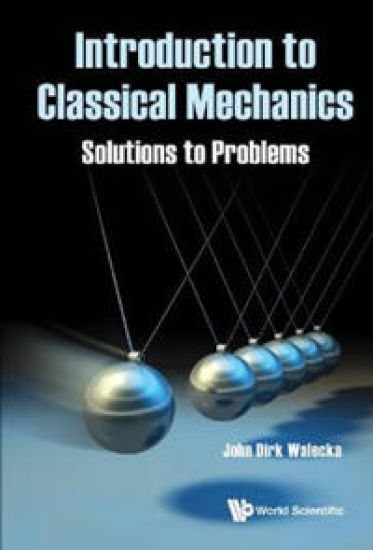
Introduction To Classical Mechanics: Solutions To Problems

Introduction To Classical Mechanics: Solutions To Problems

John Dirk Walecka

World Scientific Publishing Co Pte Ltd
2020
nidottu
The textbook Introduction to Classical Mechanics aims to provide a clear and concise set of lectures that take one from the introduction and application of Newton's laws up to Hamilton's principle of stationary action and the lagrangian mechanics of continuous systems. An extensive set of accessible problems enhances and extends the coverage. It serves as a prequel to the author's recently published book entitled Introduction to Electricity and Magnetism based on an introductory course taught some time ago at Stanford with over 400 students enrolled. Both lectures assume a good, concurrent course in calculus and familiarity with basic concepts in physics; the development is otherwise self-contained. As an aid for teaching and learning, and as was previously done with the publication of Introduction to Electricity and Magnetism: Solutions to Problems, this additional book provides the solutions to the problems in the text Introduction to Classical Mechanics.
Introduction To Classical Mechanics: Solutions To Problems

Introduction To Classical Mechanics: Solutions To Problems

John Dirk Walecka

World Scientific Publishing Co Pte Ltd
2020
sidottu
The textbook Introduction to Classical Mechanics aims to provide a clear and concise set of lectures that take one from the introduction and application of Newton's laws up to Hamilton's principle of stationary action and the lagrangian mechanics of continuous systems. An extensive set of accessible problems enhances and extends the coverage. It serves as a prequel to the author's recently published book entitled Introduction to Electricity and Magnetism based on an introductory course taught some time ago at Stanford with over 400 students enrolled. Both lectures assume a good, concurrent course in calculus and familiarity with basic concepts in physics; the development is otherwise self-contained. As an aid for teaching and learning, and as was previously done with the publication of Introduction to Electricity and Magnetism: Solutions to Problems, this additional book provides the solutions to the problems in the text Introduction to Classical Mechanics.
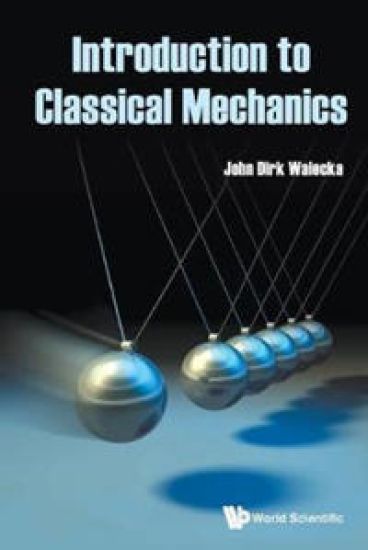
Introduction To Classical Mechanics

Introduction To Classical Mechanics

John Dirk Walecka

World Scientific Publishing Co Pte Ltd
2020
nidottu
This textbook aims to provide a clear and concise set of lectures that take one from the introduction and application of Newton's laws up to Hamilton's principle of stationary action and the lagrangian mechanics of continuous systems. An extensive set of accessible problems enhances and extends the coverage. It serves as a prequel to the author's recently published book entitled Introduction to Electricity and Magnetism based on an introductory course taught sometime ago at Stanford with over 400 students enrolled. Both lectures assume a good, concurrent, course in calculus and familiarity with basic concepts in physics; the development is otherwise self-contained. A good introduction to the subject allows one to approach the many more intermediate and advanced texts with better understanding and a deeper sense of appreciation that both students and teachers alike can share.
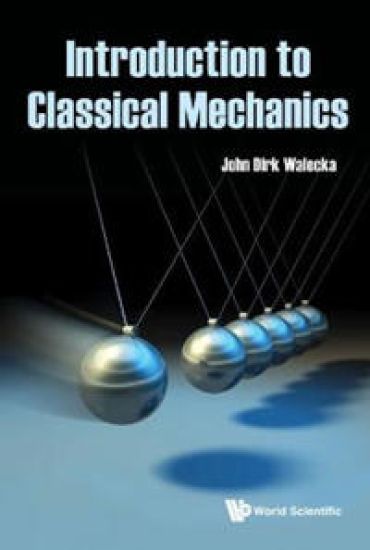
Introduction To Classical Mechanics

Introduction To Classical Mechanics

John Dirk Walecka

World Scientific Publishing Co Pte Ltd
2020
sidottu
This textbook aims to provide a clear and concise set of lectures that take one from the introduction and application of Newton's laws up to Hamilton's principle of stationary action and the lagrangian mechanics of continuous systems. An extensive set of accessible problems enhances and extends the coverage. It serves as a prequel to the author's recently published book entitled Introduction to Electricity and Magnetism based on an introductory course taught sometime ago at Stanford with over 400 students enrolled. Both lectures assume a good, concurrent, course in calculus and familiarity with basic concepts in physics; the development is otherwise self-contained. A good introduction to the subject allows one to approach the many more intermediate and advanced texts with better understanding and a deeper sense of appreciation that both students and teachers alike can share.
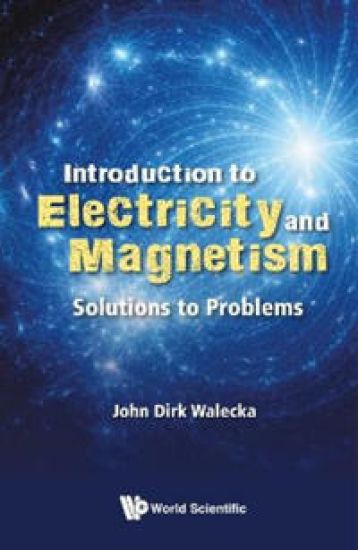
Introduction To Electricity And Magnetism: Solutions To Problems

Introduction To Electricity And Magnetism: Solutions To Problems

John Dirk Walecka

World Scientific Publishing Co Pte Ltd
2019
nidottu
The previously published book Introduction to Electricity and Magnetism provides a clear, calculus-based introduction to a subject that together with classical mechanics, quantum mechanics, and modern physics lies at the heart of today's physics curriculum. The lectures, although relatively concise, take one from Coulomb's law to Maxwell's equations and special relativity in a lucid and logical fashion. That book contains an extensive set of accessible problems that enhances and extends the coverage. As an aid to teaching and learning, the present book provides the solutions to those problems.
Introduction To Electricity And Magnetism

Introduction To Electricity And Magnetism

John Dirk Walecka

World Scientific Publishing Co Pte Ltd
2018
nidottu
'It is an excellent, concise introduction to the topic. It presents mathematical treatments of abstract concepts in a clear and straightforward way. I think it will be most effective as a companion to other excellent introductory texts, but readers who want to review the material will find the author’s treatment of electricity and magnetism refreshing.'Physics TodayThese lectures provide an introduction to a subject that together with classical mechanics, quantum mechanics, and modern physics lies at the heart of today's physics curriculum. This introduction to electricity and magnetism assumes only a good course in calculus, and familiarity with vectors and Newton's laws; it is otherwise self-contained. Furthermore, these lectures, although relatively concise, take one from Coulomb's law to Maxwell's equations and special relativity in a lucid and logical fashion. An extensive set of accessible problems enhances and extends the coverage. Review chapters spaced throughout the text summarize the material. Clear departure points for further study are indicated along the way. The principles of electromagnetism, as synthesized in Maxwell's equations and the Lorentz force, have such an astonishing range of applicability. A good introduction to this subject, even at the cost of some repetition, allows one to approach the many more advanced texts and monographs with better understanding and a deeper sense of appreciation that both students and teachers can share alike.
Introduction To Electricity And Magnetism

Introduction To Electricity And Magnetism

John Dirk Walecka

World Scientific Publishing Co Pte Ltd
2018
sidottu
'It is an excellent, concise introduction to the topic. It presents mathematical treatments of abstract concepts in a clear and straightforward way. I think it will be most effective as a companion to other excellent introductory texts, but readers who want to review the material will find the author’s treatment of electricity and magnetism refreshing.'Physics TodayThese lectures provide an introduction to a subject that together with classical mechanics, quantum mechanics, and modern physics lies at the heart of today's physics curriculum. This introduction to electricity and magnetism assumes only a good course in calculus, and familiarity with vectors and Newton's laws; it is otherwise self-contained. Furthermore, these lectures, although relatively concise, take one from Coulomb's law to Maxwell's equations and special relativity in a lucid and logical fashion. An extensive set of accessible problems enhances and extends the coverage. Review chapters spaced throughout the text summarize the material. Clear departure points for further study are indicated along the way. The principles of electromagnetism, as synthesized in Maxwell's equations and the Lorentz force, have such an astonishing range of applicability. A good introduction to this subject, even at the cost of some repetition, allows one to approach the many more advanced texts and monographs with better understanding and a deeper sense of appreciation that both students and teachers can share alike.
Nonlinear Potential Theory of Degenerate Elliptic Equations

Nonlinear Potential Theory of Degenerate Elliptic Equations

John Dirk Walecka; Juha Heinonen

Dover Publications Inc.
2018
nidottu
A self-contained treatment appropriate for advanced undergraduate and graduate students, this volume offers a detailed development of the necessary background for its survey of the nonlinear potential theory of superharmonic functions. Starting with the theory of weighted Sobolev spaces, the text advances to the theory of weighted variational capacity. Succeeding chapters investigate solutions and supersolutions of equations, with emphasis on refined Sobolev spaces, variational integrals, and harmonic functions. Chapter 7 defines superharmonic functions via the comparison principle, and chapters 8 through 14 form the core of the nonlinear potential theory of superharmonic functions. Topics include balayage; Perron's method, barriers, and resolutivity; polar sets; harmonic measure; fine topology; harmonic morphisms; and quasiregular mappings. The book concludes with explorations of axiomatic nonlinear potential theory and helpful appendixes.
Introduction To General Relativity: Solutions To Problems

Introduction To General Relativity: Solutions To Problems

John Dirk Walecka

World Scientific Publishing Co Pte Ltd
2017
nidottu
It is important for every physicist today to have a working knowledge of Einstein's theory of general relativity. Introduction to General Relativity published in 2007 was aimed at first-year graduate students, or advanced undergraduates, in physics. Only a basic understanding of classical lagrangian mechanics is assumed; beyond that, the reader should find the material to be self-contained. The mechanics problem of a point mass constrained to move without friction on a two-dimensional surface of arbitrary shape serves as a paradigm for the development of the mathematics and physics of general relativity. Special relativity is reviewed. The basic principles of general relativity are then presented, and the most important applications are discussed. The final special topics section takes the reader up to a few areas of current research. An extensive set of accessible problems enhances and extends the coverage. As a learning and teaching tool, this current book provides solutions to those problems. This text and solutions manual are meant to provide an introduction to the subject. It is hoped that these books will allow the reader to approach the more advanced texts and monographs, as well as the continual influx of fascinating new experimental results, with a deeper understanding and sense of appreciation.
Introduction To Statistical Mechanics: Solutions To Problems

Introduction To Statistical Mechanics: Solutions To Problems

John Dirk Walecka

World Scientific Publishing Co Pte Ltd
2016
nidottu
Statistical mechanics is concerned with defining the thermodynamic properties of a macroscopic sample in terms of the properties of the microscopic systems of which it is composed. The previous book Introduction to Statistical Mechanics provided a clear, logical, and self-contained treatment of equilibrium statistical mechanics starting from Boltzmann's two statistical assumptions, and presented a wide variety of applications to diverse physical assemblies. An appendix provided an introduction to non-equilibrium statistical mechanics through the Boltzmann equation and its extensions. The coverage in that book was enhanced and extended through the inclusion of many accessible problems. The current book provides solutions to those problems. These texts assume only introductory courses in classical and quantum mechanics, as well as familiarity with multi-variable calculus and the essentials of complex analysis. Some knowledge of thermodynamics is also assumed, although the analysis starts with an appropriate review of that topic. The targeted audience is first-year graduate students and advanced undergraduates, in physics, chemistry, and the related physical sciences. The goal of these texts is to help the reader obtain a clear working knowledge of the very useful and powerful methods of equilibrium statistical mechanics and to enhance the understanding and appreciation of the more advanced texts.
Introduction To Statistical Mechanics: Solutions To Problems

Introduction To Statistical Mechanics: Solutions To Problems

John Dirk Walecka

World Scientific Publishing Co Pte Ltd
2016
sidottu
Statistical mechanics is concerned with defining the thermodynamic properties of a macroscopic sample in terms of the properties of the microscopic systems of which it is composed. The previous book Introduction to Statistical Mechanics provided a clear, logical, and self-contained treatment of equilibrium statistical mechanics starting from Boltzmann's two statistical assumptions, and presented a wide variety of applications to diverse physical assemblies. An appendix provided an introduction to non-equilibrium statistical mechanics through the Boltzmann equation and its extensions. The coverage in that book was enhanced and extended through the inclusion of many accessible problems. The current book provides solutions to those problems. These texts assume only introductory courses in classical and quantum mechanics, as well as familiarity with multi-variable calculus and the essentials of complex analysis. Some knowledge of thermodynamics is also assumed, although the analysis starts with an appropriate review of that topic. The targeted audience is first-year graduate students and advanced undergraduates, in physics, chemistry, and the related physical sciences. The goal of these texts is to help the reader obtain a clear working knowledge of the very useful and powerful methods of equilibrium statistical mechanics and to enhance the understanding and appreciation of the more advanced texts.
Advanced Modern Physics: Solutions To Problems

Advanced Modern Physics: Solutions To Problems

John Dirk Walecka; Paolo Amore

World Scientific Publishing Co Pte Ltd
2015
nidottu
Our understanding of the physical world was revolutionized in the twentieth century — the era of 'modern physics'. Three texts presenting the foundations and frontiers of modern physics have been published by the second author. Many problems are included in these books. The current authors have published solutions manuals for two of the texts Introduction to Modern Physics: Theoretical Foundations and Topics in Modern Physics: Theoretical Foundations. The present book provides solutions to the over 180 problems in the remaining text Advanced Modern Physics: Theoretical Foundations. This is the most challenging material, ranging over advanced quantum mechanics, angular momentum, scattering theory, lagrangian field theory, symmetries, Feynman rules, quantum electrodynamics (QED), higher-order processes, path-integrals, and canonical transformations for quantum systems; several appendices supply important details. This solutions manual completes the modern physics series, whose goal is to provide a path through the principal areas of theoretical physics of the twentieth century in sufficient detail so that students can obtain an understanding and an elementary working knowledge of the field. While obtaining familiarity with what has gone before would seem to be a daunting task, these volumes should help the dedicated student to find that job less challenging, and even enjoyable.
Topics In Modern Physics: Solutions To Problems

Topics In Modern Physics: Solutions To Problems

John Dirk Walecka; Paolo Amore

World Scientific Publishing Co Pte Ltd
2014
nidottu
Our understanding of the physical world was revolutionized in the twentieth century — the era of “modern physics”. Two books by the second author entitled Introduction to Modern Physics: Theoretical Foundations and Advanced Modern Physics: Theoretical Foundations, aimed at the very best students, present the foundations and frontiers of today's physics. Many problems are included in these texts. A previous book by the current authors provides solutions to the over 175 problems in the first volume. A third volume Topics in Modern Physics: Theoretical Foundations has recently appeared, which covers several subjects omitted in the essentially linear progression in the previous two. This book has three parts: part 1 is on quantum mechanics, part 2 is on applications of quantum mechanics, and part 3 covers some selected topics in relativistic quantum field theory. Parts 1 and 2 follow naturally from the initial volume. The present book provides solutions to the over 135 problems in this third volume. The three volumes in this series, together with the solutions manuals, provide a clear, logical, self-contained, and comprehensive base from which students can learn modern physics. When finished, readers should have an elementary working knowledge in the principal areas of theoretical physics of the twentieth century.
Introduction To Modern Physics: Solutions To Problems

Introduction To Modern Physics: Solutions To Problems

Paolo Amore; John Dirk Walecka

World Scientific Publishing Co Pte Ltd
2013
nidottu
Our understanding of the physical world was revolutionized in the twentieth century — the era of “modern physics”. The book Introduction to Modern Physics: Theoretical Foundations, aimed at the very best students, presents the foundations and frontiers of today's physics. Typically, students have to wade through several courses to see many of these topics. The goal is to give them some idea of where they are going, and how things fit together, as they go along. The book focuses on the following topics: quantum mechanics; applications in atomic, nuclear, particle, and condensed-matter physics; special relativity; relativistic quantum mechanics, including the Dirac equation and Feynman diagrams; quantum fields; and general relativity. The aim is to cover these topics in sufficient depth that things “make sense” to students, and they achieve an elementary working knowledge of them. The book assumes a one-year, calculus-based freshman physics course, along with a one-year course in calculus. Several appendices bring the reader up to speed on any additional required mathematics. Many problems are included, a great number of which take dedicated readers just as far as they want to go in modern physics. The present book provides solutions to the over 175 problems in Introduction to Modern Physics: Theoretical Foundations in what we believe to be a clear and concise fashion.