

Kirjailija
John Fletcher
Kirjat ja teokset yhdessä paikassa: 339 kirjaa, julkaisuja vuosilta 1967–2026, suosituimpiin kuuluu The Works Of Francis Beaumont And John Fletcher / [edited By P.a. Daniel ... Et Al.. Vertaile teosten hintoja ja tarkista saatavuus suomalaisista kirjakaupoista.
339 kirjaa
Kirjojen julkaisuvuodet: 1967–2026.





Fed up with the brash immaturities of her last two boyfriends, 26 year old Sophie decides to go for an older man, but when she asks Tom to live with her, he replies, "I will give you a year." Considering the gap in their ages, Tom didn't think it would be right for their relationship to continue indefinitely. Tom's emotional life was in turmoil, so he was naturally drawn to the calm beauty of Sophie. Yet Sophie was harbouring a deep wound and like an animal, hostile towards anyone who came too near, fearing they would take advantage. So as their relationship developed, Tom offered Sophie a challenge: "To receive love," he said, "we have to dare to be vulnerable, to have faith that the future can be different from the past, to say to the abused child inside: "your world has changed, take a risk, come out and play." Sophie's response to this challenge led to such a remarkable journey for them both, that the prospect of sticking to his proposal of parting after a year, became increasingly difficult to face.


Originally published in 1915, this book presents the text of The Elder Brother, a comedy by the Jacobean playwright John Fletcher. An introduction and illustrative figures are also included. This book will be of value to anyone with an interest in the works of Fletcher and Jacobean drama.


"I went to see a man that had one foot in the grave, but I found a man that had one foot in Heaven " So wrote a visitor to the sick bed of John Fletcher of Madeley. Indeed, so heavenly-minded and so saintly was this clergyman from Switzerland that his closest associates all agreed that they had never met his equal. John Wesley wrote of him: "In general, it is easy to perceive that a more excellent man has not appeared in the Church for some ages. It is true, in several ages, and in several countries, many men have excelled in particular virtues and graces. But who can point out, in any age or nation, one that so highly excelled in all-one that was enabled in so large a measure to 'put on the whole armor of God'? yes, so to 'put on Christ' as to 'perfect holiness in the fear of God'?" This book contains many letters from the pen of Mr. Fletcher. Some are written to his own parishioners, some to his friends, and others to ministerial colleagues. Through them all, the writer continually returns to that which is evidently uppermost in his thoughts: Christ and His wonderful salvation.

The Mad Lover
John Fletcher; Francis Beaumont
Createspace Independent Publishing Platform
2014
nidottu

The Doctrines of Grace and Justice: The Works of John Fletcher
John Fletcher
Apprehending Truth Publishers
2014
nidottu

The Knight of the Burning Pestle
Francis Beaumont; John Fletcher
Literary Licensing, LLC
2014
nidottu

Following Napoleon's installation of his brother as King of Spain, in 20 years of warfare the nations of Spanish America wrested their independence from the mother country and shaped the Americas we know today. The Wars of South American Independence began with confused, scattered uprisings in 1809 and ended with a half-hearted expedition against Mexico in 1829. The South American revolutions heralded Spain’s downfall as a world power and marked the first expression of an expansionist foreign policy by the United States of America. Featuring specially commissioned full-color maps and drawing upon the latest research, this volume traces the military events of the Independence period and sheds new light on the leaders, men, and battles that reshaped the hemisphere. The myriad campaigns, often uncoordinated and occurring thousands of miles apart, are brought together and related to the wider context, in this engaging introduction to a crucial period in the history of the Americas.

This book argues that Freud's mapping of trauma as a scene is central to both his clinical interpretation of his patients' symptoms and his construction of successive theoretical models and concepts to explain the power of such scenes in his patients' lives. This attention to the scenic form of trauma and its power in determining symptoms leads to Freud's break from the neurological model of trauma he inherited from Charcot. It also helps to explain the affinity that Freud and many since him have felt between psychoanalysis and literature (and artistic production more generally), and the privileged role of literature at certain turning points in the development of his thought. It is Freud's scenography of trauma and fantasy that speaks to the student of literature and painting. Overall, the book develops the thesis of Jean Laplanche that in Freud's shift from a traumatic to a developmental model, along with the undoubted gains embodied in the theory of infantile sexuality, there were crucial losses: specifically, the recognition of the role of the adult other and the traumatic encounter with adult sexuality that is entailed in the ordinary nurture and formation of the infantile subject.

This book argues that Freud's mapping of trauma as a scene is central to both his clinical interpretation of his patients' symptoms and his construction of successive theoretical models and concepts to explain the power of such scenes in his patients' lives. This attention to the scenic form of trauma and its power in determining symptoms leads to Freud's break from the neurological model of trauma he inherited from Charcot. It also helps to explain the affinity that Freud and many since him have felt between psychoanalysis and literature (and artistic production more generally), and the privileged role of literature at certain turning points in the development of his thought. It is Freud's scenography of trauma and fantasy that speaks to the student of literature and painting. Overall, the book develops the thesis of Jean Laplanche that in Freud's shift from a traumatic to a developmental model, along with the undoubted gains embodied in the theory of infantile sexuality, there were crucial losses: specifically, the recognition of the role of the adult other and the traumatic encounter with adult sexuality that is entailed in the ordinary nurture and formation of the infantile subject.
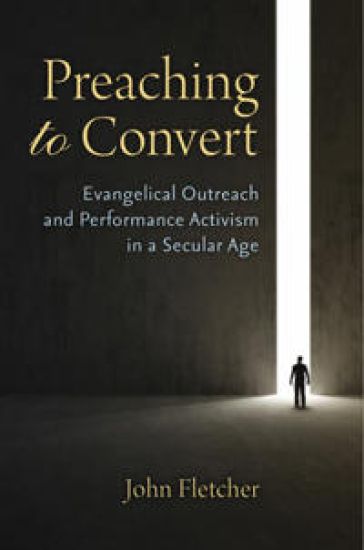
Preaching to Convert offers an intriguing new perspective on the outreach strategies of U. S. evangelicals, framing them as examples of activist performance, broadly defined as acts performed before an audience in the hopes of changing hearts and minds. Most writing about activist performance has focused on left-progressive causes, events, and actors. Preaching to Convert argues against such a constricted view of activism and for a more nuanced understanding of U. S. evangelicalism as a movement defined by its desire to win converts and spread the gospel. The book positions evangelicals as a diverse, complicated group confronting the loss of conservative Christianity’s default status in 21st-century U. S. culture. In the face of an increasingly secular age, evangelicals have been reassessing models of outreach. In acts like handing out Bible tracts to strangers on the street or going door-to-door with a Bible in hand, in elaborately staged horror-themed morality plays or multimillion-dollar creationist discovery centers, in megachurch services beamed to dozens of satellite campuses, and in controversial “ex-gay” ministries striving to return gays and lesbians to the straight and narrow, evangelicals are redefining what it means to be deeply committed in a pluralist world. The book’s engaging style and careful argumentation make it accessible and appealing to scholars and students across a range of fields.

The Complete Comedies of William Shakespeare
William Shakespeare; George Wilkins; John Fletcher
Black Curtain Press
2013
pokkari


The Celts called them ‘fairy cattle’ and the Greeks associated them with hunter goddess Artemis, but for most people today deer are seen as cute like Bambi, or noble like the Monarch of the Glen. Deer appear on coats of arms, in fine art and in literature. In Deer, veterinarian and deer farmer John Fletcher brings together the cultural and natural history of these dignified animals. In this book the reader will learn about the evolution of the deer, as well as why deer grow and cast aside their antlers each year. The book also describes how rulers from Caesar to Napoleon placed collars on deer, and how today deer feature prominently in films. Fletcher traces the evolution of deer and describes their symbolism, divulging the true story of Rudolph and other reindeer, and explores the role deer have played as prized objects of the hunt. Richly illustrated, Deer provides a fresh perspective on this graceful, powerful animal that will appeal to hunters and gatherers alike.