Kirjojen hintavertailu – 12 903 727 kirjaa ja 27 kauppaa

Kirjailija

John Hagan

Kirjat ja teokset yhdessä paikassa: 28 kirjaa, julkaisuja vuosilta 1988–2026, suosituimpiin kuuluu Reclaiming Justice. Vertaile teosten hintoja ja tarkista saatavuus suomalaisista kirjakaupoista.

28 kirjaa

Kirjojen julkaisuvuodet: 1988–2026.

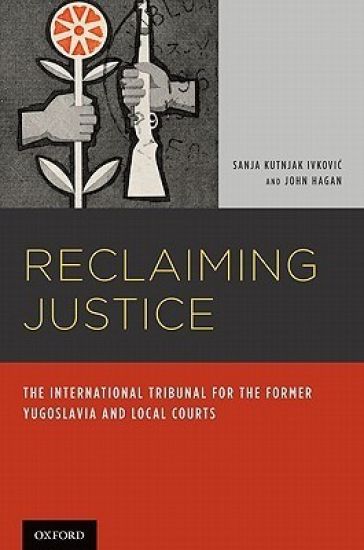
Reclaiming Justice

Reclaiming Justice

Sanja Kutnjak Ivkovich; John Hagan

Oxford University Press Inc
2011
sidottu

Halvin toimitettuna 127,70 €

For the first time in legal history, an indictment was filed against an acting head of state, Slobodan Milosevic, for crimes that Milosevic allegedly committed while he was in office. Seeking to change the concept of ethnic cleansing from a rationalizing euphemism to an incriminating metaphor, the International Criminal Tribunal for the Former Yugoslavia (ICTY) set precedents and expanded the boundaries of international criminal and humanitarian law. In Reclaiming Justice, Sanja Kutnjak Ivkovich and John Hagan add to prior literature about the ICTY by providing a comprehensive view of how people from Bosnia and Herzegovina, Croatia, Kosovo, and Serbia view and evaluate the ICTY. Kutnjak Ivkovich and Hagan ask crucial questions about international justice in a systematic and comprehensive manner, looking into the ICTY's legality and judicial independence, as well as specific issues of substantive and procedural justice and collective and individual responsibility. Kutnjak Ivkovich and Hagan provide an in-depth analysis of perceptions about the ICTY, the subsequent work of its local courts, and decisions reached by the local courts. They also examine the relationship between the views of the ICTY and ethnicity, a particularly relevant notion because the war was fought largely along ethnic lines.

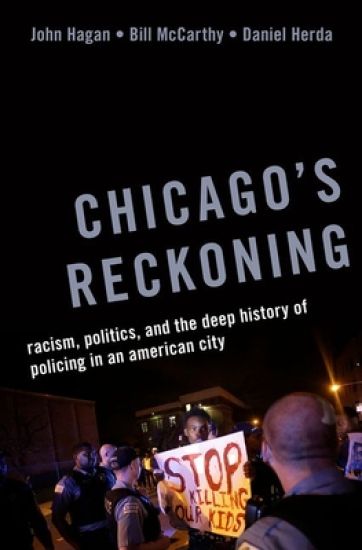
Chicago's Reckoning

Chicago's Reckoning

John Hagan; Bill McCarthy; Daniel Herda

OXFORD UNIVERSITY PRESS INC
2022
sidottu
A searing examination of the long history of police misconduct and political corruption in Chicago that produced the city's current racial reckoning Chicago faces a racial reckoning. For over 50 years, Chicago Mayors Richard J. and Richard M. Daley were at the helm of a law-and-order dynasty that disadvantaged predominantly Black and Brown neighborhoods and covered up heinous crimes against Black men. During his 1980-2012 tenure as State's Attorney and Mayor, Richard M. Daley (son of Richard J. Daley) led a law enforcement bureaucracy which permitted police detective John Burge to supervise the torture of over 100 Black men on Chicago's South and West Sides. Misguided policies on "gangs, guns, and drugs," support for a racialized code of silence and police misconduct, and a lack of meaningful punishment, have ensured that these leaders' effects on Chicago are still sorely felt. In this book, John Hagan, Bill McCarthy, and Daniel Herda confront the complicated history of race, politics, and policing in Chicago to explain how crime works from the top-down through urban political machines and the elite figures who dominate them. The authors argue that the Daleys' law enforcement system worked largely to benefit and protect White residential areas and business districts while excluding Black and Brown Chicagoans and concentrating them in highly segregated neighborhoods. The stark contradiction between the promise "to serve and protect" and the realities of hyper-segregation and mass incarceration created widespread cynicism about policing that remains one of the most persistent problems of contemporary Chicago law enforcement. By holding a sociological lens up to the history of this quintessential American city, Chicago's Reckoning reveals new insights into the politics of crime and how, until we come to terms with our history and the racial and economic divisions it created, these dynamics will continue to shape our national life.
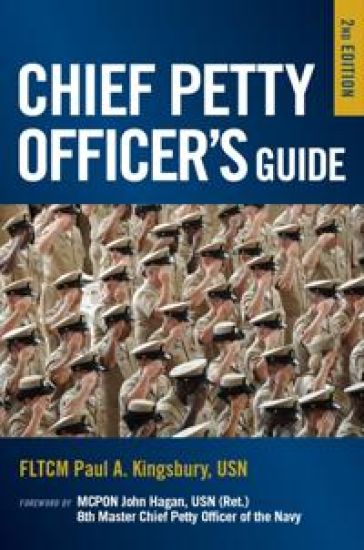
Chief Petty Officer's Guide, 2nd Edition

Chief Petty Officer's Guide, 2nd Edition

Paul A Kingsbury; John Hagan

Naval Institute Press
2018
sidottu
This second edition to the Chief Petty Officers Guide updates and modernizes the first, and has been written to serve as the ""companion guide"" to Chief Petty Officer (CPO) development processes and tools such as CPO 365, CPO mess training, the Senior Enlisted Academy, and books and articles written for and about the CPO mess. Its target audience includes serving CPOs/SCPOs/MCPOs, first-class petty officers, officers, civilian managers, foreign naval officers and senior enlisted, U. S. Coast Guard CPOs, and sister-service senior enlisted. This handbook provides unique insights into the values, beliefs, attitudes, and skills which enable CPO success, how Chiefs use power bases, influence tactics, and managerial skills to achieve objectives, and how Chiefs influence their peers and support and develop the wardroom.
Ties That Inspire

Ties That Inspire

John Hagan

Goose River Press
2017
sidottu
Hester Pennix, the legendary schoolmarm; Devon Finley, the improvident med student; Ludmilla Dandridge, the doubting professor; Jasmine French, the outspoken organizer; Henry Fleming, the Civil War soldier; Jim-Ray Cass, the soft-hearted tough; Megan O'Banion, the breathtaking prom date; Susan Collins, the puckish waitress; Brad Taylor, the ruddy-faced hulk; and Michael Moran, the discouraged writer are just some of the characters who populate John Hagan's second collection of short stories, Ties That Inspire. The scope of the stories provides a cross-section of twentieth century American life, ranging from the rural poverty of Great Depression Kentucky, to the magnificent venues of Yankee Stadium and Boardwalk Hall, to the rolling farmland of Southern Ohio, to the spacious terrain near the Organ Mountains, and to the long winters and beautiful springs of Northern Maine. Themes and tones vary from the bittersweet dynamics of "Significant Moments," to the gothic setting of "The Bottle Farm," to the courage-testing horseback ride in "A Risk Well Taken." Enter the world of Ties That Inspire and participate vicariously in the lives of its people.
A Long Farewell

A Long Farewell

John Hagan

Goose River Press
2017
sidottu
"John Hagan was born to tell stories. A Long Farewell is ample evidence. He creates the vivid word pictures of a consummate storyteller. He is a master of Midwest mid-twentieth century dialogue. If you seek to appreciate the era of Dwight David Eisenhower and Jean Paul Sartre in a new light, A Long Farewell is a must-read." -Robert J. Deger, Ph. D. Associate Professor of History and Political Science Gateway Community and Technical College "Every educator will laugh, cry, and understand; be perplexed by and relate to A Long Farewell. It touched me to my very core. ...] I think it was because of my love for and commitment to education. John Hagan captures the very heart of educators for whom those wonderful break-through moments evoke] the tears and fears we have all experienced. I pulled A Long Farewell from the shelf and read the last few pages again. I did not want to put the book down ...] because I know..." -C. Daniel Raisch, Ph. D. Associate Dean, Education and Allied Professions The University of Dayton " A Long Farewell is] reminiscent of my own childhood experiences growing up in Ohio. ...] The last story caught me completely by surprise, and I simply couldn't put the book down until I finished it. The book has mystery, intrigue, and humor. Thanks, John Hagan, for some easy and relaxing hours." -Kathleen Smith A Grosse Point Woods, Michigan ReaderPublisher Ref Number
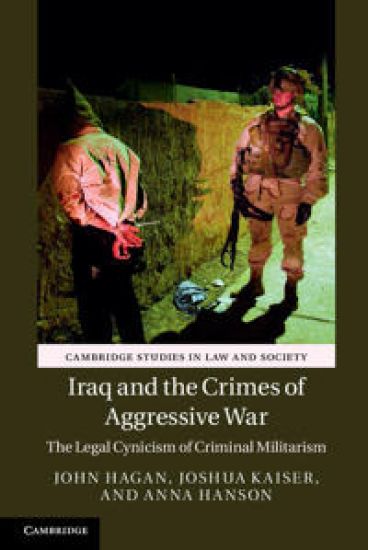
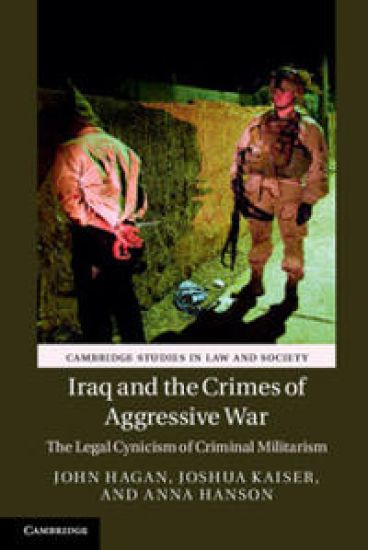
Iraq and the Crimes of Aggressive War

Iraq and the Crimes of Aggressive War

John Hagan; Joshua Kaiser; Anna Hanson

Cambridge University Press
2015
sidottu
From the torture of detainees at Abu Ghraib to unnecessary military attacks on civilians, this book is an account of the violations of international criminal law committed during the United States invasion of Iraq. Taking stock of the entire war, it uniquely documents the overestimation of the successes and underestimation of the failings of the Surge and Awakening policies. The authors show how an initial cynical framing of the American war led to the creation of a new Shia-dominated Iraq state, which in turn provoked powerful feelings of legal cynicism among Iraqis, especially the Sunni. The predictable result was a resilient Sunni insurgency that re-emerged in the violent aftermath of the 2011 withdrawal. Examining more than a decade of evidence, this book makes a powerful case that the American war in Iraq constituted a criminal war of aggression.
Iraq and the Crimes of Aggressive War

Iraq and the Crimes of Aggressive War

John Hagan; Joshua Kaiser; Anna Hanson

Cambridge University Press
2015
pokkari
From the torture of detainees at Abu Ghraib to unnecessary military attacks on civilians, this book is an account of the violations of international criminal law committed during the United States invasion of Iraq. Taking stock of the entire war, it uniquely documents the overestimation of the successes and underestimation of the failings of the Surge and Awakening policies. The authors show how an initial cynical framing of the American war led to the creation of a new Shia-dominated Iraq state, which in turn provoked powerful feelings of legal cynicism among Iraqis, especially the Sunni. The predictable result was a resilient Sunni insurgency that re-emerged in the violent aftermath of the 2011 withdrawal. Examining more than a decade of evidence, this book makes a powerful case that the American war in Iraq constituted a criminal war of aggression.
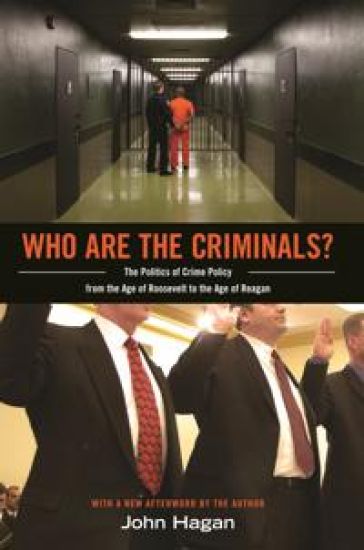
Who Are the Criminals?

Who Are the Criminals?

John Hagan

Princeton University Press
2012
pokkari
How did the United States go from being a country that tries to rehabilitate street criminals and prevent white-collar crime to one that harshly punishes common lawbreakers while at the same time encouraging corporate crime through a massive deregulation of business? Why do street criminals get stiff prison sentences, a practice that has led to the disaster of mass incarceration, while white-collar criminals, who arguably harm more people, get slaps on the wrist--if they are prosecuted at all? In Who Are the Criminals?, one of America's leading criminologists provides new answers to these vitally important questions by telling how the politicization of crime in the twentieth century transformed and distorted crime policymaking and led Americans to fear street crime too much and corporate crime too little. John Hagan argues that the recent history of American criminal justice can be divided into two eras--the age of Roosevelt (roughly 1933 to 1973) and the age of Reagan (1974 to 2008). A focus on rehabilitation, corporate regulation, and the social roots of crime in the earlier period was dramatically reversed in the later era. In the age of Reagan, the focus shifted to the harsh treatment of street crimes, especially drug offenses, which disproportionately affected minorities and the poor and resulted in wholesale imprisonment. At the same time, a massive deregulation of business provided new opportunities, incentives, and even rationalizations for white-collar crime--and helped cause the 2008 financial crisis and subsequent recession. The time for moving beyond Reagan-era crime policies is long overdue, Hagan argues. The understanding of crime must be reshaped and we must reconsider the relative harms and punishments of street and corporate crimes. In a new afterword, Hagan assesses Obama's policies regarding the punishment of white-collar and street crimes and debates whether there is any evidence of a significant change in the way our country punishes them.
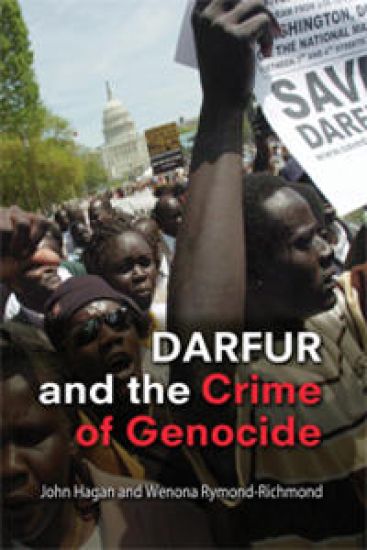
Darfur and the Crime of Genocide

Darfur and the Crime of Genocide

John Hagan; Wenona Rymond-Richmond

Cambridge University Press
2008
sidottu
In 2004, the State Department gathered more than a thousand interviews from refugees in Chad that verified Colin Powell's UN and congressional testimonies about the Darfur genocide. The survey cost nearly a million dollars to conduct and yet it languished in the archives as the killing continued, claiming hundreds of thousands of murder and rape victims and restricting several million survivors to camps. This book fully examines that survey and its heartbreaking accounts. It documents the Sudanese government's enlistment of Arab Janjaweed militias in destroying black African communities. The central questions are: why is the United States so ambivalent to genocide? Why do so many scholars deemphasize racial aspects of genocide? How can the science of criminology advance understanding and protection against genocide? This book gives a vivid firsthand account and voice to the survivors of genocide in Darfur.
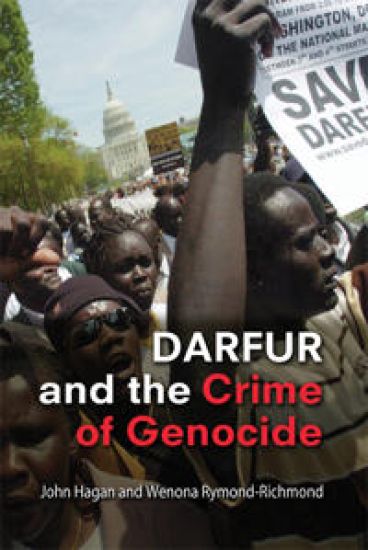
Darfur and the Crime of Genocide

Darfur and the Crime of Genocide

John Hagan; Wenona Rymond-Richmond

Cambridge University Press
2008
pokkari
In 2004, the State Department gathered more than a thousand interviews from refugees in Chad that verified Colin Powell's UN and congressional testimonies about the Darfur genocide. The survey cost nearly a million dollars to conduct and yet it languished in the archives as the killing continued, claiming hundreds of thousands of murder and rape victims and restricting several million survivors to camps. This book fully examines that survey and its heartbreaking accounts. It documents the Sudanese government's enlistment of Arab Janjaweed militias in destroying black African communities. The central questions are: why is the United States so ambivalent to genocide? Why do so many scholars deemphasize racial aspects of genocide? How can the science of criminology advance understanding and protection against genocide? This book gives a vivid firsthand account and voice to the survivors of genocide in Darfur.