Kirjojen hintavertailu – 12 903 727 kirjaa ja 27 kauppaa

Kirjailija

John Hagan

Kirjat ja teokset yhdessä paikassa: 28 kirjaa, julkaisuja vuosilta 1988–2026, suosituimpiin kuuluu Reclaiming Justice. Vertaile teosten hintoja ja tarkista saatavuus suomalaisista kirjakaupoista.

28 kirjaa

Kirjojen julkaisuvuodet: 1988–2026.

Mean Streets

Mean Streets

John Hagan; Bill McCarthy

Cambridge University Press
1998
pokkari
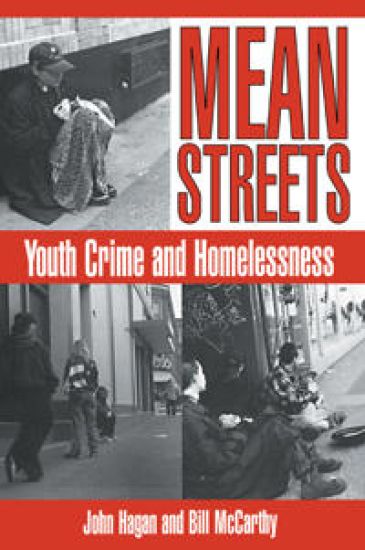
Mean Streets is a field study of young people who have left home and school and are living on the streets of Toronto and Vancouver. This book includes the personal narratives and explanatory accounts, in their own words, of some of the more than four hundred young people who participated in the summer-long study, which featured intensive personal interviews. The study examines why youth take to the streets, their struggles to survive on the street, their victimization and involvement in crime, their associations with other street youth, especially within ‘street families’, their contacts with the police, and their efforts to leave the street and rejoin conventional society. Major theories of youth crime are analyzed and reappraised in the context of a new social capital theory of crime.
Mean Streets

Mean Streets

John Hagan; Bill McCarthy

Cambridge University Press
1997
sidottu
Mean Streets is a field study of young people who have left home and school and are living on the streets of Toronto and Vancouver. This book includes the personal narratives and explanatory accounts, in their own words, of some of the more than four hundred young people who participated in the summer-long study, which featured intensive personal interviews. The study examines why youth take to the streets, their struggles to survive on the street, their victimization and involvement in crime, their associations with other street youth, especially within ‘street families’, their contacts with the police, and their efforts to leave the street and rejoin conventional society. Major theories of youth crime are analyzed and reappraised in the context of a new social capital theory of crime.
International Handbook of Violence Research

International Handbook of Violence Research

Wilhelm Heitmeyer; John Hagan

Springer-Verlag New York Inc.
2005
nidottu
An international manual is like a world cruise: a once-in-a-lifetime experience. All the more reason to consider carefully whether it is necessary. This can hardly be the case if previous research in the selected field has already been the subject of an earlier review-or even several competing surveys. On the other hand, more thorough study is necessary if the intensity and scope of research are increasing without comprehensive assessments. That was the situation in Western societies when work began on this project in the summer of 1998. It was then, too, that the challenges emerged: any manual, espe­ cially an international one, is a very special type of text, which is anything but routine. It calls for a special effort: the "state of the art" has to be documented for selected subject areas, and its presentation made as compelling as possible. The editors were delighted, therefore, by the cooperation and commitment shown by the eighty-one contributors from ten countries who were recruited to write on the sixty-two different topics, by the con­ structive way in which any requests for changes were dealt with, and by the patient re­ sponse to our many queries. This volume is the result of a long process. It began with the first drafts outlining the structure of the work, which were submitted to various distinguished colleagues. Friedheim Neidhardt of Berlin, Gertrud Nunner-Winkler of Munich, and Roland Eckert of Trier, to name only a few, supplied valuable comments at this stage.
Justice in the Balkans

Justice in the Balkans

John Hagan

University of Chicago Press
2003
sidottu
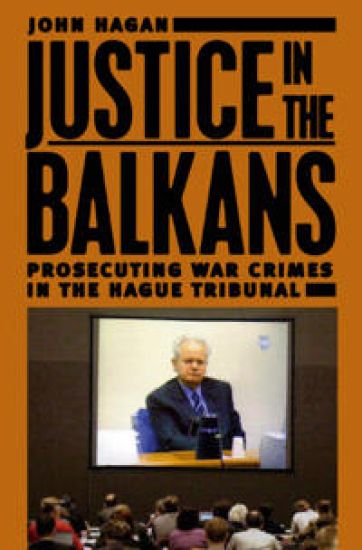
Called a fig leaf for inaction by many at its inception, the International Criminal Tribunal for the Former Yugoslavia has surprised its critics by growing from an unfunded U. N. Security Council resolution to an institution with more than 1,000 employees and a $100 million annual budget. With Slobodan Milosevic now on trial and more than forty fellow indictees currently detained, the success of the Hague tribunal has forced many to reconsider the prospects of international justice. John Hagan's Justice in the Balkans is a powerful firsthand look at the inner workings of the tribunal as it has moved from an experimental organization initially viewed as irrelevant to the first truly effective international court since Nuremberg. Creating an institution that transcends national borders is a challenge fraught with political and organizational difficulties, yet, as Hagan describes here, the Hague tribunal has increasingly met these difficulties head-on and overcome them. The chief reason for its success, he argues, is the people who have shaped it, particularly its charismatic chief prosecutor, Louise Arbour. With drama and immediacy, Justice in the Balkans re-creates how Arbour worked with others to turn the tribunal's fortunes around, reversing its initial failure to arrest and convict significant figures and advancing the tribunal's agenda to the point at which Arbour and her colleagues, including her successor, Carla Del Ponte (nicknamed the Bulldog), were able to indict Milosevic himself. Leading readers through the investigations and criminal proceedings of the tribunal, Hagan offers the most original account of the foundation and maturity of the institution. Justice in the Balkans brilliantly shows how an international social movement for human rights in the Balkans was transformed into a pathbreaking legal institution and a new transnational legal field. The Hague tribunal becomes, in Hagan's work, a stellar example of how individuals working with collective purpose can make a profound difference." The Hague tribunal reaches into only one house of horrors among many; but, within the wisely precise remit given to it, it has beamed the light of justice into the darkness of man's inhumanity, to woman as well as to man."—The Times (London)

Northern Passage

Northern Passage

John Hagan

Harvard University Press
2001
sidottu
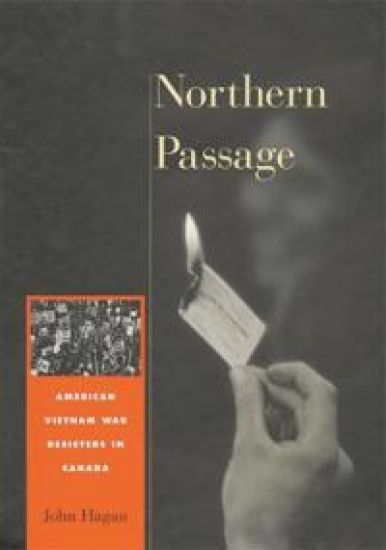
More than 50,000 draft-age American men and women migrated to Canada during the Vietnam War, the largest political exodus from the United States since the American Revolution. How are we to understand this migration three decades later? Was their action simply a marginal, highly individualized spin-off of the American antiwar movement, or did it have its own lasting collective meaning? John Hagan, himself a member of the exodus, searched declassified government files, consulted previously unopened resistance organization archives and contemporary oral histories, and interviewed American war resisters settled in Toronto to learn how they made the momentous decision. Canadian immigration officials at first blocked the entry of some resisters; then, under pressure from Canadian church and civil liberties groups, they fully opened the border, providing these Americans with the legal opportunity to oppose the Vietnam draft and military mobilization while beginning new lives in Canada. It was a turning point for Canada as well, an assertion of sovereignty in its post–World War II relationship with the United States. Hagan describes the resisters’ absorption through Toronto’s emerging American ghetto in the late 1960s. For these Americans, the move was an intense and transformative experience. While some struggled for a comprehensive amnesty in the United States, others dedicated their lives to engagement with social and political issues in Canada. More than half of the draft and military resisters who fled to Canada thirty years ago remain there today. Most lead successful lives, have lost their sense of Americanness, and overwhelmingly identify themselves as Canadians.
Gender in Practice

Gender in Practice

John Hagan; Fiona Kay

Oxford University Press Inc
1995
sidottu
This book analyses the current status of women in the law, drawing on two major studies in Canada in 1985 and 1990, and relating the findings to women and the legal profession in the United States.
Crime and Disrepute

Crime and Disrepute

John Hagan

SAGE Publications Inc
1994
nidottu
Advances a new sociology of crime and disrepute that focuses on the criminal costs of social inequality. Connects the diversion of capital away from distressed communities in the U. S. to increased violence and lack of social mobility for disadvantaged groups, which result in the development of "deviance service centers" and "ethnic vice industries." Shows the important link between "crime in the streets" and "crime in the suites" and the differences between the two in eluding punishment.
Structural Criminology

Structural Criminology

John Hagan

Rutgers University Press
1988
sidottu
Focusing on a variety of criminal activities, the author applies his structural criminology to the relationships of power which operate in a range of institutional spheres. He looks at the relationship between class and criminality, showing the inadequacy of a simple causal link and discussing the prevalence of "white collar" crime. Hagan sees other significant structures of power in the relative influence of corporate actors - for example large commercial establishments - who bring charges against individuals, and he analyzes both the legal outcome of such conflicts and the symbolic aspects of sentencing and judicial operations in general. Throughout, these essays stress the structural importance of unemployment, race and gender in the legal definitions of criminal behaviour and the need to situate each factor within its complex of power relationships.