Kirjojen hintavertailu – 12 859 828 kirjaa ja 27 kauppaa

Kirjailija

John King

Kirjat ja teokset yhdessä paikassa: 169 kirjaa, julkaisuja vuosilta 1986–2026, suosituimpiin kuuluu BART. Vertaile teosten hintoja ja tarkista saatavuus suomalaisista kirjakaupoista.

169 kirjaa

Kirjojen julkaisuvuodet: 1986–2026.

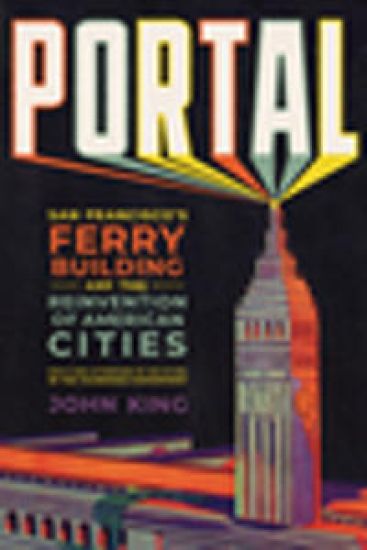
Portal

Portal

John King

WW NORTON CO
2025
nidottu
Conceived in the Gilded Age, the Ferry Building opened in 1898 as San Francisco’s portal to the world—the terminus of the transcontinental railway and a showcase of civic ambition. In silent films and World’s Fair postcards, nothing said “San Francisco” more than its soaring clocktower. But as acclaimed architectural critic John King recounts in Portal, the rise of the automobile and double-deck freeways severed the city from its beloved structure and its waterfront—a connection that required generations to restore. King’s narrative spans the rise and fall and rebirth of the Ferry Building. Rich with feats of engineering and civic imagination, his story introduces colourful figures who fought to preserve the Ferry Building’s character (and the city’s soul)—from architect Arthur Page Brown and legendary columnist Herb Caen to poet Lawrence Ferlinghetti and Senator Dianne Feinstein. In King’s hands, the saga of the Ferry Building is a microcosm of a larger evolution along the waterfronts of cities everywhere. Portal traces the damage inflicted on historic neighbourhoods and working dockyards by cars, highways, and top-down planning and “urban renewal.” But when an earthquake destroyed the Embarcadero Freeway, city residents seized the chance to reclaim their connection to the bay. Transporting readers across 125 years of history, this tour de force explores the tensions impacting urban infrastructure and public spaces, among them tourism, deindustrialization, development and globalisation. Portal culminates with a rich portrait of San Francisco’s vibrant esplanade today, visited by millions, even as sea level rise and earthquakes threaten a landmark that remains as vital as ever. A book for city lovers and visitors, architecture fans and pedestrians, Portal is essential reading for anyone interested in the history of San Francisco and the future of American cities.
How to Lead Difficult People

How to Lead Difficult People

John King

Books Explorer
2025
sidottu
Leadership is not just about guiding a team toward success; it's about navigating the complexities of human behavior. Every leader, at some point, encounters individuals who challenge their patience, test their resolve, and push the boundaries of their emotional intelligence. These are the difficult people-the complainers, the resistors, the disruptors-who can drain energy, disrupt productivity, and create tension within a team. Yet, what if these difficult individuals are not obstacles to overcome, but opportunities for growth, innovation, and stronger leadership? This book, How to Lead Difficult People, is a comprehensive guide for leaders who want to transform challenging relationships into productive partnerships. It's not just about managing difficult behavior; it's about understanding the root causes of that behavior, reframing your perspective, and unlocking the hidden potential within every individual. Whether you're leading a team, managing a department, or running an organization, this book will equip you with the tools, strategies, and mindset to turn friction into fuel and conflict into collaboration. Why This Book MattersIn today's fast-paced, ever-changing work environment, leaders face unprecedented challenges. Teams are more diverse, expectations are higher, and the pressure to perform is relentless. Amidst these demands, difficult people can feel like an added burden-a distraction from the real work of achieving goals and driving results. But what if the key to unlocking your team's full potential lies in how you lead those who are hardest to lead? Research shows that difficult behavior is often a symptom, not the root cause. A 2022 study by the Society for Human Resource Management (SHRM) found that 58% of employees who exhibited difficult behavior were responding to workplace stress, dissatisfaction, or unmet needs-not their inherent personality. This means that with the right approach, even the most challenging individuals can become valuable contributors and loyal team members. What You'll LearnThis book is divided into three parts, each designed to help you navigate the complexities of leading difficult people: Understanding Difficult People: We'll explore the psychology behind difficult behavior, debunk common misconceptions, and help you identify whether the issue is personal or systemic. Strategies for Leading Difficult People: From mastering communication and setting boundaries to resolving conflicts and motivating resistant individuals, you'll learn practical, actionable techniques to address challenging behavior effectively. Building a Resilient and Influential Leadership Style: We'll delve into the qualities and practices that define great leaders, drawing lessons from real-world examples and providing guidance on sustaining leadership excellence in the face of adversity. A New Perspective on Difficult PeopleOne of the most profound insights in this book is the idea that difficult people are not the problem-they are the signal of a problem. Whether it's a lack of trust, unclear expectations, or unmet needs, difficult behavior often points to deeper issues that, when addressed, can lead to breakthroughs for both the individual and the team. Consider this: teams with a mix of personalities, including difficult ones, often outperform homogeneous teams. A 2021 Harvard Business Review study found that teams with diverse perspectives and challenging dynamics were 30% more innovative than teams where everyone got along perfectly. This is because friction can spark creativity, force critical thinking, and lead to better solutions.

Why Have Democracies Failed According to Madison? Why Democracies Die
The phrase "how democracies die" has become a haunting refrain in political discourse, reflecting growing concerns about the stability of democratic systems worldwide. Democracies, once seen as the ultimate safeguard of freedom and equality, are increasingly under threat-not from external forces, but from within. Understanding how democracies die is crucial to preventing their collapse and preserving the rights and freedoms they guarantee. The Old Script: Coups and ViolenceTraditionally, democracies died in dramatic and violent ways. Military coups, armed insurrections, and sudden overthrows were the primary mechanisms of democratic collapse. During the 20th century, particularly in the Cold War era, military coups were responsible for the majority of democratic breakdowns. Countries like Chile, Argentina, and Greece saw their democracies dismantled by generals who seized power through force. The 1973 coup in Chile is a stark example. President Salvador Allende, a democratically elected leader, was overthrown by General Augusto Pinochet. The bombing of La Moneda palace and Allende's death marked the end of Chilean democracy. Similar stories unfolded in Brazil, Nigeria, and Thailand, where military power crushed democratic institutions. But this is no longer the primary way democracies die. While military coups still occur, they are increasingly rare. Instead, democracies today face a more subtle and insidious threat-one that comes not from the barrel of a gun but from within the system itself. The New Threat: Erosion from WithinIn the modern era, democracies die not at the hands of generals but of elected leaders. These leaders, often initially popular, gradually undermine the very institutions that brought them to power. They use legal means-constitutional amendments, court packing, and electoral manipulation-to erode democratic norms and consolidate power. Venezuela provides a chilling example. Hugo Ch vez was elected in 1998 as a populist outsider, promising to fight corruption and empower the poor. Initially, he operated within democratic frameworks, winning elections and rewriting the constitution. But over time, he began to dismantle democratic institutions. He packed the courts, silenced the media, and eliminated term limits. By the time of his death in 2013, Venezuela was no longer a democracy but an autocracy masquerading as one. This pattern is not unique to Venezuela. In Hungary, Prime Minister Viktor Orb n has systematically weakened democratic institutions, from the judiciary to the free press. In Turkey, President Recep Tayyip Erdoğan has used referendums and constitutional changes to centralize power. In the Philippines, Rodrigo Duterte has undermined the rule of law while maintaining a democratic fa ade.
Aromatherapy Formula

Aromatherapy Formula

John King

Books Explorer
2025
sidottu
Aromatherapy is a holistic healing practice that uses natural plant extracts, known as essential oils, to promote physical, emotional, and mental well-being. These oils are derived from various parts of plants, including flowers, leaves, bark, roots, and fruits, and are used in a variety of ways to harness their therapeutic properties. Aromatherapy is not just about pleasant scents; it is a science-backed practice that has been used for centuries to treat a wide range of ailments and improve overall quality of life. The practice of aromatherapy can be traced back to ancient civilizations, where aromatic plants were used for medicinal, spiritual, and cosmetic purposes. Today, aromatherapy is widely recognized as a complementary therapy that can be used alongside conventional medical treatments to enhance health and well-being. Whether you are looking to reduce stress, improve sleep, or alleviate physical pain, aromatherapy offers a natural and effective solution. Aromatherapy is the practice of using essential oils for therapeutic purposes. It has been used for centuries in various cultures. When inhaled, essential oil molecules travel to the brain, affecting the amygdala, which controls emotions. Essential oils can also be absorbed through the skin. For example, massage therapists may use diluted essential oils to relax tense muscles, while skincare products often include essential oils for their soothing properties.