
Kirjailija
John Locke
Kirjat ja teokset yhdessä paikassa: 637 kirjaa, julkaisuja vuosilta 1789–2026, suosituimpiin kuuluu The Clarendon Edition of the Works of John Locke: Some Thoughts Concerning Education. Vertaile teosten hintoja ja tarkista saatavuus suomalaisista kirjakaupoista.
637 kirjaa
Kirjojen julkaisuvuodet: 1789–2026.

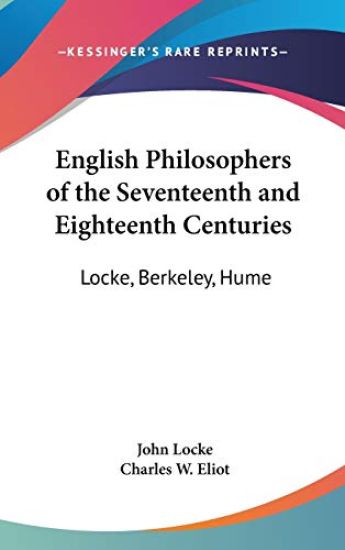
English Philosophers of the Seventeenth and Eighteenth Centuries
John Locke; Charles W. (EDT) Eliot
Kessinger Pub
2004
sidottu
English Philosophers of the Seventeenth and Eighteenth Centuries
John Locke
KESSINGER PUBLISHING CO
2004
pokkari
Two Treatises of Government and A Letter Concerning Toleration
John Locke
Yale University Press
2003
pokkari
Two of Locke’s most mature and influential political writings and three brilliant interpretive essays combined in an outstanding volume"The new standard edition of Locke for students of political theory. Dunn, Grant, and Shapiro combine authoritative historical scholarship and contemporary political theory to give us Locke for our time."—Elisabeth H. Ellis, Texas A&M University Among the most influential writings in the history of Western political thought, John Locke’s Two Treatises of Government and A Letter Concerning Toleration remainvital to political debates today, more than three centuries after they were written. The complete texts appear in this volume, accompanied by interpretive essays by three prominent Locke scholars. Ian Shapiro’s introduction places Locke’s political writings in historical and biographical context. John Dunn explores both the intellectual context in which Locke wrote the Two Treatises of Government and A Letter Concerning Toleration andthe major interpretive controversies surrounding their meaning. Ruth Grant offers a comprehensive discussion of Locke’s views on women and the family, and Shapiro contributes an essay on the democratic elements of Locke’s political theory. Taken together, the texts and essays in this volume offer invaluable insights into the history of ideas and the enduring influence of Locke’s political thought.
John Locke's Second Treatise of Government (c. 1681) is perhaps the key founding liberal text. A Letter Concerning Toleration , written in 1685 (a year when a Catholic monarch came to the throne of England and Louis XVI unleashed a reign of terror against Protestants in France), is a classic defense of religious freedom. Yet many of Locke's other writings--not least the Constitutions of Carolina, which he helped draft--are almost defiantly anti-liberal in outlook. This comprehensive collection brings together the main published works (excluding polemical attacks on other people's views) with the most important surviving evidence from among Lockes papers relating to his political philosophy. David Wootton's wide-ranging and scholarly Introduction sets the writings in the context of their time, examines Locke's developing ideas and unorthodox Christianity, and analyzes his main arguments. The result is the first fully rounded picture of Lockes political thought in his own words.
Examen de la opinion del padre Malebranche de que vemos todas las cosas en Dios / Review of Opinion of Father Malebranche that we See all Things in God
John Locke; Juan Jose Garcia (TRN) Norro
Complutense S A Editorial
2003
pokkari
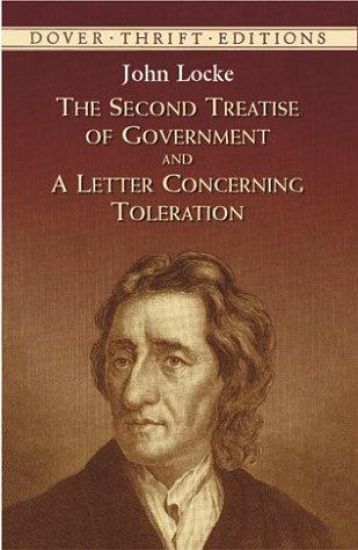
The Second Treatise of Government: and a Letter Concerning Toleration
John Locke
Dover Publications Inc.
2002
nidottu

Que la Religion Chretienne est Tres Raisonnable - Discours sur les Miracles
John Locke
Voltaire Foundation
1999
nidottu
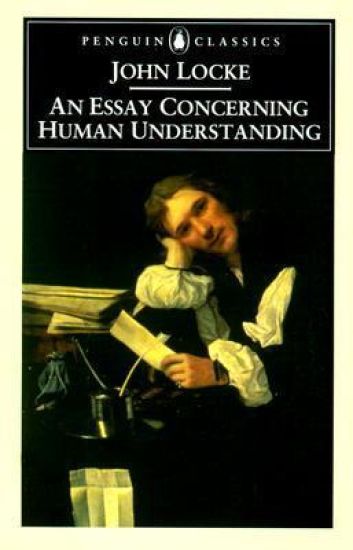
An Essay Concerning Human Understanding
John Locke
Penguin Classics
1997
pokkari
Halvin toimitettuna 20,30 €
In An Essay Concerning Human Understanding, first published in 1690, John Locke (1632-1704) provides a complete account of how we acquire everyday, mathematical, natural scientific, religious and ethical knowledge. Rejecting the theory that some knowledge is innate in us, Locke argues that it derives from sense perceptions and experience, as analysed and developed by reason. While defending these central claims with vigorous common sense, Locke offers many incidental - and highly influential - reflections on space and time, meaning, free will and personal identity. The result is a powerful, pioneering work, which, together with Descartes's works, largely set the agenda for modern philosophy.

Anleitung Des Menschlichen Verstandes: Festgabe Fur Norbert Hinske Zum 65. Geburtstag
John Locke
Frommann-Holzboog
1996
sidottu
Band 1: Anleitung des menschlichen Verstandes. Eine Abhandlung von den Wunderwerken. In der Ubersetzung Konigsberg 1755 von Georg David Kypke. XXVIII, 218 S. Band 2: Of the Conduct of the Understanding. A Discourse of Miracles. Nach der ersten Werkausgabe London 1714. VIII, 140 S. John Lockes postum erschienene Schrift Of the Conduct of the Understanding enthalt bereits entscheidende Grundideen der deutschen Aufklarung (z. B. Selbstdenken, Kampf gegen Vorurteile, Unparteilichkeit). Ihre Ubersetzung durch Kants Mitschuler Kypke hat dann wesentlich zur Verbreitung ihres Gedankengutes beigetragen. Die kommentierte Neuerschliessung dieses rar gewordenen Textes, der Kant aufs nachhaltigste beeinflusst hat, bietet eine unentbehrliche Grundlage fur das noch weithin unerforschte Kapitel Locke in Konigsberg. Ebenfalls der Neuausgabe beigegeben wird die von Kypke der Anleitung beigefugte Abhandlung von den Wunderwerken, welche die Grundgedanken der grosseren Schrift auf die Religionsphilosophie ubertragt.
Some Thoughts Concerning Education and of the Conduct of the Understanding
John Locke
Hackett Publishing Co, Inc
1996
pokkari
Offers two complementary works, unabridged, in modernised, annotated texts. Suitable for classroom use, this title provides an introduction, a note on the texts, and a select bibliography.
Some Thoughts Concerning Education and of the Conduct of the Understanding
John Locke
Hackett Publishing Co, Inc
1996
sidottu
This volume offers two complementary works, unabridged, in modernized, annotated texts--the only available edition priced for classroom use. Grant and Tarcov provide a concise introduction, a note on the texts, and a select bibliography.
Part of a two-volume set of work containing words of all four books comprising the "Essay", this book provides marginal analyses of almost every paragraph, and explanatory footnotes which comment, elaborate and explain difficult points.
Der Staat wird von John Locke als eine Institution bestimmt, deren ausschließliche Aufgabe im Schutz von Leben, Besitz und Freiheiten der Bürger besteht. Die Handlungen der Bürger - insbesondere in Glaubensfragen - sind schutzwürdig, soweit sie dieser Aufgabe nicht widersprechen. Die Toleranzforderung gegenüber dem Staat ist demnach auf ein Freiheitsrecht gegründet, das auch der Idee einer vom Staat gestützten Einheitskirche entgegensteht. Mit dem Toleranzbrief (1685/1686) griff Locke von seinem Amsterdamer Exil aus in die zeitgenössischen konfessionellen Auseinandersetzungen in England ein.
Two Treatises of Government
John Locke; Mark Goldie
Phoenix (an Imprint of The Orion Publishing Group Ltd )
1993
pokkari
Halvin toimitettuna 15,60 €
Peter Laslett's edition of Locke's "Two Treatises of Government" is widely recognised as one of the classic pieces of recent scholarship in the history of ideas, and has been read and used by students of politcal theory throughout the world. Dr. Laslett demonstrated that the version usually cited was in no way a representation of that 'text for posterity' Locke left behind, and exhaustive analysis of Lock's private papers and personal library caused Dr. Laslett radically to alter the received notion that the "Two Treatises" were in any sense a rationalization of the events of 1688: Locke's texts were rather a call for a revolution yet to come.
Ever since humankind raised its head toward the heavens in search of universal understanding and spiritual fulfillment, wars, pogroms, persecution, prejudice, and contempt have been the means of resolving the many and varied disagreements that have arisen over matters religious. In his Letter Concerning Toleration, Locke offers a compelling plea for freedom of conscience and religious expression. He outlines the limits of social and political incursion into the realm of personal belief or non-belief, discusses the dangers of mixing church and state, and strikes hard at those who would use the power of the state to fulfill religious or political goals. Rational persuasion is always to be encouraged in the hope that wayward souls may find a moral direction in life, but the use of force in such matters is unwarranted and unacceptable. Locke also addresses the question of denominational infighting and relations among the major religions. Talk of heresy and schism should be set aside in favor of understanding and cooperation to achieve mutually desirable social ends.
Lockes philosophisches Hauptwerk wurde bereits 1671 begonnen, aber erst 1690 vollständig publiziert. Im Sendschreiben an den Leser berichtet Locke von einer mit Freunden geführten, ergebnislosen Diskussion, die ihn auf den Gedanken gebracht habe, solchen Sacherörterungen eine Untersuchung der Leistungsfähigkeit des menschlichen Verstandesvermögens voranzuschicken. Die Durchführung dieses kritischen Programms beginnt - nach der Widerlegung der überkommenen Lehre von den angeborenen Ideen und Grundsätzen (Buch 1) - mit dem Aufweis des empirischen Ursprungs des gesamten Materials der menschlichen Erkenntnis (Buch 2) und endet - nach einer später eingeschobenen Erörterung über Sprache und Denken (Buch 3) - mit einer Bestimmung der Grenzen und Arten der Erkenntnis (Buch 4). Neben einer Bibliographie von R. Brandt bietet die Ausgabe eine vollständige Übersetzung aller vier Bücher.