Kirjojen hintavertailu – 12 859 819 kirjaa ja 27 kauppaa

Kirjailija

John Locke

Kirjat ja teokset yhdessä paikassa: 637 kirjaa, julkaisuja vuosilta 1789–2026, suosituimpiin kuuluu The Clarendon Edition of the Works of John Locke: Some Thoughts Concerning Education. Vertaile teosten hintoja ja tarkista saatavuus suomalaisista kirjakaupoista.

637 kirjaa

Kirjojen julkaisuvuodet: 1789–2026.

Locke: Two Treatises of Government Student edition

Locke: Two Treatises of Government Student edition

John Locke

Cambridge University Press
1988
pokkari

Halvin toimitettuna 30,70 €

This is the revised version of Peter Laslett’s acclaimed edition of Two Treatises of Government, which is widely recognised as one of the classic pieces of recent scholarship in the history of ideas, read and used by students of political theory throughout the world. This new edition revises Dr Laslett’s second edition (1970) and includes an updated bibliography, a guide to further reading and a fully reset and revised introduction which surveys recent advances in Locke scholarship. In the introduction, Dr Laslett shows that the Two Treatises were not a rationalisation of the events of 1688 but rather a call for a revolution yet to come.
Locke: Two Treatises of Government Student edition

Locke: Two Treatises of Government Student edition

John Locke

Cambridge University Press
1988
sidottu
This is the revised version of Peter Laslett's acclaimed edition of Two Treatises of Government, which is widely recognised as one of the classic pieces of recent scholarship in the history of ideas, read and used by students of political theory throughout the world. This 1988 edition revises Dr Laslett's second edition (1970) and includes an updated bibliography, a guide to further reading and a fully reset and revised introduction which surveys advances in Locke scholarship since publication of the second edition. In the introduction, Dr Laslett shows that the Two Treatises were not a rationalisation of the events of 1688 but rather a call for a revolution yet to come.
The Second Treatise on Civil Government

The Second Treatise on Civil Government

John Locke

Prometheus Books
1986
pokkari
As one of the early Enlightenment philosophers in England, John Locke sought to bring reason and critical intelligence to the discussion of the origins of civil society. Endeavoring to reconstruct the nature and purpose of government, a social contract theory is proposed. The Second Treatise sets forth a detailed discussion of how civil society came to be and the nature of its inception. Locke's discussion of tacit consent, separation of powers, and the right of citizens to revolt against repressive governments, has made The Second Treatise one of the most influential essays in the history of political philosophy.
Letter Concerning Toleration

Letter Concerning Toleration

John Locke; James H. Tully

Hackett Publishing Co, Inc
1983
pokkari
John Locke's subtle and influential defense of religious toleration as argued in his seminal "Letter Concerning Toleration" (1685) appears in this edition as introduced by one of our most distinguished political theorists and historians of political thought.
Letter Concerning Toleration

Letter Concerning Toleration

John Locke; James H. Tully

Hackett Publishing Co, Inc
1983
sidottu
John Locke's subtle and influential defense of religious toleration as argued in his seminal Letter Concerning Toleration (1685) appears in this edition as introduced by one of our most distinguished political theorists and historians of political thought.
Second Treatise of Government

Second Treatise of Government

John Locke

Hackett Pub Co Inc
1980
sidottu
The central principles of what today is broadly known as political liberalism were made current in large part by Locke's "Second Treatise of Government" (1690). The principles of individual liberty, the rule of law, government by consent of the people, and the right to private property are taken for granted as fundamental to the human condition now. Most liberal theorists writing today look back to Locke as the source of their ideas. Some maintain that religious fundamentalism, 'post-modernism', and socialism are today the only remaining ideological threats to liberalism. To the extent that this is true, these ideologies are ultimately attacks on the ideas that Locke, arguably more than any other, helped to make the universal vocabulary of political discourse.
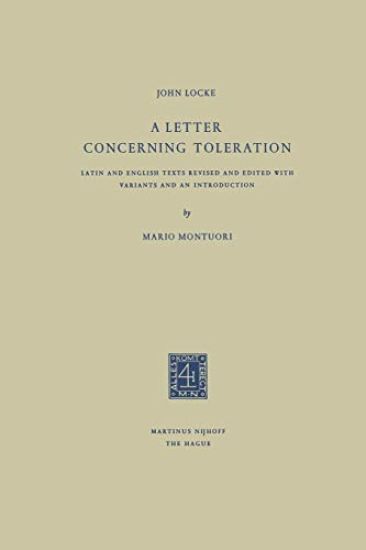
A Letter Concerning Toleration
Limborch's edition and Popple's translation, as on whether it is true that Popple translated the Epistola into English 'a l'insu de Mr Locke', and consequently whether Locke was right or wrong in saying that the translation was made 'without my privity'. Long research into documents hitherto unpublished, or little known, or badly used, has persuaded me that Locke not only knew that Popple had undertaken to translate the Gouda Latin text, but also that Locke followed Popple's work very closely, and even that the second English edition of 1690 was edited by Locke himself. In these circumstances it does not seem possible to speak of an original text, that in Latin, and an English translation; rather they are two different versions of Locke's thoughts on Toleration. The accusations of unreliability levelled at Popple therefore fall to the ground, and the Latin and English texts acquire equal rights to our trust, since they both deserve the same place among Locke's works. Consequently the expression 'without my privity', which a number of people had seen as revealing an innate weakness in Locke's moral character, reacquires its precise meaning: testifying to Locke's profound modesty and integrity.
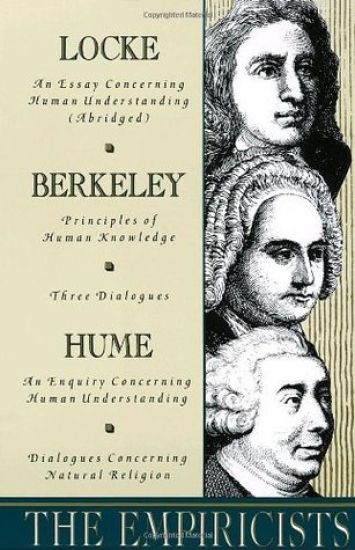
The Empiricists

The Empiricists

John Locke; George Berkeley; David Hume

Bantam Dell Publishing Group, Div of Random House, Inc
1960
pokkari
This volume includes the major works of the British Empiricists, philosophers who sought to derive all knowledge from experience. All essays are complete except that of Locke, which Professor Richard Taylor of Brown University has skillfully abridged.
The Reasonableness of Christianity, and a Discourse of Miracles
A new and manageable edition of Locke has been badly needed. Professor Ramsey's judicious editing of these important texts fills the need and greatly enhances the value of the texts for the modern reader. Included are The Reasonablesness of Christianity, A Discourse on Miracles, A Further Note on Miracles, and some passages from A Third letter concerning Toleration. Each work is prefaced by an introduction,giving the background of its writing and indicating its contemporary significance.
Two Treatises of Government

Two Treatises of Government

John Locke

Binker North
1789
sidottu
Two Treatises of Government (or Two Treatises of Government: In the Former, The False Principles, and Foundation of Sir Robert Filmer, and His Followers, Are Detected and Overthrown. The Latter Is an Essay Concerning The True Original, Extent, and End of Civil Government) is a work of political philosophy published anonymously in 1689 by John Locke. The First Treatise attacks patriarchalism in the form of sentence-by-sentence refutation of Robert Filmer's Patriarcha, while the Second Treatise outlines Locke's ideas for a more civilized society based on natural rights and contract theory. This publication contrasts former political works by Locke himself. In Two Tracts on Government, written in 1660, Locke defends a very conservative position; however Locke never published it. In 1669 Locke co-authored the Fundamental Constitutions of Carolina, which endorses aristocracy, slavery and serfdom. King James II of England (VII of Scotland) was overthrown in 1688 by a union of Parliamentarians and the stadtholder of the Dutch Republic William III of Oranje-Nassau (William of Orange), who as a result ascended the English throne as William III of England. This is known as the Glorious Revolution, also called the Revolution of 1688. Locke claims in the "Preface" to the Two Treatises that its purpose is to justify William III's ascension to the throne, though Peter Laslett suggests that the bulk of the writing was instead completed between 1679-1680 (and subsequently revised until Locke was driven into exile in 1683). 4] According to Laslett, Locke was writing his Two Treatises during the Exclusion Crisis, which attempted to prevent James II from ever taking the throne in the first place. Anthony Ashley-Cooper, 1st Earl of Shaftesbury, Locke's mentor, patron and friend, introduced the bill, but it was ultimately unsuccessful. Richard Ashcraft, following in Laslett's suggestion that the Two Treatises were written before the Revolution, objected that Shaftesbury's party did not advocate revolution during the Exclusion Crisis. He suggests that they are instead better associated with the revolutionary conspiracies that swirled around what would come to be known as the Rye House Plot