Kirjailija
John Miller
Kirjat ja teokset yhdessä paikassa: 179 kirjaa, julkaisuja vuosilta 1937–2026, suosituimpiin kuuluu James II. Vertaile teosten hintoja ja tarkista saatavuus suomalaisista kirjakaupoista.
179 kirjaa
Kirjojen julkaisuvuodet: 1937–2026.

Miller's Modern Acting Drama: Consisting Of The Most Popular Pieces Produced At The London Theatres (1834)
John Miller
KESSINGER PUBLISHING, LLC
2008
sidottu
Miller's Modern Acting Drama: Consisting Of The Most Popular Pieces Produced At The London Theatres (1834)
John Miller
KESSINGER PUBLISHING, LLC
2008
nidottu

Things After Death: Three Chapters On The Intermediate State, With Thoughts On Family Burying Places, And Hints For Epitaphs In Country Churchyard (18
John Miller
KESSINGER PUBLISHING, LLC
2008
nidottu
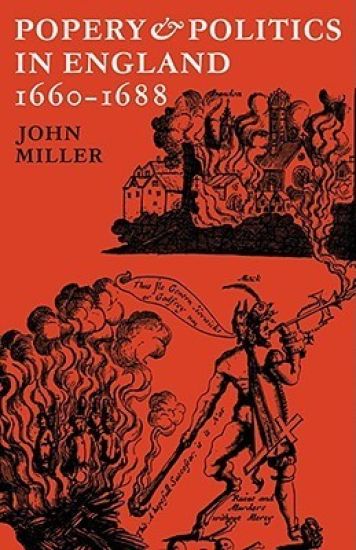
In the reign of Charles II, over a century after the Protestant Reformation, England was faced with the prospect of a Catholic king when the King's brother, the future James II became a Catholic. The reaction to his conversion, the fears it aroused and their background form the main theme of this book.
An Inquiry Into The Present State Of The Civil Law Of England (1825)
John Miller
KESSINGER PUBLISHING, LLC
2008
nidottu
Poems On Several Occasions: To Which Are Added Dramatic Epistles From The Principal Characters In Some Of Our Most Approved English Tragedies (1754)
John Miller
KESSINGER PUBLISHING, LLC
2008
sidottu
Written with rare mastery and a sure sense of the essential, this concise general history of modern East Asia offers students and general readers an understanding of this dynamic region from a global perspective. It is the ideal introductory text for college survey courses in Asian and international studies. Following an introductory discussion of the regional concept, the first two chapters lay the foundations. Chapter 1 describes East Asia's geographical, human, cultural, economic, social, and political setting as it has evolved over the past several millennia, and the three major belief systems - Confucianism, Buddhism, and Islam. Chapter 2 presents a panoramic view of the region ca. 1800. The chapter introduces the "dramatis personae" - the Chinese, Japanese, Koreans, Vietnamese, Thai, Burmese, Indonesians, Filipinos, and others - and describes their interactions with each other and with Imperial China. The following three chapters deal with European expansionism and East Asians' responses to the civilizational challenge; the stirrings of nationalism in reaction to European colonial rule; and the remarkable rise of Imperial Japan. Chapters 6 and 7 trace Japan's bid to lead a pan-Asianist revolt against the twin threats of Western liberalism and Soviet communism, and the ensuing Pacific War. Chapters 8 and 9 span the cold war era, from postwar U. S. hopes for a "Pax Americana" to the division of East Asia into communist and anti-communist blocs. The Sino-Soviet split and the Sino-American rapprochement of the early 1970s open the way to the "East Asian miracle" and a resurgence of East Asian regionalism, surveyed in Chapter 10. A concluding chapter considers the prospects for continued economic dynamism and the balance of nationalism and pan-Asian trends in shaping the future.
Written with rare mastery and a sure sense of the essential, this concise general history of modern East Asia offers students and general readers an understanding of this dynamic region from a global perspective. It is the ideal introductory text for college survey courses in Asian and international studies. Following an introductory discussion of the regional concept, the first two chapters lay the foundations. Chapter 1 describes East Asia's geographical, human, cultural, economic, social, and political setting as it has evolved over the past several millennia, and the three major belief systems - Confucianism, Buddhism, and Islam. Chapter 2 presents a panoramic view of the region ca. 1800. The chapter introduces the "dramatis personae" - the Chinese, Japanese, Koreans, Vietnamese, Thai, Burmese, Indonesians, Filipinos, and others - and describes their interactions with each other and with Imperial China. The following three chapters deal with European expansionism and East Asians' responses to the civilizational challenge; the stirrings of nationalism in reaction to European colonial rule; and the remarkable rise of Imperial Japan. Chapters 6 and 7 trace Japan's bid to lead a pan-Asianist revolt against the twin threats of Western liberalism and Soviet communism, and the ensuing Pacific War. Chapters 8 and 9 span the cold war era, from postwar U. S. hopes for a "Pax Americana" to the division of East Asia into communist and anti-communist blocs. The Sino-Soviet split and the Sino-American rapprochement of the early 1970s open the way to the "East Asian miracle" and a resurgence of East Asian regionalism, surveyed in Chapter 10. A concluding chapter considers the prospects for continued economic dynamism and the balance of nationalism and pan-Asian trends in shaping the future.


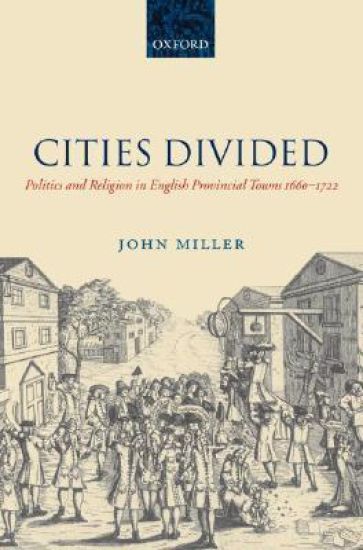
The religious and political history of late seventeenth- and early eighteenth-century England is typically written in terms of conflict and division. This was the period when party conflict - exacerbated by religious enmities - became a normal part of English life. Rather than denying the importance of partisan divisions, this book reveals how civic celebration, designed as an expression of unity and amity, was often used for partisan purposes, reaching a peak in the 1710s. The animosities were most marked in elections, which were often corrupt and drunken, and sometimes very violent. But division and conflict were not universal. Many towns avoided electoral contests, not because they were in the pocket of a great aristocrat, but as a matter of deliberate policy. Despite occasional disorder, urban government rarely broke down, and even violent elections ended with bruises rather than fatalities. Professor Miller suggests an explanation for this in the nature of urban governance. While the formal structures of town government were profoundly undemocratic - vacancies on corporations were most often filled by co-option - there was much participation, consultation, and negotiation in the lower levels of government. In addition, corporation members lived in close proximity to, and did business with, their fellow townspeople, and needed to meet their expectations. These expectations might have been modest - they wanted streets to be reasonably clean and kept in adequate repair, sewage and rubbish to be removed, law and order maintained, and the deserving poor relieved. But they were the things that made daily life tolerable, and for many they mattered more than politics.

Born with a split lip and cleft palate, Toshy Wolfman's life is an uphill battle. Believing he is dim-witted and ugly, Toshy finds his resentment slowly building as he is ridiculed, used, and misled. Ultimately, he is imprisoned after being caught stealing a valuable and famous diamond, the Orange Sunset. But Toshy's story is not his alone - it is shared with his two sisters: Lil, a radical and a devotee of anarchist Emma Goldman; and Bessie, who goes to work for one of Goldmans enemies, the owners of the Orange Sunset. Toshy's love for his sisters drives him to make some of the bravest decisions of his life. But despite having seemingly overcome his obstacles, an aging Toshy stuns his nephew by asking for his assistance in committing suicide. Toshy wont fully explain his decision. Nor will he fully explain why, at this late stage in life, he is obsessed with making a journey to France.
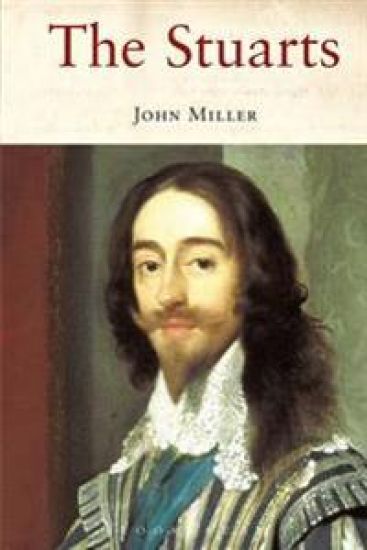
When James VI of Scotland succeeded Elizabeth as James I on the throne of England in 1603, the Stuarts became the first dynasty to rule Britain as a whole. The problems that James and his successors encountered in reconciling their kingdoms led to tensions and revolts in Scotland, Ireland and England itself, leading to the Civil War under Charles I between 1642 and 1646, and to the king's subsequent execution. While Charles II, restored after Cromwell's Interregnum, died on the throne, his brother James II quickly alienated much of the political nation and had to flee abroad after an invasion by his son-in-law, who became William III. Following William's death, James's daughter Anne presided over a period of victory on the Continent, but bitter internal tension at home. Her death without an heir in 1714 brought in the Hanoverians. In "The Stuarts", John Miller looks at the individual monarchs who made up this remarkable dynasty. He also examines the history of the dynasty as a whole, in terms of the Stuarts' identity and agenda as a ruling house.