Kirjailija
John Nichols
Kirjat ja teokset yhdessä paikassa: 145 kirjaa, julkaisuja vuosilta 1971–2025, suosituimpiin kuuluu The Works of William Hogarth. Vertaile teosten hintoja ja tarkista saatavuus suomalaisista kirjakaupoista.
145 kirjaa
Kirjojen julkaisuvuodet: 1971–2025.
The Original Works of William King - Volume the Second is an unchanged, high-quality reprint of the original edition of 1776. Hansebooks is editor of the literature on different topic areas such as research and science, travel and expeditions, cooking and nutrition, medicine, and other genres. As a publisher we focus on the preservation of historical literature. Many works of historical writers and scientists are available today as antiques only. Hansebooks newly publishes these books and contributes to the preservation of literature which has become rare and historical knowledge for the future.
The original works of William King is an unchanged, high-quality reprint of the original edition of 1776. Hansebooks is editor of the literature on different topic areas such as research and science, travel and expeditions, cooking and nutrition, medicine, and other genres. As a publisher we focus on the preservation of historical literature. Many works of historical writers and scientists are available today as antiques only. Hansebooks newly publishes these books and contributes to the preservation of literature which has become rare and historical knowledge for the future.
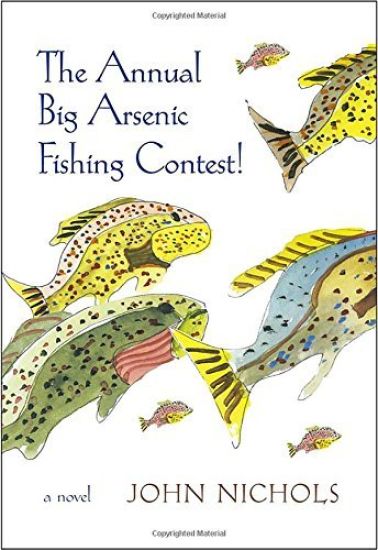
On the surface this book spins a fisherman's tall tale about a ribald angling contest between three middle-aged friends who love (and perhaps hate) each other: a preppy trilingual Machiavelli, an intellectual ghetto pool shark, and a brawny Texan who defies his own macho stereotype. All professional writers, the men have met every autumn for eighteen years at the Big Arsenic Springs on the Río Grande to fly-cast for trout and argue about life, literature, marriage, and eco-Armageddon. Their escapades reveal a spirited paean to a beautiful river gorge, and also a poignant cautionary fable about male friendship and cutthroat competition. As aging cripples them all, tragedy mars the tournament. In this insightful and bittersweet love story, masterful storyteller John Nichols brings to life northern New Mexico and three unforgettable characters.
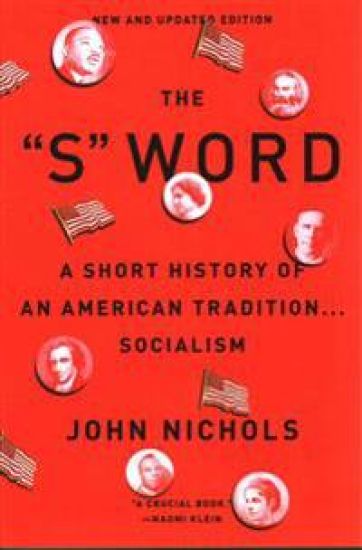
During the Cold War it became a dirty word in the United States, but "socialism" runs like a red thread through the nation's history, an integral part of its political consciousness since the founding of the republic. In this unapologetic corrective to today's collective amnesia, John Nichols calls for the proud return of socialism in American life. He recalls the reforms lauded by Founding Father Tom Paine; the presence of Karl Marx's journalism in American letters; the left leanings of founders of the Republican Party; the socialist politics of Helen Keller; the progressive legacy of figures like Chaplin and Einstein. Now in an updated edition, The "S" Word makes a case for socialist ideas as an indispensable part of American heritage. A new final chapter considers the recent signs of a leftward sea change in American politics in the face of increasing and historic levels of inequality. Today, corporations-like other rich "individuals"-pay fewer taxes than they did in the 1950s, while our infrastructure crumbles and the seas rise. The "S" Wordaddresses a nation that can no longer afford to put capital before people.
The Works Of Of The Rev. Jonathan Swift
Jonathan Swift; Thomas Sheridan; John Nichols
Sagwan Press
2015
sidottu
This work has been selected by scholars as being culturally important, and is part of the knowledge base of civilization as we know it. This work was reproduced from the original artifact, and remains as true to the original work as possible. Therefore, you will see the original copyright references, library stamps (as most of these works have been housed in our most important libraries around the world), and other notations in the work. This work is in the public domain in the United States of America, and possibly other nations. Within the United States, you may freely copy and distribute this work, as no entity (individual or corporate) has a copyright on the body of the work. As a reproduction of a historical artifact, this work may contain missing or blurred pages, poor pictures, errant marks, etc. Scholars believe, and we concur, that this work is important enough to be preserved, reproduced, and made generally available to the public. We appreciate your support of the preservation process, and thank you for being an important part of keeping this knowledge alive and relevant.
The Works of of the Rev. Jonathan Swift
Jonathan Swift; Thomas Sheridan; John Nichols
Sagwan Press
2015
sidottu
Illustrations of the Literary History of the Eighteenth Century
John Nichols
Cambridge University Press
2014
pokkari
The subtitle of this eight-volume set is Consisting of Authentic Memoirs and Original Letters of Eminent Persons, and Intended as a Sequel to the 'Literary Anecdotes', which had been published in nine volumes by the author, editor and publisher John Nichols (1745–1826) between 1812 and 1815, and are also reissued in this series. Like its predecessor set, these 'illustrations' are a useful source of biographical material on authors and publishers at a time when many of the literary genres we take for granted, such as the novel, the autobiography and the analytical history, were first being developed. The volumes were published between 1817 and 1858, the project being continued after Nichols' death by his son and grandson. Among the 'eminent persons' included in Volume 7 are the scholar and literary editor George Steevens, Bishop Thomas Percy, Dr Johnson and James Boswell.
Illustrations of the Literary History of the Eighteenth Century
John Nichols
Cambridge University Press
2014
pokkari
The subtitle of this eight-volume set is Consisting of Authentic Memoirs and Original Letters of Eminent Persons, and Intended as a Sequel to the 'Literary Anecdotes', which had been published in nine volumes by the author, editor and publisher John Nichols (1745–1826) between 1812 and 1815, and are also reissued in this series. Like its predecessor set, these 'illustrations' are a useful source of biographical material on authors and publishers at a time when many of the literary genres we take for granted, such as the novel, the autobiography and the analytical history, were first being developed. The volumes were published between 1817 and 1858, the project being continued after Nichols' death by his son and grandson. Among the 'eminent persons' included in Volume 6 are the poet Anna Seward, Dr Johnson, the bibliographer Thomas Dibdin, and King George III.
Illustrations of the Literary History of the Eighteenth Century
John Nichols
Cambridge University Press
2014
pokkari
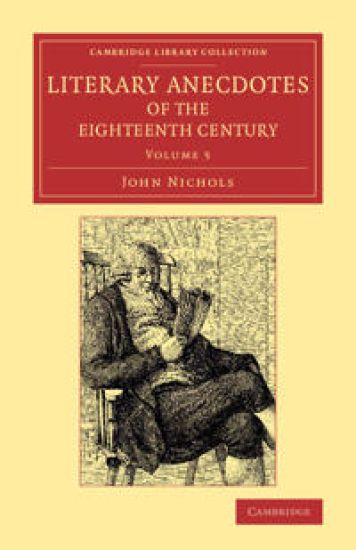
The subtitle of this eight-volume set is Consisting of Authentic Memoirs and Original Letters of Eminent Persons, and Intended as a Sequel to the 'Literary Anecdotes', which had been published in nine volumes by the author, editor and publisher John Nichols (1745–1826) between 1812 and 1815, and are also reissued in this series. Like its predecessor set, these 'illustrations' are a useful source of biographical material on authors and publishers at a time when many of the literary genres we take for granted, such as the novel, the autobiography and the analytical history, were first being developed. The volumes were published between 1817 and 1858, the project being continued after Nichols' death by his son and grandson. Among the 'eminent persons' included in Volume 5 are Jonathan Swift, Alexander Pope, and the Chinese sculptor Chitqua, who visited London in 1769.
Illustrations of the Literary History of the Eighteenth Century
John Nichols
Cambridge University Press
2014
pokkari
The subtitle of this eight-volume set is Consisting of Authentic Memoirs and Original Letters of Eminent Persons, and Intended as a Sequel to the 'Literary Anecdotes', which had been published in nine volumes by the author, editor and publisher John Nichols (1745–1826) between 1812 and 1815, and are also reissued in this series. Like its predecessor set, these 'illustrations' are a useful source of biographical material on authors and publishers at a time when many of the literary genres we take for granted, such as the novel, the autobiography and the analytical history, were first being developed. The volumes were published between 1817 and 1858, the project being continued after Nichols' death by his son and grandson. Among the 'eminent persons' included in Volume 4 are Isaac Newton, the poet Abraham Cowley, the topographer Richard Gough, and the Scottish jurist Lord Kaimes.
Illustrations of the Literary History of the Eighteenth Century
John Nichols
Cambridge University Press
2014
pokkari
The subtitle of this eight-volume set is Consisting of Authentic Memoirs and Original Letters of Eminent Persons, and Intended as a Sequel to the 'Literary Anecdotes', which had been published in nine volumes by the author, editor and publisher John Nichols (1745–1826) between 1812 and 1815, and are also reissued in this series. Like its predecessor set, these 'illustrations' are a useful source of biographical material on authors and publishers at a time when many of the literary genres we take for granted, such as the novel, the autobiography and the analytical history, were first being developed. The volumes were published between 1817 and 1858, the project being continued after Nichols' death by his son and grandson. Volume 3 focuses on the judge and writer George Hardinge (1743–1816) and his family, but also includes material on Samuel Pepys, Robert Burns and the botanist Richard Pulteney.
Illustrations of the Literary History of the Eighteenth Century
John Nichols
Cambridge University Press
2014
pokkari
The subtitle of this eight-volume set is Consisting of Authentic Memoirs and Original Letters of Eminent Persons, and Intended as a Sequel to the 'Literary Anecdotes', which had been published in nine volumes by the author, editor and publisher John Nichols (1745–1826) between 1812 and 1815, and are also reissued in this series. Like its predecessor set, these 'illustrations' are a useful source of biographical material on authors and publishers at a time when many of the literary genres we take for granted, such as the novel, the autobiography and the analytical history, were first being developed. The volumes were published between 1817 and 1858, the project being continued after Nichols' death by his son and grandson. Among the 'eminent persons' included in Volume 2 are the Shakespearian entrepreneur Lewis Theobald, the antiquarian William Stukeley, Sir Hans Sloane, and Sir Joseph Banks.
Illustrations of the Literary History of the Eighteenth Century
John Nichols
Cambridge University Press
2014
pokkari
The subtitle of this eight-volume set is Consisting of Authentic Memoirs and Original Letters of Eminent Persons, and Intended as a Sequel to the 'Literary Anecdotes', which had been published in nine volumes by the author, editor and publisher John Nichols (1745–1826) between 1812 and 1815, and are also reissued in this series. Like its predecessor set, these 'illustrations' are a useful source of biographical material on authors and publishers at a time when many of the literary genres we take for granted, such as the novel, the autobiography and the analytical history, were first being developed. The volumes were published between 1817 and 1858, the project being continued after Nichols' death by his son and grandson. Among the 'eminent persons' included in Volume 1 are the prime minister Robert Walpole, the actor David Garrick, the radical politician John Wilkes and the cleric and traveller William Gilpin.
Illustrations of the Literary History of the Eighteenth Century
John Nichols
Cambridge University Press
2014
pokkari
The subtitle of this eight-volume set is Consisting of Authentic Memoirs and Original Letters of Eminent Persons, and Intended as a Sequel to the 'Literary Anecdotes', which had been published in nine volumes by the author, editor and publisher John Nichols (1745–1826) between 1812 and 1815, and are also reissued in this series. Like its predecessor set, these 'illustrations' are a useful source of biographical material on authors and publishers at a time when many of the literary genres we take for granted, such as the novel, the autobiography and the analytical history, were first being developed. The volumes were published between 1817 and 1858, the project being continued after Nichols' death by his son and grandson. Among the 'eminent persons' included in this final volume is Nichols himself; it also contains material showing the state of the London book trade in the second half of the eighteenth century.
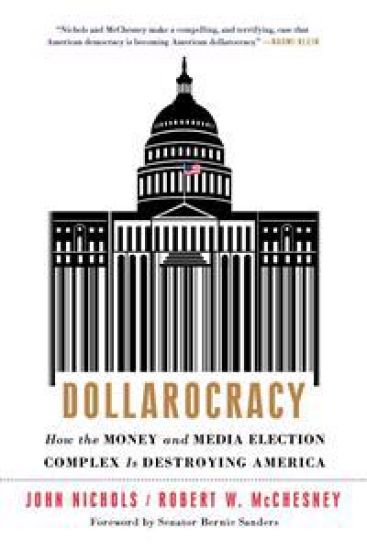
Foreword by Senator Bernie SandersFresh from the first 10 billion election campaign, two award-winning authors show how unbridled campaign spending defines our politics and, failing a dramatic intervention, signals the end of our democracy. Blending vivid reporting from the 2012 campaign trail and deep perspective from decades covering American and international media and politics, political journalist John Nichols and media critic Robert W. McChesney explain how US elections are becoming controlled, predictable enterprises that are managed by a new class of consultants who wield millions of dollars and define our politics as never before. As the money gets bigger,especially after the Citizens United ruling,and journalism, a core check and balance on the government, declines, American citizens are in danger of becoming less informed and more open to manipulation. With ground-breaking behind-the-scenes reporting and staggering new research on the money power," Dollarocracy shows that this new power does not just endanger electoral politics it is a challenge to the DNA of American democracy itself.
In this nine-volume work, published between 1812 and 1815, the author and publisher John Nichols (1745–1826) provides biographical notes on publishers, writers and artists of the eighteenth century, and also gives 'an incidental view of the progress and advancement of literature in this kingdom during the last century'. (A shorter version had been published in 1782.) His subjects range from the publisher William Bowyer to Henry Fielding and Horace Walpole, and also include histories of individual publishing houses and of genres such as lexicography. The work remains a useful source of biographical material on authors and publishers at a period when many of the literary genres we take for granted, such as the novel, the autobiography and the analytical history, were first being developed. Volume 2 includes memoirs of Richard Farmer and George Steevens, and a history of Bowyer's press from 1732 to 1765.
In this nine-volume work, published between 1812 and 1815, the author and publisher John Nichols (1745–1826) provides biographical notes on publishers, writers and artists of the eighteenth century, and also gives 'an incidental view of the progress and advancement of literature in this kingdom during the last century'. (A shorter version had been published in 1782.) His subjects range from the publisher William Bowyer to Henry Fielding and Horace Walpole, and also include histories of individual publishing houses and of genres such as lexicography. The work remains a useful source of biographical material on authors and publishers at a period when many of the literary genres we take for granted, such as the novel, the autobiography and the analytical history, were first being developed. Volume 3 includes memoirs of Henry Fielding and the printer John Baskerville, and a history of the Stationers' Company.
In this nine-volume work, published between 1812 and 1815, the author and publisher John Nichols (1745–1826) provides biographical notes on publishers, writers and artists of the eighteenth century, and also gives 'an incidental view of the progress and advancement of literature in this kingdom during the last century'. (A shorter version had been published in 1782.) His subjects range from the publisher William Bowyer to Henry Fielding and Horace Walpole, and also include histories of individual publishing houses and of genres such as lexicography. The work remains a useful source of biographical material on authors and publishers at a period when many of the literary genres we take for granted, such as the novel, the autobiography and the analytical history, were first being developed. As well as memoirs of writers, Volume 4 also contains essays on the polyglot Bible, and on the rise of newspapers and periodicals.
In this nine-volume work, published between 1812 and 1815, the author and publisher John Nichols (1745–1826) provides biographical notes on publishers, writers and artists of the eighteenth century, and also gives 'an incidental view of the progress and advancement of literature in this kingdom during the last century'. (A shorter version had been published in 1782.) His subjects range from the publisher William Bowyer to Henry Fielding and Horace Walpole, and also include histories of individual publishing houses and of genres such as lexicography. The work remains a useful source of biographical material on authors and publishers at a period when many of the literary genres we take for granted, such as the novel, the autobiography and the analytical history, were first being developed. Volume 5 includes memoirs of John and Charles Wesley, and of antiquaries such as William Stukeley, as well as an essay on lexicography.