
Kirjailija
John Reed
Kirjat ja teokset yhdessä paikassa: 96 kirjaa, julkaisuja vuosilta 1919–2026, suosituimpiin kuuluu Ten Days That Shook the World. Vertaile teosten hintoja ja tarkista saatavuus suomalaisista kirjakaupoista.
96 kirjaa
Kirjojen julkaisuvuodet: 1919–2026.


The writings contained in this book exemplify the emotional roller coaster of life due to life's experiences, from a spiritual standpoint, reminding all spiritual warriors that no matter how grim a situation looks, there is always a silver lining and a way out.

This book presents full history of the origin of Orwell’s Animal Farm, as well as a translation of the Russuian/Ukranian source work. Has George Orwell lost his saintly luster? In The Never End, rabble-rouser, dogged investigator, and consummate literary stylist John Reed collects two decades of subject-Orwell findings previously published in Pank, Guernica, Literary Hub, The Brooklyn Rail, The Rumpus, The New York Press, The Believer, Harper’s Magazine and The Paris Review. Reed’s treatment of Orwell is corrective and peerlessly contemporary; he views Orwell in a twenty-first century global context, considering Orwell’s collaboration with Cold War intelligence operations—US and UK—with unfaltering objectivity. It’s hard to imagine that Orwell—in our own moment of global doublethink—wouldn’t have wanted his devotion to contrariety applied to the literary legacy he left behind. The Never End is atonce a hatchet job and a celebration. Animal Farm, based on a previously unknown Russian short story? Animal Farm, deployed by the CIA, MI6 and the Congress for Cultural Freedom? Orwell, turning over blacklists in a McCarthy-esque act of betrayal? The Cold War? Does it last forever? Russia, the “Axis of Evil,” and now China? But. Orwell. Course syllabi. Literary laurels. Snitch. Why do we keep coming back? For the wrong reasons? Or because we know Old Benjamin would want us to know the truth?


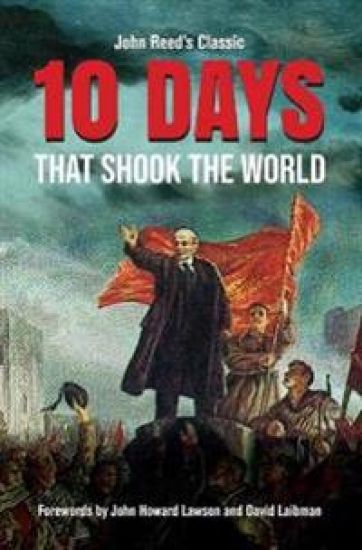
Ten Days That Shook the World (1919) is a book by the American journalist and socialist John Reed about the October Revolution in Russia in 1917, which Reed experienced firsthand. Reed followed many of the prominent Bolshevik leaders closely during his time in Russia. John Reed died in 1920, shortly after the book was finished, and he is one of the few Americans buried at the Kremlin Wall Necropolis in Moscow, a site normally reserved only for the most prominent Soviet leaders. THIS book is a slice of intensified; history as I saw it. It does not pretend to be anything but a detailed account of the Russian Revolution, when the Bolsheviki, at the head of the workers and soldiers, seized the state power of Russia and placed it in the hands of the Soviets. John Reed John Reed was on an assignment for The Masses, a magazine of socialist politics, when he was reporting the Russian Revolution. Although Reed states that he had "tried to see events with the eye of a conscientious reporter, interested in setting down the truth" during the time of the event, he stated in the preface that "in the struggle my sympathies were not neutral" (since the book leans towards the Bolsheviks and their viewpoints) Before John Reed left for Russia, the Espionage Act was passed on June 15, 1917, which fined and imprisoned anyone who interfered with the recruiting of soldiers and prohibited the mailing of any newspaper or magazine that promoted such sentiments. The U. S. Post Office was also given leave to deny any mailing that fitted these standards from further postal delivery, and then to disqualify a magazine because it had missed a mailing (due to the ban) and hence was no longer considered a "regular publication."

Embark on a journey through the tumultuous days of the Russian Revolution with John Reed's 'Ten Days That Shook the World'-a book recommended by Lenin himself. Renowned journalist and eyewitness, Reed brings unparalleled authenticity to his work as a key figure who not only reported on the Russian Revolution but actively participated in and documented its revolutionary fervor. His unique perspective as both an observer and a participant adds depth and credibility to this historical masterpiece. The text is presented with utmost clarity, ensuring an accessible and engaging reading experience for both seasoned enthusiasts and those new to this pivotal moment in history. An insightful read for those seeking a comprehensive understanding of the revolution, this edition ensures a well-rounded exploration of this crucial chapter, whose consequences continue to shape our world even today.

This book presents full history of the origin of Orwell’s Animal Farm, as well as a translation of the Russuian/Ukranian source work. Has George Orwell lost his saintly luster? In The Never End, rabble-rouser, dogged investigator, and consummate literary stylist John Reed collects two decades of subject-Orwell findings previously published in Pank, Guernica, Literary Hub, The Brooklyn Rail, The Rumpus, The New York Press, The Believer, Harper’s Magazine and The Paris Review. Reed’s treatment of Orwell is corrective and peerlessly contemporary; he views Orwell in a twenty-first century global context, considering Orwell’s collaboration with Cold War intelligence operations—US and UK—with unfaltering objectivity. It’s hard to imagine that Orwell—in our own moment of global doublethink—wouldn’t have wanted his devotion to contrariety applied to the literary legacy he left behind. The Never End is atonce a hatchet job and a celebration. Animal Farm, based on a previously unknown Russian short story? Animal Farm, deployed by the CIA, MI6 and the Congress for Cultural Freedom? Orwell, turning over blacklists in a McCarthy-esque act of betrayal? The Cold War? Does it last forever? Russia, the “Axis of Evil,” and now China? But. Orwell. Course syllabi. Literary laurels. Snitch. Why do we keep coming back? For the wrong reasons? Or because we know Old Benjamin would want us to know the truth?

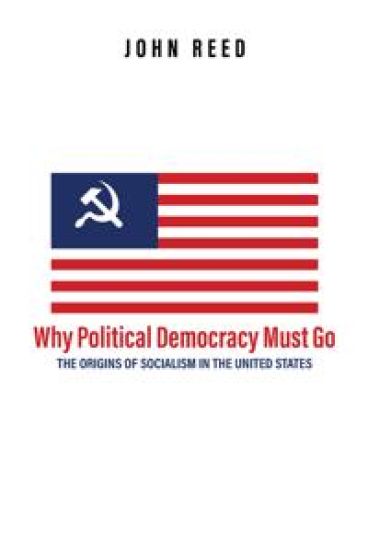
Why Political Democracy Must Go is an insightful analysis of the origins of the socialist movement in the United States, written by famed journalist John Reed, one of the most distinguished American writers on the subject. One of socialism’s fiercest proponents, Reed exposes the myth of ‘democratic socialism.’ He provides an overview of the development of socialist thought, demonstrating that socialism cannot be achieved through political democracy. Originally published in 1919 in serial form, Why Political Democracy Must Go provides critical historical insight on the evolution of socialist thought in the United States. Reed gives a devastating critique of the American political system that, in many ways, is as valid today as it was when he first wrote it. Today, when there is renewed interest in socialism on the American political scene, this notable series of essays reveals the underpinnings of socialist thought. John Reed’s analysis will be of interest to those on all sides of the political spectrum. Born in Portland, Oregon, on October 22, 1887, Harvard-educated John Reed was considered one of the most remarkable journalists of his generation. He became famous for his first-hand accounts of the Mexican Revolution, where he rode alongside Panchos Villa, and for his acclaimed portrayal of the Russian Revolution, Ten Days that Shook the World. Reed was also a political activist and a founding member of the Communist Labor Party of America. He died in Russia on October 17, 1920, and is one of only three Americans buried in the Kremlin Wall. Why Political Democracy Must Go: The Origins of Socialism in the United States is edited, with an introduction by Dr. A. K. Brackob, a noted historian and editor of John Reed’s collection of writings, Romania during World War I: Observations of an American Journalist (2018).


Climate change is the overriding issue of our time. In the face of recurring climate disasters, the resistance and inertia we witness today will slowly break down. Those who have seen the writing on the wall are already choosing to change the way they live. For the young, who are mobilizing impressively, climate change is a cause of much anxiety. Sooner or later every one of us will experience the consequences of a warming planet at which time we shall all be obliged to take appropriate action. What form this will take and in what state of mind, is the real question. The purpose of this book is to show that a post-carbon world is not necessarily the misfortune so many fear.

Organizational Behavior and Management in Law Enforcement
Gennaro Vito; John Reed; Harry More
PEARSON EDUCATION (US)
2021
nidottu
For courses in police administration or organizational behavior, and as a reference for police managers or officers preparing for promotional exams. An accessible guide to real-world police management Organizational Behavior and Management in Law Enforcement provides a clear, concise blueprint for successful police administration and management. Drawing on decades of experience as practitioners, trainers, and researchers, the authors focus on organizational behavior as a means of understanding both the complexity of the criminal justice system and interactions between officers and managers as they work to resolve community problems. With substantial content revisions and new learning objectives, the 4th edition integrates new research into an organizational behavioral approach to police management and demonstrates the relationship between research and its applications in the field.
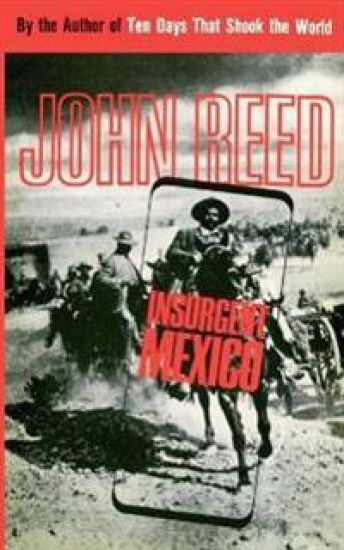
Toward the end of 1913 John Reed was sent to cover the revolution in Mexico by Metropolitan, a widely read magazine whose writers included the leading muckrakers and reformers of the time. He was also commissioned as a correspondent by the New York World. Then twenty-six years of age, Reed had already won some fame as a journalist, having earlier that year reported the fierce silk workers strike in Paterson, New Jersey, led by the I. W. W. Reed's articles from Mexico established him among the top journalists of his day. Insurgent Mexico, his first published book, included episodes which first had appeared in the Metropolitan. Later, in a brief autobiographical essay, he referred to his days in Mexico as "the most satisfactory period of my life." The preface to this edition is by Renato Leduc, a leading Mexican journalist who was a telegrapher with Villa's army at the time Reed sent his dispatches from Mexico.

‘You see them everywhere’ was the slogan adopted by Bedford when advertising its commercial vehicles in the 1930s and it held true for many decades. The company set out to produce reliable vehicles at an economic price. Catering to the small trader with its 30cwt and 2 ton trucks, and 6cwt and 10/12cwt vans, the company was one of the leading manufacturers within its first seven years. During the war Bedford produced more than 250,000 lorries for the armed forces, such as the 15cwt ‘pneumonia wagons’ and the more solid 3-tonners. With a return to peacetime conditions, Bedford was able to produce new vehicles which it had been unable to launch during the war but regained market supremacy by 1947, when the company produced its 500,000th truck – the first British manufacturer to reach this figure. Bedford entered the market for heavier vehicles in 1950 and its one millionth truck was produced in 1958. Two years later the first of the TK range was announced and the concept of cab ahead of engine was introduced. This basic chassis layout has been followed ever since. The changes of design, use and loads carried in the course of 50 years of steady progress are illustrated in this book, which proves the truth of the slogan, ‘You see them everywhere’.
Ten Days That Shook the World
John Reed; David Laibman
INTERNATIONAL PUBLISHERS CO INC.,U.S.
2021
pokkari
Covering the decisive moment of the Bolshevik revolution, "Ten Days" revealed the author to be among the first Americans to grasp the true significance of the Revolution and to make the U. S. public aware of it. The book remains acclaimed today. It is published in many countries and in a multitude of languages. This edition, a facsimile of the original 1919 printing was prepared by John Howard Lawson, the late noted film writer who himself made history as, member of the famed "Hollywood Ten." His introduction corrects distortions of Reed and his time presented in other edited versions. Included also are biographical sketches of the main participant, contemporary photographs, a map of Petrograd showing where events took place, prefaces by Lenin and his wife Krupskaya, editorial notes and an index.
Why Political Democracy Must Go
John Reed; A.K. Brackob
Histria LLC
2021
sidottu
Halvin toimitettuna 37,00 €
Why Political Democracy Must Go is an insightful analysis of the origins of the socialist movement in the United States, written by famed journalist John Reed, one of the most distinguished American writers on the subject. One of socialism’s fiercest proponents, Reed exposes the myth of ‘democratic socialism.’ He provides an overview of the development of socialist thought, demonstrating that socialism cannot be achieved through political democracy. Originally published in 1919 in serial form, Why Political Democracy Must Go provides critical historical insight on the evolution of socialist thought in the United States. Reed gives a devastating critique of the American political system that, in many ways, is as valid today as it was when he first wrote it. Today, when there is renewed interest in socialism on the American political scene, this notable series of essays reveals the underpinnings of socialist thought. John Reed’s analysis will be of interest to those on all sides of the political spectrum. Born in Portland, Oregon, on October 22, 1887, Harvard-educated John Reed was considered one of the most remarkable journalists of his generation. He became famous for his first-hand accounts of the Mexican Revolution, where he rode alongside Panchos Villa, and for his acclaimed portrayal of the Russian Revolution, Ten Days that Shook the World. Reed was also a political activist and a founding member of the Communist Labor Party of America. He died in Russia on October 17, 1920, and is one of only three Americans buried in the Kremlin Wall. Why Political Democracy Must Go: The Origins of Socialism in the United States is edited, with an introduction by Dr. A. K. Brackob, a noted historian and editor of John Reed’s collection of writings, Romania during World War I: Observations of an American Journalist (2018).
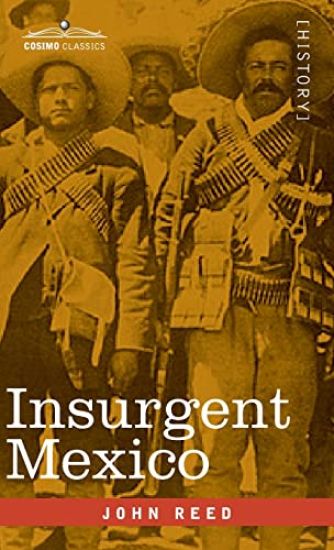
"... Villa was an outlaw for twenty-two years. When he was only a boy of sixteen, ... he killed a government official... that in itself would not have outlawed him long in Mexico, where human life is cheap; but once a refugee he committed the unpardonable crime of stealing cattle from the rich "hacendados." And from that time to the outbreak of the Madero revolution, the Mexican government had a price on his head." -John Reed, Insurgent Mexico, (1914) American journalist John Reed was sent in 1913 to Mexico by the Metropolitan Magazine to cover the Mexican Revolution, an armed struggle from 1910 to 1920 that had a major impact on Mexican culture and government. While reporting on Pancho Villa, a former bandit, who became a Mexican revolutionary general and one of the most prominent figures of the Mexican Revolution, Reed established his national reputation as a war correspondent. Reed's articles were published in his book Insurgent Mexico (1914), which offers a fascinating read for anyone interested in the Mexican Revolution and its history.

Vince Richards, a New York private eye, stumbles into a strange, hidden world when a prospective client is hanged in Tompkins Square Park. Someone is targeting a local coven of Wiccans and the details of their deaths mirror the Salem witch trials of 1692. When the Wiccans hire Vince to investigate, the weirdness intensifies: a voodoo priestess plots to take of the drug trade in lower Manhattan; a phantom train races by, announcing itself with a haunting whistle only Vince can hear; Wiccans and mobsters battle in the streets; and a ghostly encounter convinces Vince that his prospective client may not be dead after all. When he finally climbs aboard the phantom train and races past the boundaries of time and space, he discovers the trick is not getting on-but getting off.