Kirjojen hintavertailu – 12 903 725 kirjaa ja 27 kauppaa

Kirjailija

John Roberts

Kirjat ja teokset yhdessä paikassa: 90 kirjaa, julkaisuja vuosilta 1983–2026, suosituimpiin kuuluu Roberts On Billiards. Ed. By H. Buck. Vertaile teosten hintoja ja tarkista saatavuus suomalaisista kirjakaupoista.

90 kirjaa

Kirjojen julkaisuvuodet: 1983–2026.

The Day the Dancing Died

The Day the Dancing Died

John Roberts

Independently Published
2018
nidottu
Dancing, especially rock-n-roll and West Coast Swing offered John Roberts years of enjoyment and friendships, while running, swimming and cycling nourished his appetite for recreation in the great outdoors. His work in Australia and the United States was challenging and satisfying, with promotion and praise coming his way. Life was good, until a stroke - a needless catastrophe just waiting to happen - struck down this healthy and productive research scientist in the prime of his professional life. All proceeds from the sale of this book will be donated to animal welfare - RSPCA in Australia.
Permanent Revolution in Latin America

Permanent Revolution in Latin America

John Roberts; Jorge Martin

Wellred
2018
pokkari
This book presents the histories of the revolutions in Cuba, Nicaragua, and Venezuela as the latest demonstrations of the price the popular masses pay for the absence of a correct revolutionary strategy. The goal of the leaders of the revolutionary movements in all three countries was to create a progressive, independent bourgeoisdemocratic state but contrary to expectations, the national bourgeoisie did not welcome a national democratic revolution. Instead, faced with a mass movement, it fought hard to re-assert its own and US imperialism's economic and political stranglehold, opposing increased democratic rights, greater social equality, agrarian reform and the redistribution of wealth. We trace how, in all three countries, the national bourgeoisie joined forces with imperialism and used violent methods to reverse the progressive measures made, and when these attempts failed carried on a campaign of economic sabotage to starve the masses into submission. In Cuba the revolution was propelled forward by abolishing capitalism and enormous conquests were made. In Nicaragua and Venezuela, the revolution was stopped half way, leading to disaster and defeat. As the world enters a decisive revolutionary epoch, reformists, just as they did in Nicaragua and Venezuela, attempt to hold that revolution back. In the face of all experience, their solution to social crises is one which stubbornly remains within the narrow limits of capitalism. This book is a contribution to the debate about revolutionary strategy. It highlights the lessons to be learned from the recent past, argues against the failed reformist approach and draws the conclusion that only through the workers coming to power and expropriating the oligarchy can we begin to overcome the exploitation and oppression of the masses.

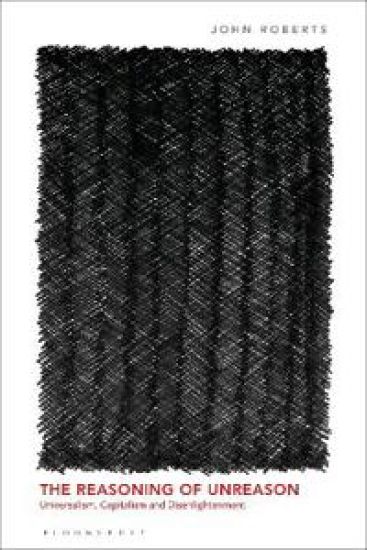
The Reasoning of Unreason

The Reasoning of Unreason

John Roberts

Bloomsbury Academic
2018
sidottu
The twenty-first century so far has seen the global rise of authoritarian populism, systematic racism, and dogmatic metaphysics. Even though these events demonstrate the growth of an age of ‘unreason’, in this original and compelling book John Roberts resists the assumption that such thinking displays an unthinking irrationality or loss of reason; instead he asserts that an important feature of modern reactionary politics is that it offers a supposedly convincing integration of the particular and the universal. This move is defined by what Roberts calls the ‘reasoning of unreason’ and has deep roots in the history of Western thought and politics. Tracing the dark history of enlightenment-disenlightenment, John Roberts explores ‘the reasoning of unreason’ across centuries from Aquinas, William of Ockham, the most important treatise on witchcraft Malleus Maleficarum, Locke, Kant, and Count Arthur de Gobineau, to Social Darwinism, Nazism, Carl Schmitt, Leo Strauss, and Friedrich von Hayek. Roberts provides a new set of philosophical-political tools to understand the formation and denigration of the rational subject and the current reinvestment in various forms of political unreason globally. The Reasoning of Unreason is the first book to draw on the philosophy of reason, political philosophy, political theory and political history, in order to produce a dialectical account of the ‘making of reason’ internal to the forces of unreason and the limits of reason.
Depresion: Cómo Curar la Depresión sin usar Medicamentos Mediante la Terapia Cognitiva Conductual (Libro en español/Spanish book version)
Te has preguntado si es posible eliminar la depresi n de tu vida sin tener que depender de medicamentos? La mayor a de los medicamentos para controlar la depresi n pueden tener diversos efectos negativos secundarios que a veces afectan considerablemente la vida de los pacientes, muchas veces dej ndolos en un peor estado que antes. La terapia cognitivo-conductual ha sido uno de los m todos m s exitosos para eliminar la depresi n, ansiedad y otros trastornos del estado de nimo. En este libro, aprender s a: Como identificar y "reprogramar" pensamientos autom ticos negativos que atormentan la vida de personas con depresi n. Como desarrollar creencias centrales de ti mismo para que as los factores externos tengan poco impacto en tu estado de nimo y manera de pensar. Como mejorar tu perspectiva de una manera positiva y crear buenos h bitos que te beneficiaran a largo plazo. Como evitar los errores m s com nes que te previenen de llegar a una recuperaci n completa. M todos comprobados para relajar tu mente y cuerpo para interrumpir patrones de estr s y depresi n. Este libro contiene todo lo necesario para empezar a pr cticar la terapia cognitivo-conductual y eliminar la depresi n y ansiedad de tu vida. Muchos pacientes han logrado 'reprogramar' sus mentes y estados de nimo sin tener que depender de medicamentos potencialmente peligrosos. Cuando se aplica correctamente, podr s disfrutar los beneficios de la terapia cognitivo-conductual por el resto de tu vida. No hay un mejor tiempo para empezar a disfrutar de una vida y mente mas sana y eliminar la depresi n de tu vida por siempre. Empieza a practicar la terapia cognitivo-conductual hoy mismo
Prey

Prey

John Roberts

Matador
2018
nidottu
Why do two young Britons become terrorists? Shalima is a young muslim woman; Yusuf was born Ryan but converts to Islam. Both are radicalised and fly to Yemen to join Al Qaeda. Here they are trained and indoctrinated. Meanwhile an Al Qaeda leader is mysteriously delivered to the British embassy in Jordan and then transferred to Belmarsh prison in London. Yusuf and Shalima concoct a plan to rescue him. David, a relapsed Muslim and an MI5 officer, is placed in charge of the operation to prevent the terrorist attack. Will David and his team succeed or will the terrorists keep one step ahead.
Changing Habits: Improve your Life by Changing your Habits. Stop Procrastinating, Create Healthy Behaviors, End Unhealthy Thinking and
Have you ever tried to change your habits and failed multiple times? Somewhere between 80 percent and 92 percent of the promises made by New Year Resolutioners fail. Most people get used to this cycle of failure and eventually give up completely, thinking that changing habits is impossible for them and that only those with endless willpower can succeed at it. Here's some of what you can expect to learn inside the pages of this book: Discover how to deal with the most damaging behaviors we do on auto-pilot. A step-by-step process that will help you develop long-term habits. Learn at which pace you should advance so that you never feel burnt out or unmotivated. How to deal with distractions that can hinder your progress. Avoiding the most common mistakes when changing habits. Believe it or not, even dramatic habitual changes are possible. Luckily, changing habits is a skill, and one that we can practice and refine so that we can eventually become really good at. Over the long-term, even small efforts can have significant life-altering effects. There is no better time to start the journey towards an improved quality of life. Start by changing your habits today
Mental Toughness: How to Develop an Invincible Mind. Increase your Confidence, Self-Discipline and Perform at the Highest Level
Have you ever wondered why some people seem to have an endless amount of determination and resilience to pursue their goals? Most people believe that you are either born mentally tough or you aren't. But this is simply not the case Most people get used to this cycle of failure and eventually give up completely, thinking that changing habits is impossible for them and that only those with endless willpower can succeed at it. Here's some of what you can expect to learn inside the pages of this book: Discover the exact habits of mentally tough people and how we can apply their same mindsets. A step-by-step plan that will help you develop an invincible mind. Learn at which pace you should advance so that you never feel burnt out or unmotivated. How to deal with distractions that can hinder your progress. Avoiding the most common mistakes when changing habits. Believe it or not, even dramatic habitual changes are possible. Luckily, changing habits is a skill, and one that we can practice and refine so that we can eventually become really good at. Over the long-term, even small efforts can have significant life-altering effects. There is no better time to start the journey towards an improved quality of life. Start by developing an invincible mind today
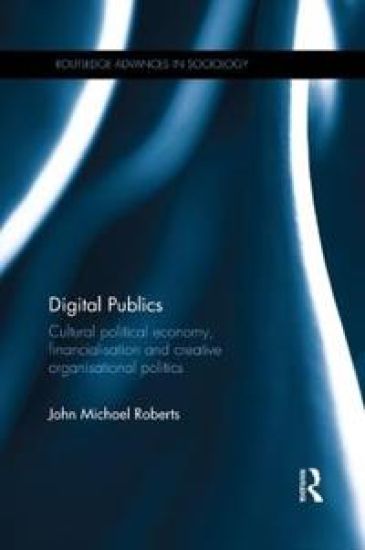
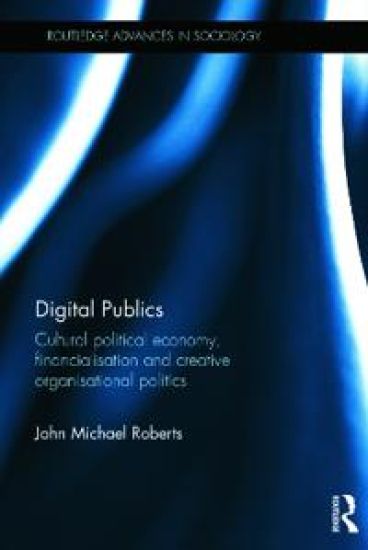
Digital Publics

Digital Publics

John Roberts

Routledge
2017
nidottu
Today we often hear academics, commentators, pundits, and politicians telling us that new media has transformed activism, providing an array of networks for ordinary people to become creatively involved in a multitude of social and political practices. But what exactly is the ideology lurking behind these positive claims made about digital publics? By recourse to various critical thinkers, including Marx, Bakhtin, Deleuze and Guattari, and Gramsci, Digital Publics systematically unpacks this ideology. It explains how a number of influential social theorists and management gurus have consistently argued that we now live in new informational times based in global digital systems and new financial networks, which create new sbjectivities and power relations in societies. Digital Publics traces the historical roots of this thinking, demonstrates its flaws and offers up an alternative Marxist-inspired theory of the public sphere, cultural political economy and financialisation. The book will appeal to scholars and students of cultural studies, critical management studies, political science and sociology.
The Oxford Dictionary of the Classical World

The Oxford Dictionary of the Classical World

John Roberts

Oxford University Press
2016
sidottu
This dictionary is part of the Oxford Reference Collection: using sustainable print-on-demand technology to make the acclaimed backlist of the Oxford Reference programme perennially available in hardback format. Authoritative, wide-ranging, and unrivalled in its accessibility, The Oxford Dictionary of the Classical World is a concise and lucid survey of life in ancient Greece and Rome, spanning 776 BC - AD 180, from the first Olympic games to the death of Marcus Aurelius. An approachable, user-friendly abridgement of the highly acclaimed Oxford Classical Dictionary, this book offers over 2,500 A-Z entries on aspects of life in the classical world, from politics, medicine, philosophy, art, and architecture, to history, myth and religion, mathematics, and literature, with biographical entries on the important individuals - both real and mythological - of the period. Appendices include a clear and comprehensive account of money and its value in the classical world; a chronology of events across Greece
Thoughts on an Index Not Freely Given

Thoughts on an Index Not Freely Given

John Roberts

John Hunt Publishing
2016
nidottu
In this ambitious theoretical encounter with five imaginary artists from the 1980s, John Roberts produces a set of richly constructed artistic thought experiments. But in creating the work on the page these thought experiments are not thereby novelistic fictions. On the contrary, the fictiveness of each artist's work and biography is formed from Roberts's critical engagement with the historical and theoretical determinates of the work he has created - artwork and its theoretical engagement forming an interdependent whole.
Revolutionary Time and the Avant-Garde
Since the decidedly bleak beginning of the twenty-first century, art practice has become increasingly politicized. Yet, few sustained defences of the avant-garde have been put forward. Revolutionary Time and the Avant-Garde is the first book of its kind to look at the legacy of the avant-garde in relation to the deepening crisis of capitalist non-reproduction. An invigorating revitalization of the Frankfurt School legacy, Roberts's book is unique in its penetrating definition and defense of the avant-garde idea, providing a refined conceptual set of tools that critically engages with the most advanced art theorists of our day, such as Hal Foster, Andrew Benjamin, Alain Badiou, Jacques Ranciere, Paolo Virno, Claire Bishop, Michael Hardt, and Toni Negri.
Revolutionary Time and the Avant-Garde
Since the decidedly bleak beginning of the twenty-first century, art practice has become increasingly politicized. Yet few have put forward a sustained defence of this development. Revolutionary Time and the Avant-Garde is the first book to look at the legacy of the avant-garde in relation to the deepening crisis of contemporary capitalism. An invigorating revitalization of the Frankfurt School legacy, Roberts's book defines and validates the avant-garde idea with an erudite acuity, providing a refined conceptual set of tools to engage critically with the most advanced art theorists of our day, such as Hal Foster, Andrew Benjamin, Alain Badiou, Jacques Rancière, Paolo Virno, Claire Bishop, Michael Hardt, and Toni Negri.
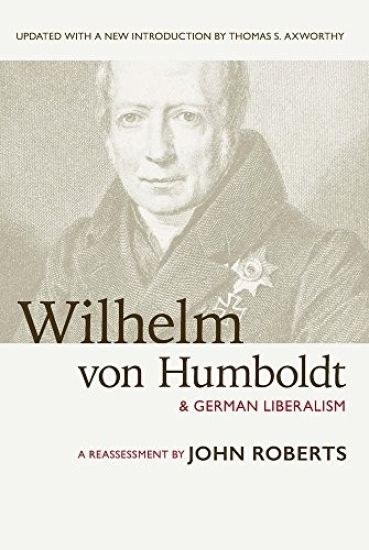
Wilhelm von Humboldt & German Liberalism
The newly revised edition of Wilhelm von Humboldt and German Liberalism offers a unique and thoughtful look at one of the most remarkable individuals in late 18th and early 19th century German history and explores the foundations of liberalism in the country. Called the “greatest statesmen of Europe” by Madame de Stael, Wilhlem von Humboldt was a poet, classicist, translator and an author of books on history, political theory, diplomacy and several other topics. John Roberts’ book is based on a complete and thorough reading of von Humboldt’s writings and biography. The focus is to reassess the origins and particular nature of his writings in the context of an understanding of contemporary liberalism and liberal theory.
Digital Publics

Digital Publics

John Roberts

Routledge
2014
sidottu
Today we often hear academics, commentators, pundits, and politicians telling us that new media has transformed activism, providing an array of networks for ordinary people to become creatively involved in a multitude of social and political practices. But what exactly is the ideology lurking behind these positive claims made about digital publics? By recourse to various critical thinkers, including Marx, Bakhtin, Deleuze and Guattari, and Gramsci, Digital Publics systematically unpacks this ideology. It explains how a number of influential social theorists and management gurus have consistently argued that we now live in new informational times based in global digital systems and new financial networks, which create new sbjectivities and power relations in societies. Digital Publics traces the historical roots of this thinking, demonstrates its flaws and offers up an alternative Marxist-inspired theory of the public sphere, cultural political economy and financialisation. The book will appeal to scholars and students of cultural studies, critical management studies, political science and sociology.
Photography and Its Violations

Photography and Its Violations

John Roberts

Columbia University Press
2014
sidottu
Theorists critique photography for "objectifying" its subjects and manipulating appearances for the sake of art. In this bold counterargument, John Roberts recasts photography's violating powers of disclosure and aesthetic technique as part of a complex "social ontology" that exposes the hierarchies, divisions, and exclusions behind appearances. The photographer must "arrive unannounced" and "get in the way of the world," Roberts argues, committing photography to the truth-claims of the spectator over the self-interests and sensitivities of the subject. Yet even though the violating capacity of the photograph results from external power relations, the photographer is still faced with an ethical choice: whether to advance photography's truth-claims on the basis of these powers or to diminish or veil these powers to protect the integrity of the subject. Photography's acts of intrusion and destabilization, then, constantly test the photographer at the point of production, in the darkroom, and at the computer, especially in our 24-hour digital image culture. In this game-changing work, Roberts refunctions photography's place in the world, politically and theoretically restoring its reputation as a truth-producing medium.