Kirjojen hintavertailu – 12 903 724 kirjaa ja 27 kauppaa
Kirjailija
John S C Abbott
Kirjat ja teokset yhdessä paikassa: 416 kirjaa, julkaisuja vuosilta 1874–2026, suosituimpiin kuuluu Josephine. Vertaile teosten hintoja ja tarkista saatavuus suomalaisista kirjakaupoista.
Nimi esiintyy myös muodoissa: John S. C. Abbott, John S.C. Abbott
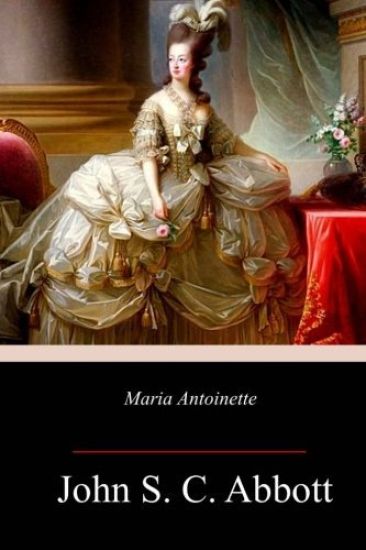
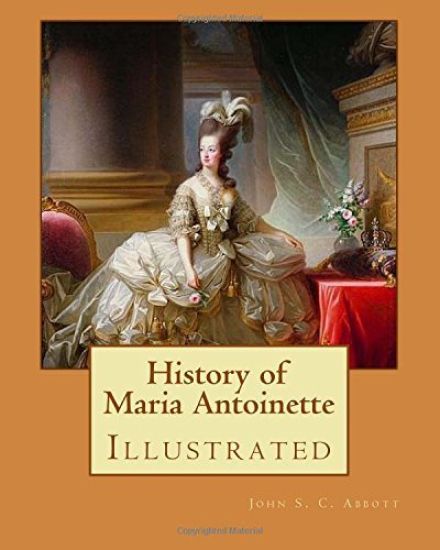
John S. C. Abbott was an American historian best known for his books on some of the most important people and events in history. John's brother Jacob was also a well-known author of popular historical biographies. This is Abbott's biography on Marie Antoinette, the last Queen of France before the French Revolution.
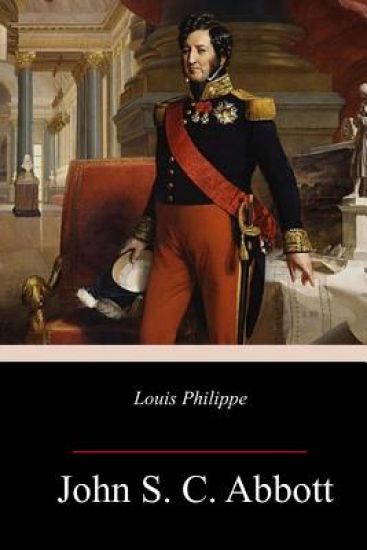
The origin of the House of Orleans is involved in some obscurity. The city of Orleans, from which the duke takes his title, was the Aurelium of imperial Rome. The first Duke of Orleans with whom history makes us familiar was Philip, the only brother of Louis XIV. Louis XIII., the son and heir of Henry IV., married Anne of Austria. Two children were born to them, Louis and Philippe. The first became the world-renowned monarch, Louis XIV. His brother, known in history as Monsieur, enjoyed the title and the princely revenues of the dukedom of Orleans. The regent.
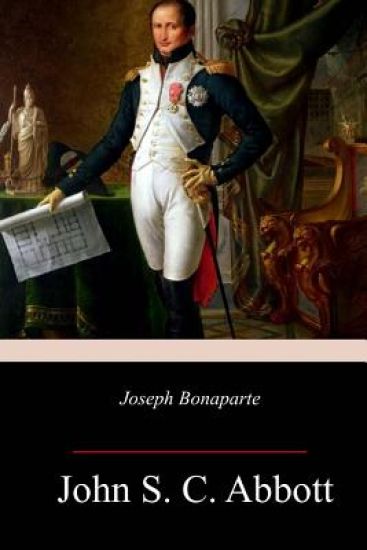
The island of Corsica, in the Mediterranean Sea, sixty miles from the coast of Tuscany, is about half as large as the State of Massachusetts. In the year 1767 this island was one of the provinces of Italy. There was then residing, in the small town of Cort , in Corsica, a young lawyer nineteen years of age. He was the descendant of an illustrious race, which could be traced back, through a succession of distinguished men, far into the dark ages. Charles Bonaparte, the young man of whom we speak, was tall, handsome, and possessed strong native powers of mind, which he had highly cultivated. In the same place there was a young lady, Letitia Raniolini, remarkable for her beauty and her accomplishments. She also was of an ancient family. When but sixteen years of age Letitia was married to Charles Bonaparte, then but nineteen years old.
This work has been selected by scholars as being culturally important, and is part of the knowledge base of civilization as we know it. This work was reproduced from the original artifact, and remains as true to the original work as possible. Therefore, you will see the original copyright references, library stamps (as most of these works have been housed in our most important libraries around the world), and other notations in the work. This work is in the public domain in the United States of America, and possibly other nations. Within the United States, you may freely copy and distribute this work, as no entity (individual or corporate) has a copyright on the body of the work. As a reproduction of a historical artifact, this work may contain missing or blurred pages, poor pictures, errant marks, etc. Scholars believe, and we concur, that this work is important enough to be preserved, reproduced, and made generally available to the public. We appreciate your support of the preservation process, and thank you for being an important part of keeping this knowledge alive and relevant.
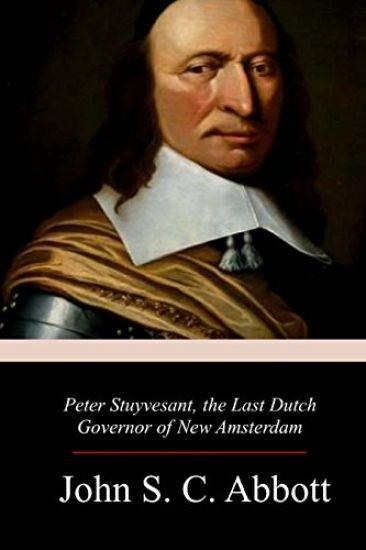
This engrossing work details the early history of the colonization of Manhattan and its surrounding regions from the exploration of the Hudson River in 1610 through to the final surrender of the colony to the English in 1664. The thoroughly-researched history takes the reader through the trials and tribulations of colonists, Indians, slaves, soldiers, and politicians alike. Hardships, religious struggles, and Indian wars dominated the early history of the settlement, but Peter Stuyvesant's rule was marked by many building projects, of which the end results are still seen today: a protective wall ("Wall Street"), the canal that became Broad Street, and Broadway. The author writes with objectivity about the suffering of colonists, Indians, and slaves-and of the fighting between the English and Dutch over possession of the colony." It is impossible to understand the very remarkable character and career of Peter Stuyvesant, the last, and by far the most illustrious, of the Dutch governors of New Amsterdam, without an acquaintance with the early history of the Dutch colonies upon the Hudson and the Delaware. Peter Stuyvesant leads us to the Hudson, from the time when its majestic waters were disturbed only by the arrowy flight of the birch canoe, till European colonization had laid there the foundations of one of the most flourishing cities on this globe." - From the Preface. CONTENTSCHAPTER I: Discovery of the Hudson RiverCHAPTER II: The Progress of DiscoveryCHAPTER III: The Commencement of ColonizationCHAPTER IV: The Administration of Van TwillerCHAPTER V: War and Its DevastationsCHAPTER VI: Governor StuyvesantCHAPTER VII: War between England and HollandCHAPTER VIII: Another Indian WarCHAPTER IX: An Energetic AdministrationCHAPTER X: The Esopus WarCHAPTER XI: The Disastrous YearCHAPTER XII: Encroachments of the EnglishCHAPTER XIII: Hostile Measures CommencedCHAPTER XIV: The Capture of New AmsterdamCHAPTER XV: The Final SurrenderCHAPTER XVI: The Olden Time
This is one of the most enthralling and all-encompassing biographies ever written about Christopher Columbus, the man who changed the course of world history with his voyages over the Atlantic Ocean. Renowned history writer John S. C. Abbott takes the reader on a no-holds-barred-and remarkably objective-ride from Columbus's background and life, to his struggle in the courts of Portugal and Spain to gain acceptance for his radical idea of sailing west to reach the east-and the astonishing details of his four voyages to the New World and their aftermath. Abbott spares no detail in highlighting the bravery, achievements, and staggering feats which paved the way for European colonization of the New World. But he also deals equally dispassionately with the less savory aspects which followed the Spanish settlements-such as the fact that most of Columbus's crews were criminals recruited only with the promise of pardons, the institution of slavery, and the resultant practical extermination of the Indians on the Caribbean Islands. Throughout this breathtaking narrative, Abbott never loses touch with the human aspects of Columbus's life, and ends with an assessment which gives an indication of the struggles and tribulations faced by the simple man from Genoa: "His eventful life was, on the whole, one of the most joyless and full of trouble of which we have any record. That he had his faults all will admit. That those blemishes of character were redeemed by many and exalted virtues, few candid minds will deny."
About the Author John Stevens Cabot Abbott (September 19, 1805 - June 17, 1877), an American historian, pastor, and pedagogical writer, was born in Brunswick, Maine to Jacob and Betsey Abbott. -Wikipedia For more eBooks visit www.kartindo.com
The world is now too busy to read voluminous history. The interminable details of battles, and the petty intrigues of courtiers and mistresses, have lost their interest. In this volume it has been our object to trace perspicuously the path which Russia has trod from earliest infancy to the present hour. The career of this empire has been so wild and wonderful that the historian can have no occasion to call in the aid of fancy for the embellishment of his narrative. . .
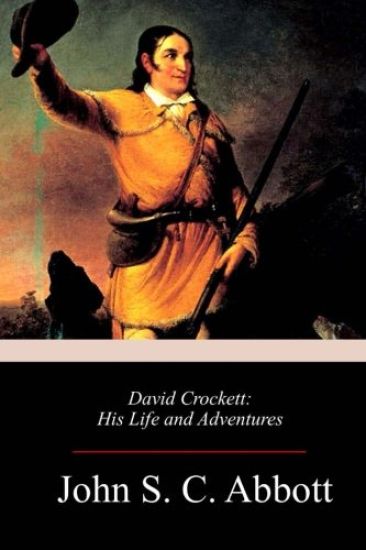
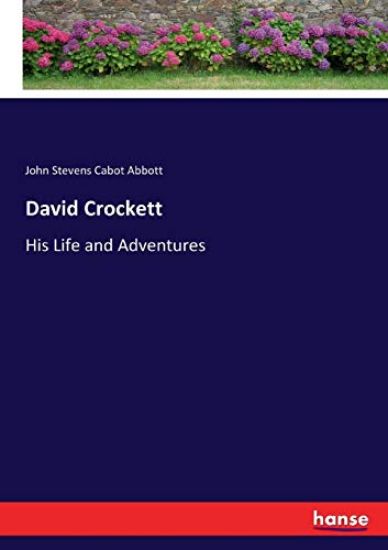
David Crockett certainly was not a model man. But he was a representative man. He was conspicuously one of a very numerous class, still existing, and which has heretofore exerted a very powerful influence over this republic. As such, his wild and wondrous life is worthy of the study of every patriot. Of this class, their modes of life and habits of thought, the majority of our citizens know as little as they do of the manners and customs of the Comanche Indians. No man can make his name known to the forty millions of this great and busy republic who has not something very remarkable in his character or his career. But there is probably not an adult American, in all these widespread States, who has not heard of David Crockett. His life is a veritable romance, with the additional charm of unquestionable truth. It opens to the reader scenes in the lives of the lowly, and a state of semi-civilization, of which but few of them can have the faintest idea. It has not been my object, in this narrative, to defend Colonel Crockett or to condemn him, but to present his peculiar character exactly as it was. I have therefore been constrained to insert some things which I would gladly have omitted.
David Crockett - His Life and Adventures is an unchanged, high-quality reprint of the original edition of 1874. Hansebooks is editor of the literature on different topic areas such as research and science, travel and expeditions, cooking and nutrition, medicine, and other genres. As a publisher we focus on the preservation of historical literature. Many works of historical writers and scientists are available today as antiques only. Hansebooks newly publishes these books and contributes to the preservation of literature which has become rare and historical knowledge for the future.
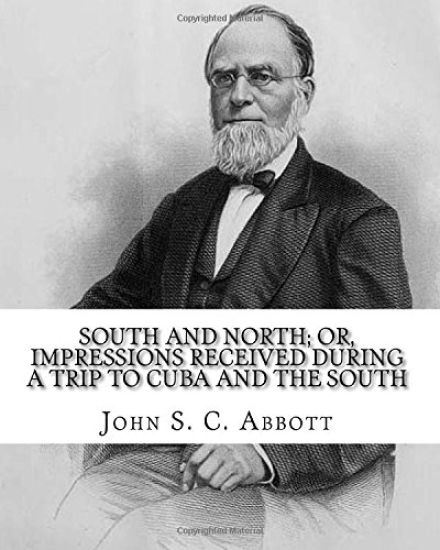
John Stevens Cabot Abbott (September 19, 1805 - June 17, 1877), an American historian, pastor, and pedagogical writer, was born in Brunswick, Maine to Jacob and Betsey Abbott. Early life: He was a brother of Jacob Abbott, and was associated with him in the management of Abbott's Institute, New York City, and in the preparation of his series of brief historical biographies. Dr. Abbott graduated at Bowdoin College in 1825, prepared for the ministry at Andover Theological Seminary, and between 1830 and 1844, when he retired from the ministry in the Congregational Church, preached successively at Worcester, Roxbury and Nantucket, all in Massachusetts. Literary career: Owing to the success of a little work, The Mother at Home, he devoted himself, from 1844 onwards, to literature. He was a voluminous writer of books on Christian ethics, and of popular histories, which were credited with cultivating a popular interest in history. He is best known as the author of the widely popular History of Napoleon Bonaparte (1855), in which the various elements and episodes in Napoleon's career are described. Abbott takes a very favourable view towards his subject throughout. Also among his principal works are: History of the Civil War in America (1863-1866), and The History of Frederick II, Called Frederick the Great (New York, 1871). He also did a forward to a book called Life of Boone by W. M. Bogart, about Daniel Boone in 1876. In general, except that he did not write juvenile fiction, his work in subject and style closely resembles that of his brother, Jacob Abbott....
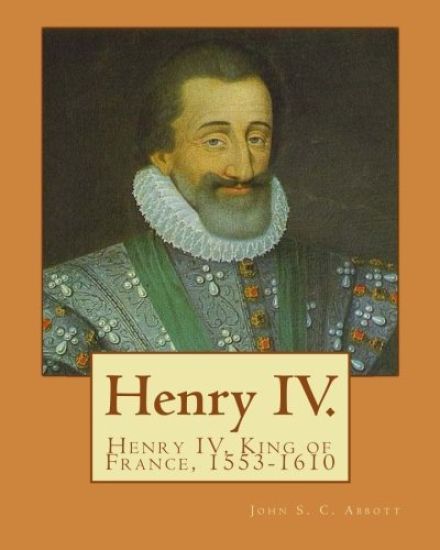
Henry IV (French: Henri IV, read as Henri-Quatre pronounced 13 December 1553 - 14 May 1610), also known by the epithet "Good King Henry", was King of Navarre (as Henry III) from 1572 to 1610 and King of France from 1589 to 1610. He was the first French monarch of the House of Bourbon, a branch of the Capetian dynasty. Baptised as a Catholic but raised in the Protestant faith by his mother Jeanne d'Albret, Queen of Navarre, he inherited the throne of Navarre in 1572 on the death of his mother. As a Huguenot, Henry was involved in the French Wars of Religion, barely escaping assassination in the St. Bartholomew's Day massacre, and later led Protestant forces against the royal army. Henry, as Head of the House of Bourbon, was a direct male-line descendant of Louis IX of France, and "first prince of the blood". Upon the death of his brother-in-law and distant cousin Henry III of France in 1589, Henry was called to the French succession by the Salic law. He initially kept the Protestant faith and had to fight against the Catholic League, which denied that he could wear France's crown as a Protestant. To obtain mastery over his kingdom, after four years of stalemate, he found it prudent to abjure the Calvinist faith. As a pragmatic politician (in the parlance of the time, a politique), he displayed an unusual religious tolerance for the era. Notably, he promulgated the Edict of Nantes (1598), which guaranteed religious liberties to Protestants, thereby effectively ending the Wars of Religion. He was assassinated in 1610 by Fran ois Ravaillac, a fanatical Catholic, and was succeeded by his son Louis XIII. Considered a usurper by some Catholics and a traitor by some Protestants, Henry became target of at least 12 assassination attempts. An unpopular king immediately after his accession, Henry's popularity greatly improved after his death, in light of repeated victories over his enemies and his conversion to Catholicism. The "Good King Henry" (le bon roi Henri) was remembered for his geniality and his great concern about the welfare of his subjects. He was celebrated in the popular song Vive le roi Henri and in Voltaire's Henriade....... John Stevens Cabot Abbott (September 19, 1805 - June 17, 1877), an American historian, pastor, and pedagogical writer, was born in Brunswick, Maine to Jacob and Betsey Abbott. John Stevens Cabot Abbott (September 19, 1805 - June 17, 1877), an American historian, pastor, and pedagogical writer, was born in Brunswick, Maine to Jacob and Betsey Abbott. Early life He was a brother of Jacob Abbott, and was associated with him in the management of Abbott's Institute, New York City, and in the preparation of his series of brief historical biographies. Dr. Abbott graduated at Bowdoin College in 1825, prepared for the ministry at Andover Theological Seminary, and between 1830 and 1844, when he retired from the ministry in the Congregational Church, preached successively at Worcester, Roxbury and Nantucket, all in Massachusetts. 1] Literary career Owing to the success of a little work, The Mother at Home, he devoted himself, from 1844 onwards, to literature. He was a voluminous writer of books on Christian ethics, and of popular histories, which were credited with cultivating a popular interest in history. He is best known as the author of the widely popular History of Napoleon Bonaparte (1855), in which the various elements and episodes in Napoleon's career are described. Abbott takes a very favourable view towards his subject throughout. Also among his principal works are: History of the Civil War in America (1863-1866), and The History of Frederick II, Called Frederick the Great (New York, 1871). He also did a forward to a book called Life of Boone by W. M. Bogart, about Daniel Boone in 1876....
Marie Antoinette ( born Maria Antonia Josepha Johanna; 2 November 1755 - 16 October 1793) was the last Queen of France before the French Revolution. She was born an Archduchess of Austria, and was the penultimate child of Empress Maria Theresa and Francis I, Holy Roman Emperor. In April 1770, upon her marriage to Louis-Auguste, heir apparent to the French throne, she became Dauphine of France. On 10 May 1774, when her husband ascended the throne as Louis XVI, she assumed the title Queen of France and Navarre, which she held until September 1791, when, as the French Revolution proceeded, she became Queen of the French, a title she held until 21 September 1792. After eight years of marriage, Marie Antoinette gave birth to a daughter, Marie Th r se of France, the first of her four children. Despite her initial popularity, a growing number of the population eventually came to dislike her, accusing her of being profligate, promiscuous, 2] and of harbouring sympathies for France's enemies, particularly her native Austria. 3] The Affair of the Diamond Necklace damaged her reputation further. During the Revolution, she became known as Madame D ficit because the country's financial crisis was blamed on her lavish spending and her opposition to the social and financial reforms of Turgot and Necker. During the Revolution, after the government had placed the royal family under house arrest in the Tuileries Palace in October 1789, several events linked to Marie Antoinette, in particular the June 1791 attempted flight to Varennes and her role in the War of the First Coalition, had disastrous effects on French popular opinion. On 10 August 1792, the attack on the Tuileries forced the royal family to take refuge at the Assembly, and on 13 August the family was imprisoned in the Temple. On 21 September 1792, the monarchy was abolished. After a two-day trial begun on 14 October 1793, Marie Antoinette was convicted by the Revolutionary Tribunal of high treason and executed by guillotine on the Place de la R volution on 16 October 1793.............. John Stevens Cabot Abbott (September 19, 1805 - June 17, 1877), an American historian, pastor, and pedagogical writer, was born in Brunswick, Maine to Jacob and Betsey Abbott. John Stevens Cabot Abbott (September 19, 1805 - June 17, 1877), an American historian, pastor, and pedagogical writer, was born in Brunswick, Maine to Jacob and Betsey Abbott. Early life He was a brother of Jacob Abbott, and was associated with him in the management of Abbott's Institute, New York City, and in the preparation of his series of brief historical biographies. Dr. Abbott graduated at Bowdoin College in 1825, prepared for the ministry at Andover Theological Seminary, and between 1830 and 1844, when he retired from the ministry in the Congregational Church, preached successively at Worcester, Roxbury and Nantucket, all in Massachusetts. 1] Literary career Owing to the success of a little work, The Mother at Home, he devoted himself, from 1844 onwards, to literature. He was a voluminous writer of books on Christian ethics, and of popular histories, which were credited with cultivating a popular interest in history. He is best known as the author of the widely popular History of Napoleon Bonaparte (1855), in which the various elements and episodes in Napoleon's career are described. Abbott takes a very favourable view towards his subject throughout. Also among his principal works are: History of the Civil War in America (1863-1866), and The History of Frederick II, Called Frederick the Great (New York, 1871). He also did a forward to a book called Life of Boone by W. M. Bogart, about Daniel Boone in 1876. In general, except that he did not write juvenile fiction, his work in subject and style closely resembles that of his brother, Jacob Abbott....