Kirjojen hintavertailu – 12 903 724 kirjaa ja 27 kauppaa

Kirjailija

John S C Abbott

Kirjat ja teokset yhdessä paikassa: 416 kirjaa, julkaisuja vuosilta 1874–2026, suosituimpiin kuuluu Josephine. Vertaile teosten hintoja ja tarkista saatavuus suomalaisista kirjakaupoista.

Nimi esiintyy myös muodoissa: John S. C. Abbott, John S.C. Abbott

416 kirjaa

Kirjojen julkaisuvuodet: 1874–2026.

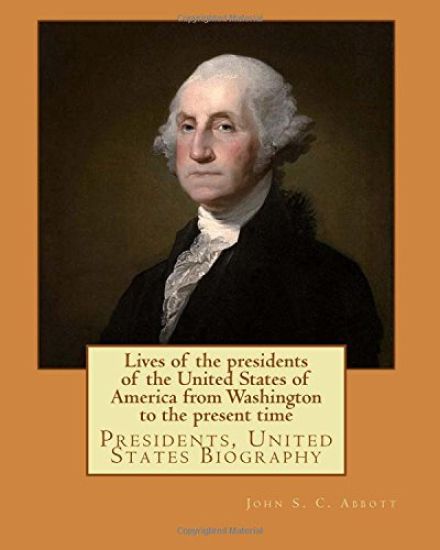
Lives of the presidents of the United States of America from Washington to the present time. By: John S. C. Abbott: Presidents, United States Biograph
John Stevens Cabot Abbott (September 19, 1805 - June 17, 1877), an American historian, pastor, and pedagogical writer, was born in Brunswick, Maine to Jacob and Betsey Abbott. John Stevens Cabot Abbott (September 19, 1805 - June 17, 1877), an American historian, pastor, and pedagogical writer, was born in Brunswick, Maine to Jacob and Betsey Abbott. Early life He was a brother of Jacob Abbott, and was associated with him in the management of Abbott's Institute, New York City, and in the preparation of his series of brief historical biographies. Dr. Abbott graduated at Bowdoin College in 1825, prepared for the ministry at Andover Theological Seminary, and between 1830 and 1844, when he retired from the ministry in the Congregational Church, preached successively at Worcester, Roxbury and Nantucket, all in Massachusetts. 1] Literary career Owing to the success of a little work, The Mother at Home, he devoted himself, from 1844 onwards, to literature. He was a voluminous writer of books on Christian ethics, and of popular histories, which were credited with cultivating a popular interest in history. He is best known as the author of the widely popular History of Napoleon Bonaparte (1855), in which the various elements and episodes in Napoleon's career are described. Abbott takes a very favourable view towards his subject throughout. Also among his principal works are: History of the Civil War in America (1863-1866), and The History of Frederick II, Called Frederick the Great (New York, 1871). He also did a forward to a book called Life of Boone by W. M. Bogart, about Daniel Boone in 1876. In general, except that he did not write juvenile fiction, his work in subject and style closely resembles that of his brother, Jacob Abbott. Marriage and children On August 17, 1835 he married Jane Williams Bourne, daughter of Abner Bourne and Abagail Williams. John and Jane had issue: John Brown Abbott (November 29, 1831 - May 24, 1839) Jane Maria Abbott (born November 25, 1833) Waldo Abbott (September 8, 1836 - July 7, 1864) Harriet Vaughan Abbott (born February 18, 1838) Ellen Williams Abbott(born January 11, 1840) Laura Sallucia Abbott (born October 30, 1843) Elizabeth Ballister Abbott (March 15, 1847 - February 23, 1864) Emma Susan Abbott (born July 12, 1849) Gorham Dummer Abbott (born March 29, 1851) As a part of the 1872 Iwakura Mission Mr. Abbott was given guardianship of Shige Nagai, a Japanese girl sent to the United States to be educated. John Stevens Cabot Abbott died at Fair Haven, Connecticut. In 1910, a series of twenty short biographies of historical characters by J. S. C. and Jacob Abbott, was published. Their brother, Gorham Dummer Abbott, was also an author. Abbott's grandson, Willis Abbott, was a Christian Scientist and an editor of the Christian Science Monitor .....................
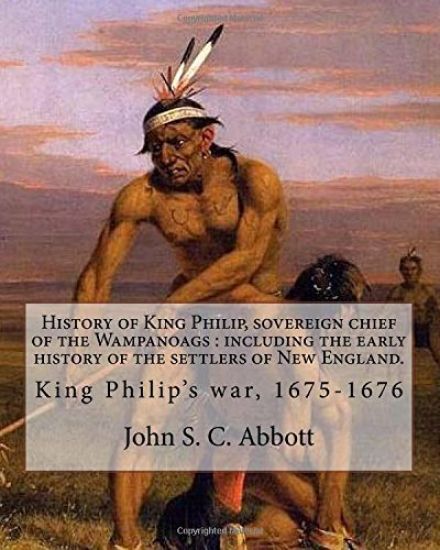
History of King Philip, sovereign chief of the Wampanoags: including the early history of the settlers of New England. By: John S. C. Abbott: King Phi
King Philip's War (sometimes called the First Indian War, Metacom's War, Metacomet's War, or Metacom's Rebellion) was an armed conflict between American Indian inhabitants of present-day New England and English colonists and their Indian allies in 1675-78. The war is named for Metacomet, the Wampanoag chief who adopted the English name Philip due to the friendly relations between his father and the Mayflower Pilgrims. The war continued in the most northern reaches of New England until the signing of the Treaty of Casco Bay in April 1678. Metacom (c. 1638-1676) was the second son of Wampanoag chief Massasoit, who had coexisted peacefully with the Pilgrims. He succeeded his brother in 1662 and reacted to rising tensions between the Wampanoags and the colonists. At Taunton in 1671, he was humiliated when colonists forced him to sign a new peace agreement that included the surrender of Indian guns. Officials in Plymouth Colony hanged three Wampanoags in 1675 for the murder of an Indian, and Metacom's followers and allies launched a united assault on colonial towns throughout the region. Metacom's forces gained initial victories in the first year, but then the Indian alliance began to unravel. By the end of the conflict, the Wampanoags and their Narragansett allies were almost completely destroyed. Metacom anticipated their defeat, and returned to his ancestral home at Mt. Hope, where he was killed fleeing an English attack. The war was the single greatest calamity to occur in seventeenth century Puritan New England and is considered by many to be the deadliest war in the history of European settlement in North America in proportion to the population. In the space of little more than a year, twelve of the region's towns were destroyed and many more damaged, the colony's economy was all but ruined, and its population was decimated, losing one-tenth of all men available for military service. More than half of New England's towns were attacked by Indians. King Philip's War began the development of an independent American identity. The colonists faced their trials without significant English government support, and this gave them a group identity separate and distinct from those who lived in Britain.................. John Stevens Cabot Abbott (September 19, 1805 - June 17, 1877), an American historian, pastor, and pedagogical writer, was born in Brunswick, Maine to Jacob and Betsey Abbott. John Stevens Cabot Abbott (September 19, 1805 - June 17, 1877), an American historian, pastor, and pedagogical writer, was born in Brunswick, Maine to Jacob and Betsey Abbott. Early life He was a brother of Jacob Abbott, and was associated with him in the management of Abbott's Institute, New York City, and in the preparation of his series of brief historical biographies. Dr. Abbott graduated at Bowdoin College in 1825, prepared for the ministry at Andover Theological Seminary, and between 1830 and 1844, when he retired from the ministry in the Congregational Church, preached successively at Worcester, Roxbury and Nantucket, all in Massachusetts. 1] Literary career Owing to the success of a little work, The Mother at Home, he devoted himself, from 1844 onwards, to literature. He was a voluminous writer of books on Christian ethics, and of popular histories, which were credited with cultivating a popular interest in history. He is best known as the author of the widely popular History of Napoleon Bonaparte (1855), in which the various elements and episodes in Napoleon's career are described. Abbott takes a very favourable view towards his subject throughout. Also among his principal works are: History of the Civil War in America (1863-1866), and The History of Frederick II, Called Frederick the Great (New York, 1871). He also did a forward to a book called Life of Boone by W. M. Bogart, about Daniel Boone in 1876. In general, except that he did not write juvenile fiction, his work in subject and style closely resembles that of his brother, Ja
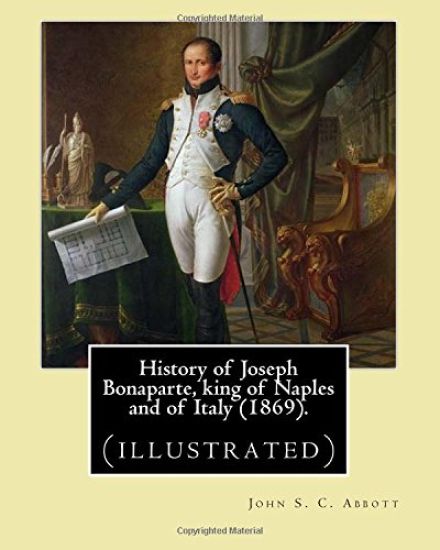
History of Joseph Bonaparte, king of Naples and of Italy (1869). By: John S. C. Abbott: Joseph Bonaparte, King of Spain, 1768-1844. (illustrated)
Joseph-Napoleon Bonaparte (born Giuseppe Buonaparte; 7 January 1768 - 28 July 1844) was a French diplomat and nobleman, the elder brother of Napoleon Bonaparte, who made him King of Naples and Sicily (1806-1808), and later King of Spain (1808-1813, as Jos I). After the fall of Napoleon, Joseph styled himself Comte de Survilliers....... John Stevens Cabot Abbott (September 19, 1805 - June 17, 1877), an American historian, pastor, and pedagogical writer, was born in Brunswick, Maine to Jacob and Betsey Abbott. John Stevens Cabot Abbott (September 19, 1805 - June 17, 1877), an American historian, pastor, and pedagogical writer, was born in Brunswick, Maine to Jacob and Betsey Abbott. Early life He was a brother of Jacob Abbott, and was associated with him in the management of Abbott's Institute, New York City, and in the preparation of his series of brief historical biographies. Dr. Abbott graduated at Bowdoin College in 1825, prepared for the ministry at Andover Theological Seminary, and between 1830 and 1844, when he retired from the ministry in the Congregational Church, preached successively at Worcester, Roxbury and Nantucket, all in Massachusetts. 1] Literary career Owing to the success of a little work, The Mother at Home, he devoted himself, from 1844 onwards, to literature. He was a voluminous writer of books on Christian ethics, and of popular histories, which were credited with cultivating a popular interest in history. He is best known as the author of the widely popular History of Napoleon Bonaparte (1855), in which the various elements and episodes in Napoleon's career are described. Abbott takes a very favourable view towards his subject throughout. Also among his principal works are: History of the Civil War in America (1863-1866), and The History of Frederick II, Called Frederick the Great (New York, 1871). He also did a forward to a book called Life of Boone by W. M. Bogart, about Daniel Boone in 1876. In general, except that he did not write juvenile fiction, his work in subject and style closely resembles that of his brother, Jacob Abbott. Marriage and children On August 17, 1835 he married Jane Williams Bourne, daughter of Abner Bourne and Abagail Williams. John and Jane had issue: John Brown Abbott (November 29, 1831 - May 24, 1839) Jane Maria Abbott (born November 25, 1833) Waldo Abbott (September 8, 1836 - July 7, 1864) Harriet Vaughan Abbott (born February 18, 1838) Ellen Williams Abbott(born January 11, 1840) Laura Sallucia Abbott (born October 30, 1843) Elizabeth Ballister Abbott (March 15, 1847 - February 23, 1864) Emma Susan Abbott (born July 12, 1849) Gorham Dummer Abbott (born March 29, 1851) As a part of the 1872 Iwakura Mission Mr. Abbott was given guardianship of Shige Nagai, a Japanese girl sent to the United States to be educated. John Stevens Cabot Abbott died at Fair Haven, Connecticut. In 1910, a series of twenty short biographies of historical characters by J. S. C. and Jacob Abbott, was published. Their brother, Gorham Dummer Abbott, was also an author. Abbott's grandson, Willis Abbott, was a Christian Scientist and an editor of the Christian Science Monitor..................
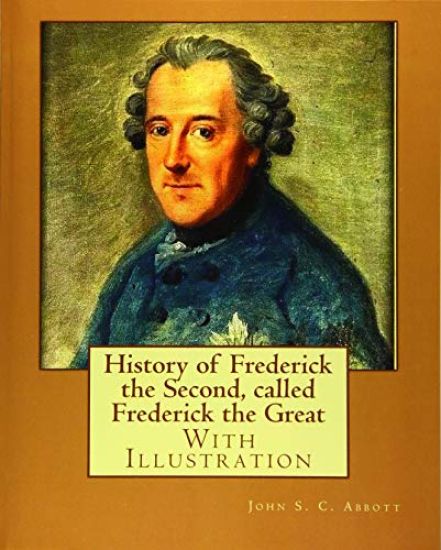
History of Frederick the Second, called Frederick the Great. By: John S. C. Abbott (With Illustration).: Frederick II, King of Prussia, 1712-1786, Pru
John Stevens Cabot Abbott (September 19, 1805 - June 17, 1877), an American historian, pastor, and pedagogical writer, was born in Brunswick, Maine to Jacob and Betsey Abbott. John Stevens Cabot Abbott (September 19, 1805 - June 17, 1877), an American historian, pastor, and pedagogical writer, was born in Brunswick, Maine to Jacob and Betsey Abbott. Early life He was a brother of Jacob Abbott, and was associated with him in the management of Abbott's Institute, New York City, and in the preparation of his series of brief historical biographies.... Frederick II (German: Friedrich; 24 January 1712 - 17 August 1786) was King of Prussia from 1740 until 1786, the longest reign of any Hohenzollern king. His most significant accomplishments during his reign included his military victories, his reorganization of Prussian armies, his patronage of the arts and the Enlightenment in Prussia, and his final success against great odds in the Seven Years' War. Frederick was the last titled King in Prussia and declared himself King of Prussia after achieving full sovereignty for all historical Prussian lands. Prussia had greatly increased its territories and became a leading military power in Europe under his rule. He became known as Frederick the Great and was affectionately nicknamed Der Alte Fritz ("Old Fritz") by the Prussian and later by all German people. In his youth, Frederick was more interested in music and philosophy than the art of war. Nonetheless, upon ascending to the Prussian throne, he attacked Austria and claimed Silesia during the Silesian Wars, winning military acclaim for himself and Prussia. Toward the end of his reign, Frederick physically connected most of his realm by acquiring Polish territories in the First Partition of Poland. He was an influential military theorist whose analysis emerged from his extensive personal battlefield experience and covered issues of strategy, tactics, mobility and logistics. Considering himself "the first servant of the state", Frederick was a proponent of enlightened absolutism. He modernized the Prussian bureaucracy and civil service and pursued religious policies throughout his realm that ranged from tolerance to segregation. He reformed the judicial system and made it possible for men not of noble stock to become judges and senior bureaucrats. Frederick also encouraged immigrants of various nationalities and faiths to come to Prussia. Some critics, however, point out his oppressive measures against conquered Polish subjects during the First Partition. Frederick supported arts and philosophers he favored, as well as allowing complete freedom of the press and literature. Frederick is buried at his favorite residence, Sanssouci in Potsdam. Because he died childless, Frederick was succeeded by his nephew, Frederick William II, son of his brother, Augustus William. Nearly all 19th-century German historians made Frederick into a romantic model of a glorified warrior, praising his leadership, administrative efficiency, devotion to duty and success in building up Prussia to a great power in Europe. Historian Leopold von Ranke was unstinting in his praise of Frederick's "Heroic life, inspired by great ideas, filled with feats of arms ... immortalized by the raising of the Prussian state to the rank of a power." Johann Gustav Droysen was even more extolling. Frederick remained an admired historical figure through the German Empire's defeat in the First World War, and the Nazis glorified him as a great German leader pre-figuring Hitler, but his reputation in both East and West Germany became far less favorable after the fall of the Nazi regime, largely due to his status as a favorite icon of the Nazis. However, by the 21st century, a re-evaluation of his legacy as a great warrior and enlightened monarch returned opinion of him to favour............
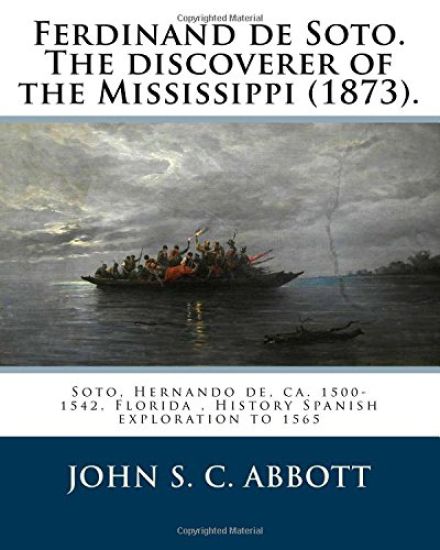
Ferdinand de Soto. The discoverer of the Mississippi (1873). By: John S. C. Abbott: Soto, Hernando de, ca. 1500-1542, Florida, History Spanish explora
Hernando de Soto (c. 1495 - May 21, 1542) was a Spanish explorer and conquistador who led the first European expedition deep into the territory of the modern-day United States (Florida, Georgia, Mississippi, Alabama and most likely Arkansas). He is the first European documented as having crossed the Mississippi River. 4] De Soto's North American expedition was a vast undertaking. It ranged throughout the southeastern United States, both searching for gold, reported by various Indian tribes and earlier explorers, and a passage to China or the Pacific coast. De Soto died in 1542 on the banks of the Mississippi River 5] in what is now Guachoya, Arkansas or Ferriday, Louisiana...... John Stevens Cabot Abbott (September 19, 1805 - June 17, 1877), an American historian, pastor, and pedagogical writer, was born in Brunswick, Maine to Jacob and Betsey Abbott. John Stevens Cabot Abbott (September 19, 1805 - June 17, 1877), an American historian, pastor, and pedagogical writer, was born in Brunswick, Maine to Jacob and Betsey Abbott. Early life He was a brother of Jacob Abbott, and was associated with him in the management of Abbott's Institute, New York City, and in the preparation of his series of brief historical biographies. Dr. Abbott graduated at Bowdoin College in 1825, prepared for the ministry at Andover Theological Seminary, and between 1830 and 1844, when he retired from the ministry in the Congregational Church, preached successively at Worcester, Roxbury and Nantucket, all in Massachusetts. 1] Literary career Owing to the success of a little work, The Mother at Home, he devoted himself, from 1844 onwards, to literature. He was a voluminous writer of books on Christian ethics, and of popular histories, which were credited with cultivating a popular interest in history. He is best known as the author of the widely popular History of Napoleon Bonaparte (1855), in which the various elements and episodes in Napoleon's career are described. Abbott takes a very favourable view towards his subject throughout. Also among his principal works are: History of the Civil War in America (1863-1866), and The History of Frederick II, Called Frederick the Great (New York, 1871). He also did a forward to a book called Life of Boone by W. M. Bogart, about Daniel Boone in 1876. In general, except that he did not write juvenile fiction, his work in subject and style closely resembles that of his brother, Jacob Abbott. Marriage and children On August 17, 1835 he married Jane Williams Bourne, daughter of Abner Bourne and Abagail Williams. John and Jane had issue: John Brown Abbott (November 29, 1831 - May 24, 1839) Jane Maria Abbott (born November 25, 1833) Waldo Abbott (September 8, 1836 - July 7, 1864) Harriet Vaughan Abbott (born February 18, 1838) Ellen Williams Abbott(born January 11, 1840) Laura Sallucia Abbott (born October 30, 1843) Elizabeth Ballister Abbott (March 15, 1847 - February 23, 1864) Emma Susan Abbott (born July 12, 1849) Gorham Dummer Abbott (born March 29, 1851) As a part of the 1872 Iwakura Mission Mr. Abbott was given guardianship of Shige Nagai, a Japanese girl sent to the United States to be educated. John Stevens Cabot Abbott died at Fair Haven, Connecticut. In 1910, a series of twenty short biographies of historical characters by J. S. C. and Jacob Abbott, was published. Their brother, Gorham Dummer Abbott, was also an author. Abbott's grandson, Willis Abbott, was a Christian Scientist and an editor of the Christian Science Monitor.................
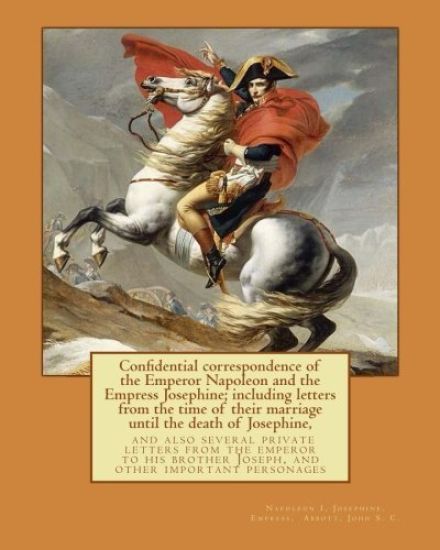
Confidential correspondence of the Emperor Napoleon and the Empress Josephine;: including letters from the time of their marriage until the death of J

Confidential correspondence of the Emperor Napoleon and the Empress Josephine;: including letters from the time of their marriage until the death of J

Empress Josephine; John S. C. Abbott; 1769-1821 Napole Emperor of the French

Createspace Independent Publishing Platform
2017
nidottu
Napoleon Bonaparte (15 August 1769 - 5 May 1821) was a French military and political leader who rose to prominence during the French Revolution and led several successful campaigns during the French Revolutionary Wars. As Napoleon I, he was Emperor of the French from 1804 until 1814, and again briefly in 1815 (during the Hundred Days). Napoleon dominated European and global affairs for more than a decade while leading France against a series of coalitions in the Napoleonic Wars. He won most of these wars and the vast majority of his battles, building a large empire that ruled over continental Europe before its final collapse in 1815. One of the greatest commanders in history, his wars and campaigns are studied at military schools worldwide. Napoleon's political and cultural legacy has endured as one of the most celebrated and controversial leaders in human history. He was born Napoleone di Buonaparte (Italian: napole'o?ne di bw?na'parte]) in Corsica, to a relatively modest family from minor Italian nobility. When the Revolution broke out in 1789, Napoleon was serving as an artillery officer in the French army. Seizing the new opportunities presented by the Revolution, he rapidly rose through the ranks of the military, becoming a general at age 24. The Directory eventually gave him command of the Army of Italy after he suppressed a revolt against the government from royalist insurgents. At age 26, he began his first military campaign against the Austrians and their Italian allies-winning virtually every battle, conquering the Italian Peninsula in a year, and becoming a national hero. In 1798, he led a military expedition to Egypt that served as a springboard to political power. He engineered a coup in November 1799 and became First Consul of the Republic. His ambition and public approval inspired him to go further, and in 1804 he became the first Emperor of the French. Intractable differences with the British meant that the French were facing a Third Coalition by 1805. Napoleon shattered this coalition with decisive victories in the Ulm Campaign and a historic triumph over Russia and Austria at the Battle of Austerlitz, which led to the elimination of the thousand-year-old Holy Roman Empire. In 1806, the Fourth Coalition took up arms against him because Prussia became worried about growing French influence on the continent. Napoleon quickly defeated Prussia at the battles of Jena and Auerstedt, then marched the Grand Army deep into Eastern Europe and annihilated the Russians in June 1807 at the Battle of Friedland. France then forced the defeated nations of the Fourth Coalition to sign the Treaties of Tilsit in July 1807, bringing an uneasy peace to the continent. Tilsit signified the high watermark of the French Empire. In 1809, the Austrians and the British challenged the French again during the War of the Fifth Coalition, but Napoleon solidified his grip over Europe after triumphing at the Battle of Wagram in July......... Jos phine de Beauharnais ( 23 June 1763 - 29 May 1814) was the first wife of Napoleon I, and thus the first Empress of the French (commonly called Empress Josephine or just Josephine)... John Stevens Cabot Abbott (September 19, 1805 - June 17, 1877), an American historian, pastor, and pedagogical writer, was born in Brunswick, Maine to Jacob and Betsey Abbott.
Benjamin Franklin. A picture of the struggles of our infant nation, one hundred years ago. By: John S. C. (John Stevens Cabot) Abbott (Illustrated).:
John Stevens Cabot Abbott (September 19, 1805 - June 17, 1877), an American historian, pastor, and pedagogical writer, was born in Brunswick, Maine to Jacob and Betsey Abbott. Early life: He was a brother of Jacob Abbott, and was associated with him in the management of Abbott's Institute, New York City, and in the preparation of his series of brief historical biographies. Dr. Abbott graduated at Bowdoin College in 1825, prepared for the ministry at Andover Theological Seminary, and between 1830 and 1844, when he retired from the ministry in the Congregational Church, preached successively at Worcester, Roxbury and Nantucket, all in Massachusetts. Literary career: Owing to the success of a little work, The Mother at Home, he devoted himself, from 1844 onwards, to literature. He was a voluminous writer of books on Christian ethics, and of popular histories, which were credited with cultivating a popular interest in history. He is best known as the author of the widely popular History of Napoleon Bonaparte (1855), in which the various elements and episodes in Napoleon's career are described. Abbott takes a very favourable view towards his subject throughout. Also among his principal works are: History of the Civil War in America (1863-1866), and The History of Frederick II, Called Frederick the Great (New York, 1871). He also did a forward to a book called Life of Boone by W. M. Bogart, about Daniel Boone in 1876. In general, except that he did not write juvenile fiction, his work in subject and style closely resembles that of his brother, Jacob Abbott.... Benjamin Franklin FRS, FRSE (January 17, 1706 O. S. January 6, 1705] - April 17, 1790) was one of the Founding Fathers of the United States. Franklin was a renowned polymath and a leading author, printer, political theorist, politician, freemason, postmaster, scientist, inventor, humorist, civic activist, statesman, and diplomat. As a scientist, he was a major figure in the American Enlightenment and the history of physics for his discoveries and theories regarding electricity. As an inventor, he is known for the lightning rod, bifocals, and the Franklin stove, among other inventions. He facilitated many civic organizations, including Philadelphia's fire department and the University of Pennsylvania, an Ivy League institution. Franklin earned the title of "The First American" for his early and indefatigable campaigning for colonial unity, initially as an author and spokesman in London for several colonies. As the first United States Ambassador to France, he exemplified the emerging American nation. Franklin was foundational in defining the American ethos as a marriage of the practical values of thrift, hard work, education, community spirit, self-governing institutions, and opposition to authoritarianism both political and religious, with the scientific and tolerant values of the Enlightenment. In the words of historian Henry Steele Commager, "In a Franklin could be merged the virtues of Puritanism without its defects, the illumination of the Enlightenment without its heat." To Walter Isaacson, this makes Franklin "the most accomplished American of his age and the most influential in inventing the type of society America would become." Franklin became a successful newspaper editor and printer in Philadelphia, the leading city in the colonies, publishing the Pennsylvania Gazette at the age of 23. He became wealthy publishing this and Poor Richard's Almanack, which he authored under the pseudonym "Richard Saunders". After 1767, he was associated with the Pennsylvania Chronicle, a newspaper that was known for its revolutionary sentiments and criticisms of the British policies. He pioneered and was first president of Academy and College of Philadelphia which opened in 1751 and later became the University of Pennsylvania. He organized and was the first secretary of the American Philosophical Society and was elected president in 1769. ....
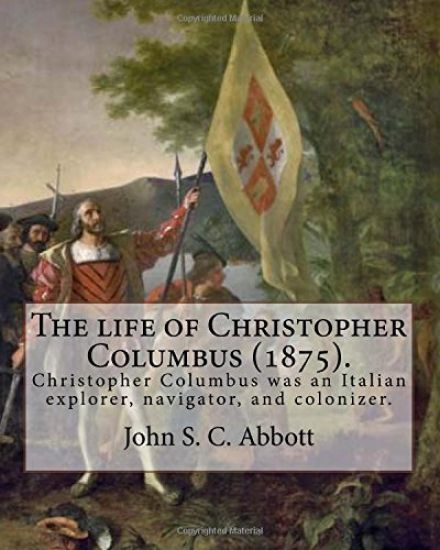
The life of Christopher Columbus (1875). By: John S. C. Abbott: Christopher Columbus ( 1451 - 20 May 1506) was an Italian explorer, navigator, and col
John Stevens Cabot Abbott (September 19, 1805 - June 17, 1877), an American historian, pastor, and pedagogical writer, was born in Brunswick, Maine to Jacob and Betsey Abbott. Early life: He was a brother of Jacob Abbott, and was associated with him in the management of Abbott's Institute, New York City, and in the preparation of his series of brief historical biographies. Dr. Abbott graduated at Bowdoin College in 1825, prepared for the ministry at Andover Theological Seminary, and between 1830 and 1844, when he retired from the ministry in the Congregational Church, preached successively at Worcester, Roxbury and Nantucket, all in Massachusetts. Literary career: Owing to the success of a little work, The Mother at Home, he devoted himself, from 1844 onwards, to literature. He was a voluminous writer of books on Christian ethics, and of popular histories, which were credited with cultivating a popular interest in history. He is best known as the author of the widely popular History of Napoleon Bonaparte (1855), in which the various elements and episodes in Napoleon's career are described. Abbott takes a very favourable view towards his subject throughout. Also among his principal works are: History of the Civil War in America (1863-1866), and The History of Frederick II, Called Frederick the Great (New York, 1871). He also did a forward to a book called Life of Boone by W. M. Bogart, about Daniel Boone in 1876. In general, except that he did not write juvenile fiction, his work in subject and style closely resembles that of his brother, Jacob Abbott... Christopher Columbus (1451 - 20 May 1506) was an Italian explorer, navigator, and colonizer. Born in the Republic of Genoa, under the auspices of the Catholic Monarchs of Spain he completed four voyages across the Atlantic Ocean. Those voyages and his efforts to establish settlements on the island of Hispaniola initiated the permanent European colonization of the New World. At a time when European kingdoms were beginning to establish new trade routes and colonies, motivated by imperialism and economic competition, Columbus proposed to reach the East Indies (South and Southeast Asia) by sailing westward. This eventually received the support of the Spanish Crown, which saw a chance to enter the spice trade with Asia through this new route. During his first voyage in 1492, he reached the New World instead of arriving in Japan as he had intended, landing on an island in the Bahamas archipelago that he named San Salvador. Over the course of three more voyages, he visited the Greater and Lesser Antilles, as well as the Caribbean coast of Venezuela and Central America, claiming all of it for the Crown of Castile. Columbus is the European explorer credited with establishing and documenting routes to the Americas, though he was preceded by the Viking expedition led by Leif Erikson in the 11th century. Moreover, the voyages of Columbus led to the first lasting European contact with the Americas, inaugurating a period of exploration, conquest, and colonization that lasted several centuries. These voyages thus had an enormous effect on the historical development of the modern Western world. He spearheaded the transatlantic slave trade and has been accused by several historians of initiating the genocide of the Hispaniola natives. Columbus himself saw his accomplishments primarily in the light of spreading the Christian religion. Columbus had set course in hopes of finding a western route to the Indies (Asia). He called the inhabitants of the lands that he visited indios (Spanish for "Indians"). His strained relationship with the Spanish crown and its appointed colonial administrators in America led to his arrest and dismissal as governor of the settlements on the island of Hispaniola in 1500, and later to protracted litigation over the benefits that he and his heirs claimed were owed to them by the crown......
The history of Christianity: consisting of the life and teachings of Jesus of Nazareth; the adventures of Paul and the apostles; and the most inter
John Stevens Cabot Abbott (September 19, 1805 - June 17, 1877), an American historian, pastor, and pedagogical writer, was born in Brunswick, Maine to Jacob and Betsey Abbott. Early life: He was a brother of Jacob Abbott, and was associated with him in the management of Abbott's Institute, New York City, and in the preparation of his series of brief historical biographies. Dr. Abbott graduated at Bowdoin College in 1825, prepared for the ministry at Andover Theological Seminary, and between 1830 and 1844, when he retired from the ministry in the Congregational Church, preached successively at Worcester, Roxbury and Nantucket, all in Massachusetts. Literary career: Owing to the success of a little work, The Mother at Home, he devoted himself, from 1844 onwards, to literature. He was a voluminous writer of books on Christian ethics, and of popular histories, which were credited with cultivating a popular interest in history. He is best known as the author of the widely popular History of Napoleon Bonaparte (1855), in which the various elements and episodes in Napoleon's career are described. Abbott takes a very favourable view towards his subject throughout. Also among his principal works are: History of the Civil War in America (1863-1866), and The History of Frederick II, Called Frederick the Great (New York, 1871). He also did a forward to a book called Life of Boone by W. M. Bogart, about Daniel Boone in 1876. In general, except that he did not write juvenile fiction, his work in subject and style closely resembles that of his brother, Jacob Abbot
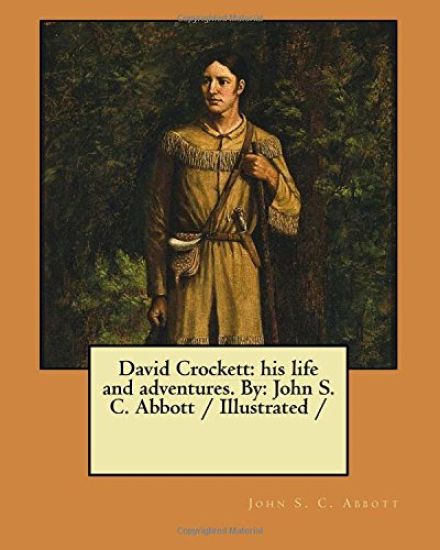
David Crockett: his life and adventures (1874). By: John S. C. Abbott (Illustrated).: David "Davy" Crockett (August 17, 1786 - March 6
John Stevens Cabot Abbott (September 19, 1805 - June 17, 1877), an American historian, pastor, and pedagogical writer, was born in Brunswick, Maine to Jacob and Betsey Abbott. Early life: He was a brother of Jacob Abbott, and was associated with him in the management of Abbott's Institute, New York City, and in the preparation of his series of brief historical biographies. Dr. Abbott graduated at Bowdoin College in 1825, prepared for the ministry at Andover Theological Seminary, and between 1830 and 1844, when he retired from the ministry in the Congregational Church, preached successively at Worcester, Roxbury and Nantucket, all in Massachusetts. Literary career: Owing to the success of a little work, The Mother at Home, he devoted himself, from 1844 onwards, to literature. He was a voluminous writer of books on Christian ethics, and of popular histories, which were credited with cultivating a popular interest in history. He is best known as the author of the widely popular History of Napoleon Bonaparte (1855), in which the various elements and episodes in Napoleon's career are described. Abbott takes a very favourable view towards his subject throughout. Also among his principal works are: History of the Civil War in America (1863-1866), and The History of Frederick II, Called Frederick the Great (New York, 1871). He also did a forward to a book called Life of Boone by W. M. Bogart, about Daniel Boone in 1876. In general, except that he did not write juvenile fiction, his work in subject and style closely resembles that of his brother, Jacob Abbott.... David "Davy" Crockett (August 17, 1786 - March 6, 1836) was a 19th-century American folk hero, frontiersman, soldier, and politician. He is commonly referred to in popular culture by the epithet "King of the Wild Frontier". He represented Tennessee in the U. S. House of Representatives and served in the Texas Revolution. Crockett grew up in East Tennessee, where he gained a reputation for hunting and storytelling. He was made a colonel in the militia of Lawrence County, Tennessee and was elected to the Tennessee state legislature in 1821. In 1825, he was elected to the U. S. Congress where he vehemently opposed many of the policies of President Andrew Jackson, most notably the Indian Removal Act. Crockett's opposition to Jackson's policies led to his defeat in the 1831 elections. He won again in 1833, then narrowly lost in 1835, prompting his angry departure to Texas (then the Mexican state of Tejas) shortly thereafter. In early 1836, he took part in the Texas Revolution and was killed at the Battle of the Alamo in March. Crockett became famous in his own lifetime for larger-than-life exploits popularized by stage plays and almanacs. After his death, he continued to be credited with acts of mythical proportion. These led in the 20th century to television and movie portrayals, and he became one of the best-known American folk heroes................
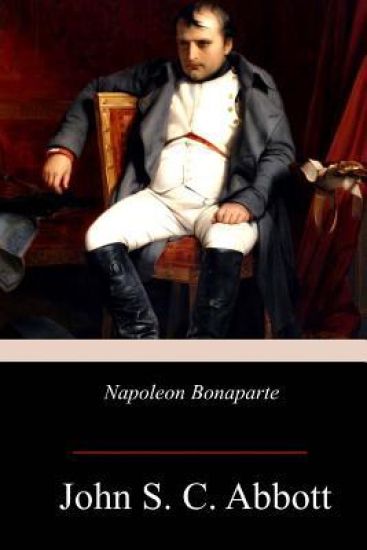
Napoleon Bonaparte

Napoleon Bonaparte

John S. C. Abbott

Createspace Independent Publishing Platform
2017
nidottu
Napoleon Bonaparte, by John S. C. Abbott, is a classic Napoleon biography and among the most definitive accounts of the life of the great French emperor and military leader. Napoleon Bonaparte (15 August 1769 - 5 May 1821) was a French military and political leader who rose to prominence during the latter stages of the French Revolution and its associated wars in Europe. This book is one of the most definitive biographies of the great man.
David Crockett: his life and adventures. By: John S. C. Abbott / Illustrated /

David Crockett: his life and adventures. By: John S. C. Abbott / Illustrated /

John S. C. Abbott

Createspace Independent Publishing Platform
2017
nidottu
John Stevens Cabot Abbott (September 19, 1805 - June 17, 1877), an American historian, pastor, and pedagogical writer, was born in Brunswick, Maine to Jacob and Betsey Abbott. He was a brother of Jacob Abbott, and was associated with him in the management of Abbott's Institute, New York City, and in the preparation of his series of brief historical biographies. Dr. Abbott graduated at Bowdoin College in 1825, prepared for the ministry at Andover Theological Seminary, and between 1830 and 1844, when he retired from the ministry in the Congregational Church, preached successively at Worcester, Roxbury and Nantucket, all in Massachusetts
The Empire of Austria

The Empire of Austria

John S C Abbott

Hansebooks
2017
pokkari
The Empire of Austria - Its rise and present power. Vol. 2 is an unchanged, high-quality reprint of the original edition of 1882. Hansebooks is editor of the literature on different topic areas such as research and science, travel and expeditions, cooking and nutrition, medicine, and other genres. As a publisher we focus on the preservation of historical literature. Many works of historical writers and scientists are available today as antiques only. Hansebooks newly publishes these books and contributes to the preservation of literature which has become rare and historical knowledge for the future.
The History of Napoleon III, Emperor of the French
The History of Napoleon III, Emperor of the French - Including a brief narrative of all the most important events which have occurred in Europe since the fall of Napoleon I until the overthrow of the second empire and the death of Napoleon III is an unchanged, high-quality reprint of the original edition of 1873. Hansebooks is editor of the literature on different topic areas such as research and science, travel and expeditions, cooking and nutrition, medicine, and other genres. As a publisher we focus on the preservation of historical literature. Many works of historical writers and scientists are available today as antiques only. Hansebooks newly publishes these books and contributes to the preservation of literature which has become rare and historical knowledge for the future.
Prussia and the Franco-Prussian War

Prussia and the Franco-Prussian War

John S C Abbott

Hansebooks
2017
pokkari
Prussia and the Franco-Prussian War - Containing a brief narrative of the origin of the kingdom, its past history, and a detailed account of the causes and results of the late war with Austria is an unchanged, high-quality reprint of the original edition of 1871. Hansebooks is editor of the literature on different topic areas such as research and science, travel and expeditions, cooking and nutrition, medicine, and other genres. As a publisher we focus on the preservation of historical literature. Many works of historical writers and scientists are available today as antiques only. Hansebooks newly publishes these books and contributes to the preservation of literature which has become rare and historical knowledge for the future.