Kirjojen hintavertailu – 12 903 724 kirjaa ja 27 kauppaa
Kirjailija
John S C Abbott
Kirjat ja teokset yhdessä paikassa: 416 kirjaa, julkaisuja vuosilta 1874–2026, suosituimpiin kuuluu Josephine. Vertaile teosten hintoja ja tarkista saatavuus suomalaisista kirjakaupoista.
Nimi esiintyy myös muodoissa: John S. C. Abbott, John S.C. Abbott
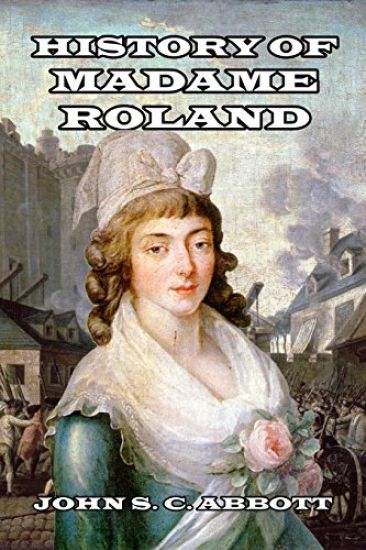
The astonishing story of one of the leading women of the French Revolution-and of her own ironic but grisly end at the guillotine-is told with typical intensity and passion by master storyteller John Abbott in this gripping account of the events leading up to the infamous Reign of Terror. Marie-Jeanne Phlippon Roland, better known as Madame Roland, and her husband, Jean-Marie Roland de la Plati re, were leading supporters of the initial ideals of equality and freedom which they presumed the French revolutionaries sought. As such, they became the leaders of what was known as the Girondist faction during those tumultuous events. The Girondists campaigned for the end of the monarchy but then found themselves at odds with the increasing violence and extremist nature of the radicals. Madame Roland began her political involvement as secretary to her husband, who was appointed minister of the interior of the government of 1792. This was a particularly dangerous post to occupy, as the radicals, still waiting to finally dispose of the French king, viewed the ministry as representing the crown, even though Madame Roland-and her husband-actively worked to persuade the king to accept the demands of the revolutionaries. Her June 1792 letter to the king, which urged him to publicly pledge his loyalty and cooperation to the new republic or face serious unrest, led to her husband's dismissal as minister. Then, as she and her husband publicly opposed the worst excesses of the ongoing Revolution, the couple became equally unpopular with the revolutionaries as well, who now regarded them as conservatives. In June 1793, Madame Roland was, along with her husband, arrested by the radical faction under the leadership of Robespierre, charged with treason and thrown into prison. Although there were no real grounds for the charge, a guilty sentence was inevitable as it became clear that the trial was part of Robespierre's plot to destroy his Girondist opposition. In November 1793, Madame Roland suffered the fate of so many other innocent people of the time, and was beheaded in public on the Place de la R volution, uttering the famous remark for which she is remembered: O Libert , que de crimes on commet en ton nom (Oh Liberty, what crimes are committed in thy name )ContentsChapter I: ChildhoodChapter II: YouthChapter III: MaidenhoodChapter IV: MarriageChapter V: The National AssemblyChapter VI: The Ministry of M. RolandChapter VII: Madame Roland and the JacobinsChapter VIII: Last Struggles of the GirondistsChapter IX: Arrest of Madame RolandChapter X: Fate of the GirondistsChapter XI: Prison LifeChapter XII: Trial and Execution of Madame Roland
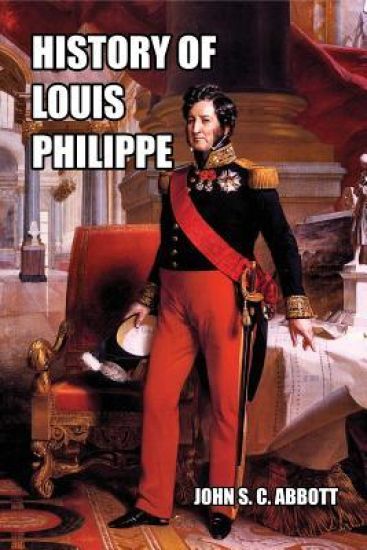
A fascinating account of the life, trials, tribulations-and ultimately failure-of one of Europe's first notable "constitutional monarchs," Louis Philippe (1773-1850). The first king to be properly elected by the National Assembly, his reign was based on the principle of union of king and people, and marked the first real shift away from the "divine right to rule" approach to kingship. This sweeping work reveals many details not generally known about this momentous change in European politics, all the while keeping the reader's attention by weaving together the story of Louis Philippe's youth, his years of exile, the dramatic events leading to his appointment as king, his extended family and relations, and finally his steady decline in popularity until his own forced abdication and exile in 1848. Regarded as a usurper by the aristocracy, but rejected by the masses because of the fact that he was made king by an assembly elected by only one hundred and fifty thousand voters-he was stalked by assassins at every step, becoming known as the "Target King." Finally, caught between the conflicting demands of the aristocracy and the 1848 revolutions, he resigned and fled into exile once again." We may search history in vain for the record of any monarch so unrelentingly harassed as was Louis Philippe from the time he ascended the throne until he was driven from it. He was irreproachable in morals, a man who had seen much of the world in all its phases, sagacious and well meaning. But he was placed in a position in which no earthly wisdom could rescue him from the direst trouble." ContentsChapter I: Origin of the House of OrleansChapter II: The ExileChapter III: Wanderings in the Old World and the NewChapter IV: The Tomb and the BridalChapter V: The RestorationChapter VI: The Death of Louis XVIII, and Reign of Charles XChapter VII: Charles X DethronedChapter VIII: The Struggles of DiplomacyChapter IX: Louis Philippe's ThroneChapter X: The Adventures of the Duchess de BerriChapter XI: The Final StruggleChapter XII: The Throne Demolished
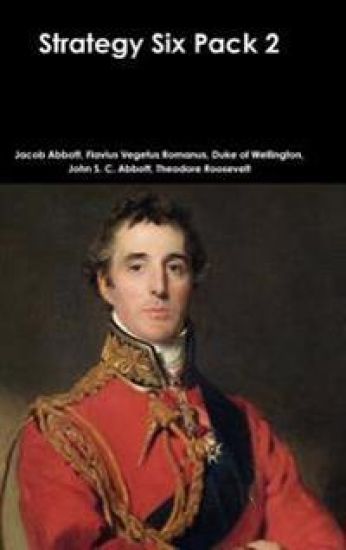
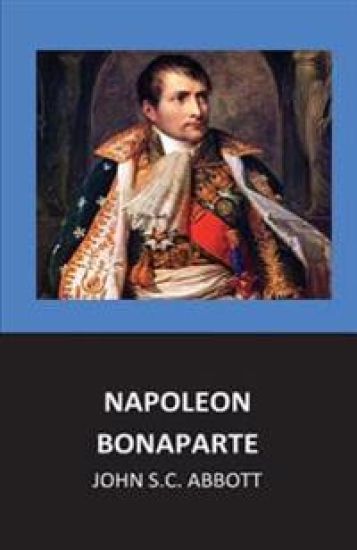
"Never interrupt your enemy when he is making a mistake." - Napoleon Bonaparte. Strategy Six Pack 2 brings together six master works for military theorists: Cleopatra by Jacob Abbott The Military Institutions of the Romans (De Re Militari) by Flavius Vegetus Renatus Alexander The Great by Jacob Abbott Napoleon Bonaparte by John S. C. Abbott Military Maxims by the Duke of Wellington The Rough Riders by Theodore Roosevelt Each classic text has been newly revised and expertly edited with notes, images and a table of contents. Two thousand years of military science distilled into one awesome eBook. "Speak softly and carry a big stick; you will go far." - Theodore Roosevelt.
Strategy Six Pack 2 brings together six master works for military theorists: Cleopatra by Jacob Abbott, The Military Institutions of the Romans by Flavius Vegetus Renatus, Alexander The Great by Jacob Abbot, Napoleon Bonaparte by John S. C. Abbott, Military Maxims by the Duke of Wellington and The Rough Riders by Theodore Roosevelt. Each classic text has been newly revised and expertly edited. Two thousand years of military science distilled into one awesome book.
Napoleon Bonaparte is an historical biography of the French Civil War General and First Consul of the French Republic. John Stevens Cabot Abbott was an American writer. He was a prolific writer of books on Christian ethics, and of histories, which helped to cultivate a popular interest in historical subjects. Napoleon was a military and political leader of France whose actions shaped European politics in the early 19th century. Bonaparte rose to prominence under the First French Republic and led successful campaigns against the First and Second Coalitions. In 1799, he staged a coup d' tat and named himself First Consul. In 1804 he crowned himself Emperor of the French.
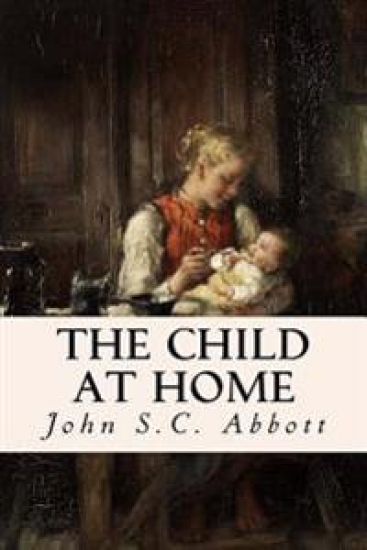
The Child at Home is a family study that is intended for the children of those families to which The Mother at Home has gone. It is prepared with the hope that it may exert an influence upon the minds of the children, in exciting gratitude for their parents' love, and in forming characters which shall ensure future usefulness and happiness.
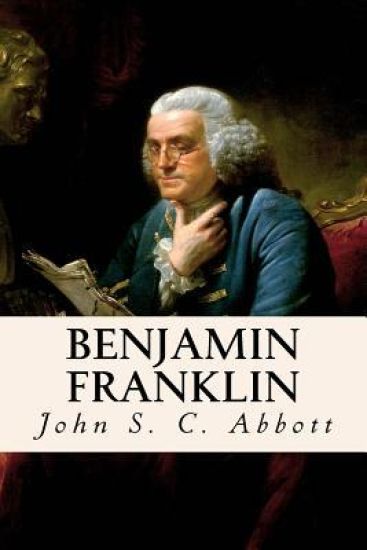
Benjamin Franklin, by Paul Elmer More, is a classic biography of the great American statesman and inventor, Ben Franklin. Benjamin Franklin FRS FRSE (January 17, 1706 O. S. January 6, 1705] 1] - April 17, 1790) was an American polymath and one of the Founding Fathers of the United States. Franklin was a leading author, printer, political theorist, politician, freemason, postmaster, scientist, inventor, humorist, civic activist, statesman, and diplomat. As a scientist, he was a major figure in the American Enlightenment and the history of physics for his discoveries and theories regarding electricity. As an inventor, he is known for the lightning rod, bifocals, and the Franklin stove, among other inventions. 2] He founded many civic organizations, including Philadelphia's fire department and the University of Pennsylvania. Franklin earned the title of "The First American" for his early and indefatigable campaigning for colonial unity, initially as an author and spokesman in London for several colonies. As the first United States Ambassador to France, he exemplified the emerging American nation. 4] Franklin was foundational in defining the American ethos as a marriage of the practical values of thrift, hard work, education, community spirit, self-governing institutions, and opposition to authoritarianism both political and religious, with the scientific and tolerant values of the Enlightenment. In the words of historian Henry Steele Commager, "In a BenFranklin could be merged the virtues of Puritanism without its defects, the illumination of the Enlightenment without its heat." 5] To Walter Isaacson, this makes Franklin "the most accomplished American of his age and the most influential in inventing the type of society America would become." Ben Franklin became a successful newspaper editor and printer in Philadelphia, the leading city in the colonies, publishing the Pennsylvania Gazette at the age of 23. He became wealthy publishing this and Poor Richard's Almanack, which he authored under the pseudonym "Richard Saunders". After 1767, he was associated with the Pennsylvania Chronicle, a newspaper that was known for its revolutionary sentiments and criticisms of British policies. He pioneered and was first president of Academy and College of Philadelphia which opened in 1751 and later became the University of Pennsylvania. He organized and was the first secretary of the American Philosophical Society and was elected president in 1769. Ben Franklin became a national hero in America as an agent for several colonies when he spearheaded an effort in London to have the Parliament of Great Britain repeal the unpopular Stamp Act. An accomplished diplomat, he was widely admired among the French as American minister to Paris and was a major figure in the development of positive Franco-American relations. His efforts proved vital for the American Revolution in securing shipments of crucial munitions from France. He was promoted to deputy postmaster-general for the British colonies in 1753, having been Philadelphia postmaster for many years, and this enabled him to set up the first national communications network. During the Revolution, he became the first United States Postmaster General. He was active in community affairs and colonial and state politics, as well as national and international affairs. From 1785 to 1788, he served as governor of Pennsylvania. He initially owned and dealt in slaves but, by the 1750s, he argued against slavery from an economic perspective and became one of the most prominent abolitionists.