Kirjojen hintavertailu – 12 903 725 kirjaa ja 27 kauppaa

Kirjailija

John Sallis

Kirjat ja teokset yhdessä paikassa: 50 kirjaa, julkaisuja vuosilta 1970–2024, suosituimpiin kuuluu Sojourns. Vertaile teosten hintoja ja tarkista saatavuus suomalaisista kirjakaupoista.

50 kirjaa

Kirjojen julkaisuvuodet: 1970–2024.

The Logos of the Sensible World

The Logos of the Sensible World

John Sallis

Indiana University Press
2019
pokkari
This volume of the collected writings of John Sallis presents a two-semester lecture course on Maurice Merleau-Ponty given at Duquesne University from 1970 to 1971. Devoted primarily to a close reading of the French philosopher's magnum opus, Phenomenology of Perception, the course begins with a detailed analysis of The Structure of Behavior. The central topics considered in the lectures include the functions of the phenomenological body; beyond realism and idealism; the structures of the lived world; spatiality, temporality, language, sexuality; and perception and knowledge. Sallis illuminates Merleau-Ponty's first two works and offers a thread to follow through developments in his later essays. Merleau-Ponty's notion of the primacy of perception and his claim that "the end of a philosophy is the account of its beginning" are woven throughout the lectures. For Sallis's part, these lectures are foundational for his extended engagement with Merleau-Ponty's The Visible and the Invisible, which was published in Sallis's Phenomenology and the Return to Beginnings.
Elemental Discourses

Elemental Discourses

John Sallis

Indiana University Press
2018
pokkari
John Sallis's thought is oriented to two overarching tasks: to bring to light the elemental in nature and to show how the imagination operates at the very center of human experience. He undertakes these tasks by analyzing a broad range of phenomena, including perception, the body, the natural world, art, space, and the cosmos. In every case, Sallis develops an original form of discourse attuned to the specific phenomenon and enacts a thorough reflection on discourse itself in its relation to voice, dialogue, poetry, and translation. Sallis's systematic investigations are complemented by his extensive interpretations of canonical figures in the history of philosophy such as Plato, Aristotle, Kant, Schelling, and Hegel and by his engagement with the most original thinkers in the areas of phenomenology, hermeneutics, and deconstruction.
Elemental Discourses

Elemental Discourses

John Sallis

Indiana University Press
2018
sidottu
John Sallis's thought is oriented to two overarching tasks: to bring to light the elemental in nature and to show how the imagination operates at the very center of human experience. He undertakes these tasks by analyzing a broad range of phenomena, including perception, the body, the natural world, art, space, and the cosmos. In every case, Sallis develops an original form of discourse attuned to the specific phenomenon and enacts a thorough reflection on discourse itself in its relation to voice, dialogue, poetry, and translation. Sallis's systematic investigations are complemented by his extensive interpretations of canonical figures in the history of philosophy such as Plato, Aristotle, Kant, Schelling, and Hegel and by his engagement with the most original thinkers in the areas of phenomenology, hermeneutics, and deconstruction.
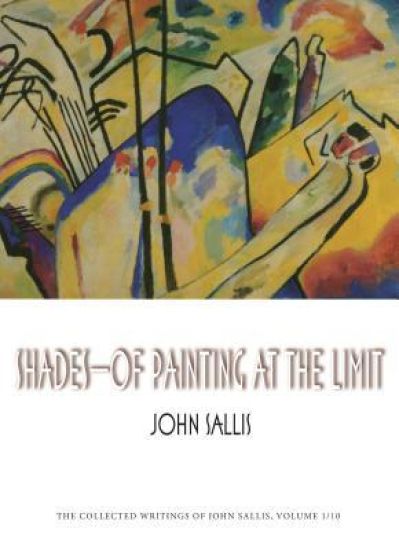
Shades—of Painting at the Limit

Shades—of Painting at the Limit

John Sallis

Indiana University Press
2017
pokkari
"[Sallis's] ideas are presented in a singular, scholarly, remarkable, captivating, conceptually rigorous, dense, and deep manner. . . . Highly recommended." —Choice "This fascinating book by one of the more original voices writing philosophy in English poses questions about the nature of the visible and invisible, sensible and intelligible." —Dennis Schmidt What is it that an artist paints in a painting? Working from paintings themselves rather than from philosophical theories, John Sallis shows how, through shades and limits, the painter renders visible the light that confers visibility on things. In his extended examination of three phases in the development of modern painting, Sallis focuses on the work of Claude Monet, Wassily Kandinsky, and Mimmo Paladino—three painters who, each in his own way, carry painting to the limit.
The Return of Nature

The Return of Nature

John Sallis

Indiana University Press
2016
sidottu
John Sallis dismantles the traditional conception of nature in this book of imagination and the cosmos. In the thought of Emerson, Hegel, and Schelling, Sallis discerns the seeds of an understanding of nature that goes against the modern technological assault on natural things and opens a space for a revitalized approach to the world. He identifies two fundamental reorientations that philosophical thought is called on to address today: the turn to the elemental in nature and the turn from nature to the cosmos at large. He traces the elusive course of the imagination, as if coming from nowhere, and describes the way in which it bears on the relation of humans to nature. Sallis's account demonstrates that a renewal of our understanding of nature is one of the prime imperatives we demand from philosophy today.
The Return of Nature

The Return of Nature

John Sallis

Indiana University Press
2016
pokkari
John Sallis dismantles the traditional conception of nature in this book of imagination and the cosmos. In the thought of Emerson, Hegel, and Schelling, Sallis discerns the seeds of an understanding of nature that goes against the modern technological assault on natural things and opens a space for a revitalized approach to the world. He identifies two fundamental reorientations that philosophical thought is called on to address today: the turn to the elemental in nature and the turn from nature to the cosmos at large. He traces the elusive course of the imagination, as if coming from nowhere, and describes the way in which it bears on the relation of humans to nature. Sallis's account demonstrates that a renewal of our understanding of nature is one of the prime imperatives we demand from philosophy today.
The Figure of Nature

The Figure of Nature

John Sallis

Indiana University Press
2016
pokkari
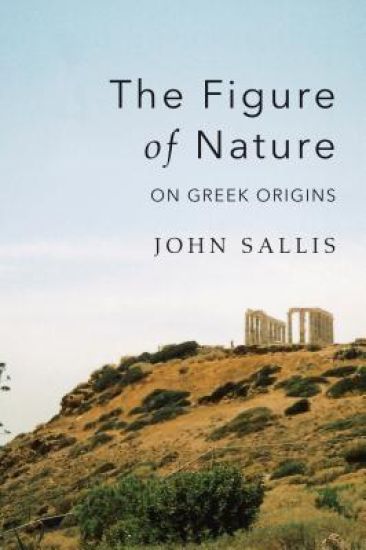
Broaching an understanding of nature in Platonic thought, John Sallis goes beyond modern conceptions and provides a strategy to have recourse to the profound sense of nature operative in ancient Greek philosophy. In a rigorous and textually based account, Sallis traces the complex development of the Greek concept of nature. Beginning with the mythical vision embodied in the figure of the goddess Artemis, he reanimates the sense of nature that informs the fragmentary discourses of Anaximenes, Heraclitus, Parmenides, and Empedocles and shows how Plato takes up pre-Socratic conceptions critically while also being transformed. Through Sallis's close reading of the Theaetetus and the Phaedo, he recovers the profound and comprehensive concept of nature in Plato's thought.
The Figure of Nature

The Figure of Nature

John Sallis

Indiana University Press
2016
sidottu
Broaching an understanding of nature in Platonic thought, John Sallis goes beyond modern conceptions and provides a strategy to have recourse to the profound sense of nature operative in ancient Greek philosophy. In a rigorous and textually based account, Sallis traces the complex development of the Greek concept of nature. Beginning with the mythical vision embodied in the figure of the goddess Artemis, he reanimates the sense of nature that informs the fragmentary discourses of Anaximenes, Heraclitus, Parmenides, and Empedocles and shows how Plato takes up pre-Socratic conceptions critically while also being transformed. Through Sallis's close reading of the Theaetetus and the Phaedo, he recovers the profound and comprehensive concept of nature in Plato's thought.
Senses of Landscape

Senses of Landscape

John Sallis

Northwestern University Press
2015
nidottu
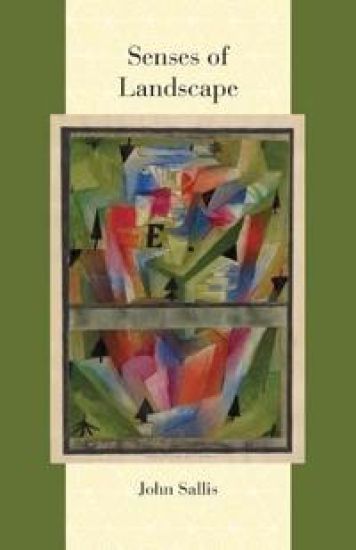
Beginning with the assertion that earth is the elemental place that grants an abode to humans and to other living things, in Senses of Landscape the philosopher John Sallis turns to landscapes, and in particular to their representation in painting, to present a power­ful synthetic work. Senses of Landscape proffers three kinds of analyses, which, though distinct, continually intersect in the course of the book. The first consists of extended analyses of distinctive landscapes from four exemplary painters, Paul Cezanne, Caspar David Friedrich, Paul Klee, and Guo Xi. Sallis then turns to these art­ists’ own writings—treatises, essays, and letters—about art in general and landscape painting in particular, and he sets them into a philosophical context. The third kind of analysis draws both on Sallis’s theoretical writings and on the canonical texts in the philosophy of art (Kant, Schelling, Hegel, and Heidegger). These analyses present for a wide audience a profound sense of landscape and of the earthly abode of the human.
Senses of Landscape

Senses of Landscape

John Sallis

Northwestern University Press
2015
sidottu
Beginning with the assertion that earth is the elemental place that grants an abode to humans and to other living things, in Senses of Landscape the philosopher John Sallis turns to landscapes, and in particular to their representation in painting, to present a power­ful synthetic work. Senses of Landscape proffers three kinds of analyses, which, though distinct, continually intersect in the course of the book. The first consists of extended analyses of distinctive landscapes from four exemplary painters, Paul Cezanne, Caspar David Friedrich, Paul Klee, and Guo Xi. Sallis then turns to these art­ists’ own writings—treatises, essays, and letters—about art in general and landscape painting in particular, and he sets them into a philosophical context. The third kind of analysis draws both on Sallis’s theoretical writings and on the canonical texts in the philosophy of art (Kant, Schelling, Hegel, and Heidegger). These analyses present for a wide audience a profound sense of landscape and of the earthly abode of the human.
Light Traces

Light Traces

John Sallis

Indiana University Press
2014
pokkari

Halvin toimitettuna 23,00 €

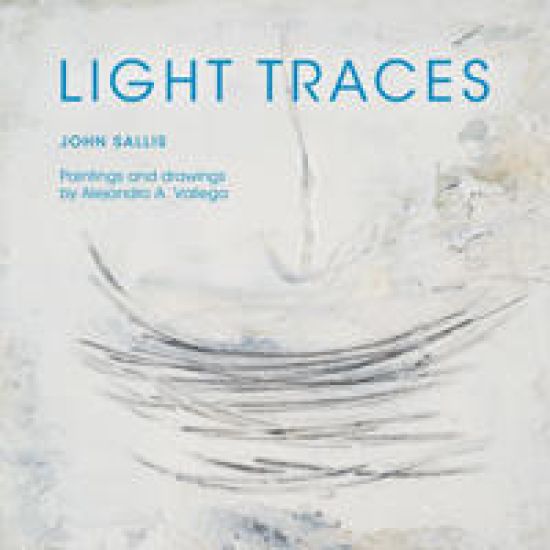
What is the effect of light as it measures the seasons? How does light leave different traces on the terrain—on a Pacific Island, in the Aegean Sea, high in the Alps, or in the forest? John Sallis considers the expansiveness of nature and the range of human vision in essays about the effect of light and luminosity on place. Sallis writes movingly of nature and the elements, employing an enormous range of philosophical, geographical, and historical knowledge. Paintings and drawings by Alejandro A. Vallega illuminate the text, accentuating the interaction between light and environment.
Logic of Imagination

Logic of Imagination

John Sallis

Indiana University Press
2012
pokkari
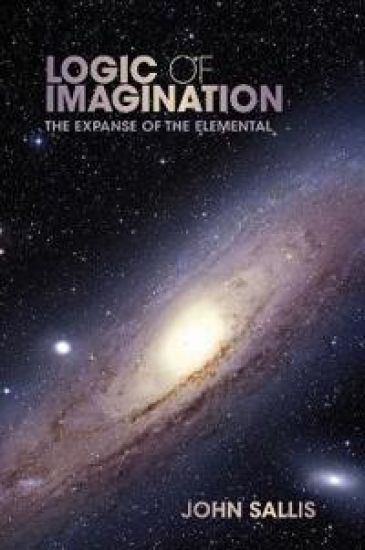
The Shakespearean image of a tempest and its aftermath forms the beginning as well as a major guiding thread of Logic of Imagination. Moving beyond the horizons of his earlier work, Force of Imagination, John Sallis sets out to unsettle the traditional conception of logic, to mark its limits, and, beyond these limits, to launch another, exorbitant logic—a logic of imagination. Drawing on a vast range of sources, including Plato, Aristotle, Kant, Hegel, Nietzsche, and Freud, as well as developments in modern logic and modern mathematics, Sallis shows how a logic of imagination can disclose the most elemental dimensions of nature and of human existence and how, through dialogue with contemporary astrophysics, it can reopen the project of a philosophical cosmology.
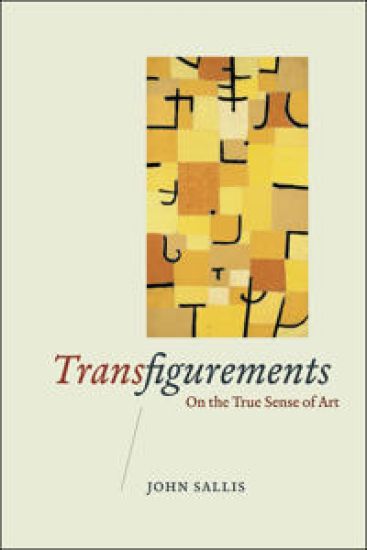
Transfigurements

Transfigurements

John Sallis

University of Chicago Press
2011
nidottu
"Transfigurements" develops a framework for thinking about art through innovative readings of some of the most important philosophical writing on the subject by Kant, Hegel, and Heidegger. Sallis exposes new layers in their texts and theories while also marking their limits. By doing so, his aim is to show that philosophy needs to attend to art directly. Consequently, Sallis also addresses a wide range of works of art, including paintings by Raphael, Monet, and Klee; Shakespeare's comedies; and the music of Beethoven, Schubert, Mahler, and Tan Dun. Through these interpretations, he puts forth a compelling new elaboration of the philosophy of art.
Einbildungskraft

Einbildungskraft

John Sallis

Mohr Siebeck
2010
sidottu
John Sallis untersucht den Kerngedanken der Einbildungskraft und zeigt, daß deren Kraft auf alle Bereiche des menschlichen Lebens Einfluß hat. Aus dem Blickwinkel der gegenwärtigen Dekonstuktion des klassischen Gegensatzes zwischen der intelligiblen und der sinnlichen Wirklichkeit setzt er sich kritisch mit der gesamten Geschichte der Philosophie auseinander. Dadurch, daß er das Wesen der Einbildungskraft hinterfragt, wendet sich seine Untersuchung dem Sinnlichen und dem Elementaren in der Natur zu. Er greift auf die Methoden der radikalisierten Phänomenologie und der Hermeneutik zurück, um ein ganz neues Konzept der Einbildungskraft zu erarbeiten. So wird deutlich, daß die Einbildungskraft eine zentrale Rolle für das Verständnis des Wesens von Zeit, Eigenen und Fremden sowie der Kunst spielt. Dies wird an Werken von Shakespeare, Keats und Hölderlin veranschaulicht. Der Autor zeigt, daß die Einbildungskraft, sobald sie von jeglicher Subjektivität befreit ist, die Momente unserer Wahrnehmung sinnlicher Dinge zusammenbringt und gleichzeitig die Wahrnehmung für Licht, Atmosphäre, Erde und Himmel öffnet.
The Verge of Philosophy

The Verge of Philosophy

John Sallis

University of Chicago Press
2009
nidottu
"The Verge of Philosophy" is both an exploration of the limits of philosophy and a memorial for John Sallis' longtime friend and interlocutor Jacques Derrida. The centerpiece of the book is an extended examination of three sites in Derrida's thought: his interpretation of Heidegger regarding the privileging of the question; his account of the Platonic figure of the good; and his interpretation of Plato's discourse on the crucial notion of the chora, the originating space of the universe. Sallis' reflections are given added weight - even poignancy - by his discussion of his many public and private philosophical conversations with Derrida over the decades of their friendship. This volume thus simultaneously serves to mourn and remember a friend and to push forward the deeply searching discussions that lay at the very heart of that friendship.
Transfigurements

Transfigurements

John Sallis

University of Chicago Press
2008
sidottu
"Transfigurements" develops a framework for thinking about art through innovative readings of some of the most important philosophical writing on the subject by Kant, Hegel, and Heidegger. Sallis exposes new layers in their texts and theories while also marking their limits. By doing so, his aim is to show that philosophy needs to attend to art directly. Consequently, Sallis also addresses a wide range of works of art, including paintings by Raphael, Monet, and Klee; Shakespeare's comedies; and the music of Beethoven, Schubert, Mahler, and Tan Dun. Through these interpretations, he puts forth a compelling new elaboration of the philosophy of art.
The Verge of Philosophy

The Verge of Philosophy

John Sallis

University of Chicago Press
2007
sidottu
"The Verge of Philosophy" is both an exploration of the limits of philosophy and a memorial for John Sallis' longtime friend and interlocutor Jacques Derrida. The centerpiece of the book is an extended examination of three sites in Derrida's thought: his interpretation of Heidegger regarding the privileging of the question; his account of the Platonic figure of the good; and his interpretation of Plato's discourse on the crucial notion of the chora, the originating space of the universe. Sallis' reflections are given added weight - even poignancy - by his discussion of his many public and private philosophical conversations with Derrida over the decades of their friendship. This volume thus simultaneously serves to mourn and remember a friend and to push forward the deeply searching discussions that lay at the very heart of that friendship.
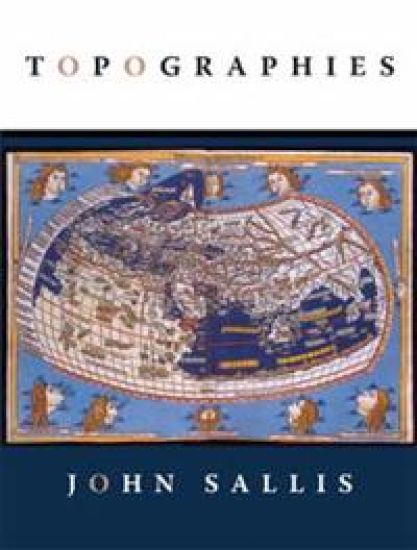
Topographies

Topographies

John Sallis

Indiana University Press
2006
pokkari
"Philosophers have become increasingly concerned with the places and spaces of our Earth. They are finally coming to acknowledge their situatedness, and to be grateful for it. Sallis's wonderful book evokes in word and image the power of places that bring him—and now us—to think, feel, imagine, and write." —David Farrell Krell, DePaul University How does it feel to get caught in a violent storm in the high Alps? What does a visitor think while ascending the sacred way in Delphi? How does a rock garden in Kyoto challenge one's sense of self? What comes out of a face-to-face encounter with deer in the woods? In Topographies, John Sallis invites readers to open their imaginations to the power of evocative places. Written in the style of a travel diary, Sallis responds reflectively and receptively to experiences that are beyond the carefully prepared tidbits of the exotic that often characterize tourism. On this venture into the foreign, Sallis discloses a unique power for drawing from place as he allows himself and readers to be drawn into it. Forty illustrations grace the book and enhance our sense of what it means to understand and connect to our world.
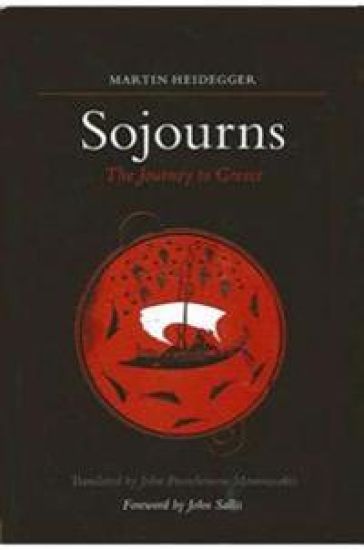
Sojourns

Sojourns

Martin Heidegger; John Sallis

State University of New York Press
2005
pokkari
Heidegger's philosophical journal, written during his first visit to Greece in 1962, and appearing here in English for the first time. The story of Martin Heidegger's enigmatic search for truth in the land that inspired his philosophy, Aufenthalte (Sojourns) is the philosophical journal that he kept during his first visit to Greece in the spring of 1962. Available here for the first time in English, this invaluable translation offers not only a rare and intimate view of its author, but also a chance to observe Heidegger working with his philosophical concepts outside the lecture hall, applying them in concrete cultural and historical contexts. Here we find Heidegger in dialogue with Greek history itself as it has left traces in the land, and as it has been recorded on various monuments and works of art.
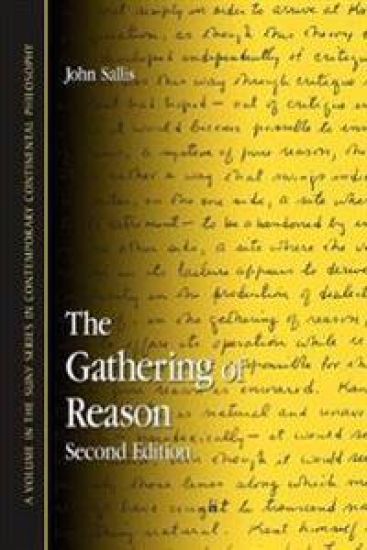
The Gathering of Reason

The Gathering of Reason

John Sallis

State University of New York Press
2005
pokkari
This second edition of the author's classic study of Kant's First Critique includes a new preface and extensive afterword. This second edition of The Gathering of Reason expands on John Sallis's classic study of Kant's First Critique. This study examines the relation of imagination to reason and to human knowledge and action in general. Moving simultaneously at several different hermeneutical levels, Sallis carries out an interpretation of the Transcendental Dialectic of Kant's Critique of Pure Reason. Although, in contrast to the Analytic, the Dialectic seldom refers explicitly to imagination, Sallis shows that the concept of reason in the Dialectic requires the complicity of imagination. Sallis demonstrates that for Kant, reason alone does not suffice for bringing before our minds the metaphysical ideas of the soul, the world, and God; rather it is through the force of imagination that these ideas are brought forth and made effective. A new preface situates the book in relation to Sallis's later work, and an extensive afterword focuses on Kant and the Greeks.