Kirjailija
John Stuart Mill
Kirjat ja teokset yhdessä paikassa: 889 kirjaa, julkaisuja vuosilta 1850–2027, suosituimpiin kuuluu Sosialismin hyödyt ja haitat. Vertaile teosten hintoja ja tarkista saatavuus suomalaisista kirjakaupoista.
889 kirjaa
Kirjojen julkaisuvuodet: 1850–2027.
Since its first publication in 1859, few works of political philosophy have provoked such continuous controversy as John Stuart Mill’s On Liberty, a passionate argument on behalf of freedom of self-expression. This classic work is now available in a new edition that also includes essays by distinguished scholars in a range of fields. The book begins with a biographical essay by David Bromwich and an interpretative essay by George Kateb. Then Jean Bethke Elshtain, Owen Fiss, Judge Richard A. Posner, and Jeremy Waldron present commentaries on the pertinence of Mill’s thinking to current debates. They discuss, for example, the uses of authority and tradition, the shifting legal boundaries of free speech and free action, the relation of personal liberty to market individualism, and the tension between the right to live as one pleases and the right to criticize anyone’s way of life.

Including three of his most famous and important essays, Utilitarianism, On Liberty, and Essay on Bentham, along with formative selections from Jeremy Bentham and John Austin, this volume provides a uniquely perspicuous view of Mill's ethical and political thought. Contains Mill's most famous and influential works, Utilitarianism and On Liberty as well as his important Essay on Bentham. Uses the 1871 edition of Utilitarianism, the last to be published in Mill's lifetime. Includes selections from Bentham and John Austin, the two thinkers who most influenced Mill. Introduction written by Mary Warnock, a highly respected figure in 20th-century ethics in her own right. Provides an extensive, up-to-date bibliography with the best scholarship on Mill, Bentham and Utilitarianism.
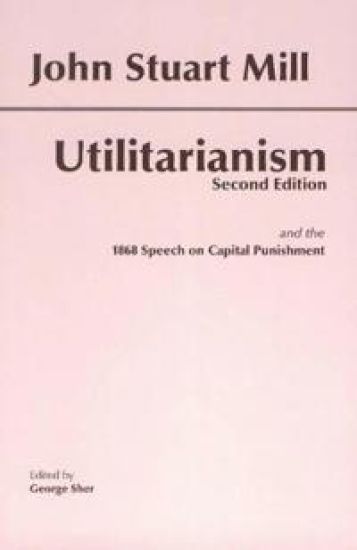
This expanded edition of John Stuart Mill's Utilitarianism includes the text of his 1868 speech to the British House of Commons defending the use of capital punishment in cases of aggravated murder. The speech is significant both because its topic remains timely and because its arguments illustrate the applicability of the principle of utility to questions of large-scale social policy.
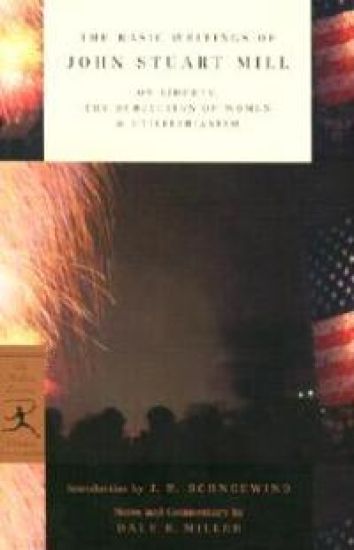
The writings of John Stuart Mill have become the cornerstone of political liberalism. Collected for the first time in this volume are Mill’s three seminal and most widely read works: On Liberty, The Subjection of Women, and Utilitarianism. A brilliant defense of individual rights versus the power of the state, On Liberty is essential reading for anyone interested in political thought and theory. As Bertrand Russell reflected, “On Liberty remains a classic . . . the present world would be better than it is, if [Mill’s] principles were more respected.” This Modern Library Paperback Classics edition includes newly commissioned endnotes and commentary by Dale E. Miller, and an index.
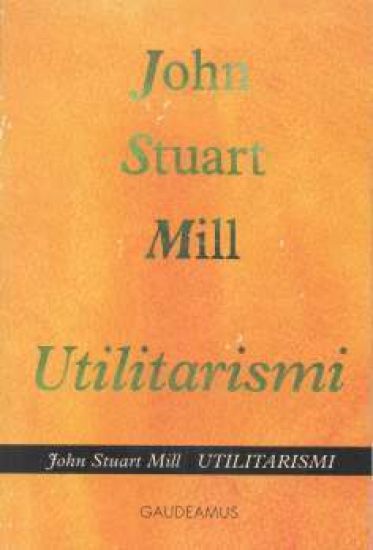
J. S. Millin (1806-1873) moraalifilosofinen pääteos Utilitarismi on yksi länsimaisen eettisen ajattelun merkkipaaluista. Se tarjoaa klassisen filosofisen muotoilun näkemyksestä, että tekojen moraalinen arvo määräytyy niiden tuottaman onnellisuuden tai hyvinvoinnin mukaan ja että onnellisuus koostuu nautintojen runsaudesta ja tuskien puutteesta. Mill esittelee myös tunnetun ajatuksensa nautintojen välisistä laadullisista eroista. Lisäksi teos sisältää Millin kriittisen esseen Jeremy Benthamista sekä suomentajan laajan jälkipuheen. ”On parempi olla tyytymätön ihminen kuin tyytyväinen sika, ja on parempi olla tyytymätön Sokrates kuin tyytyväinen typerys.” - JOHN STUART MILL
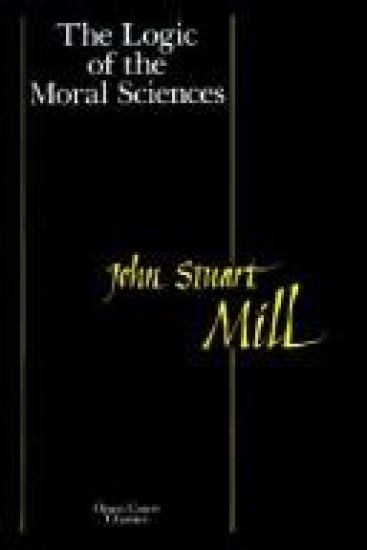
This books is a reprint of the Sixth Book of Mill's A System of Logic ratiocinative and inductive, being a connected view of the principles of evidence and the methods of scientific investigation, first published in 1843. The text has been reset from the eighth edition (1872), the last edition published in Mill's lifetime.
The Collected Works of John Stuart Mill took thirty years to complete and is acknowledged as the definitive edition of J. S. Mill and as one of the finest works editions ever completed. Mill's contributions to philosophy, economics, and history, and in the roles of scholar, politician and journalist can hardly be overstated and this edition remains the only reliable version of the full range of Mill's writings. Each volume contains extensive notes, a new introduction and an index. Many of the volumes have been unavailable for some time, but the Works are now again available, both as a complete set and as individual volumes.
Förtrycket av kvinnorna / Kvinnornas befrielse
John Stuart Mill; Harriet Taylor Mill
Bokförlaget Nya Doxa
1995
sidottu
John Stuart Mills The Subjection of Women från 1869, och dess pendang Harriet Taylor Mills The Enfranchisement of Women från 1851 har kommit att bli klassiska texter i kampen mot kvinnoförtrycket. Paret Taylor Mill tillhörde tidens radikala kretsar och ville genom sina skrifter påverka den samtida opinionen.
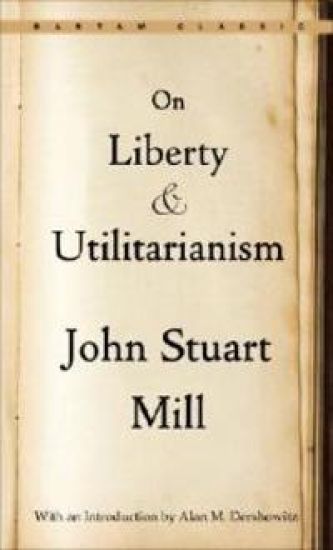
Together, these two essays mark the philosophic cornerstone of democratic morality and represent a thought-provoking search for the true balance between the rights of the individual and the power of the state. Thoroughly schooled in the principles of the utilitarian movement founded by Jeremy Bentham, John Stuart Mill nevertheless brings his own unique intellectual energy to issues such individual freedom, equality, authority, happiness, justice, and virtue. On Liberty is Mill's famous examination of the nature of individuality and its crucial role in any social system that expected to remain creative and vital. Utilitarian brilliantly expounds a pragmatic ethic based on one controversial proposition: actions are right only if they promote the common good and wrong if they do not. While much of Mill's thinking was eventually adopted by socialists, it is in today's democratic societies--with their troubling issues of crime, freedom of speech, and the boundaries of personal liberty--that his work resounds most powerfully.
On Liberty and Utilitarianism
John Stuart Mill
Everyman's Library
1992
sidottu
Halvin toimitettuna 20,30 €
How can the individual be both free and happy? What are freedom and happiness and how do they relate to each other? These are the questions that Mill aims to answer from both a political and a philosophical perspective.
In this powerful work, John Stuart Mill sets forth representative government as the most sensible compromise between unreflective rule by the masses and the self-indulgence of the few. The reader may sense that Mill is being pulled in opposing directions: steadfastly committed to majority rule with minority rights while at the same time being just enough of an aristocrat to believe that the masses need examplars to emulate. On Representative Government is one of the most compelling political essays of the 19th century.
This volume contains more than 300 letters by John Stuart Mill that have been discovered since the publication of Earlier Letters in 1962 and Later Letters in 1972. The collection covers a vast rangle of topics, and includes three groups of letters of special interest: a series of notes to Henry Cole, friend and ally of Mill, dealing among other things with the disposition of the London and Westminster Review; the full versions of letters to Theodor Gomperz, Mill's leading German disciple and translator, which had been thought destroyed; and, most exceptionally, recently found internal correspondence in the Examiner's Office of the East India Company, which sheds new light on Mill's career. The introduction to the volume, by Marion Filipiuk, places the letters in context, gives detail about the three special groups, and outlines the history of the collection. The letters are presented in full scholarly form, with notes giving information about the texts and their provenance, and also historical and bibliographic information. An appendix provides the first published check-list of letters to Mill, with their locations. Other appendices give variant readings from the Gomperz leters, a finding list of form letters signed by Mill in the India Office Library and Records, an index of correspondents represented in this volume, an index of persons and works cited in the letters, and an analytical index.
John Stuart Mill worked for thirty-five years in the Examiner's Office of the East India Company, first as a junior clerk and finally as head of the Office. His activities there are among the least examined aspects of his career. Mill was somewhat reluctant, because of his official position, to comment publicly on the Company's affairs, but occasionally he put forwards views in essays and before parliamentary committees that alert us to important elements in his thought and career. Further, when in the aftermath of the Indian Mutiny a succession of bills was brought forward in parliament to abolish the Companty, Mill was its chief spokesman in a succession of carefully argued pamphlets that reveal even more of his views. This volume offers the first opportunity for a fill assessment of Mill's contribution, including as it does the first reprinting of the essays, parliamentary evidence, and pamphlets, and adding an appendix of an annotated record and location of his despatches.
The interests and activities of John Stuart Mill (1806–73) were so wide-ranging that even the varied subjects of thirty previously published volumes of Collected Works cannot encompass them all. In this volume are brought together diverse and interesting instances of his polymathic career, none before republished and some previously unpublished. Neatly framing Mill’s writing career are his editorial prefaces and extensive notes to Jeremy Bentham;s Rationale of Judicial Evidence (1827) and James Mill’s Analysis of the Phenomena of the Human Mind (1869). Both demonstrate his extraordinary powers of mind and diligence as well as his fealty. His constant avocation, field botany, is shown in his botanical writings, which open a window on an almost unknown activity that sustained and delighted him. Brief comments on two medical works hint at another interest. Two articles of which he was co-author demonstrate his work as editor of the London and Westminster Review, and a calendar of his contributions to the Political Economy Club provides yet another glimpse into his chosen activities and concerns. Published for the first time are Mill’s English and French wills, providing still further biographical detail.