Kirjailija
John Taylor
Kirjat ja teokset yhdessä paikassa: 372 kirjaa, julkaisuja vuosilta 1875–2026, suosituimpiin kuuluu The Western Farmer's Almanac, for the Year of our Lord. Vertaile teosten hintoja ja tarkista saatavuus suomalaisista kirjakaupoista.
372 kirjaa
Kirjojen julkaisuvuodet: 1875–2026.
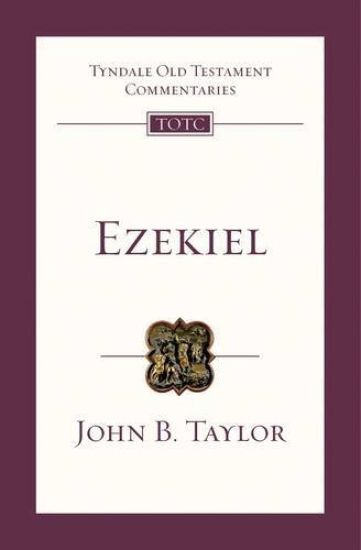
For most Bible readers Ezekiel is almost a closed book,' writes John Taylor. 'Their knowledge of him extends little further than his mysterious vision of God's chariot-throne, with its wheels within wheels, and the vision of the valley of the dry bones ... In its structure, however, if not in its thought and language, the book of Ezekiel has a basic simplicity, and its orderly framework makes it easy to analyse.' Taylor's commentary offers a portrait of the prophet, places his prophecies within their historical settings, and provides an overview of the book's contents and themes.
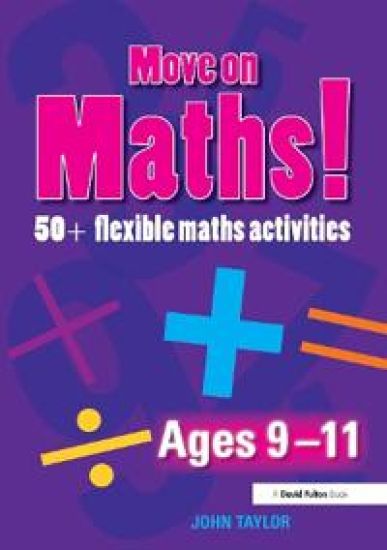
Move on Maths! offers versatile, tried and tested maths resources for nine to eleven years for you to use in the way that is most suitable for your pupils. The units give you flexible ideas, rather then prescriptive lessons and support the Renewed Primary Framework for mathematics. The PNS Framework objectives are clearly shown for every sheet, followed by unit learning outcomes, so it’s easy to choose the right worksheet to suit you and your children’s needs. contains more than fifty stand-alone photocopiable units in four strands to be used in class or as homework tasks, complete with teachers' notes and answers to help your planningbroadens understanding of four key numeracy strands from the Renewed Primary Framework: Using and applying mathematics; Understanding Shape; Measuring; Handling Datacontains a bank of short, sharp exercises, problems and fun starter activities and games to kick start your maths lesson with the whole classincludes challenges to extend your gifted and talented learners or early finisherscovers PNS Framework objectives and learning outcomes for a two year span, Year 5 and 6ideal for mixed-age classes.
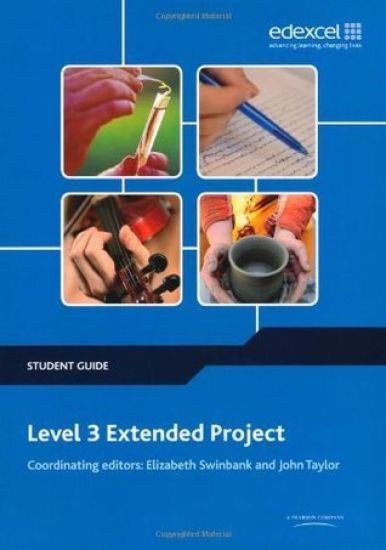
A handy Student Guide designed by Edexcel to support learners at Level 3 in any subject, enabling them to develop essential skills needed for Extended Project success.
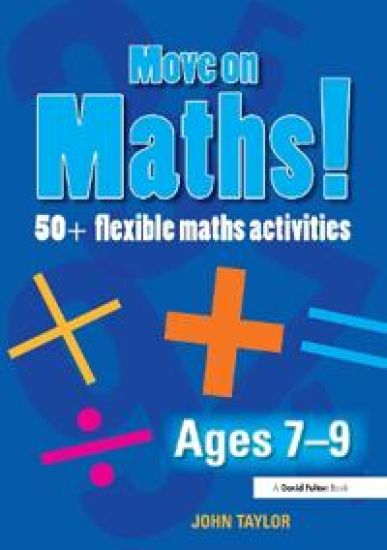
Move on Maths! offers versatile, tried and tested maths resources for 7-9 years for you to use in the way that is most suitable for your pupils. The units give you flexible ideas, rather then prescriptive lessons and support the Renewed Primary Framework for mathematics. The PNS Framework objectives are clearly shown for every sheet, followed by unit learning outcomes, so it’s easy to choose the right worksheet to suit you and your children’s needs. Contains more than fifty stand-alone photocopiable units in four strands to be used in class or as homework tasks, complete with teachers' notes and answers to help your planning Broadens understanding of four key numeracy strands from the Renewed Primary Framework: Using and applying mathematics; Understanding Shape; Measuring; Handling Data Contains a bank of short, sharp exercises, problems and fun starter activities and games to kick start your maths lesson with the whole class Includes challenges to extend your gifted and talented learners or early finishers Covers PNS Framework objectives and learning outcomes for a two year span, Year 3 and 4 Ideal for mixed-age classes
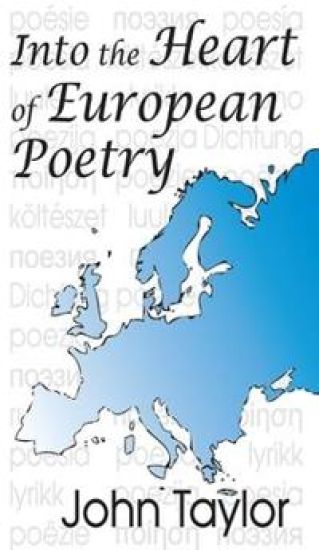
John Taylor's brilliant new book examines the work of many of the major poets who have deeply marked modern and contemporary European literature. Venturing far and wide from the France in which he has lived since the late 1970s, the polyglot writer-critic not only delves into the more widely translated literatures of Italy, Greece, Germany, and Austria, but also discovers impressive and overlooked work in Slovenia, Bosnia, Hungary, Finland, Norway, and the Netherlands in this book that ranges over nearly all of Europe, including Russia. While providing this stimulating and far-ranging critical panorama, Taylor brings to light key themes of European writing: the depth of everyday life, the quest of the thing-in-itself, metaphysical aspiration and anxiety, the dialectics of negativity and affirmation, subjectivity and self-effacement, and uprootedness as a category that is as ontological as it is geographical, historical, political, or cultural. The book pays careful attention to the intersection of writing and history (or politics), as several poets featured here have faced the Second World War, the Holocaust, Communism, the fall of Communism, or the war in the former Yugoslavia. Taylor gives the work of renowned, upcoming, and still little-known poets a thorough look, all the while scrutinizing recent translations of their verse. He highlights several poets who are also masters of the prose poem. He includes a few novelists who have fashioned a particularly original kind of poetic prose, that stylistic category that has proved so difficult for critics to define. Into the Heart of European Poetry should be of immediate interest to any reader curious about the aesthetic and philosophical ideas underlying major trends of contemporary European writing. In a day and age when much too little is translated and thus known about foreign literature, and when Europeans themselves are pondering the common denominators of their own culture, this book is as indispensable as it is engaging.
John Taylor's brilliant new book examines the work of many of the major poets who have deeply marked modern and contemporary European literature. Venturing far and wide from the France in which he has lived since the late 1970s, the polyglot writer-critic not only delves into the more widely translated literatures of Italy, Greece, Germany, and Austria, but also discovers impressive and overlooked work in Slovenia, Bosnia, Hungary, Finland, Norway, and the Netherlands in this book that ranges over nearly all of Europe, including Russia. While providing this stimulating and far-ranging critical panorama, Taylor brings to light key themes of European writing: the depth of everyday life, the quest of the thing-in-itself, metaphysical aspiration and anxiety, the dialectics of negativity and affirmation, subjectivity and self-effacement, and uprootedness as a category that is as ontological as it is geographical, historical, political, or cultural. The book pays careful attention to the intersection of writing and history (or politics), as several poets featured here have faced the Second World War, the Holocaust, Communism, the fall of Communism, or the war in the former Yugoslavia. Taylor gives the work of renowned, upcoming, and still little-known poets a thorough look, all the while scrutinizing recent translations of their verse. He highlights several poets who are also masters of the prose poem. He includes a few novelists who have fashioned a particularly original kind of poetic prose, that stylistic category that has proved so difficult for critics to define. Into the Heart of European Poetry should be of immediate interest to any reader curious about the aesthetic and philosophical ideas underlying major trends of contemporary European writing. In a day and age when much too little is translated and thus known about foreign literature, and when Europeans themselves are pondering the common denominators of their own culture, this book is as indispensable as it is engaging.
The Battle Of The Standards: The Ancient, Of Four Thousand Years, Against The Modern, Of The Last Fifty Years, The Less Perfect Of The Two (1864)
John Taylor
KESSINGER PUBLISHING, LLC
2008
nidottu
The Identity Of Junius: With A Distinguished Living Character Established (1818)
John Taylor
KESSINGER PUBLISHING, LLC
2008
nidottu