Kirjailija
John Taylor
Kirjat ja teokset yhdessä paikassa: 372 kirjaa, julkaisuja vuosilta 1875–2026, suosituimpiin kuuluu The Western Farmer's Almanac, for the Year of our Lord. Vertaile teosten hintoja ja tarkista saatavuus suomalaisista kirjakaupoista.
372 kirjaa
Kirjojen julkaisuvuodet: 1875–2026.
John Taylor jumpstarts pupil and teacher enthusiasm for ICT learning with this refreshing range of simple to use activities, games and creative lesson starters. Encouraging and developing creative uses of basic ICT software, Jumpstart ICT widens teachers’ horizons, bringing ICT to the fore as an exciting resource and classroom tool. Key aims of the book include:making learning ICT techniques fun for both teacher and pupildeveloping the ICT confidence of non-specialist teachersproviding opportunities for non-specialist teachers to learn and demonstrate specific techniquesencouraging pupils to creatively explore ways to achieve tasksgiving pupils opportunities to apply their learning of techniques through task races.@text:Aimed at all KS2 teachers and KS3 ICT teachers seeking to refresh their ICT teaching, these quick ‘starter’ activities will provide variety and challenge to a typical ICT lesson.
The Massoretic Text and the Ancient Versions of the Book of Micah
John Taylor
Kessinger Pub
2006
pokkari
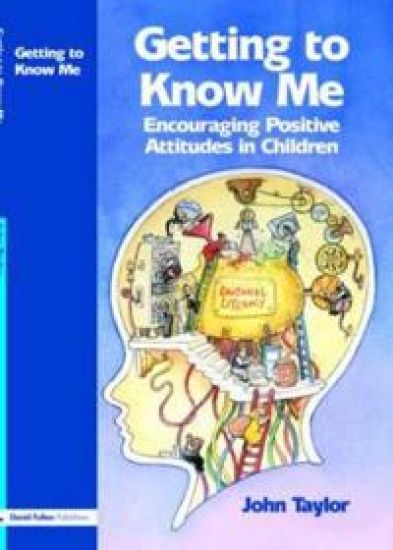
The lessons in Getting to Know Me aim to foster positive attitudes towards self and others. The book contains worksheets, games, cards and study grids to assist teachers in their day-to-day work in the classroom. All worksheets come with teachers notes suggesting ways of presenting the lessons, and can be used as a structured learning programme, as part of a 1:1 lesson, or to address problems as they arise. Lessons cover:self-imageself esteemsocial skillsanger managementhandling and resolving conflict. For all teachers in mainstream schools and pupil referral units, particularly SENCos, pastoral staff, behaviour management personnel, mentors and LSAs, and teachers of personal, social and health education.
A new collection of 120 passages from Greek authors. The first half contains twenty adapted passages building up to GCSE level, thirty lightly adapted ones for AS, and ten easy unadapted passages to introduce the translation of verse. The second half contains thirty prose and thirty verse passages of A2 standard, unadapted except by minor omissions. Vocabulary beyond the core assumed at each level is glossed.
The mummified forms, along with beautifully painted masks and coffins, of animals, scribes, viziers, noblemen and women, priests, pharaohs and queens from the Pharaonic period, all feature in this miniature but magnificent introduction to the world of the Ancient Egyptian mummy.
Health Expenditure, Income and Health Status Among Indigenous and Other Australians
Matthew Gray; John Taylor; Boyd Hunter
ANU Press
2004
nidottu
Aboriginal Population Profiles for Development Planning in the Northern East Kimberley
John Taylor
ANU Press
2004
nidottu
Sketch of Moral Philosophy or an Essay to Demonstrate the Principles of Virtue and Religion upon a New, Natural and Easy Plan 1760
John Taylor
Kessinger Pub
2003
pokkari
Examination into and an Elucidation of the Great Principle of the Mediation and Atonement of Our Lord and Savior Jesus Christ 1882
John Taylor
Kessinger Pub
2003
pokkari
Numerical analysis explains why numerical computations work, or fail. This book is divided into four parts. Part I starts Part I starts with a guided tour of floating number systems and machine arithmetic. The exponential and the logarithm are constructed from scratch to present a new point of view on questions well-known to the reader, and the needed knowledge of linear algebra is summarized. Part II starts with polynomial approximation (polynomial interpolation, mean-square approximation, splines). It then deals with Fourier series, providing the trigonometric version of least square approximations, and one of the most important numerical algorithms, the fast Fourier transform. Any scientific computation program spends most of its time solving linear systems or approximating the solution of linear systems, even when trying to solve non-linear systems. Part III is therefore about numerical linear algebra, while Part IV treats a selection of non-linear or complex problems: resolution of linear equations and systems, ordinary differential equations, single step and multi-step schemes, and an introduction to partial differential equations. The book has been written having in mind the advanced undergraduate students in mathematics who are interested in the spice and spirit of numerical analysis. The book does not assume previous knowledge of numerical methods. It will also be useful to scientists and engineers wishing to learn what mathematics has to say about the reason why their numerical methods work - or fail.
Numerical analysis explains why numerical computations work, or fail. This book is divided into four parts. Part I starts with a guided tour of floating number systems and machine arithmetic. The exponential and the logarithm are constructed from scratch to present a new point of view on questions well-known to the reader, and the needed knowledge of linear algebra is summarized. Part II starts with polynomial approximation (polynomial interpolation, mean-square approximation, splines). It then deals with Fourier series, providing the trigonometric version of least square approximations, and one of the most important numerical algorithms, the fast Fourier transform. Any scientific computation program spends most of its time solving linear systems or approximating the solution of linear systems, even when trying to solve non-linear systems. Part III is therefore about numerical linear algebra, while Part IV treats a selection of non-linear or complex problems: resolution of linear equations and systems, ordinary differential equations, single step and multi-step schemes, and an introduction to partial differential equations. The book has been written having in mind the advanced undergraduate students in mathematics who are interested in the spice and spirit of numerical analysis. The book does not assume previous knowledge of numerical methods. It will also be useful to scientists and engineers wishing to learn what mathematics has to say about the reason why their numerical methods work - or fail.
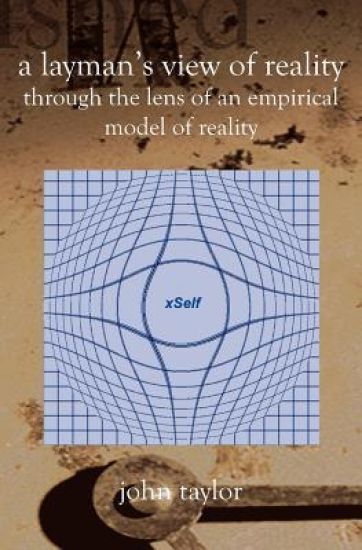
A Layman's View of Reality: (Through The Lens Of An Empirical Model Of Reality)
John Taylor
Booksurge Publishing
2002
nidottu
This book is written to meet the requirements of the 2001 GCSE PE specifications for all awarding bodies. New features link the application of PE theory to practical work and sports performance. An integrated approach develops knowledge and understanding and improves revision techniques. This book enhances understanding and confidence by reinforcing the information with clear and attractive diagrams, tables and photographs.