

Kirjailija
John Wilson
Kirjat ja teokset yhdessä paikassa: 345 kirjaa, julkaisuja vuosilta 1909–2026, suosituimpiin kuuluu John Franklin. Vertaile teosten hintoja ja tarkista saatavuus suomalaisista kirjakaupoista.
345 kirjaa
Kirjojen julkaisuvuodet: 1909–2026.
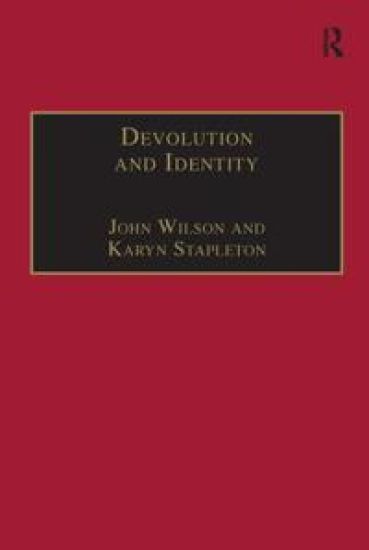
The identity implications have been overlooked from discussions on devolution, which have tended to focus on constitutional, legal and financial issues. In this volume, contributors from the communities under discussion explore the ways in which devolution is experienced and understood by citizens from the devolved regions of the UK. The additional inclusion of a US perspective allows parallels with American federalism to be drawn out. Informed by a discursive/textual/communication approach to identity, Devolution and Identity offers a range of theoretical and empirical perspectives, including both macro- and micro-level analyses of devolution and identity processes. Themes covered include discourse and interaction, national identity, flags and emblems, gender representation, newspaper letters, regional marketing, language ideology, history and culture, artistic practice, minority identities and political ideology. In exploring the impact of the devolution process on both individual and group identities, this book provides a richer understanding of the devolution process itself, as well as a new understanding of the relationship between socio-political structures and identity.


In recent years, for reasons connected to the organization of the industry, technical developments, and major safety concerns, rail human factors has grown in importance at an international level. Despite its importance, however, supporting literature has been largely restricted to specialist journal publications and technical reports. Rail Human Factors addresses this imbalance by providing the first fully comprehensive overview of the area. The volume includes contributions from leading ergonomists, psychologists, sociologists, management scientists and engineers whose common theme is to investigate, understand and design for people on the railways, including staff, passengers and the general public. Every area of ergonomics/human factors is covered: physical design of work and equipment in maintenance; cognitive ergonomics in driving, signalling and control; organizational and social ergonomics in the way teams are formed, plans are made and organizations are structured and run. Topics covered include: ¢ Systems views of rail human factors ¢ Driver models and performance ¢ Train and cab design ¢ Network and train control systems, including ERTMS ¢ Signals and signal ¢ SPADS ¢ Signalling and control center design ¢ Signaller performance ¢ Control center interfaces ¢ Workload, situation awareness, team working ¢ Human error and reliability ¢ Timetabling and planning ¢ Maintenance planning and work ¢ Safety climate and safety culture ¢ Passenger comfort and behaviour ¢ Station design ¢ Public information systems ¢ Level crossings ¢ Trespass and vandalism ¢ Ergonomics standards and guidelines ¢ Human Factors integration The book is the definitive guide for all those concerned with making railways safer, more reliable, of higher quality and more efficient. It will be essential reading for policy-makers, researchers and industry around the world.

Birdwatching Walks in Bowland, now in its third edition, reveals the many treasures in the Forest of Bowland that can be enjoyed by all. Readers can choose from over 30 lovely routes, all with straightforward directions, easy-to-follow maps and useful birding tips.
The Importance of the Proof-Reader A Paper Read Before the Club of Odd Volumes In Boston
John Wilson
Createspace Independent Publishing Platform
2016
nidottu
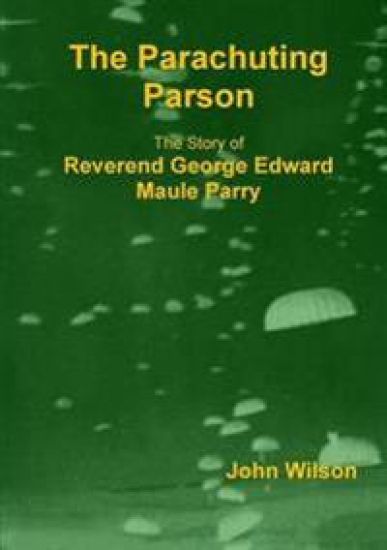
George Edward Maule Parry was Curate to the Parish of St John the Baptist, Leytonstone from June 1938 to June 1940. In February 1941 he joined the Royal Army Chaplains Department and became a Chaplain to the Forces. After serving in West Africa for nearly two years he returned to England and was assigned to the recently created 7th Battalion of the Parachute Regiment. He parachuted into France on D-Day and was killed in Benouville in the action to secure and hold the Pegasus and Horsa bridges. This is his story.

Adult Coloring Book Compilation Of Good Vibes Patterns: Mandala Coloring Book
John Wilson
Createspace Independent Publishing Platform
2016
nidottu
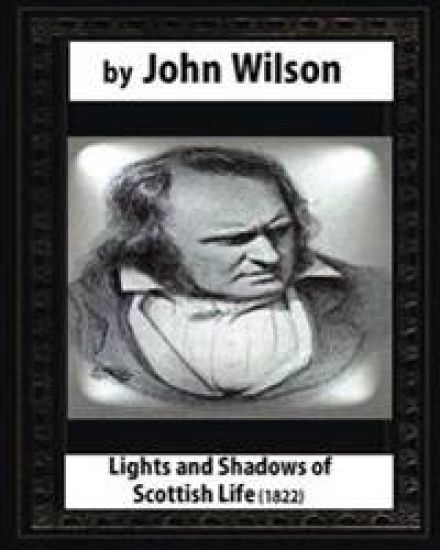
Lights and Shadows of Scottish Life (1822), by John Wilson
John Wilson
Createspace Independent Publishing Platform
2016
nidottu
This book provides a pragmatic analysis of presidential language. Pragmatics is concerned with "meaning in context," or the relationship between what we say and what we mean. John Wilson explores the various ways in which U. S. Presidents have used language within specific social contexts to achieve specific objectives. This includes obfuscation, misdirection, the use of metaphor or ambiguity, or in some cases simply lying. He focuses on six presidents: John F. Kennedy, Richard M. Nixon, Ronald W. Reagan, William F. Clinton, George W. Bush, and Barack H. Obama. These presidents cover most of the last half of the twentieth century, and the first decade of the twenty first century, and each has been associated with a specific linguistic quality. John F. Kennedy was famed for his quality of oratory, Nixon for his manipulative use of language, Reagan for his gift of telling stories, Clinton for his ability to engage the public and to linguistically turn arguments and descriptions in particular directions. Bush, on the other hand, was famed for his inability to use language appropriately, and Obama returns us to the rhetorical flourishes of early Kennedy. In the case of each president, a range of specific examples are explored in order to highlight the ways in which a pragmatic analysis may provide an insight into presidential language. In many cases, what the president says is not necessarily what the president means.
This book provides a pragmatic analysis of presidential language. Pragmatics is concerned with "meaning in context," or the relationship between what we say and what we mean. John Wilson explores the various ways in which U. S. Presidents have used language within specific social contexts to achieve specific objectives. This includes obfuscation, misdirection, the use of metaphor or ambiguity, or in some cases simply lying. He focuses on six presidents: John F. Kennedy, Richard M. Nixon, Ronald W. Reagan, William F. Clinton, George W. Bush, and Barack H. Obama. These presidents cover most of the last half of the twentieth century, and the first decade of the twenty first century, and each has been associated with a specific linguistic quality. John F. Kennedy was famed for his quality of oratory, Nixon for his manipulative use of language, Reagan for his gift of telling stories, Clinton for his ability to engage the public and to linguistically turn arguments and descriptions in particular directions. Bush, on the other hand, was famed for his inability to use language appropriately, and Obama returns us to the rhetorical flourishes of early Kennedy. In the case of each president, a range of specific examples are explored in order to highlight the ways in which a pragmatic analysis may provide an insight into presidential language. In many cases, what the president says is not necessarily what the president means.

The Isle of Palms and Other Poems
John Wilson
Createspace Independent Publishing Platform
2015
nidottu
"The Isle of Palms and Other Poems", John Wilson. John Wilson was a Scottish advocate, literary critic and author (1785-1854)..
Recreations of Christopher North - Volume I
John Wilson
Createspace Independent Publishing Platform
2015
nidottu
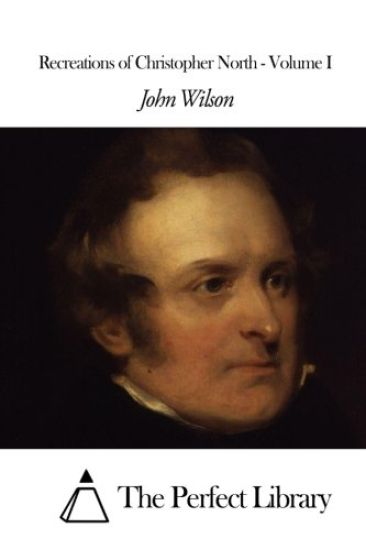
"Recreations of Christopher North - Volume I", John Wilson. John Wilson was a Scottish advocate, literary critic and author (1785-1854)..

Recreations of Christopher North - Volume II
John Wilson
Createspace Independent Publishing Platform
2015
nidottu
"Recreations of Christopher North - Volume II", John Wilson. John Wilson was a Scottish advocate, literary critic and author (1785-1854)..

Woodrow, the dog, came into this world two months before his mother, Wags, left this world. From a litter of ten puppies, he remained unclaimed as his owner prepared to move, leaving no choice but to take him. As they settled into their new surroundings together, they spent time riding in the pick-up truck and walking around the lake. Woodrow liked to travel and over the course of his nearly sixteen year life, he and his owner enjoyed sharing highway time. This close relationship forged a deep bond between Woodrow and his owner, such that after Woodrow's worldly departure, his owner was inspired to pay him tribute in a poem, which in turn inspired this book.
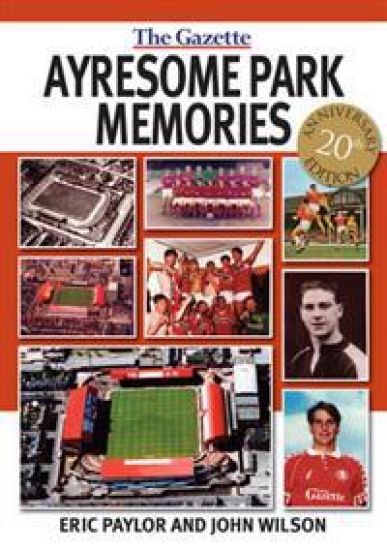

Exclusive Groom Speeches: Speeches to Spellbind Your Audience
John Wilson
Createspace Independent Publishing Platform
2014
nidottu


The Lost Solar System of the Ancients Discovered V1
John Wilson
Literary Licensing, LLC
2014
nidottu