Kirjojen hintavertailu – 12 859 828 kirjaa ja 27 kauppaa

Kirjailija

Jon Stewart

Kirjat ja teokset yhdessä paikassa: 63 kirjaa, julkaisuja vuosilta 1996–2026, suosituimpiin kuuluu The Daily Show with Jon Stewart Presents America (the Book): A Citizen's Guide to Democracy Inaction. Vertaile teosten hintoja ja tarkista saatavuus suomalaisista kirjakaupoista.

63 kirjaa

Kirjojen julkaisuvuodet: 1996–2026.

The Emergence of Subjectivity in the Ancient and Medieval World
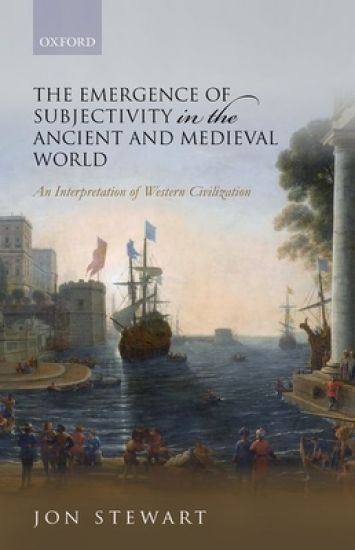
The Emergence of Subjectivity in the Ancient and Medieval World: An Interpretation of Western Civilization represents a combination of different genres: cultural history, philosophical anthropology, and textbook. It follows a handful of different but interrelated themes through more than a dozen texts that were written over a period of several millennia and, by means of an analysis of these texts, presents a theory of the development of Western civilization from antiquity to the Middle Ages. The main line of argument traces the various self-conceptions of different cultures as they developed historically, reflecting different views of what it is to be human. The thesis of the volume is that through examination of these changes we can discern the gradual emergence of what we today call inwardness, subjectivity, and individual freedom. As human civilization took its first tenuous steps, it had a very limited conception of the individual. Instead, the dominant principle was that of the wider group: the family, clan, or people. Only in the course of history did the idea of what we now know as individuality begin to emerge, and it took millennia for this idea to be fully recognized and developed. The conception of human beings as having a sphere of inwardness and subjectivity subsequently had a sweeping impact on all aspects of culture, including philosophy, religion, law, and art: indeed, this notion largely constitutes what is today referred to as modernity. It is easy to lose sight of the fact that this modern conception of human subjectivity was not simply something given, but rather the result of a long process of historical and cultural development.
Understanding Econometrics

Understanding Econometrics

Jon Stewart

CRC Press Inc
2019
nidottu
Originally published in 1976 and with second edition published in 1984. This book established itself as the first genuinely introductory text on econometric methods, assuming no formal background on the part of the reader. The second edition maintains this distinctive feature. Fundamental concepts are carefully explained and, where possible, techniques are developed by verbal reasoning rather than formal proof. It provides all the material for a basic course. and is also ideal for a student working alone. Very little knowledge of maths and statistics is assumed, and the logic of statistical method is carefully stated. There are numerous exercises, designed to help the student assess individual progress. Methods are described with computer solutions in mind and the author shows how a variety of different calculations can be performed with relatively simple programs. This new edition also includes much new material - statistical tables are now included and their use carefully explained.
Faust, Romantic Irony, and System

Faust, Romantic Irony, and System

Jon Stewart

Museum Tusculanum Press
2019
sidottu
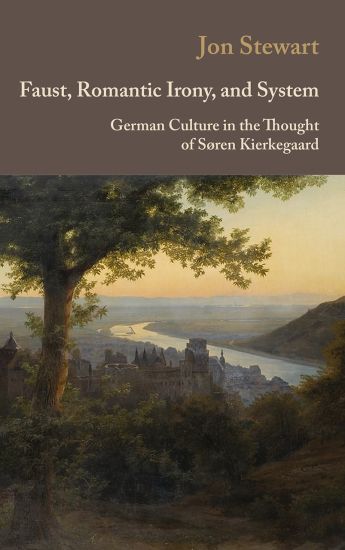
Kierkegaard readers are familiar with his dogged polemic against Hegelianism, his critique of Friedrich von Schlegels Romantic irony, and his visit to Schellings lectures in Berlin. However, these are only a few well-known examples of a much deeper relation of influence and inspiration. Kierkegaard read German fluently and was interested in many different authors and thinkers from the German-speaking countries. The auction catalogue of his personal library reveals a wealth of works in German from a number of different fields. Given his famous criticisms of the Hegelians, Schlegel, and Schelling, one might be tempted to believe that Kierkegaard was anti-German. But this is clearly not the case since he had high praise for some German thinkers such as Hamann, Lessing and Trendelenburg. The present work is dedicated to an exploration of Kierkegaards relation to different aspects of Germanophone culture. Its goal is to gain a better appreciation of the importance of his various German sources for his thought. The points of contact are so numerous that it can truly be said that if it were not for the influence of German culture, Kierkegaard would not have been Kierkegaard and the Danish Golden Age would not have been the Golden Age.
Hegel's Interpretation of the Religions of the World

Hegel's Interpretation of the Religions of the World

Jon Stewart

Oxford University Press
2018
sidottu
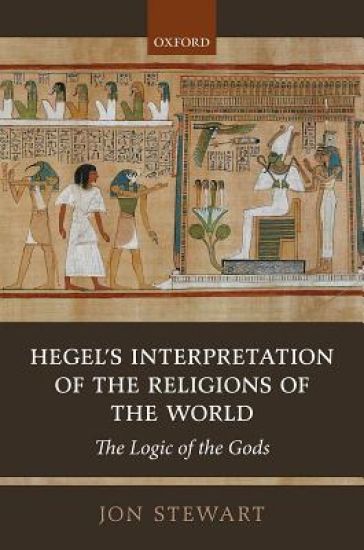
In his Lectures on the Philosophy of Religion, Hegel treats the religions of the world under the rubric "the determinate religion." This is a part of his corpus that has traditionally been neglected since scholars have struggled to understand what philosophical work it is supposed to do. In Hegel's Interpretation of the Religions of the World, Jon Stewart argues that Hegel's rich analyses of Buddhism, Hinduism, Zoroastrianism, Judaism, Egyptian and Greek polytheism, and the Roman religion are not simply irrelevant historical material, as is often thought. Instead, they play a central role in Hegel's argument for what he regards as the truth of Christianity. Hegel believes that the different conceptions of the gods in the world religions are reflections of individual peoples at specific periods in history. These conceptions might at first glance appear random and chaotic, but there is, Hegel claims, a discernible logic in them. Simultaneously, a theory of mythology, history, and philosophical anthropology, Hegel's account of the world religions goes far beyond the field of philosophy of religion. The controversial issues surrounding his treatment of the non-European religions are still very much with us today and make his account of religion an issue of continued topicality in the academic landscape of the twenty-first century.
Understanding Econometrics

Understanding Econometrics

Jon Stewart

CRC Press Inc
2018
sidottu
Originally published in 1976 and with second edition published in 1984. This book established itself as the first genuinely introductory text on econometric methods, assuming no formal background on the part of the reader. The second edition maintains this distinctive feature. Fundamental concepts are carefully explained and, where possible, techniques are developed by verbal reasoning rather than formal proof. It provides all the material for a basic course. and is also ideal for a student working alone. Very little knowledge of maths and statistics is assumed, and the logic of statistical method is carefully stated. There are numerous exercises, designed to help the student assess individual progress. Methods are described with computer solutions in mind and the author shows how a variety of different calculations can be performed with relatively simple programs. This new edition also includes much new material - statistical tables are now included and their use carefully explained.
Søren Kierkegaard

Søren Kierkegaard

Jon Stewart

Oxford University Press
2018
nidottu
Søren Kierkegaard: Subjectivity, Irony, and the Crisis of Modernity examines the thought of Søren Kierkegaard, a unique figure, who has freeired, provoked, fascinated, and irritated people ever since he walked the streets of Copenhagen. At the end of his life, Kierkegaard said that the only model he had for his work was the Greek philosopher Socrates. This work takes this statement as its point of departure. Jon Stewart explores what Kierkegaard meant by this and to show how different aspects of his writing and argumentative strategy can be traced back to Socrates. The main focus is The Concept of Irony, which is a key text at the beginning of Kierkegaard's literary career. Although it was an early work, it nevertheless played a determining role in his later development and writings. Indeed, it can be said that it laid the groundwork for much of what would appear in his later famous books such as Either/Or and Fear and Trembling.
Volume 12, Tome III: Kierkegaard's Influence on Literature, Criticism and Art
While Kierkegaard is primarily known as a philosopher or religious thinker, his writings have also been used extensively by literary writers, critics and artists. This use can be traced in the work of major cultural figures not just in Denmark and Scandinavia but also in the wider world. They have been attracted to his creative mixing of genres, his complex use of pseudonyms, his rhetoric and literary style, and his rich images, parables and allegories. The present volume documents this influence in the different language groups and traditions. Tome III investigates the works of Swedish and Norwegian writers and artists inspired by Kierkegaard. In Sweden the novelist Victoria Benedictsson made use of Kierkegaard during the period of the so-called Modern Breakthrough, as did the playwright August Strindberg. Later Swedish writers have continued to draw on his thought, such as Selma Lagerlof, Lars Ahlin, Lars Gyllensten, and Carl-Henning Wijkmark. The Norwegian reception of Kierkegaard also began remarkably early and was shaped by the leading names in Norwegian cultural life. Despite his coy responses to questions about his relation to Kierkegaard, Henrik Ibsen clearly seems to have been inspired by the Dane in works such as Brand. Norwegian writer and poet Bjornstjerne Bjornson, who was influenced by the Modern Breakthrough movement, was also deeply inspired by Kierkegaard. Finally, the celebrated Norwegian artist Edvard Munch (1863-1944) closely studied key Kierkegaardian concepts such as anxiety, and his influence is notable in his iconic paintings such as The Scream.
Volume 12, Tome II: Kierkegaard's Influence on Literature, Criticism and Art
While Kierkegaard is primarily known as a philosopher or religious thinker, his writings have also been used extensively by literary writers, critics and artists worldwide who have been attracted to his creative mixing of genres, his complex use of pseudonyms, his rhetoric and literary style, and his rich images, parables, and allegories. The goal of the present volume is to document this influence in different language groups and traditions. Tome II is dedicated to the use of Kierkegaard by later Danish writers. Almost from the beginning Kierkegaard’s works were standard reading for these authors. Danish novelists and critics from the Modern Breakthrough movement in the 1870s were among the first to make extensive use of his writings. These included the theoretical leader of the movement, the critic Georg Brandes, who wrote an entire book on Kierkegaard, and the novelists Jens Peter Jacobsen and Henrik Pontoppidan. The next generation of writers from the turn of the century and through the First World War also saw in Kierkegaard important points of inspiration. These included Ernesto Dalgas and Harald Kidde, who used elements of Kierkegaard’s thought in their novels. Modern Danish writers such as Karen Blixen, Martin A. Hansen, and Villy Sørensen have continued to incorporate Kierkegaard into their works. There can be no doubt that Kierkegaard has indelibly stamped his name on Danish literature.
Volume 13: Kierkegaard's Influence on the Social Sciences
Kierkegaard has long been known as a philosopher and theologian, but his contributions to psychology, anthropology and sociology have also made an important impact on these fields. In many of the works of his complex authorship, Kierkegaard presents his intriguing and unique vision of the nature and mental life of human beings individually and collectively. The articles featured in the present volume explore the reception of Kierkegaard's thought in the social sciences. Of these fields Kierkegaard is perhaps best known in psychology, where The Concept of Anxiety and The Sickness unto Death have been the two most influential texts. With regard to the field of sociology, social criticism, or social theory, Kierkegaard's Literary Review of Two Ages has also been regarded as offering valuable insights about some important dynamics of modern society..
Volume 12, Tome IV: Kierkegaard's Influence on Literature, Criticism and Art
While Kierkegaard is primarily known as a philosopher or religious thinker, his writings have also been used extensively by literary writers, critics and artists. This use can be traced in the work of major cultural figures not just in Denmark and Scandinavia but also in the wider world. They have been attracted to his creative mixing of genres, his complex use of pseudonyms, his rhetoric and literary style, and his rich images, parables, and allegories. The present volume documents this influence in the different language groups and traditions. Tome IV examines Kierkegaard’s surprisingly extensive influence in the Anglophone world of literature and art, particularly in the United States. His thought appears in the work of the novelists Walker Percy, James Baldwin, Flannery O’Connor, William Styron, Don Delillo, and Louise Erdrich. He has also been used by the famous American literary critics, George Steiner and Harold Bloom. The American composer Samuel Barber made use of Kierkegaard in his musical works. Kierkegaard has also exercised an influence on British and Irish letters. W. H. Auden sought in Kierkegaard ideas for his poetic works, and the contemporary English novelist David Lodge has written a novel Therapy, in which Kierkegaard plays an important role. Cryptic traces of Kierkegaard can also be found in the work of the famous Irish writer James Joyce.
Volume 12, Tome V: Kierkegaard's Influence on Literature, Criticism and Art
While Kierkegaard is primarily known as a philosopher or religious thinker, his writings have also been used extensively by literary writers, critics and artists. This use can be traced in the work of major cultural figures not just in Denmark and Scandinavia but also in the wider world. They have been attracted to his creative mixing of genres, his complex use of pseudonyms, his rhetoric and literary style, and his rich images, parables, and allegories. The present volume documents this influence in the different language groups and traditions. Tome V treats the work of a heterogeneous group of writers from the Romance languages and from Central and Eastern Europe. Kierkegaard has been particularly important for Spanish literature: the Argentine writers Jorge Luis Borges, Leonardo Castellani, and Ernesto Sábato, the Mexican writer Carlos Fuentes, and the Spanish essayist and philosopher María Zambrano were all inspired to varying degrees by him. The Dane also appears in the work of Romanian writer Max Blecher, while the Portuguese author Fernando Pessoa was almost certainly inspired by Kierkegaard’s use of pseudonyms. Kierkegaard has also influenced diverse literary figures from Central and Eastern Europe. His influence appears in the novels of the contemporary Hungarian authors Péter Nadas and Péter Esterházy, the work of the Russian writer and literary critic, Mikhail Bakhtin, the Polish writer Witold Gombrowicz and the Czech novelist Ivan Klíma. Tome V also examines how Kierkegaard’s treatment of the story of Abraham and Isaac in Fear and Trembling interested the Polish-born Israeli novelist Pinhas Sadeh.
Volume 12, Tome I: Kierkegaard's Influence on Literature, Criticism and Art
While Kierkegaard is primarily known as a philosopher or religious thinker, his writings have also been used extensively by literary writers, critics and artists worldwide who have been attracted to his creative mixing of genres, his complex use of pseudonyms, his rhetoric and literary style, and his rich images, parables, and allegories. The goal of the present volume is to document this influence in different language groups and traditions. Tome I explores Kierkegaard’s influence on literature and art in the Germanophone world. He was an important source of inspiration for German writers such as Theodor Fontane, Thomas Mann, Rainer Maria Rilke, Alfred Andersch, and Martin Walser. Kierkegaard’s influence was particularly strong in Austria during the generation of modernist authors such as Rudolf Kassner, Karl Kraus, Robert Musil, and Hermann Broch. Due presumably in part to the German translations of Kierkegaard in the Austrian cultural journal Der Brenner, Kierkegaard continued to be used by later figures such as the novelist and playwright, Thomas Bernhard. His thought was also appropriated in Switzerland through the works of Max Frisch and Friedrich Dürrenmatt. The famous Czech author Franz Kafka identified personally with Kierkegaard’s love story with Regine Olsen and made use of his reflections on this and other topics.
Volume 1, Tome I: Kierkegaard and the Bible - The Old Testament
Exploring Kierkegaard's complex use of the Bible, the essays in this volume use source-critical research and tools ranging from literary criticism to theology and biblical studies, to situate Kierkegaard's appropriation of the biblical material in his cultural and intellectual context. The contributors seek to identify the possible sources that may have influenced Kierkegaard's understanding and employment of Scripture, and to describe the debates about the Bible that may have shaped, perhaps indirectly, his attitudes toward Scripture. They also pay close attention to Kierkegaard's actual hermeneutic practice, analyzing the implicit interpretive moves that he makes as well as his more explicit statements about the significance of various biblical passages. This close reading of Kierkegaard's texts elucidates the unique and sometimes odd features of his frequent appeals to Scripture. This volume in the series devotes one tome to the Old Testament and a second tome to the New Testament. Tome I considers the canonically disputed literature of the Apocrypha. Although Kierkegaard certainly cited the Old Testament much less frequently than he did the New, passages and themes from the Old Testament do occupy a position of startling importance in his writings. Old Testament characters such as Abraham and Job often play crucial and even decisive roles in his texts. Snatches of Old Testament wisdom figure prominently in his edifying literature. The vocabulary and cadences of the Psalms saturate his expression of the range of human passions from joy to despair. The essays in this first tome seek to elucidate the crucial rhetorical uses to which he put key passages from the Old Testament, the sources that influenced him to do this, and his reasons for doing so.
Volume 18, Tome III: Kierkegaard Secondary Literature
In recent years interest in the thought of Kierkegaard has grown dramatically, and with it the body of secondary literature has expanded so quickly that it has become impossible for even the most conscientious scholar to keep pace. The problem of the explosion of secondary literature is made more acute by the fact that much of what is written about Kierkegaard appears in languages that most Kierkegaard scholars do not know. Kierkegaard has become a global phenomenon, and new research traditions have emerged in different languages, countries and regions. The present volume is dedicated to trying to help to resolve these two problems in Kierkegaard studies. Its purpose is, first, to provide book reviews of some of the leading monographic studies in the Kierkegaard secondary literature so as to assist the community of scholars to become familiar with the works that they have not read for themselves. The aim is thus to offer students and scholars of Kierkegaard a comprehensive survey of works that have played a more or less significant role in the research. Second, the present volume also tries to make accessible many works in the Kierkegaard secondary literature that are written in different languages and thus to give a glimpse into various and lesser-known research traditions. The six tomes of the present volume present reviews of works written in Catalan, Chinese, Czech, Danish, Dutch, English, Finnish, French, Galician, German, Greek, Hebrew, Hungarian, Italian, Japanese, Norwegian, Polish, Portuguese, Romanian, Russian, Slovak, Spanish, and Swedish.
Volume 18, Tome II: Kierkegaard Secondary Literature
In recent years interest in the thought of Kierkegaard has grown dramatically, and with it the body of secondary literature has expanded so quickly that it has become impossible for even the most conscientious scholar to keep pace. The problem of the explosion of secondary literature is made more acute by the fact that much of what is written about Kierkegaard appears in languages that most Kierkegaard scholars do not know. Kierkegaard has become a global phenomenon, and new research traditions have emerged in different languages, countries and regions. The present volume is dedicated to trying to help to resolve these two problems in Kierkegaard studies. Its purpose is, first, to provide book reviews of some of the leading monographic studies in the Kierkegaard secondary literature so as to assist the community of scholars to become familiar with the works that they have not read for themselves. The aim is thus to offer students and scholars of Kierkegaard a comprehensive survey of works that have played a more or less significant role in the research. Second, the present volume also tries to make accessible many works in the Kierkegaard secondary literature that are written in different languages and thus to give a glimpse into various and lesser-known research traditions. The six tomes of the present volume present reviews of works written in Catalan, Chinese, Czech, Danish, Dutch, English, Finnish, French, Galician, German, Greek, Hebrew, Hungarian, Italian, Japanese, Norwegian, Polish, Portuguese, Romanian, Russian, Slovak, Spanish, and Swedish.
Volume 18, Tome I: Kierkegaard Secondary Literature
In recent years interest in the thought of Kierkegaard has grown dramatically, and with it the body of secondary literature has expanded so quickly that it has become impossible for even the most conscientious scholar to keep pace. The problem of the explosion of secondary literature is made more acute by the fact that much of what is written about Kierkegaard appears in languages that most Kierkegaard scholars do not know. Kierkegaard has become a global phenomenon, and new research traditions have emerged in different languages, countries and regions. The present volume is dedicated to trying to help to resolve these two problems in Kierkegaard studies. Its purpose is, first, to provide book reviews of some of the leading monographic studies in the Kierkegaard secondary literature so as to assist the community of scholars to become familiar with the works that they have not read for themselves. The aim is thus to offer students and scholars of Kierkegaard a comprehensive survey of works that have played a more or less significant role in the research. Second, the present volume also tries to make accessible many works in the Kierkegaard secondary literature that are written in different languages and thus to give a glimpse into various and lesser-known research traditions. The six tomes of the present volume present reviews of works written in Catalan, Chinese, Czech, Danish, Dutch, English, Finnish, French, Galician, German, Greek, Hebrew, Hungarian, Italian, Japanese, Norwegian, Polish, Portuguese, Romanian, Russian, Slovak, Spanish, and Swedish.
Søren Kierkegaard

Søren Kierkegaard

Jon Stewart

Oxford University Press
2015
sidottu
Søren Kierkegaard: Subjectivity, Irony, and the Crisis of Modernity examines the thought of Søren Kierkegaard, a unique figure, who has inspired, provoked, fascinated, and irritated people ever since he walked the streets of Copenhagen. At the end of his life, Kierkegaard said that the only model he had for his work was the Greek philosopher Socrates. This work takes this statement as its point of departure. Jon Stewart explores what Kierkegaard meant by this and to show how different aspects of his writing and argumentative strategy can be traced back to Socrates. The main focus is The Concept of Irony, which is a key text at the beginning of Kierkegaard's literary career. Although it was an early work, it nevertheless played a determining role in his later development and writings. Indeed, it can be said that it laid the groundwork for much of what would appear in his later famous books such as Either/Or and Fear and Trembling.
Volume 15, Tome VI: Kierkegaard's Concepts

Volume 15, Tome VI: Kierkegaard's Concepts

Steven M. Emmanuel; William McDonald; Jon Stewart

Routledge
2015
sidottu
Kierkegaard’s Concepts is a comprehensive, multi-volume survey of the key concepts and categories that inform Kierkegaard’s writings. Each article is a substantial, original piece of scholarship, which discusses the etymology and lexical meaning of the relevant Danish term, traces the development of the concept over the course of the authorship, and explains how it functions in the wider context of Kierkegaard’s thought. Concepts have been selected on the basis of their importance for Kierkegaard’s contributions to philosophy, theology, the social sciences, literature and aesthetics, thereby making this volume an ideal reference work for students and scholars in a wide range of disciplines.
The Cultural Crisis of the Danish Golden Age

The Cultural Crisis of the Danish Golden Age

Jon Stewart

Museum Tusculanum Press
2015
sidottu
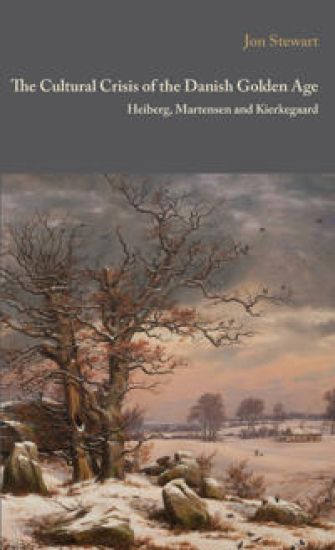
The Danish Golden Age spanned a period of time that saw a number of different kinds of crisis: political, economic and cultural. Events such as the French Revolution, the Napoleonic wars, the national bankruptcy in 1813, the Revolution of 1848 and the first Schleswig War radically transformed Danish society. The many changes that took place at this time made it a dynamic period in which artists, poets, philosophers, and religious thinkers were constantly enjoined to reassess the current situation. Some of Denmark's greatest luminaries, such Johan Ludvig Heiberg, Hans Lassen Martensen and Søren Kierkegaard, articulated the nature of the crisis and proposed different solutions to it. The present work traces the different aspects and dimensions of this crisis by means of a series of case studies. It shows how the perception of the crisis was a kind of spirit that haunted many of the intellectuals and artists of the period. But far from being something negative or destructive, it was a motivating and stimulating force that helped to make the Golden Age what is was. It made artists and thinkers more willing to break with the past and seek new solutions and approaches. Thus it is argued that the crisis can be seen as one of the central defining elements of what we know as Danish Golden Age culture. But the present work is not a purely historical study since it is shown that many of the key elements of the crisis can still be found in our modern world today. Heiberg's diagnosis of the period as suffering from relativism, subjectivism and nihilism sounds strikingly familiar to the modern reader. When seen in this manner, the Danish Golden Age becomes profoundly interesting and relevant for the broad spectrum of problems of modernity.
Volume 17: Kierkegaard's Pseudonyms

Volume 17: Kierkegaard's Pseudonyms

Katalin Nun; Jon Stewart

Routledge
2015
sidottu
One of the elements that many readers admire in Kierkegaard’s skill as a writer is his ability to create different voices and perspectives in his works. Instead of unilaterally presenting clear-cut doctrines and theses, he confronts the reader with a range of personalities and figures who all espouse different views. One important aspect of this play of perspectives is Kierkegaard’s controversial use of pseudonyms. The present volume is dedicated to exploring the different pseudonyms and authorial voices in Kierkegaard’s writing. The articles featured here try to explore each pseudonymous author as a literary figure and to explain what kind of a person is at issue in each of the pseudonymous works. The hope is that by taking seriously each of these figures as individuals, we will be able to gain new insights into the texts which they are ostensibly responsible for.