

Kirjailija
Joseph Conrad
Kirjat ja teokset yhdessä paikassa: 2 285 kirjaa, julkaisuja vuosilta 1895–2026, suosituimpiin kuuluu Lord Jim. Vertaile teosten hintoja ja tarkista saatavuus suomalaisista kirjakaupoista.
Nimi esiintyy myös muodoissa: Joseph. Conrad
2 285 kirjaa
Kirjojen julkaisuvuodet: 1895–2026.
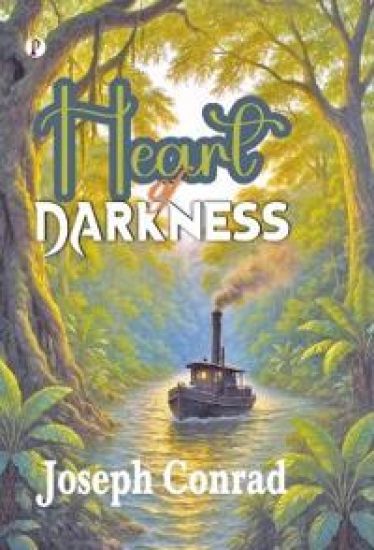
"I saw on that ivory face the expression of sombre pride, of ruthless power, of craven terror--of an intense and hopeless despair. Did he live his life again in every detail of desire, temptation, and surrender during that supreme moment of complete knowledge? He cried in a whisper at some image, at some vision--he cried out twice, a cry that was no more than a breath: The horror The horror " Heart of Darkness (1899) by Polish-British writer Joseph Conrad tells a brilliant tale of Charles Marlow's experience in the heart of Africa. Marlow narrates the tale of his voyage up the Congo River and his encounter with Mr. Kurtz, the commander of a trading post of ivory in Africa, to his fellow sailors. An inspiring and stimulating story exposing the hypocrisy of the project of colonization, this book holds a mirror to the darkness inside each one of us.



The reader follows the narrator Marlow's rather terse account of his journey down the Congo into the heart of Africa and the heart of darkness with excitement. For it is also a journey to the darkest places of the human soul. Marlow takes command of the shabby river steamer of a Belgian trading company in the late days of European colonialism. Once in Africa, he hears rumors of a Mr. Kurtz who supposedly lives and rules hundreds of miles upstream. Kurtz is the company's most successful trading agent. He supplies unimaginable amounts of ivory. Against all odds, Marlow is driven up the river to meet this man. Gr ls Classics - English Edition
The reader follows the narrator Marlow's rather terse account of his journey down the Congo into the heart of Africa and the heart of darkness with excitement. For it is also a journey to the darkest places of the human soul. Marlow takes command of the shabby river steamer of a Belgian trading company in the late days of European colonialism. Once in Africa, he hears rumors of a Mr. Kurtz who supposedly lives and rules hundreds of miles upstream. Kurtz is the company's most successful trading agent. He supplies unimaginable amounts of ivory. Against all odds, Marlow is driven up the river to meet this man. Gr ls Classics - English Edition

Joseph Conrad's autobiographical piece A Personal Record, sometimes known as a "fragment of the biography," was released in 1912. Additionally, it has been printed under the heading A Personal Record: Some Recollections and Some Recollections. Although notoriously untrustworthy and rambling in style, it is the main source of information regarding the author's life in the modern era. It talks of his childhood in Russian Poland, sailing in Marseille, the influence of his uncle Tadeusz Bobrowski, and the making of Almayer's Folly. In addition to being a moody work of art, it offers a glimpse of how Conrad wanted to be perceived by his British audience. The "Familiar Preface," which Conrad penned for it, has the frequently quoted words: "Those who read me know my opinion that the universe, the temporal world, relies on a few very simple notions; they are so simple that they must be as old as the hills. It is largely founded on the concept of fidelity, among other things." For the Doubleday collected edition of his works (released in 1920), Conrad included a new "Author's Note" to "A Personal Record" in which he detailed his friendship with the British colonial administrator and author Hugh Clifford.
Joseph Conrad first released Tales of Unrest, a collection of short stories, in 1898. Four of the five tales had previously appeared in different magazines. Conrad's stories were included in this anthology for the first time. Some of Conrad's earlier writings can be found in this collection of short stories. Four of the five tales had been published before, the first in 1898. These five short stories provide a more in-depth psychological examination of the lead characters. Tales of Unrest, a collection of these five short stories, was first released in 1898, just before Conrad's first significant novel, Heart of Darkness. These diverse tales demonstrate Conrad's capacity to delve into and reveal human character. They range from the distant and strange, where the avarice of colonial adventure is damningly exposed, to an allegedly typical London household. The introduction explores the sources and current reception of the stories as well as where Conrad wrote them in his career. The book involves the story of "The Lagoon" which is the first short story I ever wrote and marks the end of my first phase. It was conceived in the same mood as "Almayer's Folly" and "An Outcast of the Islands".
Joseph Conrad's second book, An Outcast of the Islands, which was released in 1896, was influenced by the mate-ship experience Conrad had on the steamship Vidar. The plot of the book centers on Peter Willems, a dishonest and unscrupulous character who, fleeing a scandal in Makassar, seeks refuge in a secret native hamlet but betrays his sponsors out of a passion for the tribal chief's daughter. Along with other characters from previous novels, Tom Lingard, a recurring figure in the plot, also appears in Almayer's Folly (1895) and The Rescue (1920). Many people think it is an unappreciated piece of literature. In a similar manner to his Heart of Darkness, Conrad romanticizes the jungle and its inhabitants. Outcast of the Islands, directed by Carol Reed in 1951, was based on this book. Trevor Howard played Willems, Ralph Richardson played Lingard, Robert Morley played Robert, and Wendy Hiller played Wendy. The Hollow Men by T. S. Eliot contains a statement from the novel that reads, "Life is very long."
Since the beginning of time, sound has had more power than sense. Mankind should be more impressionable than reflective. Of course, the accent needs to be corrected. the large lung, the resonant, or the delicate vocal cords. He wrote down ideas, proverbs, and musings on ivory tablets, which fate has preserved for posterity. This is more of a private concern, affecting the individual who created the work, and maybe hinted at in a book when a private remark is written in the margin of a public page. No artist can be blamed for being afraid to take a risk that only fools race to take and only geniuses dare to take on without consequence. If the outward manifestation of feeling does not change, it will inevitably fade into disdain or contempt. Even at the expense of success, having a sense of decency is simply having a sense of one's own dignity, which is inextricably linked to the dignity of one's profession. All objectives are acceptable, with the exception of those that capitalize on human suffering or credulity. Ambitions in the arts and sciences are acceptable, even when they go above and beyond the bounds of cautious sanity. Even worse for the artist if they are insane. It's not insane to strive to go further.
This novel, Tales Of Hearsay is written by Joseph Conrad. Conrad reflects on his native Poland and Russia in ""The Warrior's Soul"" and ""Prince Roman,"" the first two stories in this collection. But he does so in a very different way. His grandfather's life is being examined, not his own early years. He takes readers on a trip back in time, almost nostalgically, first to the 1830-1831 Cadet Revolution against Russia and then to Napoleon's retreat from Moscow. Although the stories don't have the psychological depth of his best work, they are nevertheless perceptive in that regard. Another element is in play while we read them as well. In effect, we have a perspective comparable to that of standing between two mirrors and seeing many reflections of existence as we look back on Conrad's writings, which also have a nostalgic quality. It turns out that the third story, ""The Tale,"" is not that. It is a confession that reveals the inner guilt that a naval captain felt after carrying out a vengeful act during hostilities. The final tale, ""The Black Mate,"" is about overcoming the otherworldly via cunning. Just a few paragraphs later, its almost whimsically ironic conclusion is reversed into a warning against self-possession.
This masterly character study of human transformation, written by Joseph Conrad (1857-1924) during the First World War, chronicles a youth's passage into manhood upon becoming the commander of his first ship. In this poignant tale of maturation, Conrad explores the initiation of this transitional occurrence and delivers a portrait of physical and psychic exile; sensory disorientation; and the final crossover toward a new identity. With realism born of firsthand knowledge of the seafaring life, Conrad delivers an intense evocation of his own first command aboard the ship Otago, which he took on when the previous captain died en route to Bangkok.

Joseph Conrad: Das Herz der Finsternis. Eine Erz hlung Gro format, 210 x 297 mm, zweispaltiger Satz Berliner Ausgabe, 2019 Durchgesehener Neusatz bearbeitet und eingerichtet von Theodor Borken Die Reihe Henricus erf llt den Anspruch, wichtige Grundlagentexte in verl sslicher Qualit t und bester Lesbarkeit zu einem sehr guten Preis zur Verf gung zu stellen. Das gro e Format, angelehnt an das klassische Quartformat, erm glicht den ungew hnlich g nstigen Preis. Durch den zweispaltigen Satz mit nur 50 Zeichen pro Zeile ist die ausgezeichnete Lesbarkeit gew hrleistet. Gesetzt in komfortablen 11 Punkten aus einer modernen Textschrift im Stile der Franz sischen Renaissance-Antiqua, der bew hrten Minion Pro, gen gt das ruhige, ausgeglichene Schriftbild auch hohen sthetischen Anspr chen. Entstanden 1899. Deutsche bersetzung von Ernst Wolfgang. Freissler. S. Fischer, Berlin 1926. Neuausgabe. Gro format, 210 x 297 mm, zweispaltiger Satz Herausgegeben von Theodor Borken. Berlin 2019. Umschlaggestaltung von Thomas Schultz-Overhage unter Verwendung des Bildes: Frederic Edwin Church, Der Fluss des Lichtes, 1877. Gesetzt aus der Minion Pro, 11 pt. Henricus Edition Deutsche Klassik UG (haftungsbeschr nkt)




Joseph Conrad: Das Ende vom Lied The End of the Tether, 1902. Hier in der deutschen bersetzung von Ernst Wolfgang Freissler, Berlin, S. Fischer Verlag, 1926. Neuausgabe. Herausgegeben von Karl-Maria Guth. Berlin 2020. Der Text dieser Ausgabe wurde behutsam an die neue deutsche Rechtschreibung angepasst. Umschlaggestaltung von Thomas Schultz-Overhage unter Verwendung des Bildes: Frederic Edwin Church, Sonnenuntergang, 1864. Gesetzt aus der Minion Pro, 11 pt.