Kirjojen hintavertailu – 12 859 824 kirjaa ja 27 kauppaa

Kirjailija

Joseph Conrad

Kirjat ja teokset yhdessä paikassa: 2 285 kirjaa, julkaisuja vuosilta 1895–2026, suosituimpiin kuuluu Lord Jim. Vertaile teosten hintoja ja tarkista saatavuus suomalaisista kirjakaupoista.

Nimi esiintyy myös muodoissa: Joseph. Conrad

2 285 kirjaa

Kirjojen julkaisuvuodet: 1895–2026.

The Mirror of the Sea

The Mirror of the Sea

Joseph Conrad

Bibliotech Press
2020
sidottu
Joseph Conrad (born J zef Teodor Konrad Korzeniowski; 3 December 1857 - 3 August 1924) was a Polish-British writer regarded as one of the greatest novelists to write in the English language. Though he did not speak English fluently until his twenties, he was a master prose stylist who brought a non-English sensibility into English literature. Conrad wrote stories and novels, many with a nautical setting, that depict trials of the human spirit in the midst of what he saw as an impassive, inscrutable universe. Conrad is considered an early modernist, though his works contain elements of 19th-century realism. His narrative style and anti-heroic characters have influenced numerous authors, and many films have been adapted from, or inspired by, his works. Numerous writers and critics have commented that Conrad's fictional works, written largely in the first two decades of the 20th century, seem to have anticipated later world events. Writing near the peak of the British Empire, Conrad drew, among other things, on his native Poland's national experiences and on his own experiences in the French and British merchant navies, to create short stories and novels that reflect aspects of a European-dominated world--including imperialism and colonialism--and that profoundly explore the human psyche. Heart of Darkness (1899) is a novella by Joseph Conrad about a narrated voyage up the Congo River into the Congo Free State in the so-called heart of Africa. Charles Marlow, the narrator, tells his story to friends aboard a boat anchored on the River Thames. This setting provides the frame for Marlow's story of his obsession with the ivory trader Kurtz, which enables Conrad to create a parallel between what Conrad calls "the greatest town on earth", London, and Africa as places of darkness. Central to Conrad's work is the idea that there is little difference between so-called civilized people and those described as savages; Heart of Darkness raises questions about imperialism and racism. Originally issued as a three-part serial story in Blackwood's Magazine to celebrate the thousandth edition of the magazine, Heart of Darkness has been widely re-published and translated into many languages. It provided the inspiration for Francis Ford Coppola's 1979 film Apocalypse Now. In 1998, the Modern Library ranked Heart of Darkness 67th on their list of the 100 best novels in English of the twentieth century. (wikipedia.org)
Almayer's Folly

Almayer's Folly

Joseph Conrad

Bibliotech Press
2020
sidottu
Joseph Conrad (born J zef Teodor Konrad Korzeniowski; 3 December 1857 - 3 August 1924) was a Polish-British writer regarded as one of the greatest novelists to write in the English language. Though he did not speak English fluently until his twenties, he was a master prose stylist who brought a non-English sensibility into English literature. Conrad wrote stories and novels, many with a nautical setting, that depict trials of the human spirit in the midst of what he saw as an impassive, inscrutable universe. Conrad is considered an early modernist, though his works contain elements of 19th-century realism. His narrative style and anti-heroic characters have influenced numerous authors, and many films have been adapted from, or inspired by, his works. Numerous writers and critics have commented that Conrad's fictional works, written largely in the first two decades of the 20th century, seem to have anticipated later world events. Writing near the peak of the British Empire, Conrad drew, among other things, on his native Poland's national experiences and on his own experiences in the French and British merchant navies, to create short stories and novels that reflect aspects of a European-dominated world--including imperialism and colonialism--and that profoundly explore the human psyche. Heart of Darkness (1899) is a novella by Joseph Conrad about a narrated voyage up the Congo River into the Congo Free State in the so-called heart of Africa. Charles Marlow, the narrator, tells his story to friends aboard a boat anchored on the River Thames. This setting provides the frame for Marlow's story of his obsession with the ivory trader Kurtz, which enables Conrad to create a parallel between what Conrad calls "the greatest town on earth", London, and Africa as places of darkness. Central to Conrad's work is the idea that there is little difference between so-called civilized people and those described as savages; Heart of Darkness raises questions about imperialism and racism. Originally issued as a three-part serial story in Blackwood's Magazine to celebrate the thousandth edition of the magazine, Heart of Darkness has been widely re-published and translated into many languages. It provided the inspiration for Francis Ford Coppola's 1979 film Apocalypse Now. In 1998, the Modern Library ranked Heart of Darkness 67th on their list of the 100 best novels in English of the twentieth century. (wikipedia.org)
Almayer's Folly

Almayer's Folly

Joseph Conrad

Bibliotech Press
2020
pokkari
Joseph Conrad (born J zef Teodor Konrad Korzeniowski; 3 December 1857 - 3 August 1924) was a Polish-British writer regarded as one of the greatest novelists to write in the English language. Though he did not speak English fluently until his twenties, he was a master prose stylist who brought a non-English sensibility into English literature. Conrad wrote stories and novels, many with a nautical setting, that depict trials of the human spirit in the midst of what he saw as an impassive, inscrutable universe. Conrad is considered an early modernist, though his works contain elements of 19th-century realism. His narrative style and anti-heroic characters have influenced numerous authors, and many films have been adapted from, or inspired by, his works. Numerous writers and critics have commented that Conrad's fictional works, written largely in the first two decades of the 20th century, seem to have anticipated later world events. Writing near the peak of the British Empire, Conrad drew, among other things, on his native Poland's national experiences and on his own experiences in the French and British merchant navies, to create short stories and novels that reflect aspects of a European-dominated world--including imperialism and colonialism--and that profoundly explore the human psyche. Heart of Darkness (1899) is a novella by Joseph Conrad about a narrated voyage up the Congo River into the Congo Free State in the so-called heart of Africa. Charles Marlow, the narrator, tells his story to friends aboard a boat anchored on the River Thames. This setting provides the frame for Marlow's story of his obsession with the ivory trader Kurtz, which enables Conrad to create a parallel between what Conrad calls "the greatest town on earth", London, and Africa as places of darkness. Central to Conrad's work is the idea that there is little difference between so-called civilized people and those described as savages; Heart of Darkness raises questions about imperialism and racism. Originally issued as a three-part serial story in Blackwood's Magazine to celebrate the thousandth edition of the magazine, Heart of Darkness has been widely re-published and translated into many languages. It provided the inspiration for Francis Ford Coppola's 1979 film Apocalypse Now. In 1998, the Modern Library ranked Heart of Darkness 67th on their list of the 100 best novels in English of the twentieth century. (wikipedia.org)
An Outcast of the Islands

An Outcast of the Islands

Joseph Conrad

Bibliotech Press
2020
pokkari
An Outcast of the Islands is the second novel by Joseph Conrad, published in 1896, inspired by Conrad's experience as mate of a steamer, the Vidar. The novel details the undoing of Peter Willems, a disreputable, immoral man who, on the run from a scandal in Makassar, finds refuge in a hidden native village, only to betray his benefactors over lust for the tribal chief's daughter. The story features Conrad's recurring character Tom Lingard, who also appears in Almayer's Folly (1895) and The Rescue (1920), in addition to sharing other characters with those novels. It is considered to be underrated as a work of literature for many. Conrad romanticizes the jungle environment and its inhabitants in a similar style to his Heart of Darkness. This novel was adapted into the film Outcast of the Islands in 1951 by director Carol Reed, featuring Trevor Howard as Willems, Ralph Richardson as Lingard, Robert Morley, and Wendy Hiller. The work was quoted in T. S. Eliot's The Hollow Men ('Life is very long.'). (wikipedia.org)
A Personal Record

A Personal Record

Joseph Conrad

Bibliotech Press
2020
pokkari
A Personal Record is an autobiographical work (or "fragment of biography") by Joseph Conrad, published in 1912. It has also been published under the titles A Personal Record: Some Reminiscences and Some Reminiscences. Notoriously unreliable and digressive in structure, it is nonetheless the principal contemporary source for information about the author's life. It tells about his schooling in Russian Poland, his sailing in Marseille, the influence of his Uncle Tadeusz, and the writing of Almayer's Folly. It provides a glimpse of how Conrad wished to be seen by his British public, as well as being an atmospheric work of art. The "Familiar Preface" Conrad wrote for it includes the often quoted lines: "Those who read me know my conviction that the world, the temporal world, rests on a few very simple ideas; so simple that they must be as old as the hills. It rests notably, among others, on the idea of Fidelity." Conrad wrote a new 'Author's Note' to A Personal Record for the Doubleday collected edition of his works (published in 1920) in which he discussed his friendship with the British colonial official and writer Hugh Clifford. (wikipedia.org)
A Set of Six

A Set of Six

Joseph Conrad

Bibliotech Press
2020
sidottu
Joseph Conrad (born J zef Teodor Konrad Korzeniowski; 3 December 1857 - 3 August 1924) was a Polish-British writer regarded as one of the greatest novelists to write in the English language. Though he did not speak English fluently until his twenties, he was a master prose stylist who brought a non-English sensibility into English literature. Conrad wrote stories and novels, many with a nautical setting, that depict trials of the human spirit in the midst of what he saw as an impassive, inscrutable universe. Conrad is considered an early modernist, though his works contain elements of 19th-century realism. His narrative style and anti-heroic characters have influenced numerous authors, and many films have been adapted from, or inspired by, his works. Numerous writers and critics have commented that Conrad's fictional works, written largely in the first two decades of the 20th century, seem to have anticipated later world events. Writing near the peak of the British Empire, Conrad drew, among other things, on his native Poland's national experiences and on his own experiences in the French and British merchant navies, to create short stories and novels that reflect aspects of a European-dominated world--including imperialism and colonialism--and that profoundly explore the human psyche. Heart of Darkness (1899) is a novella by Joseph Conrad about a narrated voyage up the Congo River into the Congo Free State in the so-called heart of Africa. Charles Marlow, the narrator, tells his story to friends aboard a boat anchored on the River Thames. This setting provides the frame for Marlow's story of his obsession with the ivory trader Kurtz, which enables Conrad to create a parallel between what Conrad calls "the greatest town on earth", London, and Africa as places of darkness. Central to Conrad's work is the idea that there is little difference between so-called civilized people and those described as savages; Heart of Darkness raises questions about imperialism and racism. Originally issued as a three-part serial story in Blackwood's Magazine to celebrate the thousandth edition of the magazine, Heart of Darkness has been widely re-published and translated into many languages. It provided the inspiration for Francis Ford Coppola's 1979 film Apocalypse Now. In 1998, the Modern Library ranked Heart of Darkness 67th on their list of the 100 best novels in English of the twentieth century. (wikipedia.org)
The Shadow Line

The Shadow Line

Joseph Conrad

Bibliotech Press
2020
sidottu
The Shadow-Line is a short novel based at sea by Joseph Conrad; it is one of his later works, being written from February to December 1915. It was first published in 1916 as a serial in New York's Metropolitan Magazine (September--October) in the English Review (September 1916-March 1917) and published in book form in 1917 in the UK (March) and America (April). The novella depicts the development of a young man upon taking a captaincy in the Orient, with the shadow line of the title representing the threshold of this development. The novella is notable for its dual narrative structure. The full, subtitled title of the novel is The Shadow-Line, A Confession, which immediately alerts the reader to the retrospective nature of the novella. The ironic constructions following from the conflict between the 'young' protagonist (who is never named) and the 'old' drive much of the underlying points of the novella, namely the nature of wisdom, experience and maturity. Conrad also extensively uses irony by comparison in the work, with characters such as Captain Giles and the ship's 'factotum' Ransome used to emphasise strengths and weaknesses of the protagonist. The novella has often been cited as a metaphor of the First World War, given its timing and references to a long struggle, the importance of camaraderie, etc. This viewpoint may also be reinforced by the knowledge that Conrad's elder son, Borys, was wounded in the First World War. Others however see the novel as having a strong supernatural influence, referring to various plot-lines in the novella such as the 'ghost' of the previous captain potentially cursing the ship, and the madness of first mate Mr Burns. Conrad himself, however, denied this link in his 'Author's Note' (1920), claiming that although critics had attempted to show this link, "The world of the living contains enough marvels and mysteries as it is." Andrzej Wajda has made a 1976 film adaptation of the novel under its Polish title - Smuga cienia. In the 2004 novel (trs 2005) House of Paper by Carlos Maria Dominguez the plot is driven by the narrator's quest for the person who sent a copy of The Shadow Line to a recently deceased colleague. (wikipedia.org)
Tales of Unrest

Tales of Unrest

Joseph Conrad

Bibliotech Press
2020
sidottu
Joseph Conrad (born J zef Teodor Konrad Korzeniowski; 3 December 1857 - 3 August 1924) was a Polish-British writer regarded as one of the greatest novelists to write in the English language. Though he did not speak English fluently until his twenties, he was a master prose stylist who brought a non-English sensibility into English literature. Conrad wrote stories and novels, many with a nautical setting, that depict trials of the human spirit in the midst of what he saw as an impassive, inscrutable universe. Conrad is considered an early modernist, though his works contain elements of 19th-century realism. His narrative style and anti-heroic characters have influenced numerous authors, and many films have been adapted from, or inspired by, his works. Numerous writers and critics have commented that Conrad's fictional works, written largely in the first two decades of the 20th century, seem to have anticipated later world events. Writing near the peak of the British Empire, Conrad drew, among other things, on his native Poland's national experiences and on his own experiences in the French and British merchant navies, to create short stories and novels that reflect aspects of a European-dominated world--including imperialism and colonialism--and that profoundly explore the human psyche. Heart of Darkness (1899) is a novella by Joseph Conrad about a narrated voyage up the Congo River into the Congo Free State in the so-called heart of Africa. Charles Marlow, the narrator, tells his story to friends aboard a boat anchored on the River Thames. This setting provides the frame for Marlow's story of his obsession with the ivory trader Kurtz, which enables Conrad to create a parallel between what Conrad calls "the greatest town on earth", London, and Africa as places of darkness. Central to Conrad's work is the idea that there is little difference between so-called civilized people and those described as savages; Heart of Darkness raises questions about imperialism and racism. Originally issued as a three-part serial story in Blackwood's Magazine to celebrate the thousandth edition of the magazine, Heart of Darkness has been widely re-published and translated into many languages. It provided the inspiration for Francis Ford Coppola's 1979 film Apocalypse Now. In 1998, the Modern Library ranked Heart of Darkness 67th on their list of the 100 best novels in English of the twentieth century. (wikipedia.org)
Tales of Unrest

Tales of Unrest

Joseph Conrad

Bibliotech Press
2020
pokkari
Joseph Conrad (born J zef Teodor Konrad Korzeniowski; 3 December 1857 - 3 August 1924) was a Polish-British writer regarded as one of the greatest novelists to write in the English language. Though he did not speak English fluently until his twenties, he was a master prose stylist who brought a non-English sensibility into English literature. Conrad wrote stories and novels, many with a nautical setting, that depict trials of the human spirit in the midst of what he saw as an impassive, inscrutable universe. Conrad is considered an early modernist, though his works contain elements of 19th-century realism. His narrative style and anti-heroic characters have influenced numerous authors, and many films have been adapted from, or inspired by, his works. Numerous writers and critics have commented that Conrad's fictional works, written largely in the first two decades of the 20th century, seem to have anticipated later world events. Writing near the peak of the British Empire, Conrad drew, among other things, on his native Poland's national experiences and on his own experiences in the French and British merchant navies, to create short stories and novels that reflect aspects of a European-dominated world--including imperialism and colonialism--and that profoundly explore the human psyche. Heart of Darkness (1899) is a novella by Joseph Conrad about a narrated voyage up the Congo River into the Congo Free State in the so-called heart of Africa. Charles Marlow, the narrator, tells his story to friends aboard a boat anchored on the River Thames. This setting provides the frame for Marlow's story of his obsession with the ivory trader Kurtz, which enables Conrad to create a parallel between what Conrad calls "the greatest town on earth", London, and Africa as places of darkness. Central to Conrad's work is the idea that there is little difference between so-called civilized people and those described as savages; Heart of Darkness raises questions about imperialism and racism. Originally issued as a three-part serial story in Blackwood's Magazine to celebrate the thousandth edition of the magazine, Heart of Darkness has been widely re-published and translated into many languages. It provided the inspiration for Francis Ford Coppola's 1979 film Apocalypse Now. In 1998, the Modern Library ranked Heart of Darkness 67th on their list of the 100 best novels in English of the twentieth century. (wikipedia.org)
Nostromo

Nostromo

Joseph Conrad

Bibliotech Press
2020
sidottu
Nostromo: A Tale of the Seaboard is a 1904 novel by Joseph Conrad, set in the fictitious South American republic of "Costaguana". It was originally published serially in two volumes of T. P.'s Weekly. In 1998, the Modern Library ranked Nostromo 47th on its list of the 100 best English-language novels of the 20th century. It is frequently regarded as amongst the best of Conrad's long fiction; F. Scott Fitzgerald once said, "I'd rather have written Nostromo than any other novel." (wikipedia.org)
Nostromo

Nostromo

Joseph Conrad

Bibliotech Press
2020
pokkari
Nostromo: A Tale of the Seaboard is a 1904 novel by Joseph Conrad, set in the fictitious South American republic of "Costaguana". It was originally published serially in two volumes of T. P.'s Weekly. In 1998, the Modern Library ranked Nostromo 47th on its list of the 100 best English-language novels of the 20th century. It is frequently regarded as amongst the best of Conrad's long fiction; F. Scott Fitzgerald once said, "I'd rather have written Nostromo than any other novel." (wikipedia.org)
A Personal Record

A Personal Record

Joseph Conrad

Bibliotech Press
2020
sidottu
A Personal Record is an autobiographical work (or "fragment of biography") by Joseph Conrad, published in 1912. It has also been published under the titles A Personal Record: Some Reminiscences and Some Reminiscences. Notoriously unreliable and digressive in structure, it is nonetheless the principal contemporary source for information about the author's life. It tells about his schooling in Russian Poland, his sailing in Marseille, the influence of his Uncle Tadeusz, and the writing of Almayer's Folly. It provides a glimpse of how Conrad wished to be seen by his British public, as well as being an atmospheric work of art. The "Familiar Preface" Conrad wrote for it includes the often quoted lines: "Those who read me know my conviction that the world, the temporal world, rests on a few very simple ideas; so simple that they must be as old as the hills. It rests notably, among others, on the idea of Fidelity." Conrad wrote a new 'Author's Note' to A Personal Record for the Doubleday collected edition of his works (published in 1920) in which he discussed his friendship with the British colonial official and writer Hugh Clifford. (wikipedia.org)
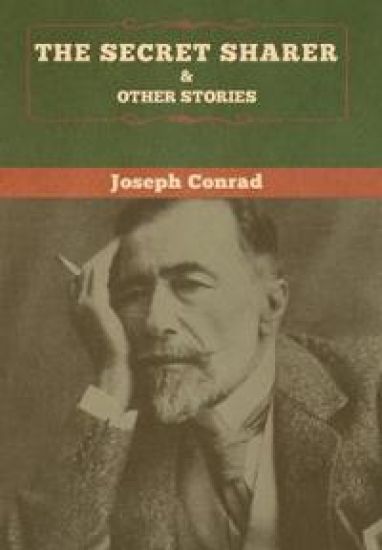
The Secret Sharer and Other Stories

The Secret Sharer and Other Stories

Joseph Conrad

Bibliotech Press
2020
sidottu
Joseph Conrad (born J zef Teodor Konrad Korzeniowski; 3 December 1857 - 3 August 1924) was a Polish-British writer regarded as one of the greatest novelists to write in the English language. Though he did not speak English fluently until his twenties, he was a master prose stylist who brought a non-English sensibility into English literature. Conrad wrote stories and novels, many with a nautical setting, that depict trials of the human spirit in the midst of what he saw as an impassive, inscrutable universe. Conrad is considered an early modernist, though his works contain elements of 19th-century realism. His narrative style and anti-heroic characters have influenced numerous authors, and many films have been adapted from, or inspired by, his works. Numerous writers and critics have commented that Conrad's fictional works, written largely in the first two decades of the 20th century, seem to have anticipated later world events. Writing near the peak of the British Empire, Conrad drew, among other things, on his native Poland's national experiences and on his own experiences in the French and British merchant navies, to create short stories and novels that reflect aspects of a European-dominated world--including imperialism and colonialism--and that profoundly explore the human psyche. Heart of Darkness (1899) is a novella by Joseph Conrad about a narrated voyage up the Congo River into the Congo Free State in the so-called heart of Africa. Charles Marlow, the narrator, tells his story to friends aboard a boat anchored on the River Thames. This setting provides the frame for Marlow's story of his obsession with the ivory trader Kurtz, which enables Conrad to create a parallel between what Conrad calls "the greatest town on earth", London, and Africa as places of darkness. Central to Conrad's work is the idea that there is little difference between so-called civilized people and those described as savages; Heart of Darkness raises questions about imperialism and racism. Originally issued as a three-part serial story in Blackwood's Magazine to celebrate the thousandth edition of the magazine, Heart of Darkness has been widely re-published and translated into many languages. It provided the inspiration for Francis Ford Coppola's 1979 film Apocalypse Now. In 1998, the Modern Library ranked Heart of Darkness 67th on their list of the 100 best novels in English of the twentieth century. (wikipedia.org)
Heart of Darkness

Heart of Darkness

Joseph Conrad

Public Park Publishing
2020
pokkari
Do you want to read Heart of Darkness? If so then keep reading... Heart of Darkness centers around Marlow, an introspective sailor, and his journey up the Congo River to meet Kurtz, reputed to be an idealistic man of great abilities. Marlow takes a job as a riverboat captain with the Company, a Belgian concern organized to trade in the Congo. As he travels to Africa and then up the Congo, Marlow encounters widespread inefficiency and brutality in the Company's stations. The native inhabitants of the region have been forced into the Company's service, and they suffer terribly from overwork and ill treatment at the hands of the Company's agents. The cruelty and squalor of imperial enterprise contrasts sharply with the impassive and majestic jungle that surrounds the white man's settlements, making them appear to be tiny islands amidst a vast darkness. What are you waiting for Heart of Darkness is one click away, select the "Buy Now" button in the top right corner NOW
Nostromo Lib/E

Nostromo Lib/E

Joseph Conrad

Naxos
2020
cd
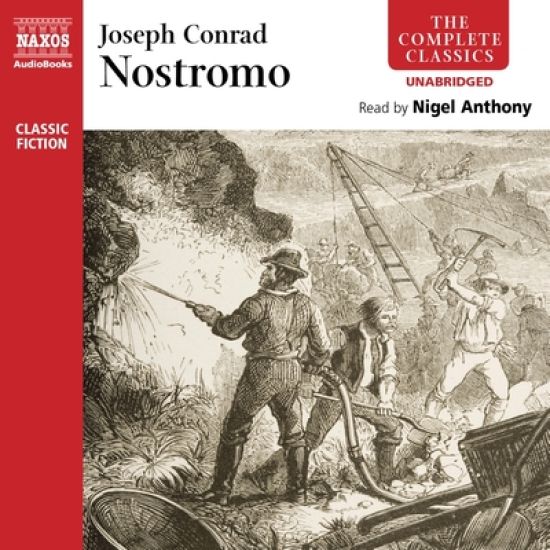
Set in the fictional South American country of Costaguana, Nostromo explores the volatile politics and crippling greed surrounding the San Tom silver mine. The story of power, love, revolutions, loyalty, and reward is told with richly evocative descriptions and brilliantly realized characters. But Nostromo is more than an adventure story; it is also a profoundly dark moral fable. Its language is as compellingly resonant as the sea itself with characters that are absorbing and complex. It was Conrad's masterwork, a forerunner of modernism, and one of the greatest novels of the twentieth century.
Heart of Darkness (Canon Classics Worldview Edition)

Heart of Darkness (Canon Classics Worldview Edition)

Joseph Conrad

Canon Press
2019
pokkari

Halvin toimitettuna 21,10 €

"From nothing else that I have ever read have I gotten what every book of Conrad has given me." -Ernest Hemingway, Transatlantic Review, 1924"What does it mean to give oneself to a tempting darkness? To a tempting character? What happens when that power that once tempted the mind and then was received by the mind, finally betrays that mind? Dark thoughts indeed." -From Schwager's IntroductionThe steaming jungles of Africa contain enough bloody ivory to bankroll an empire, but it takes a strong Company agent to manage the climate and the unhappy native laborers, many of whom are still cannibals. The most successful agent of them all is the disconcerting man known as "Kurtz." But Kurtz has been sick, and his efficient (or brutal, depending on who is asked) methods can't be ignored any longer. So Charles Marlow leaves the tidy offices of London with a new steamboat command, and sets out to find this Mr. Kurtz and bring him back to civilization-out of the disease, neglect, and enveloping presence of an immense heart of darkness. This disruptive Canon Classic is a veiled look at imperialistic atrocities and the dark desires at the heart of every human venture. The Canon Classics series presents the most definitive works of Western literature in a colorful, well-crafted, and affordable way. Unlike many other thrift editions, our classics are printed on thicker text stock and feature individualized designs that prioritize readability by means of proper margins, leading, characters per line, font, trim size, etc. Each book's materials and layout combine to make the classics a simple and striking addition to classrooms and homes, ideal for introducing the best of literary culture and human experience to the next generation. This Worldview Edition features an introduction divided into sections on The World Around, About the Author, What Other Notables Said, Setting, Characters, & Plot Summary, Worldview Analysis, and 21 Discussion Questions & Answers.
Heart of Darkness: New Edition - Heart of Darkness by Joseph Conrad
Heart of Darkness by Joseph Conrad is a real classic. You should grab it and read it to experience it yourself. Here's a simple plot to Heart of Darkness by Joseph ConradAs a child, Marlow had been fascinated by "the blank spaces" on maps, particularly by the biggest, which by the time he had grown up was no longer blank but turned into "a place of darkness". Yet there remained a big river, "resembling an immense snake uncoiled, with its head in the sea, its body at rest curving afar over a vast country and its tail lost in the depths of the land". The image of this river on the map fascinated Marlow "as a snake would a bird". Feeling as though "instead of going to the centre of a continent I were about to set off for the centre of the earth", Marlow takes passage on a French steamer bound for the African coast and then into the interior. After more than thirty days the ship anchors off the seat of government near the mouth of the big river. Marlow, with still some two hundred miles to go, takes passage on a little sea-going steamer captained by a Swede. He departs some thirty miles up the river where his company's station is. Work on the railway is going on, involving removal of rocks with explosives. Marlow enters a narrow ravine to stroll in the shade under the trees, and finds himself in "the gloomy circle of some Inferno" the place is full of diseased Africans who worked on the railroad and now await their deaths, their sickened bodies already as thin as air. Marlow witnesses the scene "horror-struck". Marlow has to wait for ten days in the company's Outer Station, where he sleeps in a hut. At this station, which strikes Marlow as a scene of devastation, he meets the company's impeccably dressed chief accountant who tells him of a Mr. Kurtz, who is in charge of a very important trading-post, and a widely respected, first-class agent, a "'very remarkable person'" who "'Sends in as much ivory as all the others put together'". The agent predicts that Kurtz will go very far: "'He will be a somebody in the Administration before long. They, above-the Council in Europe, you know-mean him to be'". Marlow departs with a caravan of sixty men to travel on foot about 200 miles (320 km) into the wilderness to the Central Station, where the steamboat that he is to captain is based. On the fifteenth day of his march, he arrives at the station, which has some twenty employees and is shocked to learn from a fellow European that his steamboat had been wrecked in a mysterious accident two days earlier. He meets the general manager, who informs him that he could wait no longer for Marlow to arrive, because the up-river stations had to be relieved and tells a rumour that one important station is in jeopardy because its chief, the exceptional Mr. Kurtz, is ill. "Hang Kurtz", Marlow thinks, irritated. He fishes his boat out of the river and is occupied with its repair for some months, during which a sudden fire destroys a grass shed full of materials used to trade with the natives. While one of the natives is tortured for allegedly causing the fire, Marlow is invited in the room of the station's brick-maker, a man who spent a year waiting for material to make bricks. Marlow gets the impression the man wants to pump him and is curious to know what kind of information he is after. Hanging on the wall is "a small sketch in oils, on a panel, representing a woman draped and blindfolded carrying a lighted torch". Marlow is fascinated with the sinister effect of the torchlight upon the woman's face, and............. Heart of Darkness by Joseph Conrad
Heart of Darkness

Heart of Darkness

Joseph Conrad

Naxos
2019
mp3 cd-levyllä
"'...he seemed to stare... with that wide and immense stare embracing, condemning, loathing all the universe. I seemed to hear the whispered cry, 'The horror The horror ''"On a becalmed yawl in the Thames estuary, Marlow tells a tale of Africa. His job there is to find the enigmatic Kurtz, but his journey farther and farther upriver reveals the brutality of the white Imperialists who run the country. Established as one of the great English novels, and a story of mythic power, Heart of Darkness is rich in meaning--allusive, enthralling, and haunting.
The Rover

The Rover

Joseph Conrad

Wilder Publications
2019
pokkari
Peyrol is a Master-Gunner French Republican Navy and a pirate. He longs to escape his violent life and settle down on a farm far away from the ocean and the violence he has known all his life. This struggle for freedom and peace plays out against the backdrop of the French Revolution and Napoleon's rise to power. Peyrol must fight for redemption and dignity on this his final voyage.