Kirjojen hintavertailu – 12 859 819 kirjaa ja 27 kauppaa
Kirjailija
Joseph Conrad
Kirjat ja teokset yhdessä paikassa: 2 285 kirjaa, julkaisuja vuosilta 1895–2026, suosituimpiin kuuluu Lord Jim. Vertaile teosten hintoja ja tarkista saatavuus suomalaisista kirjakaupoista.
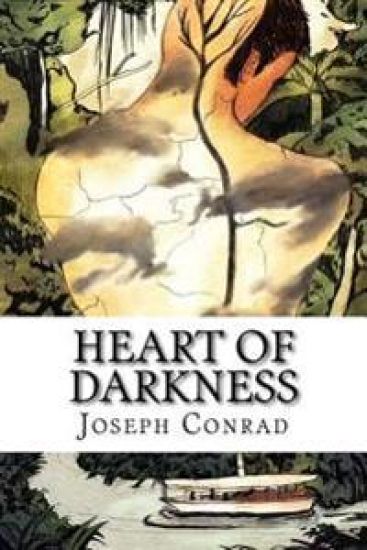
This book is written in bold, font size 24. Heart of Darkness is perhaps Joseph Conrad's finest work of fiction, detailing Charles Marlow's journey to Africa and his search for Kurtz, the ruthless ivory merchant. As he travels down the River Congo, Marlow witnesses first-hand the brutality of colonialism and imperialism, in this all-time classic tale. For more on our growing collection of large print, extra large print, and dyslexia-friendly books, visit: firestonebooks.com
The Inheritors: An Extravagant Story (1901) is a quasi-science fiction novel on which Ford Madox Ford and Joseph Conrad collaborated. It looks at society's mental evolution and what is gained and lost in the process. Written before the first World War, its themes of corruption and the effect of the 20th Century on British aristocracy appeared to predict history. In the novel, the metaphor of the "fourth dimension" is used to explain a societal shift from a generation of people who have traditional values of interdependence, being overtaken by a modern generation who believe in expediency, callously using political power to bring down the old order. Its narrator is an aspiring writer who himself makes a similar transition at a personal level only to feel he has lost everything. The Inheritors contains the themes that preoccupied both its authors in their respective bodies of work. Themes of universality and the corruptibility of human nature, loneliness, isolation, self-deception, and the outworkings of a character's flaws are signatures found throughout most of Joseph Conrad's writings. In Ford Madox Ford's work, both The Good Soldier and Parade's End published much later, depict a long undisturbed English aristocracy confused and bewildered by the arrival of the 20th century. in the midst of an impassive, inscrutable universe. This classic title has been published by RADLEY BOOKS. Each RADLEY CLASSIC is a meticulously restored, luxurious and faithful reproduction of a classic book; produced with elegant text layout, clarity of presentation, and stylistic features that make reading a true pleasure. Special attention is given to legible fonts and adequate letter sizing, correct line length for readability, generous margins and triple lead (lavish line separation); plus we do not allow any mistakes/changes/additions to creep into the author's words. Visit RADLEY BOOKS at www.radleybooks.com (or search RADLEY CLASSIC on Amazon) to see more classic book titles in this series.
Este libro es esa historia, desarrollada en proporciones convenientes, sugerido y orientado su curso entero por la salvajada absurda de la explosi n en Greenwich Park. El agente secreto es una obra de una autenticidad cabal. Incluso el puro prop sito art stico, el de aplicar un estilo ir nico a un tema de esta ndole, fue escogido con deliberaci n. La novela El Agente Secreto, de Joseph Conrad, tiene lugar en Londres en 1886 y sigue la vida de Verloc, un agente secreto. Verloc es tambi n un comerciante propietario de un negocio que vende material pornogr fico, preservativos, y adornos. Vive con su esposa Winnie, su suegra y su cu ado, Stevie. Stevie tiene problemas mentales que lo hacen ponerse nervioso. Winnie cuida de l y lo trata m s como hijo que como hermano. Los amigos de Verloc son anarquistas. Los m s destacados son Comrade Ossipon, Michaelis y "El Profesor". Aunque son inofensivos como terroristas la polic a sabe de sus acciones. El grupo produce literatura an rquica como panfletos.
A Set of Six is a collection of six stories by Joseph Conrad originally published in 1908. Joseph Conrad (1857 - 1924) was a Polish-British writer regarded as one of the greatest novelists to write in the English language. He joined the British merchant marine in 1878, and was granted British nationality in 1886. Though he did not speak English fluently until his twenties, he was a master prose stylist who brought a non-English sensibility into English literature. He wrote stories and novels, many with a nautical setting, that depict trials of the human spirit in the midst of an impassive, inscrutable universe. This classic title has been published by RADLEY BOOKS. Each RADLEY CLASSIC is a meticulously restored, luxurious and faithful reproduction of a classic book; produced with elegant text layout, clarity of presentation, and stylistic features that make reading a true pleasure. Special attention is given to legible fonts and adequate letter sizing, correct line length for readability, generous margins and triple lead (lavish line separation); plus we do not allow any mistakes/changes/additions to creep into the author's words. Visit RADLEY BOOKS at www.radleybooks.com (or search RADLEY CLASSIC on Amazon) to see more classic book titles in this series.
Nostromo is set in the South American country of Costaguana, and more specifically in that country's Occidental Province and its port city of Sulaco. Though Costaguana is a fictional nation, its geography as described in the book resembles real-life Colombia. Costaguana has a long history of tyranny, revolution and warfare, but has recently experienced a period of stability under the dictator Ribiera. Charles Gould is a native Costaguanero of English descent who owns an important silver-mining concession near the key port of Sulaco. He is tired of the political instability in Costaguana and its concomitant corruption, and uses his wealth to support Ribiera's government, which he believes will finally bring stability to the country after years of misrule and tyranny by self-serving dictators. Instead, Gould's refurbished silver mine and the wealth it has generated inspires a new round of revolutions and self-proclaimed warlords, plunging Costaguana into chaos. Among others, the forces of the revolutionary General Montero invade Sulaco after securing the inland capital; Gould, adamant that his silver should not become spoil for his enemies, orders Nostromo, the trusted "capataz de los cargadores" (head longshoreman) of Sulaco, to take it offshore so it can be sold into international markets. Nostromo is an Italian expatriate who has risen to his position through his bravery and daring exploits. ("Nostromo" is Italian for "shipmate" or "boatswain", but the name could also be considered a corruption of the Italian phrase "nostro uomo," meaning "our man.") Nostromo's real name is Giovanni Battista Fidanza-Fidanza meaning "trust" in archaic Italian. Nostromo is a commanding figure in Sulaco, respected by the wealthy Europeans and seemingly limitless in his abilities to command power among the local population. He is, however, never admitted to become a part of upper-class society, but is instead viewed by the rich as their useful tool. He is believed by Charles Gould and his own employers to be incorruptible, and it is for this reason that Nostromo is entrusted with removing the silver from Sulaco to keep it from the revolutionaries. Accompanied by the young journalist Martin Decoud, Nostromo sets off to smuggle the silver out of Sulaco. However, the lighter on which the silver is being transported is struck at night in the waters off Sulaco by a transport carrying the invading revolutionary forces under the command of Colonel Sotillo. Nostromo and Decoud manage to save the silver by putting the lighter ashore on Great Isabel. Decoud and the silver are deposited on the deserted island of Great Isabel in the expansive bay off Sulaco, while Nostromo scuttles the lighter and manages to swim back to shore undetected. Back in Sulaco, Nostromo's power and fame continues to grow as he daringly rides over the mountains to summon the army which ultimately saves Sulaco's powerful leaders from the revolutionaries and ushers in the independent state of Sulaco. In the meantime, left alone on the deserted island, Decoud eventually loses his mind. He takes the small lifeboat out to sea and there shoots himself, after first weighing his body down with some of the silver ingots so that he would sink into the sea.
The Rescue, A Romance of the Shallows (1920) is one of Joseph Conrad's works contained in what is now sometimes called the Lingard Trilogy, a group of novels based on Conrad's experience as mate on the steamer Vidar. Although it was the last of the three novels to be published, after Almayer's Folly (1895) and An Outcast of the Islands (1896), the events related in the novel precede those. The story follows Captain Tom Lingard, the recurring protagonist of The Lingard Trilogy, who was on his way to help a native friend regain his land when he falls in love with a married woman whose yacht he saves from foundering. The genre of The Rescue is adventure, specifically a sea story. From the beginning, readers are shown that the novel takes place at sea. Throughout the text, there are lengthy passages in which the plot comes to a halt while the stifling darkness is described. This helps create the atmosphere of an adventure novel as readers are held in suspense along with the characters. The British characters are constantly interacting with natives, a trope that is used in many adventure novels. Very shortly after publication in 1920, a book review came out in "The Sewanee Review" in which G. H. C. said that The Rescue is "deeply and sincerely imaginative", and "is Conrad at his best". This classic title has been published by RADLEY BOOKS. Each RADLEY CLASSIC is a meticulously restored, luxurious and faithful reproduction of a classic book; produced with elegant text layout, clarity of presentation, and stylistic features that make reading a true pleasure. Special attention is given to legible fonts and adequate letter sizing, correct line length for readability, generous margins and triple lead (lavish line separation); plus we do not allow any mistakes/changes/additions to creep into the author's words. Visit RADLEY BOOKS at www.radleybooks.com (or search RADLEY CLASSIC on Amazon) to see more classic book titles in this series.
The Shadow-Line is a short novel based at sea by Joseph Conrad; it is one of his later works, being written from February to December 1915. The novella depicts the development of a young man upon taking a captaincy in the Orient, with the shadow line of the title representing the threshold of this development. The novella is notable for its dual narrative structure. The full, subtitled title of the novel is The Shadow-Line, A Confession, which immediately alerts the reader to the retrospective nature of the novella. The ironic constructions following from the conflict between the 'young' protagonist (who is never named) and the 'old' drive much of the underlying points of the novella, namely the nature of wisdom, experience and maturity. Conrad also extensively uses irony by comparison in the work, with characters such as Captain Giles and the ship's 'factotum' Ransome used to emphasise strengths and weaknesses of the protagonist. The novella has often been cited as a metaphor of the First World War, given its timing and references to a long struggle, the importance of camaraderie, etc. This viewpoint may also be reinforced by the knowledge that Conrad's elder son, Borys, was wounded in the First World War. This classic title has been published by RADLEY BOOKS. Each RADLEY CLASSIC is a meticulously restored, luxurious and faithful reproduction of a classic book; produced with elegant text layout, clarity of presentation, and stylistic features that make reading a true pleasure. Special attention is given to legible fonts and adequate letter sizing, correct line length for readability, generous margins and triple lead (lavish line separation); plus we do not allow any mistakes/changes/additions to creep into the author's words. Visit RADLEY BOOKS at www.radleybooks.com (or search RADLEY CLASSIC on Amazon) to see more classic book titles in this series.