Kirjailija
Joseph Conrad
Kirjat ja teokset yhdessä paikassa: 2 285 kirjaa, julkaisuja vuosilta 1895–2026, suosituimpiin kuuluu Lord Jim. Vertaile teosten hintoja ja tarkista saatavuus suomalaisista kirjakaupoista.
Nimi esiintyy myös muodoissa: Joseph. Conrad
2 285 kirjaa
Kirjojen julkaisuvuodet: 1895–2026.

Un tudiant russe (Razoumov) trouve un soir chez lui, cach , l'assassin d'un minent homme d' tat responsable r pression tsariste survenue des heures plus t t. Ce dernier lui demande de l'aider fuir. Notre h ros accepte, mais finit par le d noncer la police. Il se trouve alors pris dans un engrenage et est engag pour espionner des r volutionnaires actifs l' tranger, et notamment en Suisse... Sous les yeux des occidentaux qui peinent comprendre l' me slave se d roule la trag die du peuple russe broy par l'autocratie et l'anarchisme.
In Conrad's works he include his ideas on the alter ego, anarchism, politics and the incomprehensible nature of human existence exhibit some important narrative techniques that are not found anywhere else Conrad's fiction. One of the masters of English fiction, Joseph Conrad is known for novels and works of fiction such as The Heart of Darkness, Victory, and Lord Jim. The collection A Set of Six brings together a number of Conrad's shorter pieces, featuring a swashbuckling cast of characters that will appeal to fans of the action-adventure genre. All except "The Duel" (1908) were written between Nostromo and The Secret Agent. "Gaspar Ruiz" (1906), "The Informer" (1906) and "An anarchist" (1906) cast special light on some of the issues that arise in these novels, both to clarify these concepts and to reinforce them. The same tension between individuals and political movements in Nostromo and the secret agent appears in these stories, like the same sharp skepticism toward politics. In each case, the man finds himself thrust into an absurd situation and then trying (mostly unsuccessfully) to make sense of a seemingly senseless world.

In Conrad's haunting tale, Marlow, a seaman and wanderer, recounts his physical and psychological journey in search of the enigmatic Kurtz. Travelling to the heart of the African continent, he discovers how Kurtz has gained his position of power and influence over the local people. Marlow's struggle to fathom his experience involves him in a radical questioning of not only his own nature and values but the nature and values of his society.
Joseph Conrad was a Polish novelist who lived most of his life in Britain and didn't learn English until age 21. The young Conrad lived an adventurous life involving gunrunning and political conspiracy, and apparently had a disastrous love affair that plunged him into despair. He served 16 years in the merchant navy. In 1894, at age 36, Conrad reluctantly gave up the sea, partly because of poor health and partly because he had decided on a literary career. This text refers to an out of print or unavailable edition of this title. "The six stories in this volume are the result of some three or four years of occasional work. The dates of their writing are far apart, their origins are various. None of them are connected directly with personal experiences. In all of them the facts are inherently true, by which I mean that they are not only possible but that they have actually happened. For instance, the last story in the volume, the one I call Pathetic, whose first title is Il Conde (misspelt by-the-by) is an almost verbatim transcript of the tale told me by a very charming old gentleman whom I met in Italy. I don't mean to say it is only that. Anybody can see that it is something more than a verbatim report, but where he left off and where I began must be left to the acute discrimination of the reader who may be interested in the problem. I don't mean to say that the problem is worth the trouble. What I am certain of, however, is that it is not to be solved, for I am not at all clear about it myself by this time. All I can say is that the personality of the narrator was extremely suggestive quite apart from the story he was telling me. I heard a few years ago that he had died far away from his beloved Naples where that "abominable adventure" did really happen to him".
Ce roman est l'histoire noire et comique des espions, terroristes, anarchistes et agents provocateurs d'une puissance trang re non nomm e (mais ressemblant la Russie) dans les ruelles mal fam es de Londres au d but du xxe si cle. Le personnage principal est Verloc, agent secret infiltrant le milieu anarchiste, impliqu dans un ambitieux plan terroriste qui aboutit poser une bombe l'observatoire royal de Greenwich. Les autres personnages sont la femme de Verloc Winnie, le fr re de celle-ci Stevie, les anarchistes Ossipon et Michaelis et le pr fet adjoint de la police de Londres.

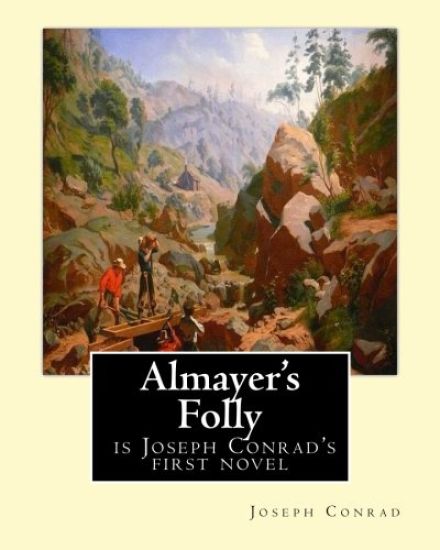
Almayer's Folly, is Joseph Conrad's first novel: Joseph Conrad (Polish pronunciation: born Jozef Teodor Konrad Korzeniowski; 3 December 1857 - 3 Augus
Joseph Conrad
Createspace Independent Publishing Platform
2016
nidottu
Almayer's Folly, published in 1895, is Joseph Conrad's first novel. Set in the late 19th century, it centers on the life of the Dutch trader Kaspar Almayer in the Borneo jungle and his relationship to his mixed heritage daughter Nina. Plot Almayer's Folly is about a poor businessman who dreams of finding a hidden gold mine and becoming very wealthy. He is a white European, married to a native Malayan; they have one daughter named Nina. He fails to find the goldmine, and comes home saddened. Previously, he had heard that the British were to conquer the Pantai River, and he had built a large, lavish house near where he resided at the time, in order to welcome the invading country to the native land. However, the conquest never took place, and the house remained unfinished. Some passing Dutch seamen had called the house "Almayer's Folly". Now, Almayer continually goes out for long trips, but eventually he stops doing so and stays home with his hopeless daydreams of riches and splendor. His native wife loathes him for this. One day, a Malayan prince, Dain Maroola, came to see Almayer about trading, and while there he falls in love with Nina. Mrs. Almayer kept arranging meetings for Nina and Dain. She wanted them to marry so her daughter could stay native, because she was highly distrustful of the white men and their ways. Dain left but vowed to return to help Almayer find the gold mine. When he does return, he goes straight to Lakamba, a Malayan rajah, and told him that he found the gold mine and that some Dutchmen had captured his ship. The rajah tells him to kill Almayer before the Dutch arrive because he is not needed to find the gold now. The following morning, an unidentifiable native corpse is found floating in the river, wearing an ankle bracelet very similar to Dain's. Almayer was distraught because Dain was his only chance at finding the secret mine. (The corpse was actually of his slave, who had died when a canoe overturned. Mrs. Almayer suggested that Dain put his anklet and ring on the body.)....... Joseph Conrad (Polish pronunciation: born Jozef Teodor Konrad Korzeniowski; 3 December 1857 - 3 August 1924) was a Polish-British writer regarded as one of the greatest novelists to write in the English language. He joined the British merchant marine in 1878, and was granted British nationality in 1886. Though he did not speak English fluently until he was in his twenties, he was a master prose stylist who brought a non-English sensibility into English literature. He wrote stories and novels, many with a nautical setting, that depict trials of the human spirit in the midst of an impassive, inscrutable universe. Conrad is considered an early modernist, though his works still contain elements of 19th-century realism. His narrative style and anti-heroic characters have influenced many authors, including T. S. Eliot, William Faulkner, Graham Greene, and Salman Rushdie. Many films have been adapted from, or inspired by, Conrad's works. Writing in the heyday of the British Empire, Conrad drew on, among other things, his native Poland's national experiences, and his personal experiences in the French and British merchant navies, to create short stories and novels that reflect aspects of a European-dominated world - including imperialism and colonialism - while profoundly exploring human psychology............
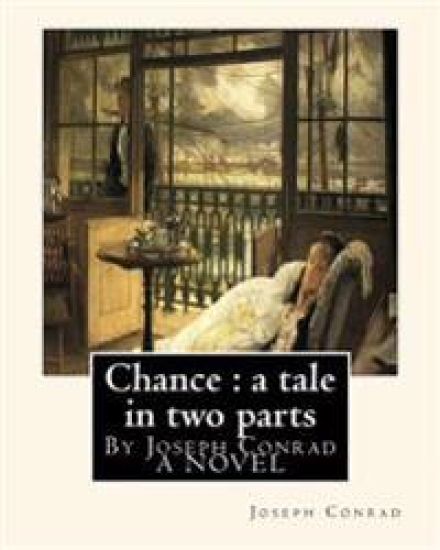
Chance: a tale in two parts, By Joseph Conrad A NOVEL: To Sir.Hugh Charles Clifford(5 March 1866 - 18 December 1941) was a Bri
Sir Hugh Clifford; Joseph Conrad
Createspace Independent Publishing Platform
2016
nidottu
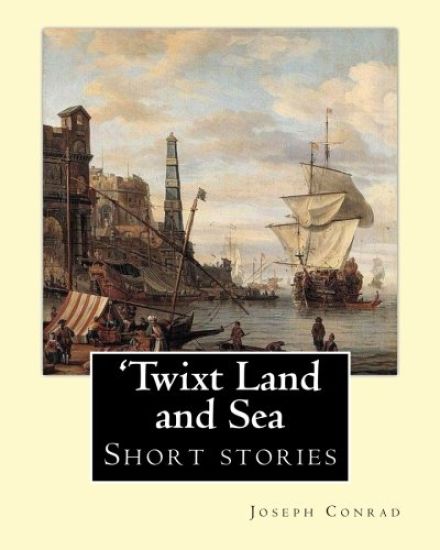
'Twixt Land and Sea, By Joseph Conrad: Short stories
Joseph Conrad
Createspace Independent Publishing Platform
2016
nidottu
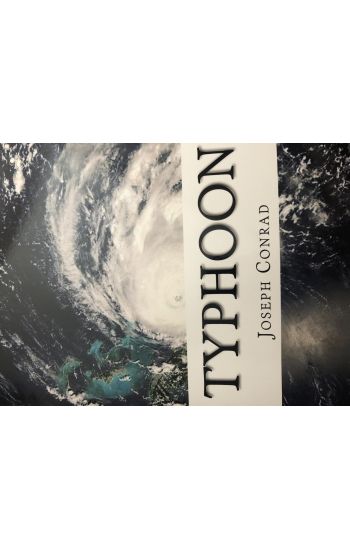
Typhoon, By Joseph Conrad (novella): Adventure story
Joseph Conrad
Createspace Independent Publishing Platform
2016
nidottu
Typhoon is a novella by Joseph Conrad, begun in 1899 and serialized in Pall Mall Magazine in January-March 1902. Its first book publication was in New York by Putnam in 1902; it was also published in Britain in Typhoon and Other Stories by Heinemann in 1903. Plot summary Typhoon is a classic sea yarn, possibly based upon Conrad's actual experience of seaman's life, and probably on a real incident aboard of the real steamer John P. Best. It describes how Captain MacWhirr sails the Siamese steamer Nan-Shan into a typhoon-a mature tropical cyclone of the northwestern part of the Pacific Ocean. Other characters include the young Jukes - most probably an alter ego of Conrad from the time he had sailed under captain John McWhirr - and Solomon Rout, the chief engineer. The novella classically evokes the seafaring life at the turn of the century. While Macwhirr, who, according to Conrad, "never walked on this Earth" - is emotionally estranged from his family and crew, and though he refuses to consider an alternate course to skirt the typhoon, his indomitable will in the face of a superior natural force elicits grudging admiration. Characters Captain MacWhirr, an empirical man without imagination. Captain Wilson from "Melita", the "storm-strategist". Jukes, the first mate (with no first name). Jukes' absent friends - second mate Jack Allen and another mate from trans-Atlantic liner (addressee of Jukes' letter). Solomon Rout, the chief engineer, an experienced seaman. Second engineer Harry and third engineer Beale. The boatswain. The second mate. Sailors, steward and cook of the "Nan-Shan". The coolies, hired workers from India and China. The clerk for Messrs. Bun-Hin Co. Mrs Lucy MacWhirr, the Captain's wife. Lydia MacWhirr, the Captain's daughter. Mrs Rout, the chief engineer's wife. Messrs Sigg and Son, the owners of the boat. Owners and foremen from the building yard. Joseph Conrad (Polish pronunciation: born Jozef Teodor Konrad Korzeniowski; 3 December 1857 - 3 August 1924) was a Polish-British writer regarded as one of the greatest novelists to write in the English language. He joined the British merchant marine in 1878, and was granted British nationality in 1886. Though he did not speak English fluently until he was in his twenties, he was a master prose stylist who brought a non-English sensibility into English literature. He wrote stories and novels, many with a nautical setting, that depict trials of the human spirit in the midst of an impassive, inscrutable universe...........
Tales of Unrest, By Joseph Conrad: Fiction, Short stories
Joseph Conrad
Createspace Independent Publishing Platform
2016
nidottu
Heart of Darkness, is a novella by Polish-British novelist Joseph Conrad: Novellas, Africa, Fiction, Short stories
Joseph Conrad
Createspace Independent Publishing Platform
2016
nidottu
Heart of Darkness (1899) is a novella by Polish-British novelist Joseph Conrad, about a voyage up the Congo River into the Congo Free State, in the heart of Africa, by the story's narrator Marlow. Marlow tells his story to friends aboard a boat anchored on the River Thames, London, England. This setting provides the frame for Marlow's story of his obsession with the ivory trader Kurtz, which enables Conrad to create a parallel between London and Africa as places of darkness. Central to Conrad's work is the idea that there is little difference between so-called civilised people and those described as savages; Heart of Darkness raises important questions about imperialism and racism. Originally published as a three-part serial story in Blackwood's Magazine, Heart of Darkness has been variously published and translated into many languages. In 1998, the Modern Library ranked Heart of Darkness as the sixty-seventh of the hundred best novels in English of the twentieth century. **Plot summary** Aboard the Nellie, anchored in the River Thames near Gravesend, England, Charles Marlow tells his fellow sailors about the events that led to his appointment as captain of a river steamboat for an ivory trading company. As a child, Marlow had been fascinated by "the blank spaces" on maps, particularly by the biggest, which by the time he had grown up was no longer blank but turned into "a place of darkness." Yet there remained a big river, "resembling an immense snake uncoiled, with its head in the sea, its body at rest curving afar over a vast country and its tail lost in the depths of the land." The image of this river on the map fascinated Marlow "as a snake would a bird". Feeling as though "instead of going to the centre of a continent I were about to set off for the centre of the earth", Marlow takes passage on a French steamer bound for the African coast and then into the interior. After more than thirty days the ship anchors off the seat of the government near the mouth of the big river. Marlow, still some two hundred miles to go, now takes passage on a little sea-going steamer captained by a Swede. He departs some thirty miles up the river where his Company's station is. Work on the railway is going on, involving removal of rocks with explosives. Marlow enters a narrow ravine to stroll in the shade under the trees, and finds himself in "the gloomy circle of some Inferno": the place is full of diseased Africans who worked on the railroad and now await their deaths, their sickened bodies already as thin as air. Marlow witnesses the scene "horror-struck". Marlow has to wait for ten days in the Company's Outer Station, where he sleeps in a hut. At this station, which strikes Marlow as a scene of devastation, he meets the Company's impeccably dressed chief accountant who tells him of a Mr. Kurtz, who is in charge of a very important trading-post, and a widely respected, first-class agent, a "'very remarkable person'" who "'Sends in as much ivory as all the others put together'". The agent predicts that Kurtz will go very far: "'He will be a somebody in the Administration before long. They, above--the Council in Europe, you know--mean him to be.'"..... Joseph Conrad (Polish pronunciation: born Jozef Teodor Konrad Korzeniowski; 3 December 1857 - 3 August 1924) was a Polish-British writer regarded as one of the greatest novelists to write in the English language. He joined the British merchant marine in 1878, and was granted British nationality in 1886. Though he did not speak English fluently until he was in his twenties, he was a master prose stylist who brought a non-English sensibility into English literature. He wrote stories and novels, many with a nautical setting, that depict trials of the human spirit in the midst of an impassive, inscrutable universe....
Falk; Amy Foster; To-morrow: three stories, By Joseph Conrad: three short stories
Joseph Conrad
Createspace Independent Publishing Platform
2016
nidottu