Kirjojen hintavertailu – 12 859 819 kirjaa ja 27 kauppaa
Kirjailija
Joseph Conrad
Kirjat ja teokset yhdessä paikassa: 2 285 kirjaa, julkaisuja vuosilta 1895–2026, suosituimpiin kuuluu Lord Jim. Vertaile teosten hintoja ja tarkista saatavuus suomalaisista kirjakaupoista.
Joseph Conrad (J zef Teodor Konrad Korzeniowski; 3 December 1857 - 3 August 1924) was a Polish-British writer regarded as one of the greatest novelists to write in the English language. He joined the British merchant marine in 1878, and was granted British nationality in 1886. Though he did not speak English fluently until he was in his twenties, he was a master prose stylist who brought a non-English sensibility into English literature. He wrote stories and novels, many with a nautical setting, that depict trials of the human spirit in the midst of an impassive, inscrutable universe.
First published in 1906, The Mirror of the Sea was the first of Joseph Conrad's two autobiographical memoirs. Discussing it, he called the book "a very intimate revelation. . . . I have attempted here to lay bare with the unreserve of a last hour's confession the terms of my relation with the sea, which beginning mysteriously, like any great passion the inscrutable Gods send to mortals, went on unreasoning and invincible, surviving the test of disillusion, defying the disenchantment that lurks in every day of a strenuous life; went on full of love's delight and love's anguish, facing them in open-eyed exultation without bitterness and without repining, from the first hour to the last." Joseph Conrad (Polish pronunciation: born J zef Teodor Konrad Korzeniowski; 3 December 1857 - 3 August 1924) was a Polish-British writer regarded as one of the greatest novelists to write in the English language. He joined the British merchant marine in 1878, and was granted British nationality in 1886. Though he did not speak English fluently until his twenties, he was a master prose stylist who brought a non-English sensibility into English literature. He wrote stories and novels, many with a nautical setting, that depict trials of the human spirit in the midst of an impassive, inscrutable universe. Conrad is considered an early modernist, though his works still contain elements of 19th-century realism. His narrative style and anti-heroic characters have influenced many authors, including F. Scott Fitzgerald, William Faulkner, Ernest Hemingway, Andr Malraux, George Orwell, Graham Greene, Gabriel Garc a M rquez, John le Carr , V. S. Naipaul, Philip Roth, J. M. Coetzee, and Salman Rushdie. Many films have been adapted from, or inspired by, Conrad's works. Writing in the heyday of the British Empire, Conrad drew on, among other things, his native Poland's national experiences note 3] and his own experiences in the French and British merchant navies, to create short stories and novels that reflect aspects of a European-dominated world-including imperialism and colonialism-and that profoundly explore the human psyche.
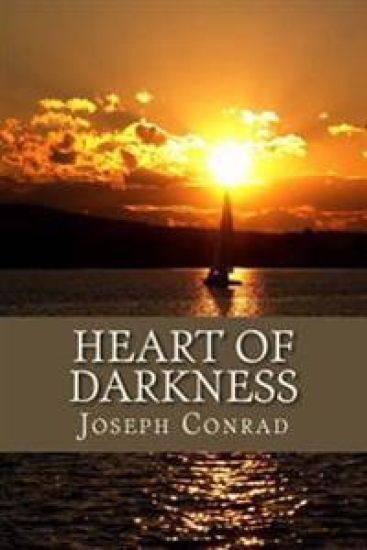
Heart of Darkness (1899) is a novella by Polish-British novelist Joseph Conrad, about a voyage up the Congo River into the Congo Free State, in the heart of Africa, by the story's narrator Marlow. Marlow tells his story to friends aboard a boat anchored on the River Thames, London, England. This setting provides the frame for Marlow's story of his obsession with the ivory trader Kurtz, which enables Conrad to create a parallel between London and Africa as places of darkness. Central to Conrad's work is the idea that there is little difference between so-called civilised people and those described as savages; Heart of Darkness raises questions about imperialism and racism. Originally published as a three-part serial story in Blackwood's Magazine, Heart of Darkness has been variously published and translated into many languages. In 1998, the Modern Library ranked Heart of Darkness as the sixty-seventh of the hundred best novels in English of the twentieth century. Plot: Aboard the Nellie, anchored in the River Thames near Gravesend, England, Charles Marlow tells his fellow sailors about the events that led to his appointment as captain of a river steamboat for an ivory trading company. As a child, Marlow had been fascinated by "the blank spaces" on maps, particularly by the biggest, which by the time he had grown up was no longer blank but turned into "a place of darkness" (Conrad 10). Yet there remained a big river, "resembling an immense snake uncoiled, with its head in the sea, its body at rest curving afar over a vast country and its tail lost in the depths of the land" (Conrad 10). The image of this river on the map fascinated Marlow "as a snake would a bird" (Conrad 10). Feeling as though "instead of going to the centre of a continent I were about to set off for the centre of the earth", Marlow takes passage on a French steamer bound for the African coast and then into the interior (Conrad 18). After more than thirty days the ship anchors off the seat of the government near the mouth of the big river. Marlow, still some two hundred miles to go, now takes passage on a little sea-going steamer captained by a Swede. He departs some thirty miles up the river where his Company's station is. Work on the railway is going on, involving removal of rocks with explosives. Marlow enters a narrow ravine to stroll in the shade under the trees, and finds himself in "the gloomy circle of some Inferno" the place is full of diseased Africans who worked on the railroad and now await their deaths, their sickened bodies already as thin as air (Conrad 24-25). Marlow witnesses the scene "horror-struck" (Conrad 26). Marlow has to wait for ten days in the Company's Outer Station, where he sleeps in a hut. At this station, which strikes Marlow as a scene of devastation, he meets the Company's impeccably dressed chief accountant who tells him of a Mr. Kurtz, who is in charge of a very important trading-post, and a widely respected, first-class agent, a "'very remarkable person'" who "'Sends in as much ivory as all the others put together'" (Conrad 28). The agent predicts that Kurtz will go very far: "'He will be a somebody in the Administration before long. They, above-the Council in Europe, you know-mean him to be'" (Conrad 29)....... Joseph Conrad (Polish pronunciation: born J zef Teodor Konrad Korzeniowski; 3 December 1857 - 3 August 1924) was a Polish-British writer regarded as one of the greatest novelists to write in the English language. He joined the British merchant marine in 1878, and was granted British nationality in 1886. Though he did not speak English fluently until his twenties, he was a master prose stylist who brought a non-English sensibility into English literature. He wrote stories and novels, many with a nautical setting, that depict trials of the human spirit in the midst of an impassive, inscrutable universe....
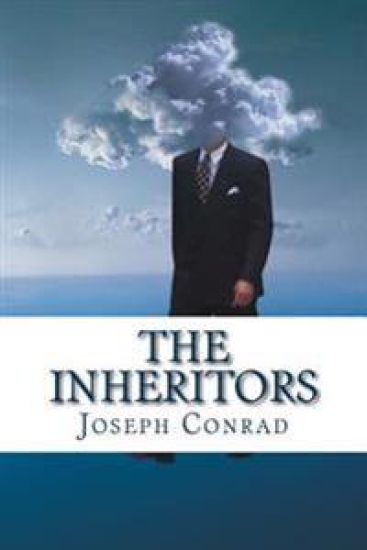
The Inheritors: An Extravagant Story (1901) is a quasi-science fiction novel that looks at society's mental evolution and what is gained and lost in the process. Written before the first World War, its themes of corruption and the effect of the 20th Century on British aristocracy appeared to predict history. In the novel, the metaphor of the "fourth dimension" is used to explain a societal shift from a generation of people who have traditional values of interdependence, being overtaken by a modern generation who believe in expediency, callously using political power to bring down the old order. Its narrator is an aspiring writer who himself makes a similar transition at a personal level only to feel he has lost everything. The inheritors are a breed of cold materialists, calling themselves Fourth Dimensionists, whose task is to occupy the earth. An unsuccessful English writer meets a fascinating woman by chance, who seems to talk in metaphors. She claims to be from the Fourth Dimension and a major player in a plan to "inherit the earth". They go their separate ways with her pledge they will meet again and again. At their next meeting, the woman freely reveals her "identity" and two others in their circle, one a cabinet minister (Charles Gurnard) and Fox, the editor of a new paper - all of them competing with each other. She has taken on his name and pretends to be his sister, invading firstly his down-on-their-luck aristocratic family by financing improvements to their estate, until she moves with his aunt, to Paris. Each time she turns up, she is in greater connection with prominent political people and appears more dazzlingly beautiful and more desirable to Arthur.
Heart of Darkness a novella by Polish-British novelist Joseph Conrad, about a voyage up the Congo River into the Congo Free State, in the heart of Africa, by the story's narrator Marlow. Marlow tells his story to friends aboard a boat anchored on the River Thames, London, England. This setting provides the frame for Marlow's story of his obsession with the ivory trader Kurtz, which enables Conrad to create a parallel between London and Africa as places of darkness. Central to Conrad's work is the idea that there is little difference between so-called civilised people and those described as savages; Heart of Darkness raises questions about imperialism and racism. Originally published as a three-part serial story in Blackwood's Magazine, Heart of Darkness has been variously published and translated into many languages. In 1998, the Modern Library ranked Heart of Darkness as the sixty-seventh of the hundred best novels in English of the twentieth century. Aboard the Nellie, anchored in the River Thames near Gravesend, England, Charles Marlow tells his fellow sailors about the events that led to his appointment as captain of a river steamboat for an ivory trading company. As a child, Marlow had been fascinated by "the blank spaces" on maps, particularly by the biggest, which by the time he had grown up was no longer blank but turned into "a place of darkness". Yet there remained a big river, "resembling an immense snake uncoiled, with its head in the sea, its body at rest curving afar over a vast country and its tail lost in the depths of the land." The image of this river on the map fascinated Marlow "as a snake would a bird". Feeling as though "instead of going to the centre of a continent I were about to set off for the centre of the earth", Marlow takes passage on a French steamer bound for the African coast and then into the interior. After more than thirty days the ship anchors off the seat of the government near the mouth of the big river. Marlow, still some two hundred miles to go, now takes passage on a little sea-going steamer captained by a Swede. He departs some thirty miles up the river where his Company's station is. Work on the railway is going on, involving removal of rocks with explosives. Marlow enters a narrow ravine to stroll in the shade under the trees, and finds himself in "the gloomy circle of some Inferno": the place is full of diseased Africans who worked on the railroad and now await their deaths, their sickened bodies already as thin as air. Marlow witnesses the scene "horror-struck".
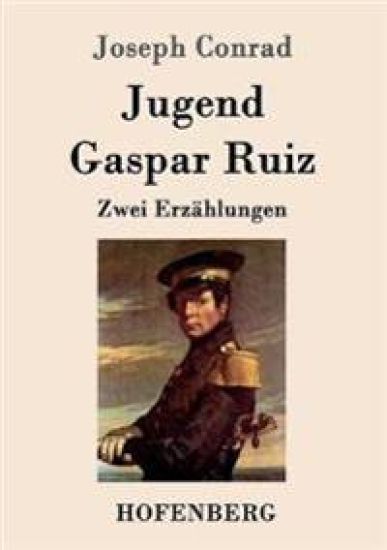
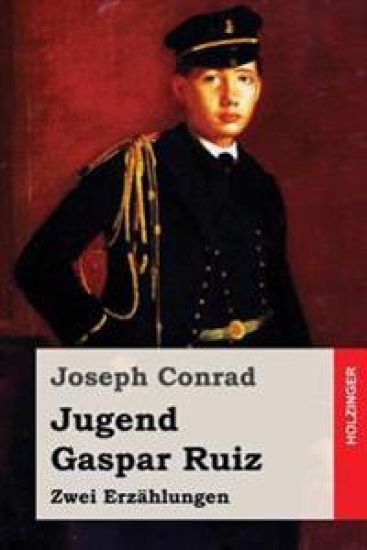
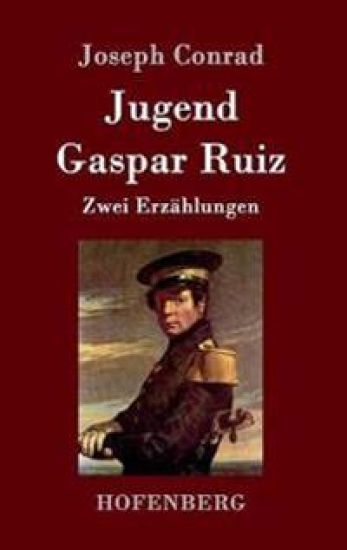
Joseph Conrad: Jugend / Gaspar Ruiz. Zwei Erz hlungen Edition Holzinger. Taschenbuch Berliner Ausgabe, 2016 Durchgesehener Neusatz bearbeitet und eingerichtet von Michael Holzinger Jugend: Youth. Entstanden 1898. Erstdruck September 1898 in Blackwood's Magazine. Gaspar Ruiz: Gaspar Ruiz. Entstanden 1904-1905. Erstdruck 1906 in The Strand Magazine. Herausgeber der Reihe: Michael Holzinger Reihengestaltung: Viktor Harvion Umschlaggestaltung unter Verwendung des Bildes: Edgar Degas, Achille als Marine-Kadett, 1857 Gesetzt aus der Minion Pro, 11 pt.
This edition includes a newly edited text based on the 1902 edition. Textual History and Editing Principles provides an overview of the controversies and ambiguities surrounding Heart of Darkness. Included are background and source materials, and contemporary responses to the novella along with essays in criticism, including a new section on film adaptations.
A group of men are aboard an English ship that is sitting on the Thames. The group includes a Lawyer, an Accountant, a Company Director/Captain, and a man without a specific profession who is named Marlow. The narrator appears to be another unnamed guest on the ship. While they are loitering about, waiting for the wind to pick up so that they might resume their voyage, Marlow begins to speak about London and Europe as some of the darkest places on earth. The narrator and other guests do not seem to regard him with much respect. Marlow is a stationary man, very unusual for a seaman. The others do not understand him because he does not fit into a neat category in the same manner that the others do. He mentions colonization and says that carving the earth into prizes or pieces is not something to examine too closely because it is an atrocity. He then begins to narrate a personal experience in Africa, which led him to become a freshwater sailor and gave him a terrible glimpse of colonization. With the exception of two or three small paragraphs, the perspective shifts to Marlow, who becomes the main narrator for the rest of the novel. Marlow has always had a passion for travel and exploration. Maps are an obsession of his. Marlow decides he wants nothing more than to be the skipper of a steamship that travels up and down a river in Africa. His aunt has a connection in the Administration Department of a seafaring and exploration company that gathers ivory, and she manages to get Marlow an appointment. He replaces a captain who was killed in a skirmish with the natives. When Marlow arrives at the company office, the atmosphere is extremely dim and foreboding. He feels as if everyone is looking at him pityingly. The doctor who performs his physical asks if there is a history of insanity in Marlow's family. He tells Marlow that nothing could persuade him to join the Company down in the Congo. This puzzles Marlow, but he does not think much of it. The next day he embarks on a one-month journey to the primary Company station. The African shores that he observes look anything but welcoming. They are dark and rather desolate, in spite of the flurry of human activity around them. When he arrives, Marlow learns that a company member recently committed suicide..... Joseph Conrad, pseudonyme de Teodor Jozef Konrad Korzeniowski herb. Nalecz, est n le 3 d cembre 1857 Berditchev (Ukraine - Empire russe) et mort le 3 ao t 1924 Bishopsbourne (Kent - Angleterre). D'origine polonaise, il est un crivain de langue anglaise majeur du XXe si cle. literary career Now dedicated to his literary work, Conrad completes Almayer's Folly which appeared in April 1895, wrote a pariah islands published in April 1896. Desperate to regain command, he wrote to a friend "I only have that literature as a means existence "and clearly states write for money ... the same year, he married Jessie George and stays in Britain from March to September - life is cheaper to Lannion Island Great in London - and there wrote some of his texts. Back in England, he moved to Stanford-le-Hope, Essex, and in March 1897, Ivy Walls, Essex (publication of the Negro Narcisse). His son Boris born in 1898 (publication of the story collection Worry), and in October, Conrad family facility at Pent Farm, Kent, house rented by the writer Ford Madox Ford. In August 1906, after the birth of the second son, John, the Conrad guests to Montpellier, then in Geneva. It publishes the Mirror of the Sea.
The Lingard Trilogy is a group of novels based on Conrad's experience as mate on the steamer "Vidar". The storys follows Captain Tom Lingard, the recurring protagonist of The Lingard Trilogy, who was on his way to help a native friend regain his land when he falls in love with a married woman whose yacht he saves from foundering.
This adventure novel is a colorful tale of capitalist exploitation and rebellion. Set in the fictitious South American republic of "Costaguana", it features an extremely realistic world where the lure of silver provokes greed, corruption and destruction. Nostromo is often regarded as Conrad's best novel.