

Kirjailija
Jules Verne
Kirjat ja teokset yhdessä paikassa: 4 171 kirjaa, julkaisuja vuosilta 1864–2026, suosituimpiin kuuluu Karpaattien linna (mp3-cd). Vertaile teosten hintoja ja tarkista saatavuus suomalaisista kirjakaupoista.
4 171 kirjaa
Kirjojen julkaisuvuodet: 1864–2026.





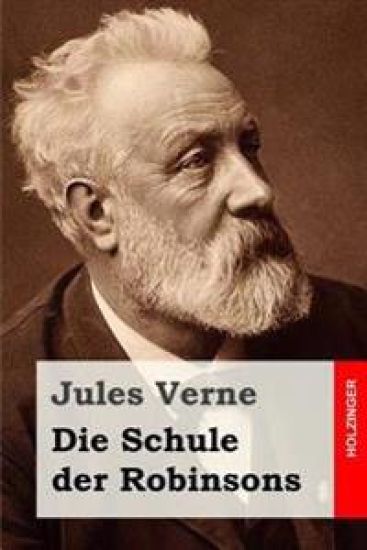
Jules Verne: Die Schule der Robinsons Edition Holzinger. Taschenbuch Berliner Ausgabe, 2015 Vollst ndiger, durchgesehener Neusatz bearbeitet und eingerichtet von Michael Holzinger L' COLE DES ROBINSONS (entstanden 1881). Frz. Vorabdruck: Magasin d'Education et de R cr ation 1.1.-1.12.1882. Frz. Buch-Erstausgabe: J. Hetzel, Paris 1882. Dt. Buch-Erstausgabe: A. Hartleben, Wien Pest Leipzig 1885, ausgeliefert Juni 1885. Textgrundlage ist die Ausgabe: Jules Verne: Die Schule der Robinsons. Bekannte und unbekannte Welten. Abenteuerliche Reisen von Julius Verne, Band XLI, Wien, Pest, Leipzig: A. Hartleben, 1887. Herausgeber der Reihe: Michael Holzinger Reihengestaltung: Viktor Harvion Gesetzt aus Minion Pro, 11 pt.

Journey to the center of the Earth: (low cost). limited edition
Jules Verne
Createspace Independent Publishing Platform
2015
nidottu
The story begins in May 1863, in the Lidenbrock house in Hamburg, Germany, with Professor Lidenbrock rushing home to peruse his latest purchase, an original runic manuscript of an Icelandic saga written by Snorri Sturluson ("Heimskringla"; the chronicle of the Norwegian kings who ruled over Iceland). While looking through the book, Lidenbrock and his nephew Axel find a coded note written in runic script. (This was a first indication of Verne's love for cryptography. Coded, cryptic or incomplete messages as a plot device would continue to appear in many of his works and in each case Verne would go a long way to explain not only the code used but also the mechanisms used to retrieve the original text.) Lidenbrock and Axel transliterate the runic characters into Latin letters, revealing a message written in a seemingly bizarre code. Lidenbrock attempts a decipherment, deducing the message to be a kind of transposition cipher; but his results are as meaningless as the original. Professor Lidenbrock decides to lock everyone in the house and force himself and the others (Axel, and the maid, Martha) to go without food until he cracks the code. Axel discovers the answer when fanning himself with the deciphered text: Lidenbrock's decipherment was correct, and only needs to be read backwards to reveal sentences written in rough Latin. 1] Axel decides to keep the secret hidden from Professor Lidenbrock, afraid of what the Professor might do with the knowledge, but after two days without food he cannot stand the hunger and reveals the secret to his uncle. Lidenbrock translates the note, which is revealed to be a medieval note written by the (fictional) Icelandic alchemist Arne Saknussemm, who claims to have discovered a passage to the centre of the Earth via Sn fell in Iceland.

Das Dampfhaus (Großdruck): Beide Teile in einem Buch
Jules Verne
Createspace Independent Publishing Platform
2015
nidottu
Jules Verne: Das Dampfhaus. Beide Teile in einem Buch Lesefreundlicher Gro druck in 16-pt-Schrift Edition Holzinger. Gro format, 216 x 279 mm Berliner Ausgabe, 2015 Vollst ndiger, durchgesehener Neusatz bearbeitet und eingerichtet von Michael Holzinger LA MAISON VAPEUR. Voyage travers I'Inde septentrionale (entstanden 1879-1880). Frz. Vorabdruck: Magasin d'Education et de R cr ation 1.12.1879-15.12.1880. Frz. Buch-Erstausgabe: J. Hetzel, Paris 1880. Dt. Buch-Erstausgabe: A. Hartleben, Wien Pest Leipzig 1881, ausgeliefert November 1880. Auch erschienen unter den Titeln Der Stahlelefant und Im Elefantenlokomobil durch Nordindien. Textgrundlage ist die Ausgabe: Jules Verne: Das Dampfhaus. Bekannte und unbekannte Welten. Abenteuerliche Reisen von Julius Verne, Band XXXV-XXXVI, Wien, Pest, Leipzig: A. Hartleben, 1882. Herausgeber der Reihe: Michael Holzinger Reihengestaltung: Viktor Harvion Gesetzt aus Minion Pro, 16 pt.

Plot summary The story starts in London on Tuesday, October 1, 1872. Fogg is a rich English gentleman living in solitude. Despite his wealth, Fogg lives a modest life with habits carried out with mathematical precision. Very little can be said about his social life other than that he is a member of the Reform Club. Having dismissed his former valet, James Forster, for bringing him shaving water at 84 F (29 C) instead of 86 F (30 C), Fogg hires a Frenchman by the name of Jean Passepartout as a replacement. At the Reform Club, Fogg gets involved in an argument over an article in The Daily Telegraph stating that with the opening of a new railway section in India, it is now possible to travel around the world in 80 days. He accepts a wager for 20,000 (equal to about 1.6 million today) from his fellow club members, which he will receive if he makes it around the world in 80 days. Accompanied by Passepartout, he leaves London by train at 8:45 P. M. on Wednesday, October 2, 1872, and is due back at the Reform Club at the same time 80 days later, Saturday, December 21, 1872. Fogg and Passepartout reach Suez in time. While disembarking in Egypt, they are watched by a Scotland Yard detective named Fix, who has been dispatched from London in search of a bank robber. Because Fogg matches the vague description of the robber, Fix mistakes Fogg for the criminal. Since he cannot secure a warrant in time, Fix boards the steamer conveying the travellers to Bombay. Fix becomes acquainted with Passepartout without revealing his purpose. Fogg promises the steamer engineer a large reward if he gets them to Bombay early. They dock two days ahead of schedule. After reaching India they take a train from Bombay to Calcutta. Fogg learns that the Daily Telegraph article was wrong - the railroad ends at Kholby and starts again 50 miles further on at Allahabad. Fogg buys an elephant, hires a guide, and starts toward Allahabad.....
Journey to the center of the Earth 1864
Jules Verne
Createspace Independent Publishing Platform
2015
nidottu
The story begins in May 1863, in the Lidenbrock house in Hamburg, Germany, with Professor Lidenbrock rushing home to peruse his latest purchase, an original runic manuscript of an Icelandic saga written by Snorri Sturluson ("Heimskringla"; the chronicle of the Norwegian kings who ruled over Iceland). While looking through the book, Lidenbrock and his nephew Axel find a coded note written in runic script. (This was a first indication of Verne's love for cryptography. Coded, cryptic or incomplete messages as a plot device would continue to appear in many of his works and in each case Verne would go a long way to explain not only the code used but also the mechanisms used to retrieve the original text.) Lidenbrock and Axel transliterate the runic characters into Latin letters, revealing a message written in a seemingly bizarre code. Lidenbrock attempts a decipherment, deducing the message to be a kind of transposition cipher; but his results are as meaningless as the original. Professor Lidenbrock decides to lock everyone in the house and force himself and the others (Axel, and the maid, Martha) to go without food until he cracks the code. Axel discovers the answer when fanning himself with the deciphered text: Lidenbrock's decipherment was correct, and only needs to be read backwards to reveal sentences written in rough Latin. 1] Axel decides to keep the secret hidden from Professor Lidenbrock, afraid of what the Professor might do with the knowledge, but after two days without food he cannot stand the hunger and reveals the secret to his uncle. Lidenbrock translates the note, which is revealed to be a medieval note written by the (fictional) Icelandic alchemist Arne Saknussemm, who claims to have discovered a passage to the centre of the Earth via Sn fell in Iceland.
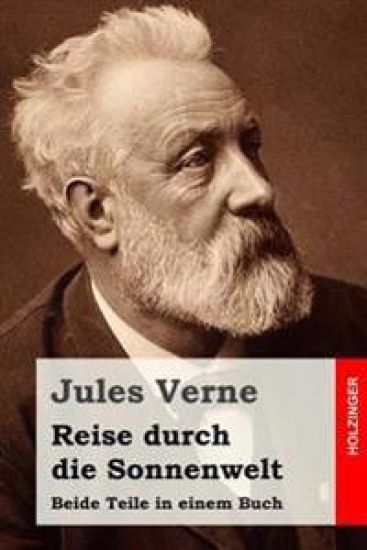
Reise durch die Sonnenwelt: Beide Teile in einem Buch
Jules Verne
Createspace Independent Publishing Platform
2015
nidottu
Jules Verne: Reise durch die Sonnenwelt. Beide Teile in einem Buch Edition Holzinger. Taschenbuch Berliner Ausgabe, 2015 Vollst ndiger, durchgesehener Neusatz bearbeitet und eingerichtet von Michael Holzinger HECTOR SERVADAC. Voyages et aventures travers le monde solaire (entstanden 1874-1876). Frz. Vorabdruck: Magasin d'Education et de R cr ation 1.1.-15.12.1877. Frz. Buch-Erstausgabe: J. Hetzel, Paris 1877. Dt. Vorabdruck: Humoristische Bl tter, Beilage Neue Fliegende Bl tter, 7.10.1877-12.5.1878 (Nr. 41-53, 1-19). Dt. Buch-Erstausgabe: A. Hartleben, Wien Pest Leipzig 1878, ausgeliefert November 1877. Auch erschienen unter den Titeln Hektor Servadacs Reise durch die Sonnenwelt, Hektor Servadacs Weltraumreise und Reise durch das Sonnensystem. Textgrundlage ist die Ausgabe: Jules Verne: Reise durch die Sonnenwelt. Bekannte und unbekannte Welten. Abenteuerliche Reisen von Julius Verne, Band XXV-XXVI, Wien, Pest, Leipzig: A. Hartleben, 1878. Herausgeber der Reihe: Michael Holzinger Reihengestaltung: Viktor Harvion Gesetzt aus Minion Pro, 11 pt.

Reise durch die Sonnenwelt (Großdruck): Beide Teile in einem Buch
Jules Verne
Createspace Independent Publishing Platform
2015
nidottu
Jules Verne: Reise durch die Sonnenwelt. Beide Teile in einem Buch Lesefreundlicher Gro druck in 16-pt-Schrift Edition Holzinger. Gro format, 216 x 279 mm Berliner Ausgabe, 2015 Vollst ndiger, durchgesehener Neusatz bearbeitet und eingerichtet von Michael Holzinger HECTOR SERVADAC. Voyages et aventures travers le monde solaire (entstanden 1874-1876). Frz. Vorabdruck: Magasin d'Education et de R cr ation 1.1.-15.12.1877. Frz. Buch-Erstausgabe: J. Hetzel, Paris 1877. Dt. Vorabdruck: Humoristische Bl tter, Beilage Neue Fliegende Bl tter, 7.10.1877-12.5.1878 (Nr. 41-53, 1-19). Dt. Buch-Erstausgabe: A. Hartleben, Wien Pest Leipzig 1878, ausgeliefert November 1877. Auch erschienen unter den Titeln Hektor Servadacs Reise durch die Sonnenwelt, Hektor Servadacs Weltraumreise und Reise durch das Sonnensystem. Textgrundlage ist die Ausgabe: Jules Verne: Reise durch die Sonnenwelt. Bekannte und unbekannte Welten. Abenteuerliche Reisen von Julius Verne, Band XXV-XXVI, Wien, Pest, Leipzig: A. Hartleben, 1878. Herausgeber der Reihe: Michael Holzinger Reihengestaltung: Viktor Harvion Gesetzt aus Minion Pro, 16 pt.
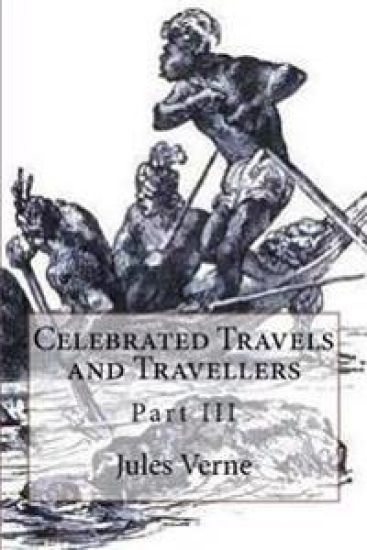
Celebrated Travels and Travellers: Part III
Jules Verne
Createspace Independent Publishing Platform
2015
nidottu
This narrative will comprehend not only all the explorations made in past ages, but also all the new discoveries which have of late years so greatly interested the scientific world. In order to give to this work-enlarged perforce by the recent labours of modern travellers, -all the accuracy possible, I have called in the aid of a man whom I with justice regard as one of the most competent geographers of the present day: M. Gabriel Marcel, attached to the Biblioth que Nationale. With the advantage of his acquaintance with several foreign languages which are unknown to me, we have been able to go to the fountain-head, and to derive all information from absolutely original documents. Our readers will, therefore, render to M. Marcel the credit due to him for his share in a work which will demonstrate what manner of men the great travellers have been, from the time of Hanno and Herodotus down to that of Livingstone and Stanley. JULES VERNE.
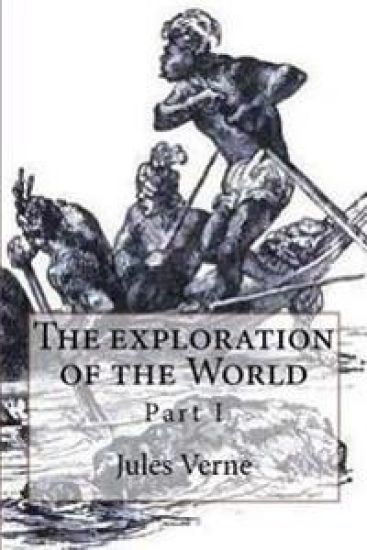
The exploration of the World: Part I
Jules Verne
Createspace Independent Publishing Platform
2015
nidottu
This narrative will comprehend not only all the explorations made in past ages, but also all the new discoveries which have of late years so greatly interested the scientific world. In order to give to this work-enlarged perforce by the recent labours of modern travellers, -all the accuracy possible, I have called in the aid of a man whom I with justice regard as one of the most competent geographers of the present day: M. Gabriel Marcel, attached to the Biblioth que Nationale. With the advantage of his acquaintance with several foreign languages which are unknown to me, we have been able to go to the fountain-head, and to derive all information from absolutely original documents. Our readers will, therefore, render to M. Marcel the credit due to him for his share in a work which will demonstrate what manner of men the great travellers have been, from the time of Hanno and Herodotus down to that of Livingstone and Stanley. JULES VERNE.
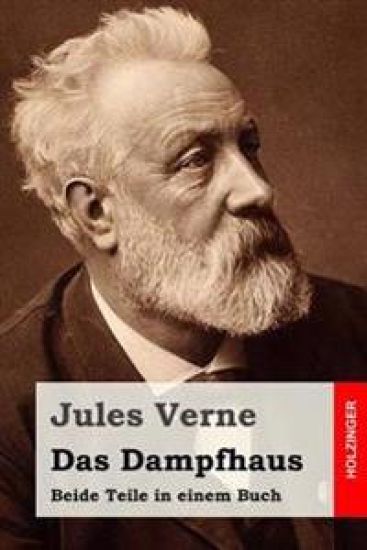
Das Dampfhaus: Beide Teile in einem Buch
Jules Verne
Createspace Independent Publishing Platform
2015
nidottu
Jules Verne: Das Dampfhaus. Beide Teile in einem Buch Edition Holzinger. Taschenbuch Berliner Ausgabe, 2015 Vollst ndiger, durchgesehener Neusatz bearbeitet und eingerichtet von Michael Holzinger LA MAISON VAPEUR. Voyage travers I'Inde septentrionale (entstanden 1879-1880). Frz. Vorabdruck: Magasin d'Education et de R cr ation 1.12.1879-15.12.1880. Frz. Buch-Erstausgabe: J. Hetzel, Paris 1880. Dt. Buch-Erstausgabe: A. Hartleben, Wien Pest Leipzig 1881, ausgeliefert November 1880. Auch erschienen unter den Titeln Der Stahlelefant und Im Elefantenlokomobil durch Nordindien. Textgrundlage ist die Ausgabe: Jules Verne: Das Dampfhaus. Bekannte und unbekannte Welten. Abenteuerliche Reisen von Julius Verne, Band XXXV-XXXVI, Wien, Pest, Leipzig: A. Hartleben, 1882. Herausgeber der Reihe: Michael Holzinger Reihengestaltung: Viktor Harvion Gesetzt aus Minion Pro, 11 pt.

Die Jangada: 800 Meilen auf dem Amazonenstrom
Jules Verne
Createspace Independent Publishing Platform
2015
nidottu
Jules Verne: Die Jangada. 800 Meilen auf dem Amazonenstrom Edition Holzinger. Taschenbuch Berliner Ausgabe, 2016, 4. Auflage Durchgesehener Neusatz bearbeitet und eingerichtet von Michael Holzinger LA JANGADA. Huit cents Iieues sur I'Amazone (entstanden 1880-1881). Frz. Vorabdruck: Magasin d'Education et de R cr ation 1.1.-1. 12.1881. Frz. Buch-Erstausgabe: J. Hetzel, Paris 1881. Dt. Buch-Erstausgabe: A. Hartleben, Wien Pest Leipzig 1882, ausgeliefert November 1881. Auch erschienen unter dem Titel 800 Meilen auf dem Amazonas. Textgrundlage ist die Ausgabe: Jules Verne: Die Jangada. Bekannte und unbekannte Welten. Abenteuerliche Reisen von Julius Verne, Band XXXIX-XL, Wien, Pest, Leipzig: A. Hartleben, 1883. Herausgeber der Reihe: Michael Holzinger Reihengestaltung: Viktor Harvion Gesetzt aus der Minion Pro, 11 pt.

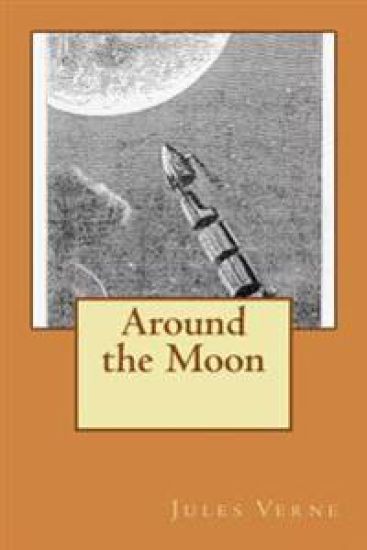
Around the Moon (French: Autour de la Lune, 1870), Jules Verne's sequel to From the Earth to the Moon, is a science fiction novel continuing the trip to the moon which left the reader in suspense after the previous novel. It was later combined with From the Earth to the Moon to create A Trip to the Moon and Around It. Plot Having been fired out of the giant Columbiad space gun, the Baltimore Gun Club's bullet-shaped projectile, along with its three passengers, Barbicane, Nicholl and Michel Ardan, begins the five-day trip to the moon. A few minutes into the journey, a small, bright asteroid passes within a few hundred yards of them, but luckily does not collide with the projectile. The asteroid had been captured by the Earth's gravity and had become a second moon. An illustration from Jules Verne's novel "Around the Moon" drawn by mile-Antoine Bayard and Alphonse de Neuville, September 16, 1872 The three travelers undergo a series of adventures and misadventures during the rest of the journey, including disposing of the body of a dog out a window, suffering intoxication by gases, and making calculations leading them, briefly, to believe that they are to fall back to Earth. During the latter part of the voyage, it becomes apparent that the gravitational force of their earlier encounter with the asteroid has caused the projectile to deviate from its course. The projectile enters lunar orbit, rather than landing on the moon as originally planned. Barbicane, Ardan and Nicholl begin geographical observations with opera glasses. The projectile then dips over the northern hemisphere of the moon, into the darkness of its shadow. It is plunged into extreme cold, before emerging into the light and heat again. They then begin to approach the moon's southern hemisphere. From the safety of their projectile, they gain spectacular views of Tycho, one of the greatest of all craters on the moon. The three men discuss the possibility of life on the moon, and conclude that it is barren. The projectile begins to move away from the moon, towards the 'dead point' (the place at which the gravitational attraction of the moon and Earth becomes equal). Michel Ardan hits upon the idea of using the rockets fixed to the bottom of the projectile (which they were originally going to use to deaden the shock of landing) to propel the projectile towards the moon and hopefully cause it to fall onto it, thereby achieving their mission. When the projectile reaches the point of neutral attraction, the rockets are fired, but it is too late. The projectile begins a fall onto the Earth from a distance of 160,000 miles, and it is to strike the Earth at a speed of 115,200 miles per hour, the same speed at which it left the mouth of the Columbiad. All hope seems lost for Barbicane, Nicholl and Ardan. Four days later, the crew of a US Navy vessel USS Susquehanna spots a bright meteor fall from the sky into the sea. This turns out to be the returning projectile, and the three men inside are found to be alive and are rescued. They are treated to lavish homecoming celebrations as the first people to leave Earth.

Die Schule der Robinsons (Großdruck)
Jules Verne
Createspace Independent Publishing Platform
2015
nidottu
Jules Verne: Die Schule der Robinsons Lesefreundlicher Gro druck in 16-pt-Schrift Edition Holzinger. Gro format, 216 x 279 mm Berliner Ausgabe, 2015 Vollst ndiger, durchgesehener Neusatz bearbeitet und eingerichtet von Michael Holzinger L' COLE DES ROBINSONS (entstanden 1881). Frz. Vorabdruck: Magasin d'Education et de R cr ation 1.1.-1.12.1882. Frz. Buch-Erstausgabe: J. Hetzel, Paris 1882. Dt. Buch-Erstausgabe: A. Hartleben, Wien Pest Leipzig 1885, ausgeliefert Juni 1885. Textgrundlage ist die Ausgabe: Jules Verne: Die Schule der Robinsons. Bekannte und unbekannte Welten. Abenteuerliche Reisen von Julius Verne, Band XLI, Wien, Pest, Leipzig: A. Hartleben, 1887. Herausgeber der Reihe: Michael Holzinger Reihengestaltung: Viktor Harvion Gesetzt aus Minion Pro, 16 pt.