Kirjailija
Kakuzo Okakura
Kirjat ja teokset yhdessä paikassa: 105 kirjaa, julkaisuja vuosilta 1906–2026, suosituimpiin kuuluu The Book of Tea. Vertaile teosten hintoja ja tarkista saatavuus suomalaisista kirjakaupoista.
Nimi esiintyy myös muodoissa: Kakuzo¯ Okakura
105 kirjaa
Kirjojen julkaisuvuodet: 1906–2026.

For a generation adjusting painfully to the demands of a modern industrial and commercial society, Asia came to represent an alternative vision of the good life: aesthetically austere, socially aristocratic, and imbued with spirituality. The Book of Tea was originally written in English and sought to address the inchoate yearnings of disaffected Westerners. In a flash of inspiration, Okakura saw that the formal tea party as practiced in New England was a distant cousin of the Japanese tea ceremony, and that East and West had thus "met in the tea-cup."

"A seminal guide to Asian life and thought. . . . Very highly recommended."-Midwest Book Review The classic 1906 essay on tea drinking, its history, aesthetics, and deep connection to Japanese culture. Kakuzo Okakura felt "Teaism" could influence the world: "Tea with us becomes more than an idealisation of the form of drinking; it is a religion of the art of life."

"A seminal guide to Asian life and thought. . . . Very highly recommended."-Midwest Book Review The classic 1906 essay on tea drinking, its history, aesthetics, and deep connection to Japanese culture. Kakuzo Okakura felt "Teaism" could influence the world: "Tea with us becomes more than an idealisation of the form of drinking; it is a religion of the art of life."
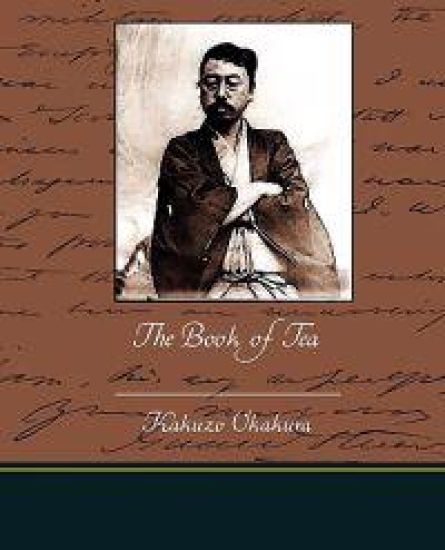
"The Book of Tea" is a description of the history, underlying philosophy, and aesthetics of the Japanese tea ceremony. It is also, and more importantly, a book about how to live a meaningful life. It is about nature and simplicity, about art and beauty, about the unfathomable depth in the small things in life that surround us. In this edition of "The Book of Tea," the author, Kakuzo Okakura, writes: "The way of tea is founded on a love of what is beautiful in our common everyday lives. It teaches purity and harmony, mutual respect, and the importance of nature and the individual. It is essentially a worship of the imperfect. It is an attempt to accomplish something possible in this impossible world of ours." Part of the "Classics Retold to be Read, Not just Revered" series, the aim of this retelling of "The Book of Tea" is to make the book more widely accessible -- without diluting its intellectual content -- for both young and emerging adults seeking broader perspectives as well as intellectually curious older readers. The book will be of particular interest to those who want a deeper insight into the tea ceremony, flower arrangement, and Japanese aesthetics. The text is set in a slightly larger typeface for easier reading. The AuthorKakuzo Okakura (1863-1913), was born in Yokohama five years before the outset of the Meiji period, which marked the end of over 200 years of national isolation and the beginning of Japan's headlong rush to transform itself into a military and industrial power that could resist Western incursions and colonization. Yokohama was a boisterous international port, and Okakura's father, a samurai stationed there for business reasons, was a progressive thinker, who started Okakura learning English at the age of six. Okakura's most important works, including "The Book of Tea" (1906), were written in English, and devoted to explaining and defending Japanese and Asian culture. The era in which Okakura lived was characterized by Western inroads into Asian countries. The West, thanks to the industrial revolution, was materially and militarily superior to the East, and considered itself to be culturally superior as well. Through heroic effort, Japan built up its industry and military, and when it emerged victorious from the Russo-Japanese War in 1905, it became the first non-Western country to achieve international recognition by Western powers. Okakura, however, was not concerned with this type of recognition. He wanted recognition for Japanese and Eastern arts and culture, and he felt the need to preserve them from increasing Westernization. In 1887 he was one of the founders of the first Japanese fine arts academy, and in 1898 he helped found the Japanese Institute of Fine Arts. In 1904 he was invited to the Boston Museum of Fine Arts as a curator, and in 1910 he became the first head of the Asian art division of that Museum. He died in 1913 at the age of fifty, having devoted his life to preserving Japan's traditional cultural heritage. Important figures influenced by Okakura include the German philosopher Martin Heidegger, the American poet Ezra Pound, the Indian poet Rabindranth Tagore, the American art collector Isabella Stewart Gardner, and the British translator Arthur Waley.
"A seminal guide to Asian life and thought... Very highly recommended."-Midwest Book Review The classic 1906 essay on tea drinking, its history, aesthetics, and deep connection to Japanese culture. Kakuzo Okakura felt "Teaism" could influence the world: "Tea with us becomes more than an idealisation of the form of drinking; it is a religion of the art of life."