Kirjojen hintavertailu – 12 903 725 kirjaa ja 27 kauppaa

Kirjailija

Kate Brown

Kirjat ja teokset yhdessä paikassa: 24 kirjaa, julkaisuja vuosilta 2005–2027, suosituimpiin kuuluu Gender in Conflicts. Vertaile teosten hintoja ja tarkista saatavuus suomalaisista kirjakaupoista.

24 kirjaa

Kirjojen julkaisuvuodet: 2005–2027.

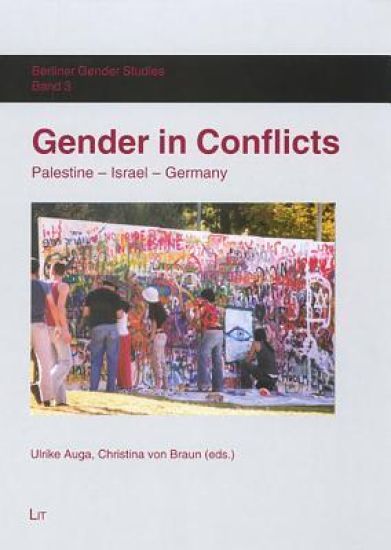
Gender in Conflicts

Gender in Conflicts

Theodore Zev Weiss; Christina von Braun; Jurgen Zimmerer; Annette Becker; Kate Brown; Omer Bartov; Na'ama Shik; Elizabeth R. Baer; Dori Laub

Lit Verlag
2007
nidottu
Gender order is one domain in which claims to power are demarcated in societies based on a religious codex as well as in secular societies such as nation-states. Gender order especially becomes the area in which conflicts are carried out when a society experiences transition or clashes with another society. At a time when Israel and Palestine face an escalation of their conflict and Germany is undergoing profound changes, renowned scholars discuss the implications on the gender order from their individual vantage points. The transdisciplinary articles focus on Gender in the context of Knowledge, Arts and Representation, Memory and Scripture, Political Transition, and Life Sciences. "Ulrike Auga" is assistant professor at Humboldt University, Berlin (Germany). "Christina von Braun" is the head of the Chair for Cultural History and Gender at Humboldt University, Berlin.

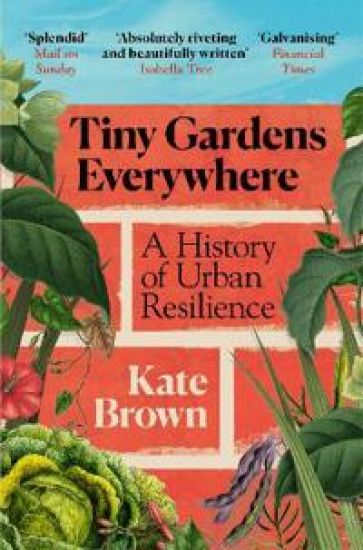
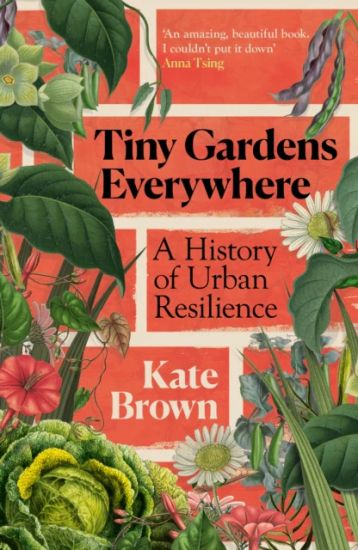
Tiny Gardens Everywhere

Tiny Gardens Everywhere

Kate Brown

Vintage Publishing
2026
sidottu

Halvin toimitettuna 26,00 €

In the heart of bustling European and American cities lies an overlooked yet vibrant corner of resilience and ingenuity: our gardens. Over the past three hundred years, from pre-Industrial England to modern-day Washington, via the Paris Commune, Barrackia in pre-war Berlin and contemporary Amsterdam, ordinary people, working with each other and with nature, cultivated life in the unlikeliest of places. These tiny gardens, often born from necessity and shaped by precarity, migration and environmental crisis, thrived by recycling nutrients, remedying contaminated soil and transforming how we think about our relationship to the earth. Tiny Gardens Everywhere is a hymn to the most fertile agriculture in recorded human history, showing that it occurred not on farms – the product of gigantic exertions of fossil fuels and technology – but with little effort in small garden beds. And the resourcefulness, intuition and inherited methods of their growers accomplished many of today’s sustainability goals in producing local, diverse and organic food. Acclaimed historian Kate Brown brings to the fore the long and battered story of gardeners and their gardens, asking what happens when these urban Edens are not seen as retreats from the city but become part of its social fabric, alive with histories of migration, conflict and resistance. This is a book about land, but also about housing, trauma, repair and the quiet revolutions that begin when someone plants a seed in unloved ground.
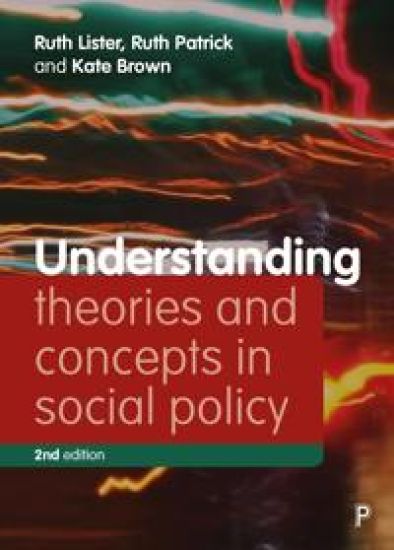
Understanding Theories and Concepts in Social Policy

Understanding Theories and Concepts in Social Policy

Ruth Lister; Ruth Patrick; Kate Brown

Bristol University Press
2024
nidottu

Halvin toimitettuna 41,00 €

Demonstrating the relevance of theory to political and policy debates and practice, this lively and accessible second edition helps students to grasp the real-life implications of social policy theory. The updated text includes consideration of contemporary shifts in welfare ideologies in the context of global austerity and the UK Coalition and Conservative governments since 2010. With a new chapter focusing on critical debates about disability, sexuality and the environment, this textbook also includes fresh reflections on migration, conditionality, resilience, social justice and human rights. Key features include: • real-life examples from UK and international politics and policy to explain and illuminate the significance of social policy theory; • key questions for student reflection and engagement; and • bulleted chapter summaries and annotated further readings at the end of every chapter. This new edition is a dynamic, engaging and valuable introduction to the key theoretical perspectives and concepts deployed in social policy.
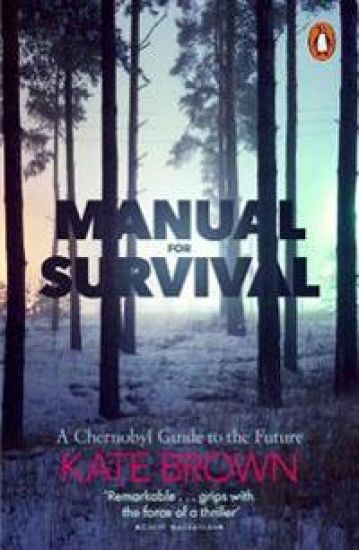
Manual for Survival

Manual for Survival

Kate Brown

Penguin
2020
pokkari
The official death toll of the 1986 Chernobyl accident, 'the worst nuclear disaster in history', is only 54, and stories today commonly suggest that nature is thriving there. Yet award-winning historian Kate Brown uncovers a much more disturbing story, one in which radioactive isotopes caused hundreds of thousands of casualties, and the magnitude of this human and ecological catastrophe has been actively suppressed. Based on a decade of archival and on-the-ground research, Manual for Survival is a gripping expose of the consequences of nuclear radiation in the wake of Chernobyl - and the plot to cover up the truth. As Brown discovers, Soviet scientists, bureaucrats, and civilians documented staggering increases in cases of birth defects, child mortality, cancers and a multitude of life-altering diseases years after the disaster. Worried that this evidence would blow the lid on the effects of massive radiation released from weapons-testing during the Cold War, scientists and diplomats from international organizations, including the UN, tried to bury or discredit it. Yet Brown also encounters many everyday heroes, often women, who fought to bring attention to the ballooning health catastrophe, and adapt to life in a post-nuclear landscape, where dangerously radioactive berries, distorted trees and birth defects still persist today. An astonishing historical detective story, Manual for Survival makes clear the irreversible impact of nuclear energy on every living thing, not just from Chernobyl, but from eight decades of radiaoactive fallout from weapons development.
Manual for Survival: An Environmental History of the Chernobyl Disaster
After the Chernobyl nuclear disaster in 1986, international aid organizations sought to help the victims but were stymied by post-Soviet political roadblocks. Efforts to gain access to the site of catastrophic radiation damage were denied, and the residents of Chernobyl were given no answers as their lives hung in the balance. Drawing on a decade of archival research and on-the-ground interviews in Ukraine, Russia, and Belarus, Kate Brown unveils the full breadth of the devastation and the whitewash that followed. Her findings make clear the irreversible impact of man-made radioactivity on every living thing; and hauntingly, they force us to confront the untold legacy of decades of weapons-testing and other catastrophic nuclear incidents.
Manual for Survival

Manual for Survival

Kate Brown

WW Norton Co
2019
sidottu
Dear Comrades! Since the accident at the Chernobyl power plant, there has been a detailed analysis of the radioactivity of the food and territory of your population point. The results show that living and working in your village will cause no harm to adults or children. So began a pamphlet issued by the Ukrainian Ministry of Health-which, despite its optimistic beginnings, went on to warn its readers against consuming local milk, berries, or mushrooms, or going into the surrounding forest. This was only one of many misleading bureaucratic manuals that, with apparent good intentions, seriously underestimated the far-reaching consequences of the Chernobyl nuclear catastrophe. After 1991, international organizations from the Red Cross to Greenpeace sought to help the victims, yet found themselves stymied by post-Soviet political circumstances they did not understand. International diplomats and scientists allied to the nuclear industry evaded or denied the fact of a wide-scale public health disaster caused by radiation exposure. Efforts to spin the story about Chernobyl were largely successful; the official death toll ranges between thirty-one and fifty-four people. In reality, radiation exposure from the disaster caused between 35,000 and 150,000 deaths in Ukraine alone. No major international study tallied the damage, leaving Japanese leaders to repeat many of the same mistakes after the Fukushima nuclear disaster in 2011. Drawing on a decade of archival research and on-the-ground interviews in Ukraine, Russia, and Belarus, Kate Brown unveils the full breadth of the devastation and the whitewash that followed. Her findings make clear the irreversible impact of man-made radioactivity on every living thing; and hauntingly, they force us to confront the untold legacy of decades of weapons-testing and other nuclear incidents, and the fact that we are emerging into a future for which the survival manual has yet to be written.
Women of Versailles

Women of Versailles

Kate Brown

Seren
2017
nidottu
Adelaide, spirited daughter of Louis XV is at odds with her father’s decadent but restrictive court of Versailles in 1745, and would rather learn to fence than curtsey. Forty-four years on Madame stalks the corridors of the palace as it is stormed by the women of Paris and Revolution looms. But so much has changed for the hopes of one young girl…
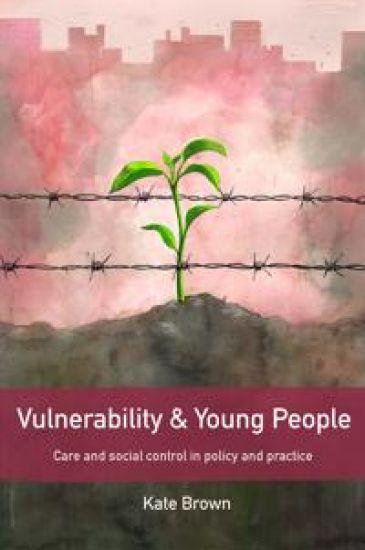
Vulnerability and Young People

Vulnerability and Young People

Kate Brown

Policy Press
2016
nidottu
The notion of 'vulnerability' is now a prominent motif in social policy in the UK and beyond, with important implications for those deemed 'vulnerable'. Yet the effects of recalibrating welfare and criminal justice processes on the basis of vulnerability often escape attention. This distinctive book draws together lived experiences of vulnerability with academic and practical applications of the concept, exploring the repercussions of a 'vulnerability zeitgeist' in UK policy and practice. Through a focus on the voices and perspectives of 'vulnerable' young people and the professionals who support them, it questions how far the rise of vulnerability serves the interests of disadvantaged citizens. Illuminating where support shades into more controlling practices, the book is important reading for scholars, students and policy-makers interested in exclusion, precariousness, deviance and youth.
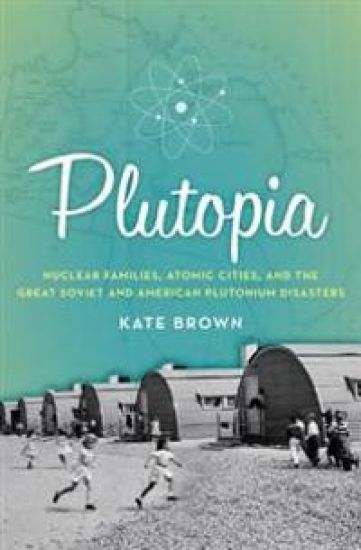
Plutopia: Nuclear Families, Atomic Cities, and the Great Soviet and American Plutonium Disasters
While many transnational histories of the nuclear arms race have been written, Kate Brown provides the first definitive account of the great plutonium disasters of the United States and the Soviet Union. In Plutopia, Brown draws on official records and dozens of interviews to tell the extraordinary stories of Richland, Washington and Ozersk, Russia-the first two cities in the world to produce plutonium. To contain secrets, American and Soviet leaders created plutopias--communities of nuclear families living in highly-subsidized, limited-access atomic cities. Fully employed and medically monitored, the residents of Richland and Ozersk enjoyed all the pleasures of consumer society, while nearby, migrants, prisoners, and soldiers were banned from plutopia--they lived in temporary "staging grounds" and often performed the most dangerous work at the plant. Brown shows that the plants' segregation of permanent and temporary workers and of nuclear and non-nuclear zones created a bubble of immunity, where dumps and accidents were glossed over and plant managers freely embezzled and polluted. In four decades, the Hanford plant near Richland and the Maiak plant near Ozersk each issued at least 200 million curies of radioactive isotopes into the surrounding environment--equaling four Chernobyls--laying waste to hundreds of square miles and contaminating rivers, fields, forests, and food supplies. Because of the decades of secrecy, downwind and downriver neighbors of the plutonium plants had difficulty proving what they suspected, that the rash of illnesses, cancers, and birth defects in their communities were caused by the plants' radioactive emissions. Plutopia was successful because in its zoned-off isolation it appeared to deliver the promises of the American dream and Soviet communism; in reality, it concealed disasters that remain highly unstable and threatening today. An untold and profoundly important piece of Cold War history, Plutopia invites readers to consider the nuclear footprint left by the arms race and the enormous price of paying for it.
Vulnerability and Young People

Vulnerability and Young People

Kate Brown

Policy Press
2015
sidottu
The notion of 'vulnerability' is now a prominent motif in social policy in the UK and beyond, with important implications for those deemed 'vulnerable'. Yet the effects of recalibrating welfare and criminal justice processes on the basis of vulnerability often escape attention. This distinctive book draws together lived experiences of vulnerability with academic and practical applications of the concept, exploring the repercussions of a 'vulnerability zeitgeist' in UK policy and practice. Through a focus on the voices and perspectives of 'vulnerable' young people and the professionals who support them, it questions how far the rise of vulnerability serves the interests of disadvantaged citizens. Illuminating where support shades into more controlling practices, the book is important reading for scholars, students and policy-makers interested in exclusion, precariousness, deviance and youth.
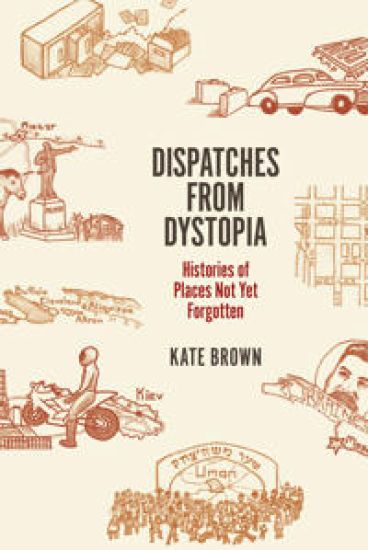
Dispatches from Dystopia

Dispatches from Dystopia

Kate Brown

University of Chicago Press
2015
sidottu
"Why are Kazakhstan and Montana the same place?" asks the opening chapter of Kate Brown's surprising and unusual journey into the histories of places on the margins, overlooked or erased. In turns out that a ruined mining town in Kazakhstan and Butte, Montana - America's largest environmental Superfund site - have much more in common than one would think thanks to similarities in climate, hucksterism, and the perseverance of their few hardy inhabitants. Taking readers to these and other unlikely locales, Dispatches from Dystopia delves into the very human and sometimes very fraught ways we come to understand a particular place, its people, and its history. In Dispatches from Dystopia, Brown wanders the Chernobyl Zone of Alienation, first on the Internet and then in person, to figure out which version - the real or the virtual - was the actual forgery. She also takes us to the basement of a hotel in Seattle to examine the personal possessions left in storage by Japanese-Americans on their way to internment camps in 1942. In Uman, Ukraine, we hide with Brown in a tree in order to witness the male-only annual Rosh Hashanah celebration of Hasidic Jews. In the Russian southern Urals, she speaks with the citizens of the small city of Kyshtym, where invisible radioactive pollutants have mysteriously blighted lives. Finally, Brown returns home to Elgin, Illinois, in the midwestern industrial rust belt to investigate the rise of "rustalgia" and how her formative experiences have inspired her obsession with modernist wastelands. Dispatches from Dystopia powerfully and movingly narrates the histories of locales that have been silenced, broken, or contaminated. In telling these previously unknown stories, Brown examines the making and unmaking of place, and the lives of the people who remain in the fragile landscapes that are left behind.
Plutopia: Nuclear Families, Atomic Cities, and the Great Soviet and American Plutonium Disasters
While many transnational histories of the nuclear arms race have been written, Kate Brown provides the first definitive account of the great plutonium disasters of the United States and the Soviet Union. In Plutopia, Brown draws on official records and dozens of interviews to tell the extraordinary stories of Richland, Washington and Ozersk, Russia-the first two cities in the world to produce plutonium. To contain secrets, American and Soviet leaders created plutopias--communities of nuclear families living in highly-subsidized, limited-access atomic cities. Fully employed and medically monitored, the residents of Richland and Ozersk enjoyed all the pleasures of consumer society, while nearby, migrants, prisoners, and soldiers were banned from plutopia--they lived in temporary "staging grounds" and often performed the most dangerous work at the plant. Brown shows that the plants' segregation of permanent and temporary workers and of nuclear and non-nuclear zones created a bubble of immunity, where dumps and accidents were glossed over and plant managers freely embezzled and polluted. In four decades, the Hanford plant near Richland and the Maiak plant near Ozersk each issued at least 200 million curies of radioactive isotopes into the surrounding environment--equaling four Chernobyls--laying waste to hundreds of square miles and contaminating rivers, fields, forests, and food supplies. Because of the decades of secrecy, downwind and downriver neighbors of the plutonium plants had difficulty proving what they suspected, that the rash of illnesses, cancers, and birth defects in their communities were caused by the plants' radioactive emissions. Plutopia was successful because in its zoned-off isolation it appeared to deliver the promises of the American dream and Soviet communism; in reality, it concealed disasters that remain highly unstable and threatening today. An untold and profoundly important piece of Cold War history, Plutopia invites readers to consider the nuclear footprint left by the arms race and the enormous price of paying for it.