
Kirjailija
Kate Chopin
Kirjat ja teokset yhdessä paikassa: 305 kirjaa, julkaisuja vuosilta 1969–2027, suosituimpiin kuuluu A Night In Acadie (1897), by Kate Chopin (Penguin Classics): original version. Vertaile teosten hintoja ja tarkista saatavuus suomalaisista kirjakaupoista.
305 kirjaa
Kirjojen julkaisuvuodet: 1969–2027.
The Awakening and Selected Short Stories
Kate Chopin
Createspace Independent Publishing Platform
2014
nidottu
Kate Chopin, born Katherine O'Flaherty (February 8, 1850 - August 22, 1904), was an American author of short stories and novels. She is now considered by some to have been an advocate of the feminist authors of the 20th century. From 1892 to 1895, she wrote short stories for both children and adults which were published in such magazines as Atlantic Monthly, Vogue, The Century Magazine, and The Youth's Companion. Her major works were two short story collections, Bayou Folk (1894) and A Night in Acadie (1897). Her important short stories included "Desiree's Baby," a tale of miscegenation in antebellum Louisiana (published in 1893), 1] "The Story of an Hour" (1894), 2] and "The Storm"(1898). "The Storm" is a sequel to "The 'Cadian Ball," which appeared in her first collection of short stories, Bayou Folk. 1] Chopin also wrote two novels: At Fault (1890) and The Awakening (1899), which are set in New Orleans and Grand Isle, respectively. The people in her stories are usually inhabitants of Louisiana. Many of her works are set in Natchitoches in north central Louisiana
The Awakening and Other Stories
Kate Chopin
Createspace Independent Publishing Platform
2014
nidottu
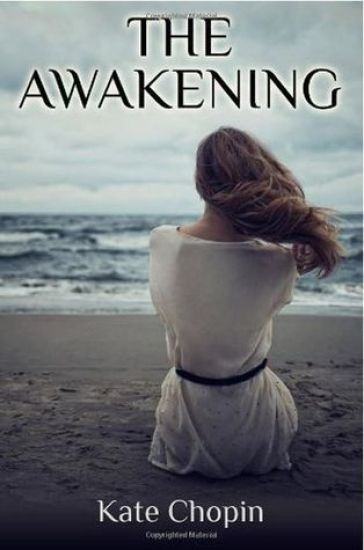
The Awakening: (Starbooks Classics Editions)
Kate Chopin
Createspace Independent Publishing Platform
2014
nidottu
The Awakening, originally titled A Solitary Soul, is a novel by Kate Chopin, first published in 1899. Set in New Orleans and the Southern Louisiana coast at the end of the nineteenth century, the plot centers on Edna Pontellier and her struggle to reconcile her increasingly unorthodox views on femininity and motherhood with the prevailing social attitudes of the turn-of-the-century South. It is one of the earliest American novels that focuses on women's issues without . It is also widely seen as a landmark work of early feminism, generating mixed reaction from contemporary readers and criticism. The novel's blend of realistic narrative, incisive social commentary, and psychological complexity makes The Awakening a precursor of American modernist literature; it prefigures the works of American novelists such as William Faulkner and Ernest Hemingway and echoes the works of contemporaries such as Edith Wharton and Henry James. It can also be considered among the first Southern works in a tradition that would culminate with the modern masterpieces of Faulkner, Flannery O'Connor, Eudora Welty, Katherine Anne Porter, and Tennessee Williams. Publication and critical reception The Awakening was particularly controversial upon publication in 1899. Although the novel was never technically banned, it was censored. Chopin's novel was considered immoral not only for its comparatively frank depictions of female sexual desire but also for its depiction of a protagonist who chafed against social norms and established gender roles. The public reaction to the novel was similar to the protests which greeted the publication and performance of Henrik Ibsen's landmark drama A Doll's House (1879), a work with which The Awakening shares an almost identical theme. Both contain a female protagonist who abandons her husband and children for self-fulfillment. However, published reviews ran the gamut from outright condemnation to the recognition of The Awakening as an important work of fiction by a gifted practitioner. Divergent reactions of two newspapers in Kate Chopin's hometown of St. Louis, Missouri reflect this. The St. Louis Republic labeled the novel "poison" and "too strong a drink for moral babes" and the St. Louis Mirror stated, "One would fain beg the gods, in pure cowardice, for sleep unending rather than to know what an ugly, cruel, loathsome Monster Passion can be when, like a tiger, it slowly awakens. This is the kind of awakening that impresses the reader in Mrs. Chopin's heroine." Later in the same year, the St. Louis Post-Dispatch praised the novel in "A St. Louis Woman Who Has Turned Fame Into Literature." As Chopin was the first woman from St. Louis to become a professional writer, she was of particular interest there. Some reviews indulged in outright vitriol, as when Public Opinion stated, "We are well-satisfied when Mrs. Pontellier deliberately swims out to her death in the waters of the gulf." Chopin's work also garnered qualified, though still negative, reviews. The Dial called The Awakening a "poignant spiritual tragedy" with the caveat that the novel was "not altogether wholesome in its tendencies." Similarly, The Congregationalist called Chopin's novel "a brilliant piece of writing" but concludes, "We cannot commend it." In the Pittsburgh Leader, Willa Cather set The Awakening alongside Madame Bovary, Gustave Flaubert's equally notorious and equally reviled novel of suburban ennui and unapologetic adultery-though Cather was no more impressed with the heroine than were most of her contemporaries. Cather "hope d] that Miss Chopin will devote that flexible, iridescent style of hers to a better cause."
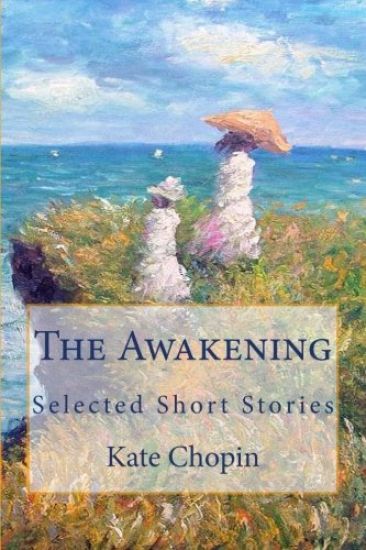
The Awakening: Selected Short Stories
Kate Chopin
Createspace Independent Publishing Platform
2014
nidottu
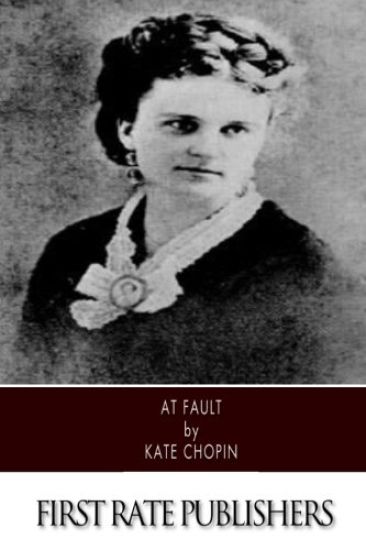
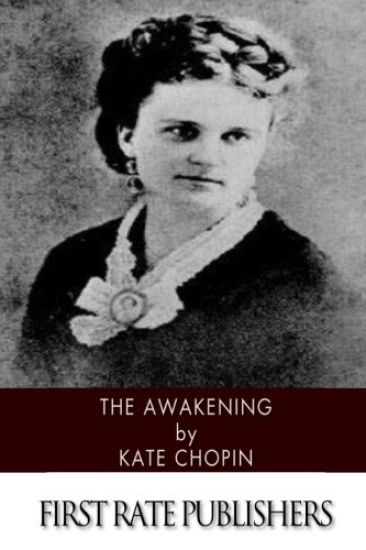
The Awakening and Selected Short Stories
Kate Chopin
Createspace Independent Publishing Platform
2013
nidottu
The Awakening, originally titled A Solitary Soul, is a novel by Kate Chopin, first published in 1899. Set in New Orleans and the Southern Louisiana coast at the end of the nineteenth century, the plot centers on Edna Pontellier and her struggle to reconcile her increasingly unorthodox views on femininity and motherhood with the prevailing social attitudes of the turn-of-the-century South. It is one of the earliest American novels that focuses on women's issues without condescension. It is also widely seen as a landmark work of early feminism, generating mixed reaction from contemporary readers and criticism. The novel's blend of realistic narrative, incisive social commentary, and psychological complexity makes The Awakening a precursor of American modernism; it prefigures the works of American novelists such as William Faulkner and Ernest Hemingway and echoes the works of contemporaries such as Edith Wharton and Henry James. It can also be considered among the first Southern works in a tradition that would culminate with the modern masterpieces of Faulkner, Flannery O'Connor, Eudora Welty, Katherine Anne Porter, and Tennessee Williams. "The voice of the sea is seductive, never ceasing, whispering, clamoring, murmuring, inviting the soul to wander in abysses of solitude." Kate Chopin, The Awakening

The Awakening: And Selected Short Stories
Kate Chopin
Createspace Independent Publishing Platform
2013
nidottu

The Awakening and Selected Short Stories
Kate Chopin
Createspace Independent Publishing Platform
2013
nidottu
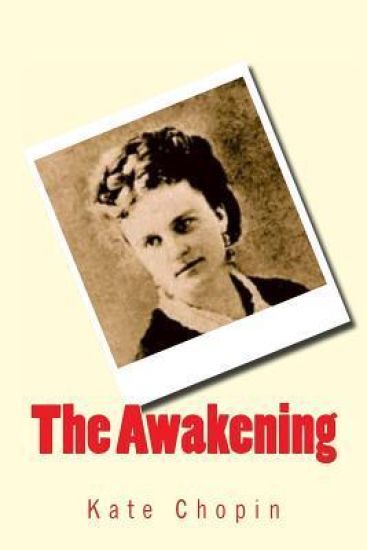
The Awakening and Selected Short StoriesBy Kate Chopin

THERE was nothing to do on the plantation so Tel sphore, having a few dollars in his pocket, thought he would go down and spend Sunday in the vicinity of Marksville. There was really nothing more to do in the vicinity of Marksville than in the neighborhood of his own small farm; but Elvina would not be down there, nor Amaranthe, nor any of Ma'me Valtour's daughters to harass him with doubt, to torture him with indecision, to turn his very soul into a weather-cock for love's fair winds to play with. Tel sphore at twenty-eight had long felt the need of a wife. His home without one was like an empty temple in which there is no altar, no offering. So keenly did he realize the necessity that a dozen times at least during the past year he had been on the point of proposing marriage to almost as many different young women of the neighborhood. Therein lay the difficulty, the trouble which Tel sphore experienced in making up his mind. Elvina's eyes were beautiful and had often tempted him to the verge of a declaration. But her skin was over swarthy for a wife; and her movements were slow and heavy; he doubted she had Indian blood, and we all know what Indian blood is for treachery. Amaranthe presented in her person none of these obstacles to matrimony. If her eyes were not so handsome as Elvina's, her skin was fine, and being slender to a fault, she moved swiftly about her household affairs, or when she walked the country lanes in going to church or to the store. Tel sphore had once reached the point of believing that Amaranthe would make him an excellent wife. He had even started out one day with the intention of declaring himself, when, as the god of chance would have it, Ma'me Valtour espied him passing in the road and enticed him to enter and partake of coffee and "baign s." He would have been a man of stone to have resisted, or to have remained insensible to the charms and accomplishments of the Valtour girls. Finally there was Ganache's widow, seductive rather than handsome, with a good bit of property in her own right. While Tel sphore was considering his chances of happiness or even success with Ganache's widow, she married a younger man. From these embarrassing conditions, Tel sphore sometimes felt himself forced to escape; to change his environment for a day or two and thereby gain a few new insights by shifting his point of view.