Kirjojen hintavertailu – 12 859 818 kirjaa ja 27 kauppaa
Kirjailija
Kenneth Grahame
Kirjat ja teokset yhdessä paikassa: 483 kirjaa, julkaisuja vuosilta 1895–2027, suosituimpiin kuuluu Jim Weiss Dragon Trilogy Bundle. Vertaile teosten hintoja ja tarkista saatavuus suomalaisista kirjakaupoista.
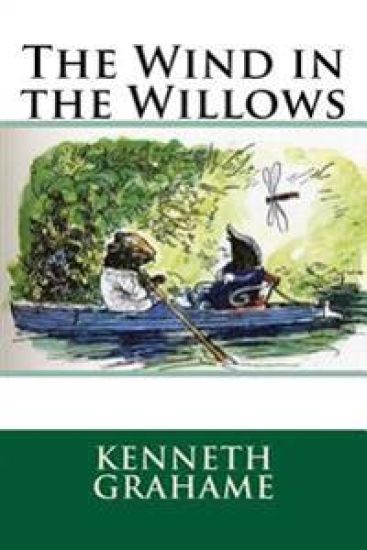
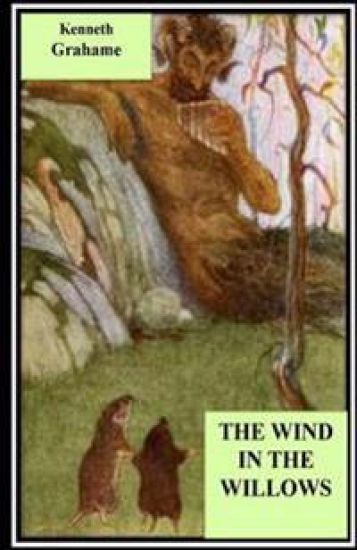
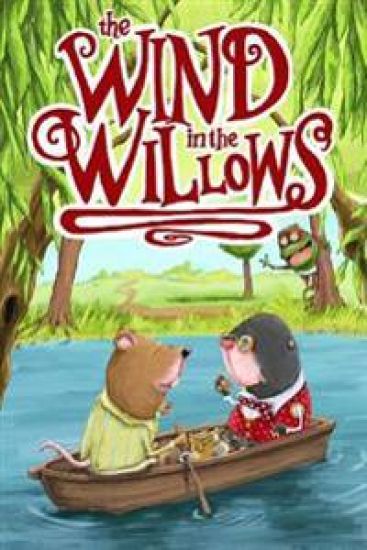
With the arrival of spring and fine weather outside, the good-natured Mole loses patience with spring cleaning. He flees his underground home, emerging to take in the air and ends up at the river, which he has never seen before. Here he meets Rat (a water vole), who at this time of year spends all his days in, on and close by the river. Rat takes Mole for a ride in his rowing boat. They get along well and spend many more days boating, with Rat teaching Mole the ways of the river. One summer day, Rat and Mole disembark near the grand Toad Hall and pay a visit to Toad. Toad is rich, jovial, friendly and kind-hearted, but aimless and conceited; he regularly becomes obsessed with current fads, only to abandon them as quickly as he took them up. Having recently given up boating, Toad's current craze is his horse-drawn caravan. He persuades the reluctant Rat and willing Mole to join him on a trip. Toad soon tires of the realities of camp life, and sleeps in the following day to avoid chores. Later that day, a passing motor car scares the horse, causing the caravan to overturn into a ditch. Rat threatens to have the law on the car driver, while Mole calms the horse, but Toad's craze for caravan travel is immediately replaced by a motor car obsession.
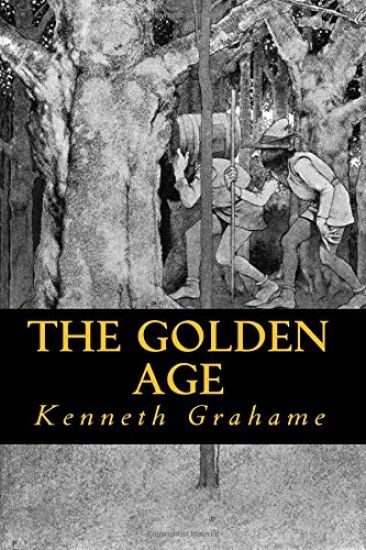
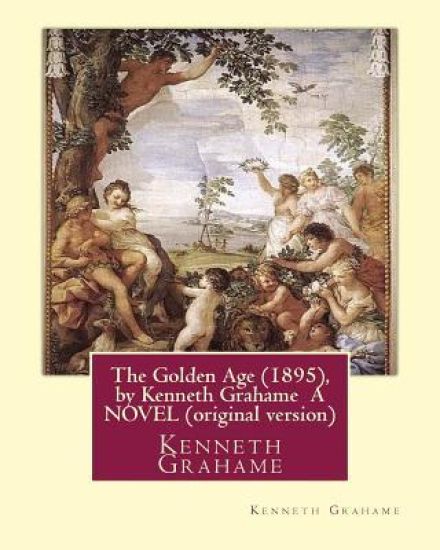
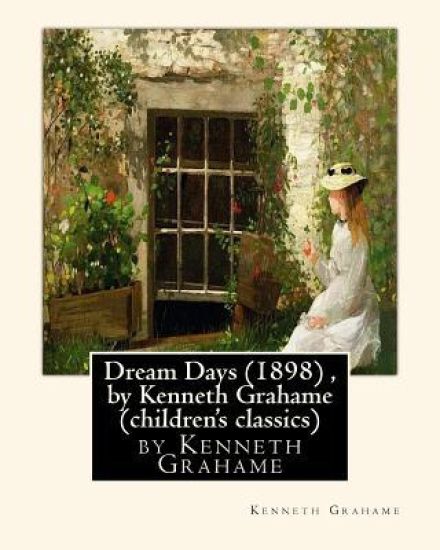
The Golden Age Is a collection of reminiscences of childhood, written by Kenneth Grahame and first published in book form in 1895, by The Bodley Head in London and by Stone & Kimball in Chicago. The Prologue and six of the stories had previously appeared in the National Observer, the journal then edited by William Ernest Henley. Widely praised upon its first appearance - Algernon Charles Swinburne, writing in the Daily Chronicle, called it "one of the few books which are well-nigh too praiseworthy for praise" - the book has come to be regarded as a classic in its genre. Typical of his culture and his era, Grahame casts his reminiscences in imagery and metaphor rooted in the culture of Ancient Greece; to the children whose impressions are recorded in the book, the adults in their lives are "Olympians", while the chapter titled "The Argonauts" refers to Perseus, Apollo, Psyche, and similar figures of Greek mythology. Grahame's reminiscences, in The Golden Age and in the later Dream Days (1898), were notable for their conception "of a world where children are locked in perpetual warfare with the adult 'Olympians' who have wholly forgotten how it feels to be young" - a theme later explored by J. M. Barrie and other authors. Dream Days Is a collection of children's fiction and reminiscences of childhood written by Kenneth Grahame. A sequel to the 1895 collection The Golden Age (some of its selections feature the same family of five children), Dream Days was first published in 1898 under the imprint John Lane: The Bodley Head. The first six selections in the book had been previously published in periodicals of the day - in The Yellow Book and the New Review in Britain and in Scribner's Magazine in the U. S. The book is best known for its inclusion of Grahame's classic story "The Reluctant Dragon". Like its precursor volume, Dream Days received strong approval from the literary critics of the day. In the decades since, the book has perhaps suffered a reputation as a thinner and weaker sequel to The Golden Age-except for its single hit story. In one modern estimation, both books "paint a convincingly unsentimental picture of childhood, with the adults in these sketches totally out of touch with the real concerns of the young people around them, including their griefs and rages."
NEW CHRISTMAS MUSIC Carol (Villagers All This Frosty Morn) from Kenneth Grahame's classic novel "The Wind in the Willows" and arranged from the ballet, "The Wind in the Willows" by American composer James Nathaniel Holland. Here in complete anthem form with orchestral accompaniment. Perfect for a children's Christmas concert. Instrumentation: Fl12, Ob12, EH, ClBb 12, BCl, Bsn 12, Cbsn, HrnF 1234, Trmp Bb12, Trmb, Tba, Timp, Perc (hand cym, sus. cym w/mallet, tri), glock, pno, strings Full score in concert pitch and parts Included. Scene Synopsis: The scene opens as Rat has succumbed to winter hibernation in front of his cozy fire. Mole takes the opportunity to return to his home, once neat tidy this past spring, now abandoned and neglected due to his adventures with Mr. Toad and with Rat over the summer and autumn. Mole hears singing outside his window and opens the door to carolers. It's a winter wonderland and he dances to music of this carol, announcing the joy all the animals felt when the baby Jesus was born on Christmas day. (Duration: 4:04) Choral with piano reduction accompaniment sold separately. Longer concertwork scene available. YouTube video presentation of scene 3 from the ballet "The Wind in Willows" https: //www.youtube.com/watch?v=-UzxwG6GYpA
The Wind in the Willows allows every person who has always wished animals could talk to dream a little more. In this amazing book, Toad, Ratty, Mr. Toad and Badger form a tight friendship and have many adventures. At the beginning of the book, Mole is busy spring cleaning is home when he suddenly decides he is simply sick of the job and that he wants to see what the big world outside his home is really like. He discovers the world is a busy, crazy place and it takes a while for him to adapt. While he is wandering along the river, he meets his first friend, Ratty. Ratty is fun-loving and has a relaxed attitude about life. He tells Mole he will show him the world and proudly shows Mole how much fun life along the river can be. Ratty does not like new things, though, so he and Mole learn some things together...
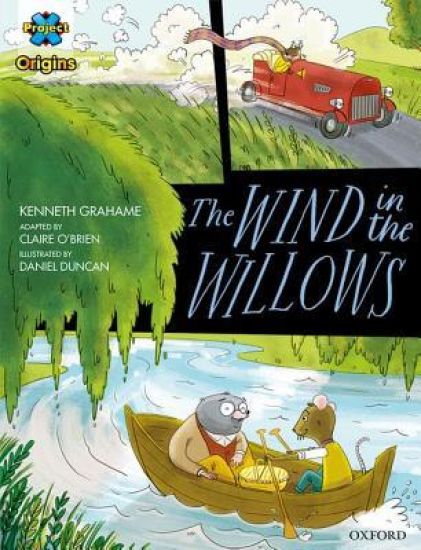
Project X Origins Graphic Texts can help children to reach higher standards in comprehension. This graphic retelling of The Wind in the Willows brings a fresh look to a well-loved classic. Life on the river bank is peaceful for Mole, Ratty and Badger until their friend Toad gets a motor car! Can Toad's friends convince him to stay out of trouble? This book also contains notes on the inside front and back covers with advice on supporting older children with their reading, ideas for follow-up activities and higher-level comprehension questions.
The most consistent of all series in terms of language control, length, and quality of story. David R. Hill, Director of the Edinburgh Project on Extensive Reading.
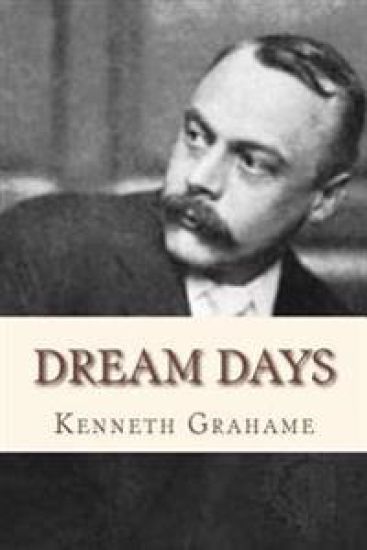
Dream Days is a collection of children's fiction and reminiscences of childhood written by Kenneth Grahame. A sequel to Grahame's 1895 collection The Golden Age (some of its selections feature the same family of five children), Dream Days was first published in 1898 under the imprint John Lane: The Bodley Head. (The first six selections in the book had been previously published in periodicals of the day-in The Yellow Book, the New Review, and in Scribner's Magazine in the United States.)The book is best known for its inclusion of Grahame's classic story The Reluctant Dragon. Like its precursor volume, Dream Days received strong approval from the literary critics of the day. In the decades since, the book has perhaps suffered a reputation as a thinner and weaker sequel to The Golden Age-except for its single hit story. In one modern estimation, both books "paint a convincingly unsentimental picture of childhood, with the adults in these sketches totally out of touch with the real concerns of the young people around them, including their griefs and rages." As with The Golden Age, the first edition of Dream Days was un-illustrated; again like the prior volume, a subsequent edition of Dream Days was published with illustrations by Maxfield Parrish. The publisher's first intention was to print color plates; however, John Lane was not satisfied with the color reproductions of Parrish's pictures. Lane instead chose a new photogravure reproduction process that produced black-and-white results superior to the halftone images in the 1899 edition of The Golden Age. The Parrish-illustrated edition of Dream Days was issued by The Bodley Head in London and New York in 1902; it contained ten full-page illustrations (one for each of the eight selections plus frontispiece and title page), and six tailpieces. The quality of the images in Dream Days inspired Lane to issue a matching edition of The Golden Age, with improved photogravure plates, in 1904. Kenneth Grahame ( 8 March 1859 - 6 July 1932) was a British writer, most famous for The Wind in the Willows (1908), one of the classics of children's literature. He also wrote The Reluctant Dragon; both books were later adapted into Disney films. Kenneth Grahame was born on 8 March (1859) in Edinburgh, Scotland. When he was a little more than a year old, his father, an advocate, received an appointment as sheriff-substitute in Argyllshire at Inveraray on Loch Fyne. Kenneth loved the sea and was happy there, but when he was 5, his mother died from complications of childbirth, and his father, who had a drinking problem, gave over care of Kenneth, his brother Willie, his sister Helen and the new baby Roland to Granny Ingles, the children's grandmother, in Cookham Dean in the village of Cookham in Berkshire. There the children lived in a spacious, if dilapidated, home, "The Mount", on spacious grounds in idyllic surroundings, and were introduced to the riverside and boating by their uncle, David Ingles, curate at Cookham Dean church. This delightful ambiance, particularly Quarry Wood and the River Thames, is believed, by Peter Green, his biographer, to have inspired the setting for The Wind in the Willows. He was an outstanding pupil at St Edward's School in Oxford. During his early years at St. Edwards, a sports regimen had not been established and the boys had freedom to explore the old city with its quaint shops, historic buildings, and cobblestone streets, St Giles' Fair, the idyllic upper reaches of the River Thames, and the nearby countryside. Grahame died in Pangbourne, Berkshire, in 1932. He is buried in Holywell Cemetery, Oxford. Grahame's cousin Anthony Hope, also a successful author, wrote his epitaph, which reads: "To the beautiful memory of Kenneth Grahame, husband of Elspeth and father of Alastair, who passed the river on the 6th of July, 1932, leaving childhood and literature through him the more blest for all time"
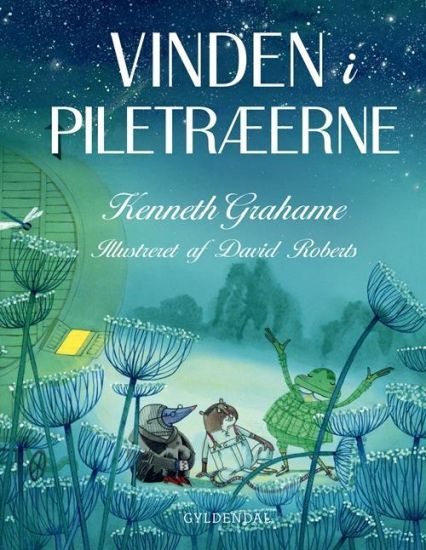
Vinden i piletræerne er den klassiske fortælling om vennerne Muldvarpen, Vandrotten, Tudse og Grævlingen. Historien om venskab og opdagelser, farer og loyalitet begyndte som en række godnathistorier, Kenneth Grahame fortalte sin lille søn, Alastair. Den blev udgivet første gang i 1908 og blev omgående en bestseller. Siden har bogen fortryllet generation efter generation over hele verden. Men selv de største klassikere fortjener et nyt udtryk og denne nyillustrerede udgave i David Roberts storslåede fortolkning inviterer nye læsere med på eventyr.
Kenneth Grahame 8 March 1859 - 6 July 1932) was a British writer, most famous for The Wind in the Willows (1908), one of the classics of children's literature. He also wrote The Reluctant Dragon; both books were later adapted into Disney films Kenneth Grahame was born on 8 March (1859) in Edinburgh, Scotland. When he was a little more than a year old, his father, an advocate, received an appointment as sheriff-substitute in Argyllshire at Inveraray on Loch Fyne. Kenneth loved the sea and was happy there, but when he was 5, his mother died from complications of childbirth, and his father, who had a drinking problem, gave over care of Kenneth, his brother Willie, his sister Helen and the new baby Roland to Granny Ingles, the children's grandmother, in Cookham Dean in the village of Cookham in Berkshire. There the children lived in a spacious, if dilapidated, home, "The Mount", on spacious grounds in idyllic surroundings, and were introduced to the riverside and boating by their uncle, David Ingles, curate at Cookham Dean church. This delightful ambiance, particularly Quarry Wood and the River Thames, is believed, by Peter Green, his biographer, to have inspired the setting for The Wind in the Willows. He was an outstanding pupil at St Edward's School in Oxford. During his early years at St. Edwards, a sports regimen had not been established and the boys had freedom to explore the old city with its quaint shops, historic buildings, and cobblestone streets, St Giles' Fair, the idyllic upper reaches of the River Thames, and the nearby countryside.