Kirjailija
Kwame Anthony Appiah
Kirjat ja teokset yhdessä paikassa: 22 kirjaa, julkaisuja vuosilta 1994–2025, suosituimpiin kuuluu Cosmopolitanisms. Vertaile teosten hintoja ja tarkista saatavuus suomalaisista kirjakaupoista.
22 kirjaa
Kirjojen julkaisuvuodet: 1994–2025.
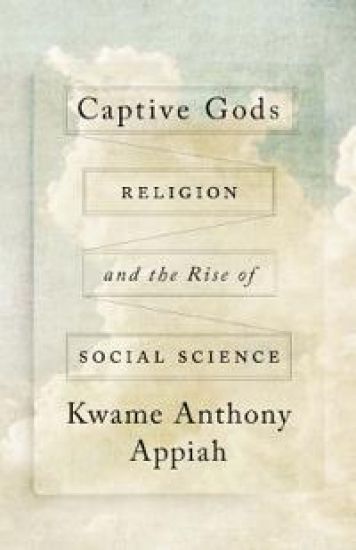
Philosopher Kwame Anthony Appiah explores how early social scientists developed our modern understandings of society through their theories of religion The foundations of modern social science were built on the study of religion, the acclaimed thinker Kwame Anthony Appiah argues. Delving into the intellectual currents of the nineteenth and early twentieth centuries, he investigates how formative thinkers—notably Edward Burnett Tylor, Émile Durkheim, Max Weber, and Georg Simmel—grappled with the concepts of society and religion as interdependent categories. Appiah shows how their efforts to define religion, or evade the task, mark the power and limitations of social thought in ways that persist among theorists today. Religion was not merely an object of study but a framework through which early social scientists established sociology as a discipline. Appiah goes on to examine more recent work in both interpretive sociology and evolutionary and cognitive psychology about the mechanisms through which communities form beliefs and values—while underscoring the enduring significance of these earlier debates for contemporary social thought. Throughout, he intertwines storytelling, historical analysis, and philosophical reflection to show how our ideas about society and culture have been, and continue to be, forged in dialogue with religious questions.

The Ethics of Identity
Kwame Anthony Appiah
PRINCETON UNIVERSITY PRESS
2023
pokkari
Halvin toimitettuna 22,00 €
A bold vision of liberal humanism for navigating today’s complex world of growing identity politics and rising nationalismCollective identities such as race, nationality, religion, gender, and sexuality clamor for recognition and respect, sometimes at the expense of other things we value. To what extent do they constrain our freedom, and to what extent do they enable our individuality? Is diversity of value in itself? Has the rhetoric of human rights been overstretched? Kwame Anthony Appiah draws on thinkers through the ages and across the globe to explore such questions, developing an account of ethics that connects moral obligations with collective allegiances and that takes aim at clichés and received ideas about identity. This classic book takes seriously both the claims of individuality—the task of making a life—and the claims of identity, these large and often abstract social categories through which we define ourselves.
In Darfur
Mu?ammad al-Tunisi; Kwame Anthony Appiah
New York University Press
2020
pokkari
Halvin toimitettuna 21,50 €
A merchant's remarkable travel account of an African kingdom Mu?ammad al-Tunisi (d. 1274/1857) belonged to a family of Tunisian merchants trading with Egypt and what is now Sudan. Al-Tunisi was raised in Cairo and a graduate of al-Azhar. In 1803, at the age of fourteen, al-Tunisi set off for the Sultanate of Darfur, where his father had decamped ten years earlier. He followed the Forty Days Road, was reunited with his father, and eventually took over the management of the considerable estates granted to his father by the sultan of Darfur. In Darfur is al-Tunisi's remarkable account of his ten-year sojourn in this independent state, featuring descriptions of the geography of the region, the customs of Darfur's petty kings, court life and the clothing of its rulers, marriage customs, eunuchs, illnesses, food, hunting, animals, currencies, plants, magic, divination, and dances. In Darfur combines literature, history, ethnography, linguistics, and travel adventure, and most unusually for its time, includes fifty-two illustrations, all drawn by the author. In Darfur is a rare example of an Arab description of an African society on the eve of Western colonization and vividly evokes a world in which travel was untrammeled by bureaucracy, borders were fluid, and startling coincidences appear almost mundane. An English-only edition.
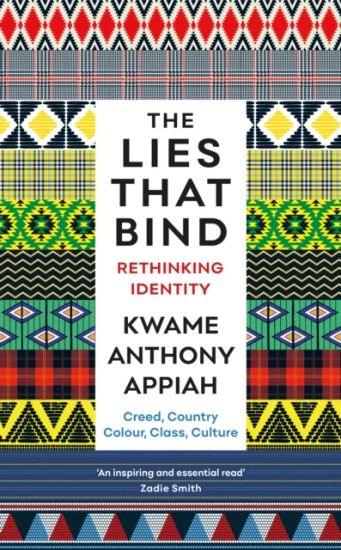
We often think identity is personal. But the identities that shape the world, our struggles, and our hopes, are social ones, shared with countless others. Our sense of self is shaped by our family, but also by affiliations that spread out from there, like our nationality, culture, class, race and religion. Taking these broad categories as a starting point, Professor Appiah challenges our assumptions about how identity works. In eloquent and lively chapters, he weaves personal anecdote with historical, cultural and literary example to explore the entanglements within the stories we tell ourselves. We all know there are conflicts among identities; but Professor Appiah explores how identities are created by conflict. Identities are then crafted from confusions - confusions this book aims to help us sort through. Religion, Appiah shows us, isn't primarily about beliefs. The idea of national self-determination is incoherent. Our everyday racial thinking is an artefact of discarded science. Class is not a matter of upper and lower. And the very idea of Western culture is a misleading myth. We will see our situation more clearly if we start to question these mistaken identities. This is radical new thinking from a master in the subject and will change forever the way we think about ourselves and our communities.
Vem tror du att du är? Den frågan är tätt sammanbunden med en annan: Vad tror du att du är? Kön. Religion. Etnicitet. Nationalitet. Klass. Kultur. Idén om identitet och tillhörighet i kombination med hur omvärlden beskriver oss påverkar vår förståelse av oss själva. Samtidigt har otaliga konflikter världen över sin utgångspunkt i spänningar mellan olika identiteter, som dessutom ofta är baserade på missförstånd eller rena lögner. Men dessa myter skänker våra liv mening och skapar tillit i våra samhällen. De är lögnerna som binder oss samman. Kwame Anthony Appiah är ghanansk-brittisk filosof verksam i USA. I Identitetsillusionen utmanar han vår bild av hur identiteter fungerar och konstrueras. Appiah vill förändra sättet vi tänker på vem och vad vi är. Personliga anekdoter blandas med historiska, kulturella och litterära exempel för att utforska historierna vi berättar om oss själva. Resultatet är en bok fylld av berättarglädje, analytisk skärpa, och viktiga lärdomar för vår polariserade samtid. Kwame Anthony Appiah är filosof och skriver om politisk- och moralfilosofi, afrikansk idéhistoria, och semantik. Appiah står bakom kolumnen The ethicist i New York Times.
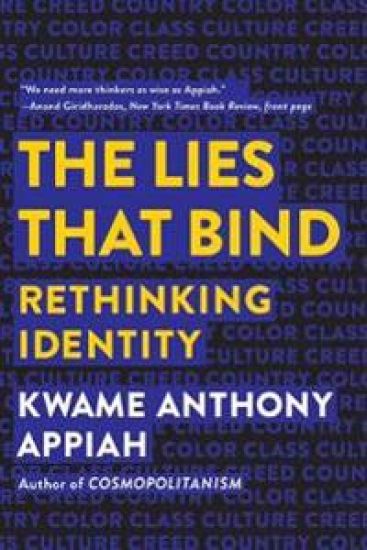
Who do you think you are? That's a question bound up in another: What do you think you are? Gender. Religion. Race. Nationality. Class. Culture. Such affiliations give contours to our sense of self, and shape our polarized world. Yet the collective identities they spawn are riddled with contradictions, and cratered with falsehoods. Kwame Anthony Appiah's The Lies That Bind is an incandescent exploration of the nature and history of the identities that define us. It challenges our assumptions about how identities work. We all know there are conflicts between identities, but Appiah shows how identities are created by conflict. Religion, he demonstrates, gains power because it isn't primarily about belief. Our everyday notions of race are the detritus of discarded nineteenth-century science. Our cherished concept of the sovereign nation--of self-rule--is incoherent and unstable. Class systems can become entrenched by efforts to reform them. Even the very idea of Western culture is a shimmering mirage. From Anton Wilhelm Amo, the eighteenth-century African child who miraculously became an eminent European philosopher before retiring back to Africa, to Italo Svevo, the literary marvel who changed citizenship without leaving home, to Appiah's own father, Joseph, an anticolonial firebrand who was ready to give his life for a nation that did not yet exist, Appiah interweaves keen-edged argument with vibrant narratives to expose the myths behind our collective identities. These "mistaken identities," Appiah explains, can fuel some of our worst atrocities--from chattel slavery to genocide. And yet, he argues that social identities aren't something we can simply do away with. They can usher in moral progress and bring significance to our lives by connecting the small scale of our daily existence with larger movements, causes, and concerns. Elaborating a bold and clarifying new theory of identity, The Lies That Bind is a ringing philosophical statement for the anxious, conflict-ridden twenty-first century. This book will transform the way we think about who--and what--"we" are.
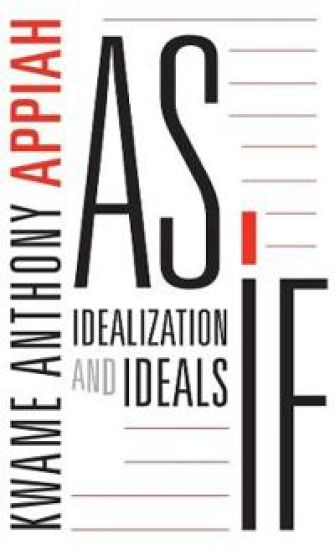
“Appiah is a writer and thinker of remarkable range… [He] has packed into this short book an impressive amount of original reflection… A rich and illuminating book.”—Thomas Nagel, New York Review of BooksIdealization is a fundamental feature of human thought. We build simplified models to make sense of the world, and life is a constant adjustment between the models we make and the realities we encounter. Our beliefs, desires, and sense of justice are bound up with these ideals, and we proceed “as if” our representations were true, while knowing they are not. In this elegant and original meditation, Kwame Anthony Appiah suggests that this instinct to idealize is not dangerous or distracting so much as it is necessary. As If explores how strategic untruth plays a critical role in far-flung areas of inquiry: decision theory, psychology, natural science, and political philosophy. A polymath who writes with mainstream clarity, Appiah defends the centrality of the imagination not just in the arts but in science, morality, and everyday life.“Appiah is the rare public intellectual who is also a first-rate analytic philosopher, and the characteristic virtues associated with each of these identities are very much in evidence throughout the book.”—Thomas Kelly, Notre Dame Philosophical Reviews
An indispensable collection that re-examines what it means to belong in the world. "Where are you from?" The word cosmopolitan was first used as a way of evading exactly this question, when Diogenes the Cynic declared himself a "kosmo-polites," or citizen of the world. Cosmopolitanism displays two impulses—on the one hand, a detachment from one's place of origin, while on the other, an assertion of membership in some larger, more compelling collective. Cosmopolitanisms works from the premise that there is more than one kind of cosmopolitanism, a plurality that insists cosmopolitanism can no longer stand as a single ideal against which all smaller loyalties and forms of belonging are judged. Rather, cosmopolitanism can be defined as one of many possible modes of life, thought, and sensibility that are produced when commitments and loyalties are multiple and overlapping. Featuring essays by major thinkers, including Homi Bhabha, Jean Bethke Elshtain, Thomas Bender, Leela Gandhi, Ato Quayson, and David Hollinger, among others, this collection asks what these plural cosmopolitanisms have in common, and how the cosmopolitanisms of the underprivileged might serve the ethical values and political causes that matter to their members. In addition to exploring the philosophy of Kant and the space of the city, this volume focuses on global justice, which asks what cosmopolitanism is good for, and on the global south, which has often been assumed to be an object of cosmopolitan scrutiny, not itself a source or origin of cosmopolitanism. This book gives a new meaning to belonging and its ground-breaking arguments call for deep and necessary discussion and discourse.
W. E. B. Du Bois never felt so at home as when he was a student at the University of Berlin. But Du Bois was also American to his core, scarred but not crippled by the racial humiliations of his homeland. In Lines of Descent, Kwame Anthony Appiah traces the twin lineages of Du Bois’ American experience and German apprenticeship, showing how they shaped the great African-American scholar’s ideas of race and social identity. At Harvard, Du Bois studied with such luminaries as William James and George Santayana, scholars whose contributions were largely intellectual. But arriving in Berlin in 1892, Du Bois came under the tutelage of academics who were also public men. The economist Adolf Wagner had been an advisor to Otto von Bismarck. Heinrich von Treitschke, the historian, served in the Reichstag, and the economist Gustav von Schmoller was a member of the Prussian state council. These scholars united the rigorous study of history with political activism and represented a model of real-world engagement that would strongly influence Du Bois in the years to come. With its romantic notions of human brotherhood and self-realization, German culture held a potent allure for Du Bois. Germany, he said, was the first place white people had treated him as an equal. But the prevalence of anti-Semitism allowed Du Bois no illusions that the Kaiserreich was free of racism. His challenge, says Appiah, was to take the best of German intellectual life without its parochialism—to steal the fire without getting burned.
Dusk of Dawn (The Oxford W. E. B. Du Bois)
W. E. B. Du Bois; Kwame Anthony Appiah
Oxford University Press Inc
2014
nidottu
W. E. B. Du Bois was a public intellectual, sociologist, and activist on behalf of the African American community. He profoundly shaped black political culture in the United States through his founding role in the NAACP, as well as internationally through the Pan-African movement. Du Bois's sociological and historical research on African-American communities and culture broke ground in many areas, including the history of the post-Civil War Reconstruction period. Du Bois was also a prolific author of novels, autobiographical accounts, innumerable editorials and journalistic pieces, and several works of history. Dusk of Dawn, published in 1940, is an explosive autobiography of the foremost African American scholar of his time. Du Bois writes movingly of his own life, using personal experience to elucidate the systemic problem of race. He reflects on his childhood, his education, and his intellectual life, including the formation of the NAACP. Though his views eventually got him expelled from the association, Du Bois continues to develop his thoughts on separate black economic and social institutions in Dusk of Dawn. Readers will find energetic essays within these pages, including insight into his developing Pan-African consciousness. With a series introduction by editor Henry Louis Gates, Jr., and an introduction by Kwame Anthony Appiah, this edition is essential for anyone interested in African American history.
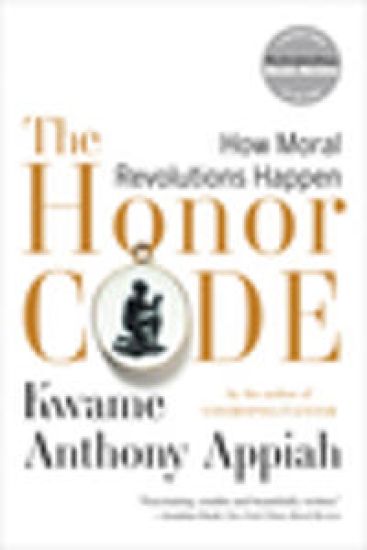
In this groundbreaking work, Kwame Anthony Appiah, hailed as "one of the most relevant philosophers today" (New York Times Book Review), changes the way we understand human behavior and the way social reform is brought about. In brilliantly arguing that new democratic movements over the last century have not been driven by legislation from above, Appiah explores the end of the duel in aristocratic England, the tumultuous struggles over footbinding in nineteenth-century China, the uprising of ordinary people against Atlantic slavery, and the horrors of "honor killing" in contemporary Pakistan. Intertwining philosophy and historical narrative, he has created "a fascinating study of moral evolution" (Philadelphia Inquirer) that demonstrates the critical role honor plays a in the struggle against man's inhumanity to man.
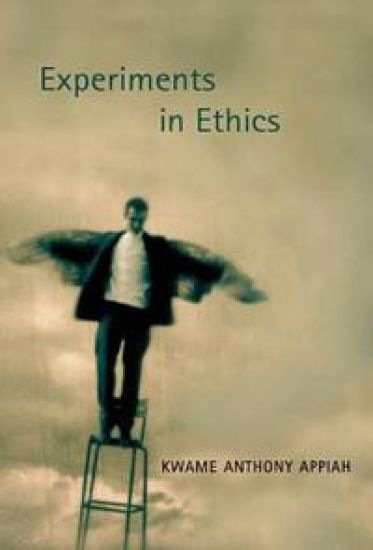
In the past few decades, scientists of human nature—including experimental and cognitive psychologists, neuroscientists, evolutionary theorists, and behavioral economists—have explored the way we arrive at moral judgments. They have called into question commonplaces about character and offered troubling explanations for various moral intuitions. Research like this may help explain what, in fact, we do and feel. But can it tell us what we ought to do or feel? In Experiments in Ethics, the philosopher Kwame Anthony Appiah explores how the new empirical moral psychology relates to the age-old project of philosophical ethics. Some moral theorists hold that the realm of morality must be autonomous of the sciences; others maintain that science undermines the authority of moral reasons. Appiah elaborates a vision of naturalism that resists both temptations. He traces an intellectual genealogy of the burgeoning discipline of "experimental philosophy," provides a balanced, lucid account of the work being done in this controversial and increasingly influential field, and offers a fresh way of thinking about ethics in the classical tradition. Appiah urges that the relation between empirical research and morality, now so often antagonistic, should be seen in terms of dialogue, not contest. And he shows how experimental philosophy, far from being something new, is actually as old as philosophy itself. Beyond illuminating debates about the connection between psychology and ethics, intuition and theory, his book helps us to rethink the very nature of the philosophical enterprise.
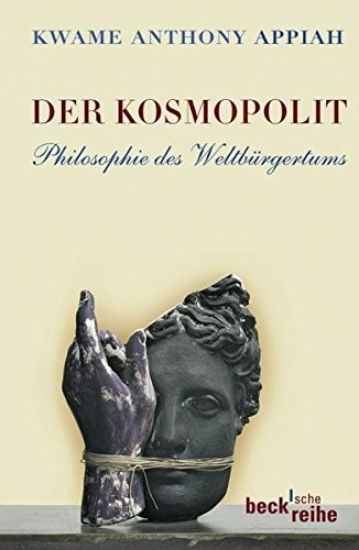
"Einer der 25 wichtigsten Denker unserer Zeit" Le Nouvel Observateur Kwame Anthony Appiahs Philosophie des Kosmopoliten ist das Werk eines Denkers, der selbst verkörpert, wofür er eintritt: die Vielfalt der Kulturen auch dann als einen gemeinsamen Gewinn zu begreifen, wenn wir nach ganz unterschiedlichen Werten und Wahrheiten leben. "Sein neues Buch Der Kosmopolit enthält nun jede Menge intellektuellen Sprengstoff, den man fast übersieht, weil es derart locker und elegant erzählend daherkommt." Gunter Hofmann, Die Zeit "Ein philosophisches Werk ungewöhnlich spannend zu lesen, voller reizvoller historischer Beispiele und Anekdoten aus aller Welt." Catherine Newmark, Berliner Zeitung "Kwame Anthony Appiah ist einer jener brillanten Köpfe, von denen das angelsächsische Universitätssystem gar nicht so wenige hervorbringt: weltläufig, geistreich, gebildet, redegewandt, um Klarheit bemüht, besonnen und thematisch an dem orientiert, was auf der Agenda der Gegenwart steht." Uwe Justus Wenzel, Neue Zürcher Zeitung
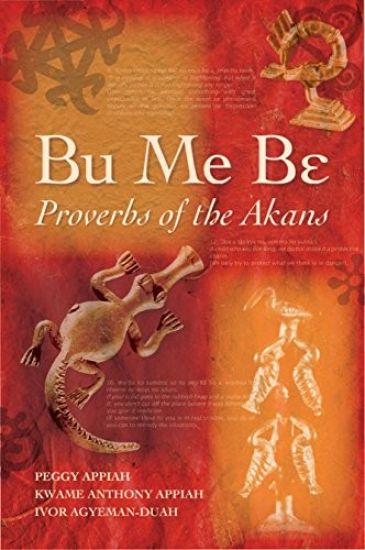
Bu Me Be
Ivor Agyeman-Duah; Peggy Appiah; Kwame Anthony Appiah
Ayebia Clarke Publishing Ltd
2008
sidottu
This is the first Akan/English dictionary that engages an African language in dialogue with other world languages. According to Ngugi wa Thiong o, African languages cannot grow as literary languages unless we develop tools that will enable their effective use in dialogue not only with other European languages but also those of Africa and Asia. This dictionary is an important step in that direction."
This landmark work challenges the separatist doctrines which have come to dominate our understanding of the world. Appiah revives the ancient philosophy of Cosmopolitanism, which dates back to the Cynics of the 4th century, as a means of understanding the complex world of today. Arguing that we concentrate too much on what makes us different rather than recognising our common humanity, Appiah explores how we can act ethically in a globalised world.
A political and philosophical manifesto considers the ramifications of a world in which western society is divided from all other creeds and cultures, challenging the separatist doctrines espoused by other writers to evaluate the limited capacity of differentiating societies as compared to the power of a united world. By the author of In My Father's House. Reprint.
What extent do "identities" constrain our freedom, and to what extent do they enable our individuality? This book draws on thinkers through the ages and across the globe to explore such questions. It develops an account of ethics that connects moral obligations with collective allegiances, our individuality with our identities.
The Dictionary of Global Culture: What Every American Needs to Know as We Enter the Next Century--From Diderot to Bo Diddley
Kwame Anthony Appiah
VINTAGE
1998
nidottu
Reference/World History "Consistently informative, lively, and accurate . . . a pathbreaking achievement." --The New York Times Book Review s the world's axes of population, power, and commerce shift from North to South and from West to East, the old Eurocentric model of culture is giving way to a new global paradigm. This dictionary, which has been compiled by two of our most esteemed scholars, is the first work of its kind to devote equal emphasis to the cultural contributions of the non-Western world alongside those of Europe and North America. Prepared by regional experts from five continents (including both scholars from other cultures and Western scholars of other cultures), the book's more than 1,200 entries include: Chinua Achebe, Aeschylus, Bo Diddley, Denis Diderot, Martha Graham, The Great Leap Forward, Igbo, Inanna, Jainism, Henry James, John Milton, Yukio Mishima, Ramayana, Raphael, Fran ois Toussaint L'Ouverture, Trail of Tears, Zionism, Zydeco Vast in scope and lucidly written, The Dictionary of Global Culture is an indispensable reference for students, businesspeople, or anyone seeking a foothold in the civilization of the next millennium. "Detailed, accurate and solid. . . . It contains much to interest and inform." --Baltimore Sun